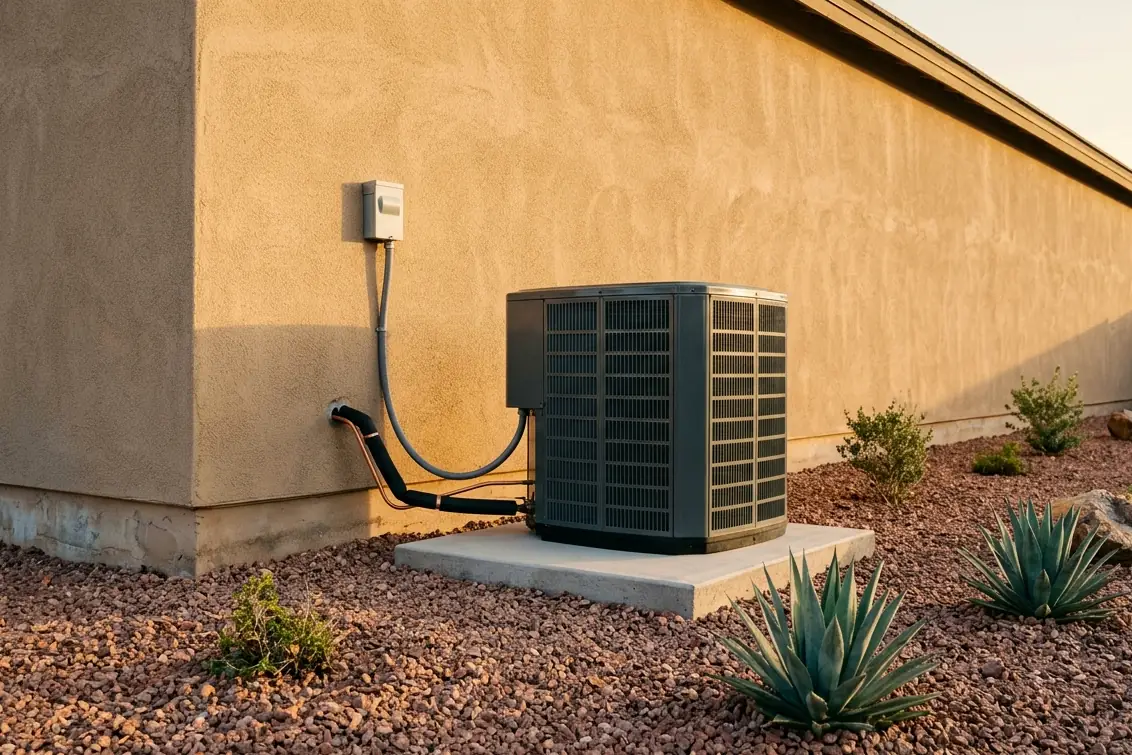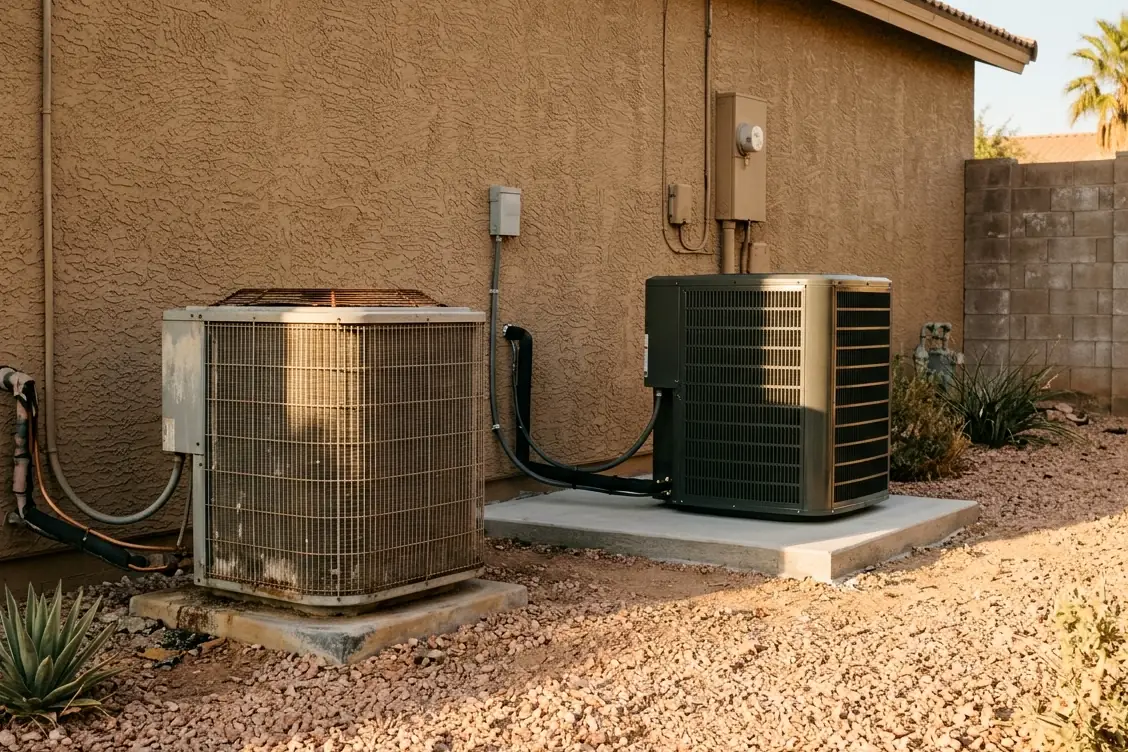
Repair usually makes sense when the system is younger, uses current refrigerant and the failed part is a capacitor, contactor, fan motor or drain issue. Replacement deserves a serious look when the system is older, runs on R-22, needs a compressor or coil, or has needed several repairs in recent summers. Comfort problems and rising electric bills also count, not only the price of today's repair.
Why does age weigh so heavily in the Valley?
Phoenix runs air conditioners harder than almost anywhere in the country. Systems here work long cycles from May into October, often through nights that never drop below 90°F, and many sit in attics or on roofs where the surrounding air is far hotter than the outdoor reading. That workload means age shows up sooner. A system that might be considered middle-aged in a mild climate can be near the end of its useful service life in the desert.
Age alone does not condemn a system, though. A well-maintained unit with clean coils and a tight duct system can keep going longer than a neglected one of the same vintage. When we evaluate a system, we look at how it has been treated, what condition the coils and cabinet are in, and whether the compressor is drawing normal current, not just the date on the data plate.
Which repairs are almost always worth doing?
Many summer breakdowns come down to inexpensive parts. Capacitors are the most common summer failure part in the Valley, because heat accelerates their wear. Contactors pit and stick after years of cycling, and monsoon power surges can damage both. These are quick repairs that restore full function, and replacing them on an otherwise healthy system is nearly always the sensible choice, regardless of age.
- Run and start capacitors
- Contactors and relays
- Condenser fan motors
- Clogged condensate drain lines
- Thermostat or low-voltage wiring faults
- Blown fuses at the outdoor disconnect
When does a big repair tip the scale toward replacement?
The decision gets harder when the failed part is the compressor, the outdoor coil or the indoor evaporator coil. Those are the most expensive components in the system, and on an older unit the repair can cost a large share of what a new system would. One simple test many homeowners find useful is to multiply the system's age by the repair cost. If that figure is getting close to the price of a new system, replacement usually deserves a serious look.
Repeat failures are another signal. If the same system has needed a refrigerant leak repair, a fan motor and a compressor component in the last few summers, each repair on its own may have been reasonable, but the pattern tells you the equipment is wearing out as a whole. We would rather lay out that history honestly than keep patching a system that is going to leave you hot again next July.
How does R-22 refrigerant change the math?
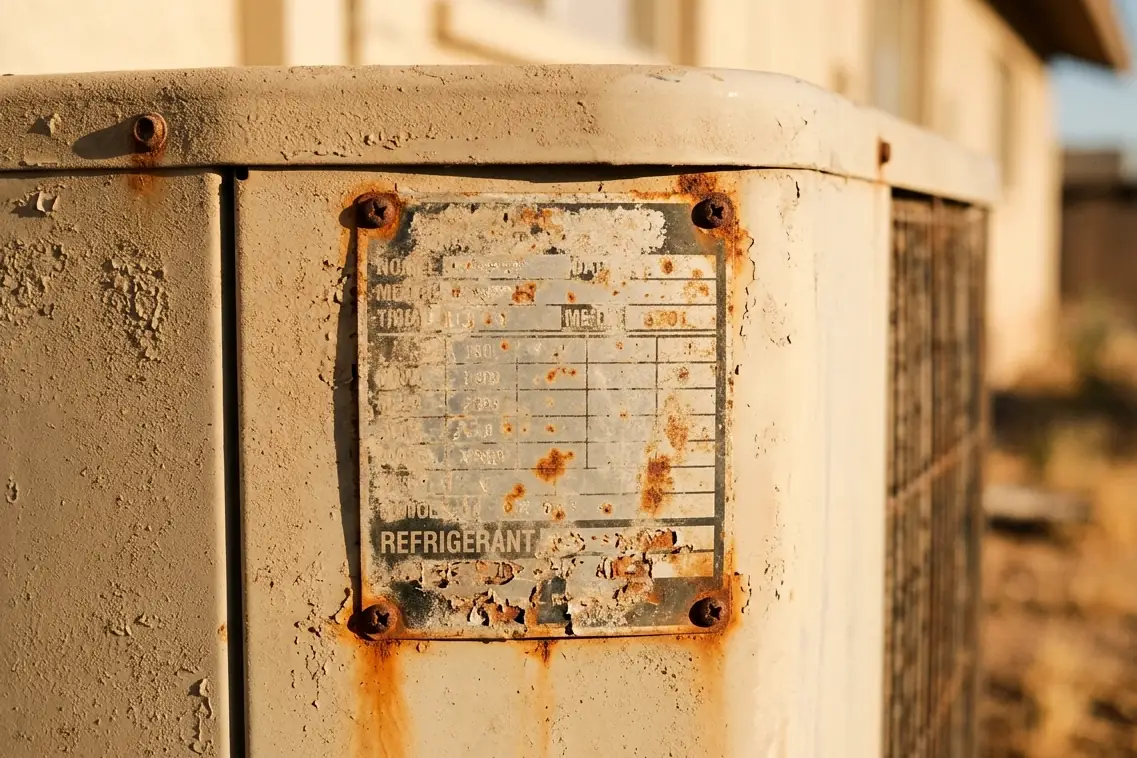
R-22 production ended in 2020, so systems that still use it can only be recharged from existing or reclaimed supply. That makes R-22 expensive, and the cost rises with every pound a leaking system needs. If your system was installed before about 2010, there is a good chance it uses R-22, and the data plate on the outdoor unit will say so.
A small top-off on an R-22 system with a minor, repairable leak can still make sense for a season or two while you plan ahead. A large leak, a leaking evaporator coil or a compressor failure on an R-22 system is a different story. New equipment made since 2025 uses A2L refrigerants such as R-454B or R-32, and mixing old and new components is not a practical path, so a major repair on an R-22 system often becomes a full replacement conversation.
What else should factor into your decision?
Repair cost is only one line in the budget. An older system that still runs may be costing you more every month than you realize, especially on APS or SRP time-of-use plans where heavy afternoon use is the most expensive. Comfort counts as well. If certain rooms never cool, the system runs nonstop or humidity feels sticky during monsoon, a repair will not fix those problems, but a correctly sized replacement with sound ductwork often will.
- How your summer electric bills have trended
- Rooms that stay hot no matter the setting
- Noise from the outdoor unit or air handler
- Condition of the ducts and attic insulation
- How long you plan to stay in the home
- Current APS or SRP efficiency rebate programs
What does each choice typically cost in Phoenix?
Typical Phoenix repairs for common parts, such as a capacitor, contactor or drain line, often fall around $185 to $465. Mid-range repairs like a condenser fan motor or blower motor commonly run about $385 to $1,140. Major repairs are where the gap narrows: compressor replacement often lands around $1,875 to $3,960, and an evaporator coil around $1,650 to $3,280. On an older system, those last two figures are the ones that usually start the replacement conversation.
Full replacement of a split AC system in a typical Phoenix home commonly falls around $7,450 to $12,900, depending on size, efficiency rating, ductwork condition and installation details. Roof package units and homes needing duct changes can land outside that range. These are typical ranges only, not quotes. The real number always depends on what the technician finds on site, and we explain both paths with actual figures before you decide anything.
How do we help you make the call?
When you call (602) 848-9399, our technician diagnoses the actual failure first, then tells you what the repair involves and what it typically costs. If the system is a candidate for replacement, we explain why, using what we measured: refrigerant type, compressor readings, coil condition and duct losses. You get both options laid out plainly, and the decision stays yours. Plenty of older systems get repaired and keep going, and we will tell you when that is the smarter move.