Package Unit Repair
Repairs for rooftop and ground-pad package units, including capacitors, contactors, blower motors, drains and refrigerant leaks, on gas-electric and heat pump models.
See package unit repairCommercial and rooftop
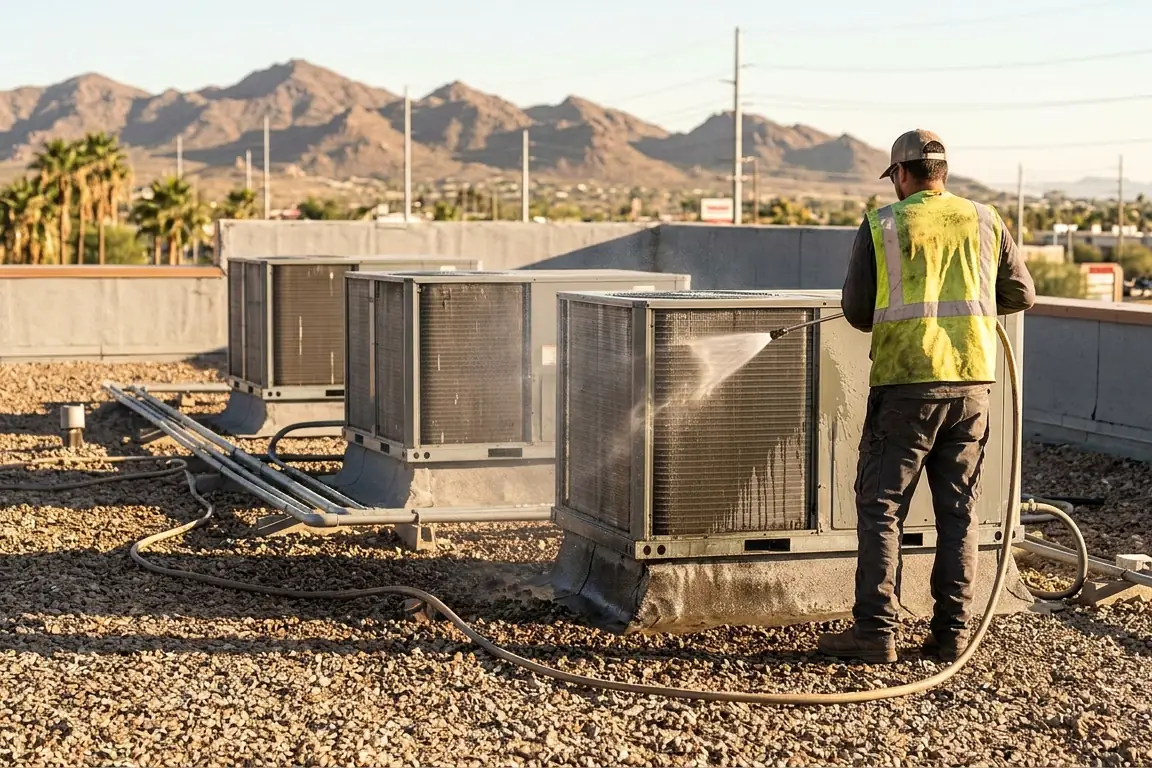
Rooftop units on Phoenix homes, strip centers and offices take full sun all summer. Scheduled service cleans dust-packed coils, flushes drains, tightens electrical connections and catches tired parts before the first 110°F week.
At a glance
Rooftop unit service is scheduled maintenance for package units and RTUs mounted on a roof. A technician cleans condenser and evaporator coils, changes filters, flushes the condensate drain, checks belts and motors, tests capacitors and contactors, and reads refrigerant performance. In Phoenix, plan service in spring before peak heat and again after monsoon season, when dust storms have packed coils and power surges have stressed the electrical parts.
A rooftop unit has a harder life than almost any other piece of equipment in the Valley. It sits in direct sun on a roof deck that runs far hotter than the air temperature, collects dust from every haboob and runs most of the day from May into October. Small problems build quietly: a coil packed with silt, a belt starting to glaze, a capacitor slowly losing strength. Service visits catch those before they become a no-cooling call in August.
Our rooftop service covers homes with package units and businesses with one or several RTUs. On commercial units, that includes belt-drive blowers, economizers and multiple compressor stages. For homes, it means a thorough coil cleaning, drain flush and electrical check on the single unit that keeps the whole house cool. Either way, the technician records readings so you can see how the equipment is holding up from one season to the next.
Timing matters in Phoenix. A spring visit in March or April gets equipment ready before the heat arrives. A second visit in October cleans out monsoon dust, checks for storm damage and prepares gas-electric and heat pump units for winter heating. Buildings with restaurants or heavy occupancy may need service more often, and we can set a schedule that fits how hard your units actually work.
Signs to watch
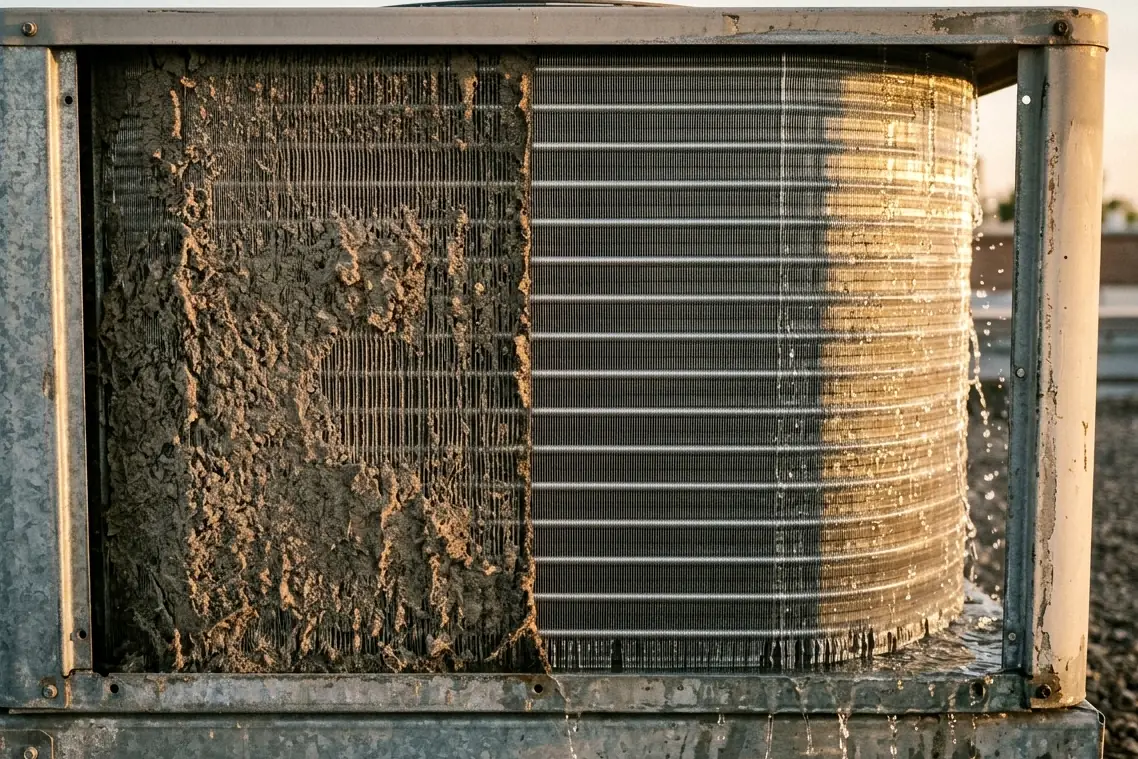
If you can see a mat of dust and debris on the condenser coil fins, the unit is working harder to shed heat. That raises pressures, power use and the risk of a summer breakdown.
A unit that used to cycle off in the afternoon now runs nonstop at the same thermostat setting. Dirty coils, slipping belts and low airflow are common reasons worth checking.
Ceiling stains near a supply diffuser often mean the condensate drain is backing up into the curb. Clearing the line and pan during service prevents damage to ceilings and insulation.
On belt-drive units, a squeal when the blower starts usually means a loose or worn belt. Left alone, it can snap and leave the space with no airflow at all.
Monsoon winds can loosen access panels and filter doors. Gaps let dust and rain into the cabinet and pull hot roof air into the system, wasting cooling.
If nobody remembers the last time the unit was serviced, filters and coils are likely loaded and electrical parts have gone untested through at least one full Phoenix summer.
Roof decks in Phoenix bake under summer sun, and the air around a rooftop unit can run noticeably hotter than the reading at the airport. Condenser coils need clean fins to reject heat in that environment, and every layer of dust makes the compressor work harder. Electrical parts bake in the control panel all afternoon, and capacitors, the most common summer failure part in the Valley, weaken faster in that heat.
Monsoon season adds its own wear. From June 15 to September 30, dust storms pack coils and filters in a single afternoon, and power flickers can kill capacitors and contactors. Humidity spikes make condensate drains carry more water, so clogs show up as ceiling leaks. A spring visit prepares the unit, and a post-monsoon visit in October clears the season's damage before small problems carry into the next year.
How we handle it
The technician checks roof access, sets up a safe path to each unit and shuts off power at the disconnect. On gas-electric units, the gas valve and supply are reviewed before panels come off.
Condenser coils get a coil-safe cleaner and a low-pressure rinse to push dust out of the fins. The evaporator coil is inspected and cleaned when buildup is cutting airflow across it.
Filters are replaced with the correct size and rating. On belt-drive units, belts are inspected for glazing and cracks, tensioned properly and replaced when worn or stretched.
The condensate line is flushed and the pan checked for rust, cracks and standing water. Traps get cleared so water drains off the roof instead of backing up into the curb.
Capacitors, contactors, wiring and motor amperage are measured. Economizer dampers and controls on commercial units get tested so outside air comes in only when it should.
Refrigerant pressures, temperature split and amperage readings are recorded. You get a short report with findings, photos of anything worn and repair priorities ranked by urgency.
Before you call
Anything beyond these checks involves electrical parts or refrigerant, so call (602) 848-9399 and let a technician take it from there.
Typical cost
Typical service visit per unit. A range, not a quote: the real number depends on what the technician finds. Full price guide
A residential package unit service sits near the low end of this range, while larger commercial RTUs with belts, economizers and multiple stages run higher. Multi-unit buildings often get a per-unit rate. The real number depends on what the technician finds on the roof, and any repair is priced before work begins.
| Line item | Typical range |
|---|---|
| Residential package unit service | $165 to $285 |
| Commercial rooftop unit service, per unit | $235 to $395 |
| Condenser coil deep cleaning, per unit | $145 to $325 |
We repair and replace Trane, Carrier, Lennox, Goodman, Rheem, Daikin and most other makes found in Valley homes.
Related work
Repairs for rooftop and ground-pad package units, including capacitors, contactors, blower motors, drains and refrigerant leaks, on gas-electric and heat pump models.
See package unit repairQuarterly or twice-yearly maintenance programs for business HVAC, with filter, coil, belt and drain service plus written reports by unit for managers.
See commercial maintenanceInside-out rinsing and coil cleaner remove packed monsoon dust from outdoor coils, lowering pressure, power draw and compressor heat.
See condenser coil cleaningCrane-lift rooftop and pad package unit replacements with curb adapters, electrical updates and new SEER2 gas-electric, heat pump or straight cool models.
See the serviceWhere we do this
These communities make up most of the homes we serve. Each link opens the local page with ZIP codes, typical homes and the issues we see there.
Twice a year works well for most rooftop units here: once in spring before peak heat and once in fall after monsoon season. Restaurants, gyms and buildings with long operating hours may need quarterly filter changes and coil checks. A single annual visit can work for lightly used residential package units, though it leaves monsoon dust on the coils through fall.
Yes. Condenser coil cleaning is a core part of every rooftop unit service visit in Phoenix, because dust and debris build up fast. We use a coil-safe cleaner and a low-pressure rinse to avoid bending the fins. When coils are badly impacted after a severe monsoon season, a deeper cleaning may be recommended and priced separately before we start.
It can't stop every failure, but it catches many of the most common ones. Weak capacitors, worn contactors, glazed belts and clogged drains show warning signs that a technician can measure or see. Replacing a weak capacitor in April costs much less than an emergency call during a 112°F weekend, and the space stays cool.
The report lists the units serviced, readings such as refrigerant pressures, temperature split and motor amperage, filters and belts changed, and any parts that are worn or failing. Photos show coil condition, rust or damage. Repairs are ranked so you can handle urgent items first and plan the rest, which helps property managers budget across a building.
Yes. Our technicians service residential package units on Phoenix homes and townhomes as well as commercial RTUs on strip centers, offices, restaurants and small warehouses. The core work is similar, but commercial units often add belts, economizers and multiple compressor stages, so those visits take longer and include more testing.
For many units, it's a worthwhile add-on. Monsoon power flickers and surges are a frequent cause of failed capacitors, contactors and control boards. A surge protector mounted at the disconnect helps absorb those spikes. It doesn't prevent every electrical failure, but it can reduce storm damage, especially on units with expensive control boards.
A real person answers (602) 848-9399 every hour of every day, and we will tell you plainly what the next step is.