Attic Insulation
Blown-in insulation and attic air sealing that slow the flow of attic heat into your rooms, so the AC runs shorter cycles on Phoenix afternoons.
See attic insulationDucts, air and attic
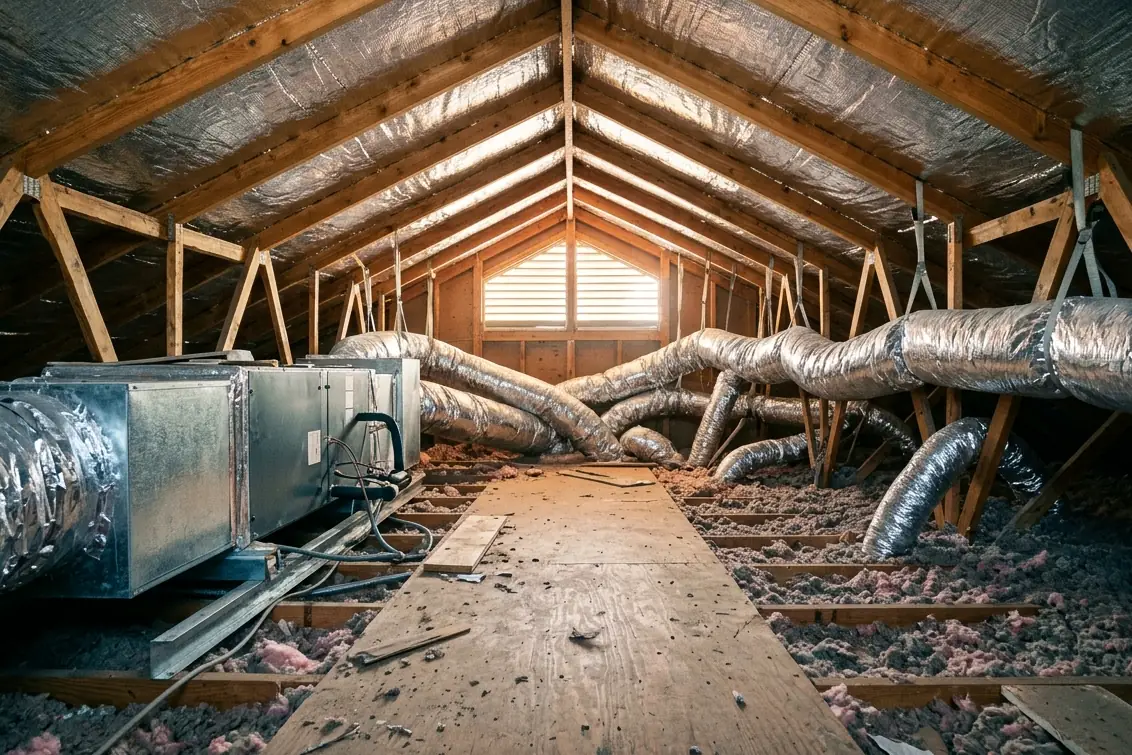
Radiant barrier foil stapled under your roof decking reflects much of the sun's heat back toward the roof before it bakes your attic, ducts and air handler. In a Phoenix attic that hits 140 to 160°F, that difference is easy to feel.
At a glance
Radiant barrier installation adds a reflective foil layer to the underside of your roof rafters or decking. Instead of slowing heat like insulation does, it reflects radiant heat from the hot roof back upward, so less of it reaches the attic floor, ducts and air handler. It makes the most sense in Phoenix homes with ducts or equipment in the attic, rooms under the roof that run hot, and roofs with no reflective layer.
On a July afternoon, sunlight heats your roof tiles or shingles far beyond the air temperature. That hot roof then radiates heat downward into the attic, warming everything below it: the insulation, the ductwork, the air handler and finally your ceilings. Insulation slows conducted heat but does little to stop that radiant load from beaming across the attic space. A radiant barrier tackles the radiant part directly, reflecting much of it before it ever reaches the attic floor.
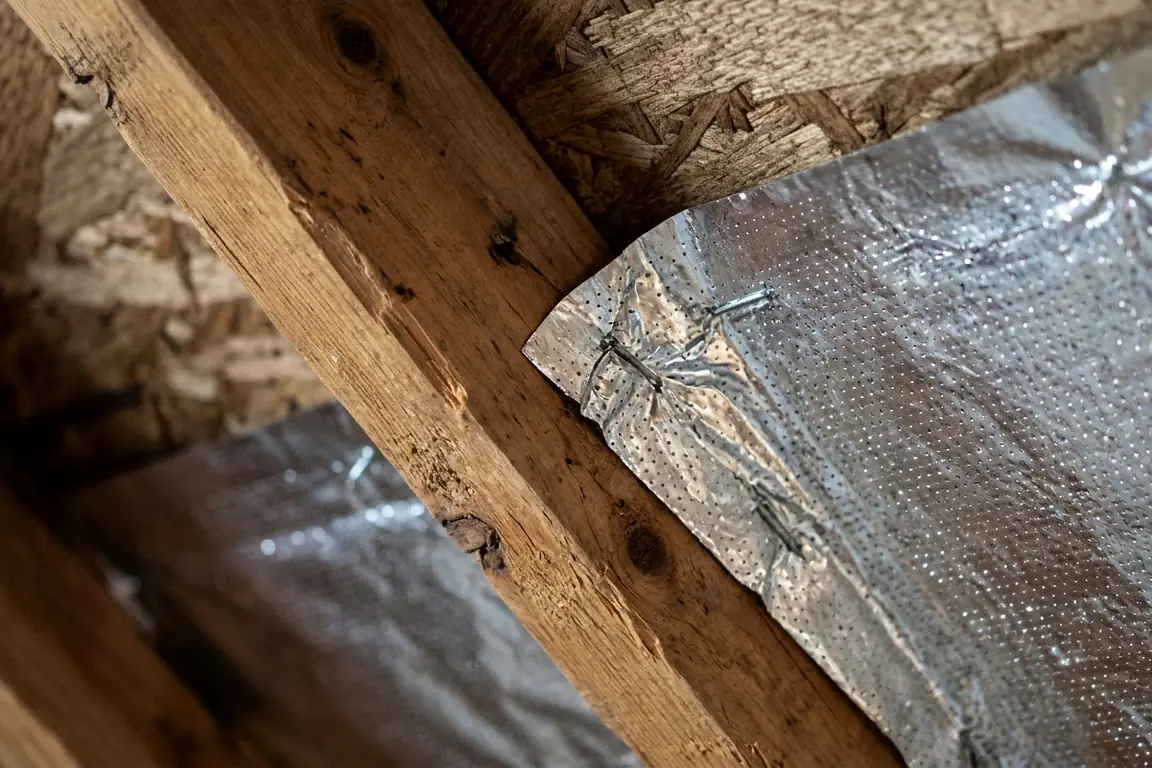
The barrier itself is a thin sheet of aluminum foil laminated to a reinforcing backing, usually perforated so moisture can pass through. Our technicians staple it to the underside of the rafters or trusses with the shiny side facing down into an air gap, which is the setup that keeps working for years. Foil laid flat on top of insulation can work at first, but dust settles on it and dulls its reflectivity, and Phoenix attics are never short on dust.
Radiant barrier is a separate upgrade from attic insulation, and the two work together. Insulation on the attic floor slows the heat that does get through, while the barrier reduces how much heat reaches that floor in the first place. Homes with ducts and an air handler in the attic often see the biggest benefit, since the barrier lowers the temperature around equipment that's trying to deliver cold air through an oven-hot space.
Phoenix gets intense sun nearly year-round, and summer attic air commonly reaches 140 to 160°F. Radiant barriers work best in exactly this kind of climate: hot, sunny and with long cooling seasons. Every degree the barrier knocks off the attic matters more here because so many Valley homes run supply ducts and air handlers through that space. A cooler attic means the cold air your system makes loses less of its chill before it reaches your rooms.
Timing and roof type matter too. We install radiant barrier from fall through spring whenever possible, since working under the roof deck in a summer attic is slow and risky. Tile roofs, common across the Valley, still benefit because the decking under the tiles heats up and radiates downward just like a shingle roof does. Homes with spray foam on the roof deck usually don't need a barrier, and we'll tell you when your attic is already well protected.
Typical cost
Typical single-story attic, stapled foil. A range, not a quote: the real number depends on what the technician finds. Full price guide
Most single-story Phoenix homes between about 1,500 and 2,200 square feet land in this range for perforated foil stapled under the rafters. Larger roofs, low-pitch attics and tight access raise the total. The real number depends on what the technician finds in your attic, and you'll have the price before any foil goes up.
| Line item | Typical range |
|---|---|
| Radiant barrier foil, single-story attic | $1,385 to $2,865 |
| Spray-on radiant barrier coating | $1,165 to $2,385 |
| Attic clearing and access prep | $185 to $435 |
How we handle it
The technician checks roof framing, ventilation, existing insulation, ductwork and wiring, and looks for roof leaks or damaged decking that should be addressed before any foil goes up.
We measure the underside of the roof deck, including gable ends where useful, to plan coverage and the amount of perforated foil your attic needs.
Drop cloths go down at the attic hatch and along the path, and boards get laid across the joists so no one steps through the drywall ceiling.
Foil goes up in overlapping runs stapled to the bottom edges of the rafters or trusses, shiny side down, leaving an air gap between the foil and the roof decking.
We trim the foil around roof vents, attic fans, plumbing stacks and flues, keeping proper clearance from heat sources so ventilation and safety stay intact.
Scraps and loose staples get cleaned out, the hatch is resealed, and you get photos of the finished coverage plus notes on any duct or insulation issues we spotted.
Signs to watch
If top-floor ceilings feel noticeably warm on summer afternoons, heat radiating down from the roof is reaching the attic floor and passing into the rooms below.
Equipment and ductwork in the attic absorb heat all day. Supply air that leaves the air handler cold can arrive at the vents several degrees warmer than it should.
Bonus rooms, vaulted spaces and bedrooms tucked under low roof sections often stay warmer than the rest of the house, even when the thermostat is satisfied.
When your system keeps up in the morning but runs without pause from 2 p.m. to sunset, attic heat gain is often a big part of that afternoon load.
Dark shingles and older tile roofs without foil-faced sheathing absorb more solar heat and pass more of it into the attic below, especially on west and south slopes.
If you're replacing ducts, adding insulation or moving an air handler, installing a radiant barrier at the same time saves extra trips into a hard-to-reach space.
Before you call
Anything beyond these checks involves electrical parts or refrigerant, so call (602) 848-9399 and let a technician take it from there.
We repair and replace Trane, Carrier, Lennox, Goodman, Rheem, Daikin and most other makes found in Valley homes.
Related work
Blown-in insulation and attic air sealing that slow the flow of attic heat into your rooms, so the AC runs shorter cycles on Phoenix afternoons.
See attic insulationSolar and powered attic fans, soffit intake and roof exhaust vents balanced to flush hot air from Phoenix attics without pulling cool air from your rooms.
See attic fan & ventilationLeaks at plenums, takeoffs, boots and returns sealed with mastic and proper fasteners, so cooling stays in the ducts and dusty attic air stays out.
See duct sealingTorn flex, crushed runs, separated joints and failed plenum connections repaired in Phoenix attics, with airflow measured at the register before and after.
See ductwork repairWhere we do this
These communities make up most of the homes we serve. Each link opens the local page with ZIP codes, typical homes and the issues we see there.
Yes. Concrete and clay tiles absorb a lot of heat, and the roof decking under them heats up and radiates into the attic much like a shingle roof does. Stapling foil to the underside of the rafters reflects that heat back toward the deck. Tile roofs sometimes have a small air space under the tiles that helps, but the attic side still benefits from a barrier.
We install it under the roof deck, stapled to the rafters with the shiny side facing down. That orientation keeps dust from settling on the reflective surface, so it stays effective for years. Foil laid on top of insulation faces up, and Phoenix dust dulls it fairly quickly. Solid foil laid that way can also trap moisture against the insulation, another reason we avoid that method.
No, they do different jobs. Insulation slows heat moving through the attic floor into your ceilings, while radiant barrier reflects the radiant heat coming off the hot roof. A barrier over a thin layer of old insulation still leaves your ceilings exposed to the heat that gets through. The best results come from adequate insulation on the floor and a barrier under the roof deck working together.
Spray-on coatings reflect some radiant heat, but generally less than a good foil barrier with an air gap. They can make sense in attics where stapling foil is impractical, such as very low or cramped spaces. For most Valley homes, stapled perforated foil delivers more benefit for the money. The technician will explain which option fits your attic after seeing the framing and access.
That's one of its main benefits. By reflecting heat away from the attic, a barrier lowers the temperature of the air surrounding your ducts and equipment. Cold air traveling through the ducts picks up less heat on its way to the vents, and the air handler works in a less extreme space. Sealing duct leaks at the same time adds to the improvement you'll feel in the rooms.
It can reduce signal coming through the roof in some homes, because metal foil reflects radio waves as well as heat. Most homeowners notice little or no change, since signals also pass through walls and windows. Perforated foil and leaving gable ends uncovered both help. If your home already has weak cell service, mention it and we'll plan the coverage with that in mind.
A real person answers (602) 848-9399 every hour of every day, and we will tell you plainly what the next step is.