Duct Sealing
Leaks at plenums, takeoffs, boots and returns sealed with mastic and proper fasteners, so cooling stays in the ducts and dusty attic air stays out.
See duct sealingDucts, air and attic
A single crushed or disconnected duct can leave a bedroom ten degrees warmer and pour cooled air into a 150°F attic. We locate the failure, repair it and confirm airflow at the register.
At a glance
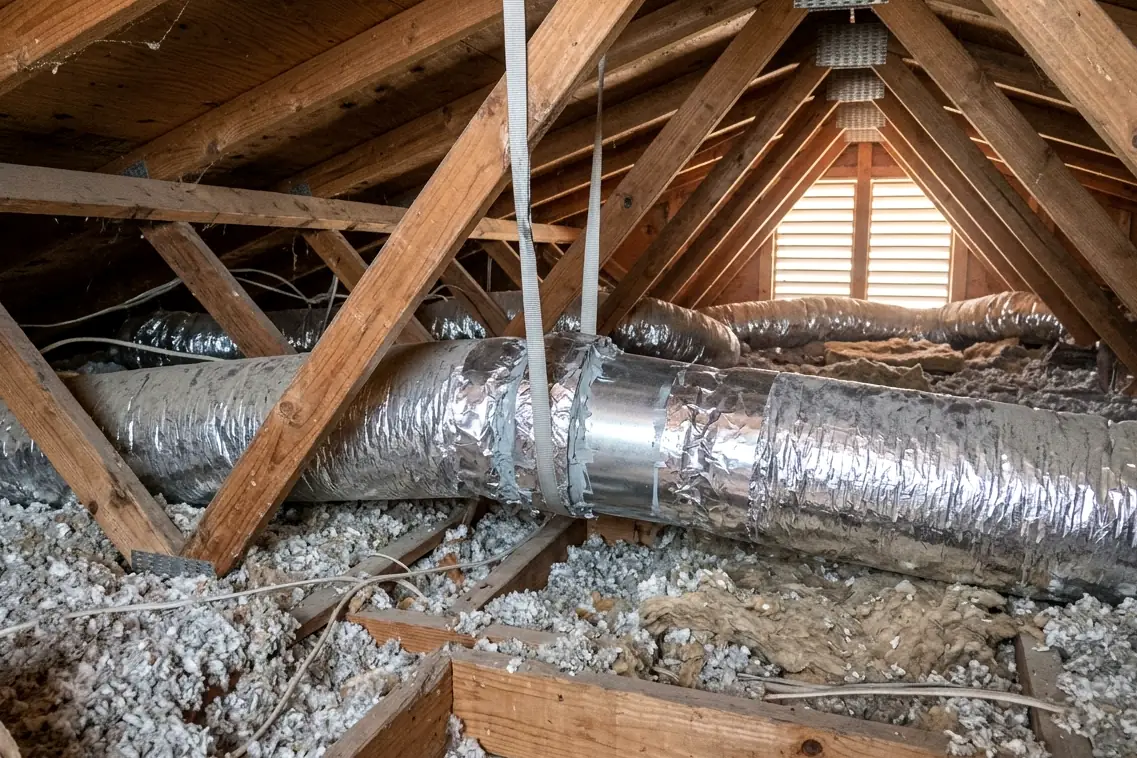
Ductwork repair fixes specific damaged sections of your duct system, such as torn flex duct, crushed runs, disconnected joints, failed plenum connections or damaged insulation. In Phoenix you need it when one room is much hotter than the others, a register barely blows, dust pours in after storms, or your bills rise without explanation. Since most ducts here run through very hot attics, even one break wastes a lot of cooling.
Ducts are the delivery route for every bit of cooling your system makes. In most Phoenix homes they run through the attic, and attic air in summer can reach roughly 140 to 160°F. When a duct tears, disconnects or gets crushed, cooled air either escapes into that heat or never reaches the room. The system runs longer, rooms stay warm, and your bill reflects the loss.
Most duct damage is localized. Flex duct sags and kinks when it is not supported properly. Tape and mastic dry out and release at joints. Workers in the attic, such as cable installers or solar crews, step on ducts and crush them. Rodents chew through insulation and inner liners. Repairing those specific sections often restores comfort without replacing the whole system.
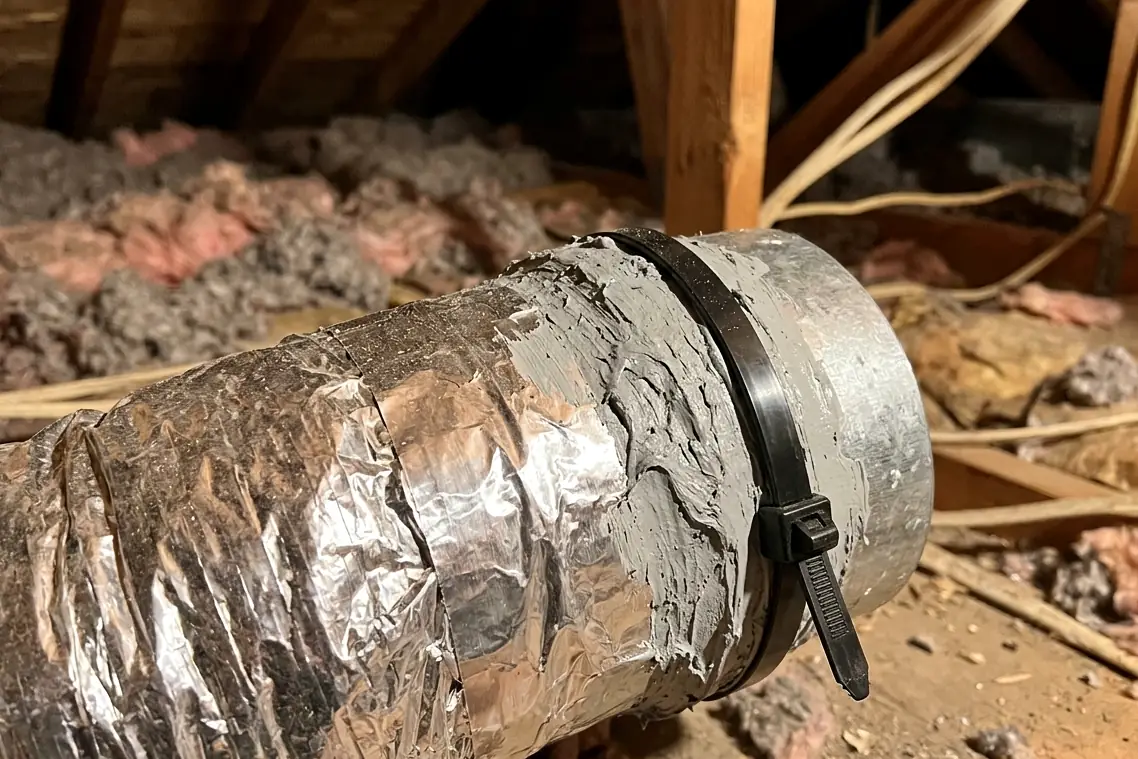
Finding the problem is the key step. Our technicians measure airflow at registers, inspect the attic runs, and use the temperature at each outlet to pinpoint the weak branch. We reconnect and seal joints with mastic and proper clamps, replace damaged sections with new insulated duct of the same size, and re-support sagging runs. Then we measure again so you can see the difference at the register.
Signs to watch
When a single bedroom stays several degrees warmer than the rest of the house, a crushed, kinked or disconnected duct feeding that room is a frequent cause.
A vent with weak airflow while others blow strongly usually means a restriction or a break somewhere along that branch between the plenum and the register.
If dust builds up quickly after a haboob, return ducts may have leaks pulling unfiltered attic or wall cavity air directly into the system.
A sudden jump in summer bills, with no change in habits or rates, can mean a duct came loose and is dumping cooled air into the attic.
Air whistling through a gap or flex duct rattling against framing can point to a loose connection or a damaged section that needs attention.
Torn outer jackets, exposed insulation, flattened sections or ducts lying on the attic floor away from their supports are clear signs a repair is needed.
Before you call
Anything beyond these checks involves electrical parts or refrigerant, so call (602) 848-9399 and let a technician take it from there.
How we handle it
We check airflow and supply temperature at each register to find which rooms are underserved, which tells us exactly where to focus the attic inspection that follows.
Our technician follows the weak branches from the plenum to the room, looking for crushed sections, separated joints, sagging spans and chewed or torn insulation.
Loose joints are pulled back onto collars, secured with clamps and sealed with mastic so they hold through attic heat instead of relying on tape alone.
Crushed or torn sections are cut out and replaced with new insulated duct of the correct diameter and an insulation rating suited to hot Phoenix attics.
Sagging or kinked flex duct is lifted, stretched and supported with wide straps at proper intervals so air moves through a smooth, full-diameter path to the room.
After repairs, we recheck airflow and supply temperature at the affected registers and show you the before and after readings so the improvement is clear.
Typical cost
Typical duct repair visit, single joint through several sections. A range, not a quote: the real number depends on what the technician finds. Full price guide
Reconnecting and sealing a single joint is at the lower end of this range. Replacing several damaged runs or repairing a plenum connection costs more. These are typical Phoenix ranges, not a quote. The real number depends on what the technician finds in the attic and how many sections need attention.
| Line item | Typical range |
|---|---|
| Duct joint reconnect and seal | $267 to $486 |
| Flex duct run replacement | $384 to $893 |
| Plenum or trunk connection repair | $673 to $1,486 |
Attic heat is the main culprit. Months of 140°F and higher temperatures dry out foil tape, harden duct sealant and make the plastic outer jacket of flex duct brittle. Joints that held for years can let go during a particularly hot summer. Older homes built with metal trunk lines and flex branches often show failures right where the two materials meet.
Activity in the attic also takes a toll. Solar panel installs, satellite and internet wiring, and insulation upgrades all put people near ducts, and a single misstep can flatten a run. Pests, including roof rats common in parts of the Valley, damage duct insulation as well. After any attic work, it is worth checking that the ducts are still connected, supported and round.
We repair and replace Trane, Carrier, Lennox, Goodman, Rheem, Daikin and most other makes found in Valley homes.
Related work
Leaks at plenums, takeoffs, boots and returns sealed with mastic and proper fasteners, so cooling stays in the ducts and dusty attic air stays out.
See duct sealingNew supply and return duct systems designed for your Phoenix home, with correct sizing, higher-rated insulation, sealed joints and measured airflow at every room.
See duct replacementNegative-pressure cleaning of supply and return ducts, with camera footage before and after so you can see exactly what came out of your system.
See air duct cleaningMotorized dampers and separate thermostats that split one system into zones, fixing hot upstairs floors and sunbaked west rooms in Phoenix homes.
See zoning systemsWhere we do this
These communities make up most of the homes we serve. Each link opens the local page with ZIP codes, typical homes and the issues we see there.
The most common causes are a crushed, kinked or disconnected duct feeding that room, an undersized branch, or a room with more sun exposure than the system was designed for. Measuring airflow at the register and inspecting the run in the attic usually reveals the cause. A repair can often fix it. If the duct is undersized, a larger run or zoning may be needed.
It can. Solar installers often run conduit through the attic, and moving around in tight spaces can crush or tear flex duct. It does not always happen, but it is worth checking afterward. If a room got warmer or a register weaker after a solar install, that is a strong hint. We inspect the runs near the installation path and repair any damage.
Standard cloth duct tape breaks down quickly in Phoenix attic heat and usually releases within a season. Proper repairs use mechanical fasteners or clamps to hold the joint and mastic sealant to close gaps. Foil tape rated for HVAC use can help in some places, but mastic holds up best. We use materials that tolerate attic temperatures for the long term.
If damage is limited to a few sections and the rest of the ducts are in good shape, repair makes sense. If ducts are very old, brittle throughout, poorly sized or damaged in many places, replacement often costs less over time than repeated fixes. We inspect the full system and tell you which approach gives the better result for your home.
Yes. A fully disconnected supply duct dumps cooled air into the attic, so the rooms it serves never cool and the thermostat keeps calling. A disconnected return can pull hot attic air straight into the system, which makes the AC work even harder. Either one can keep the system running much longer than normal, especially on 110°F afternoons.
They can. Roof rats are found in parts of the Valley and sometimes chew through the outer jacket and insulation of flex duct to nest. That damage lets cooled air escape and can bring droppings into the airflow. We repair or replace damaged sections, and we recommend pest control to seal attic entry points so the problem does not return.
A real person answers (602) 848-9399 every hour of every day, and we will tell you plainly what the next step is.