AC Repair
Warm air, odd noises or a system that never shuts off. We test capacitors, refrigerant, airflow and controls, then fix the real cause.
See ac repairValley city
Tempe packs a lot of housing types into a compact city.
Tempe at a glance
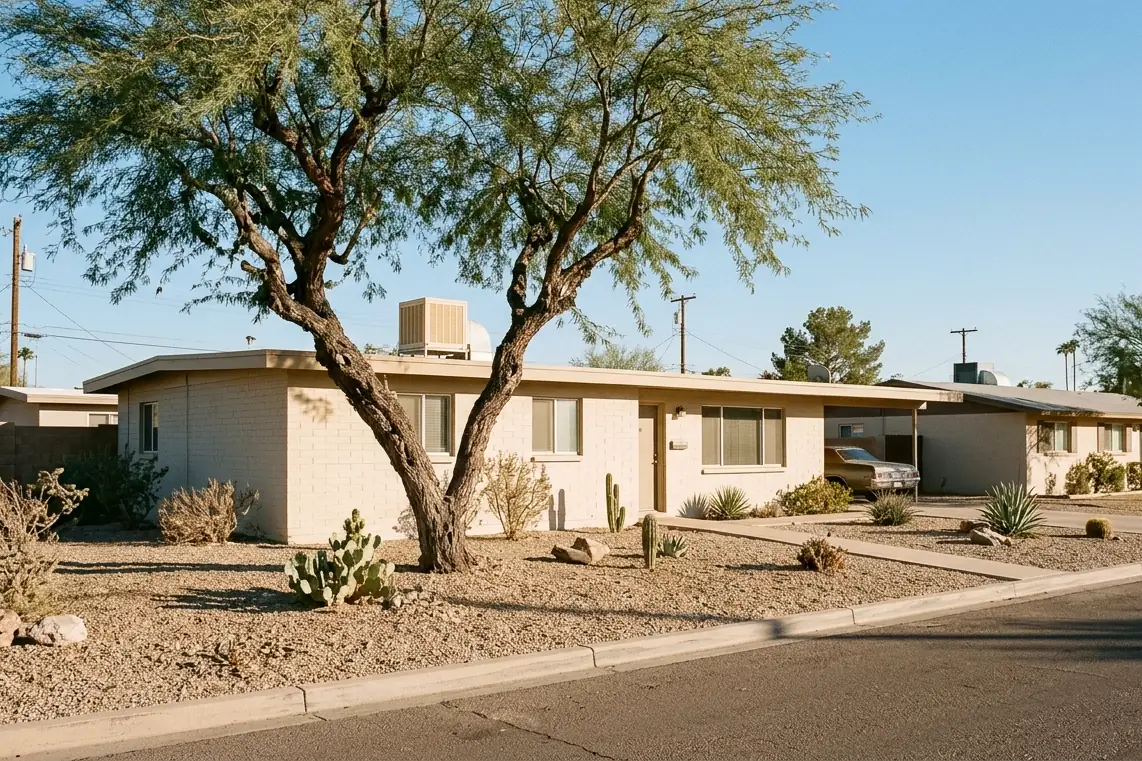
Tempe packs a lot of housing types into a compact city. North Tempe and the neighborhoods around Arizona State are full of 1950s to 1970s block ranch homes, duplexes and small apartment buildings, many cooled by roof package units or older split systems. South Tempe, around the Kyrene corridor, leans toward 1980s and 1990s stucco subdivisions with attic air handlers. Rentals are common across the city, so a lot of equipment has gone years without regular care before anyone calls us.
Older homes here face the same punishing heat as the rest of the Valley, with highs over 110°F in a typical summer and warm nights that keep compressors running. Flat and low-slope roofs on mid-century homes put package units directly in the sun. Duct runs in older attics are often original, patched and leaky. Our technicians repair Goodman, Carrier, Rheem, Trane and the many other brands you'll find on Tempe rooftops, and we explain each fix in plain terms.
Around Tempe Town Lake and Mill Avenue near Arizona State University, the same Valley rules apply: long cooling seasons, dust that settles into coils, and monsoon storms that test electrical parts. Calls from Tempe come straight to our office on East Camelback Road. Tell us what the system is doing, whether anyone at home is elderly, very young or unwell, and how hot the house is right now; that decides how we order the day.
What we see here
Rental homes and duplexes near ASU often go seasons without filter changes or coil cleaning. We see frozen evaporator coils, clogged drains and burned capacitors that trace straight back to skipped maintenance.
Mid-century Tempe homes with flat roofs keep package units in direct sun all day. Cabinet panels warp, wiring insulation cracks and fan motors run hot, so failures pile up in July.
Ducts in 1960s and 1970s Tempe attics are often brittle, crushed or disconnected. Rooms far from the unit run warm while you pay to cool the attic itself.
Hard water and constant summer runtime let algae and sludge build up in condensate lines. In south Tempe homes with attic air handlers, an overflowing pan can stain ceilings fast.
Most-called services
Warm air, odd noises or a system that never shuts off. We test capacitors, refrigerant, airflow and controls, then fix the real cause.
See ac repairRepairs for rooftop and ground-pad package units, including capacitors, contactors, blower motors, drains and refrigerant leaks, on gas-electric and heat pump models.
See package unit repairAging, R-22 or repeatedly failing systems replaced with properly sized SEER2 equipment, with ducts, drain and electrical checked before install.
See ac replacementTorn flex, crushed runs, separated joints and failed plenum connections repaired in Phoenix attics, with airflow measured at the register before and after.
See ductwork repairLocal advice
Yes. A good share of our Tempe calls come from rental homes, duplexes and small multifamily buildings near the university. We work with owners and property managers, explain what failed and why, and keep the paperwork simple. If a tenant is home, we can coordinate access with them directly so the repair isn't delayed.
On 1960s and 1970s Tempe homes, the most common causes are leaky original ducts, a dirty coil, low refrigerant or a unit sized for a different era. At 110°F outside, a working system may only hold the low 80s. We measure the temperature split and airflow to separate normal limits from a real problem.
If the unit is old, runs on R-22 or needs a compressor, replacement is usually the smarter move. A new SEER2-rated package unit uses less power during APS or SRP peak hours and holds temperature better. We check the roof curb and duct connections too, since a new unit on a failing curb invites leaks.
Nearby
A real person answers (602) 848-9399 every hour of every day, and we will tell you plainly what the next step is.