Package Unit Repair
Repairs for rooftop and ground-pad package units, including capacitors, contactors, blower motors, drains and refrigerant leaks, on gas-electric and heat pump models.
See package unit repairCommercial and rooftop
Replacing a package unit means lifting a heavy cabinet off the roof, fitting the curb and ducts, and setting a new SEER2 unit in place. We plan the crane, the curb adapter and the electrical work so the swap goes smoothly.
At a glance
Package unit replacement removes an old rooftop or ground-pad heating and cooling unit and installs a new all-in-one system, usually with a crane for rooftop jobs. In Phoenix, it makes sense when a unit is older than about 15 years, runs on R-22 refrigerant, needs a compressor or major repair, or can't keep up on 110°F days. New units meet SEER2 rules and use newer refrigerants.
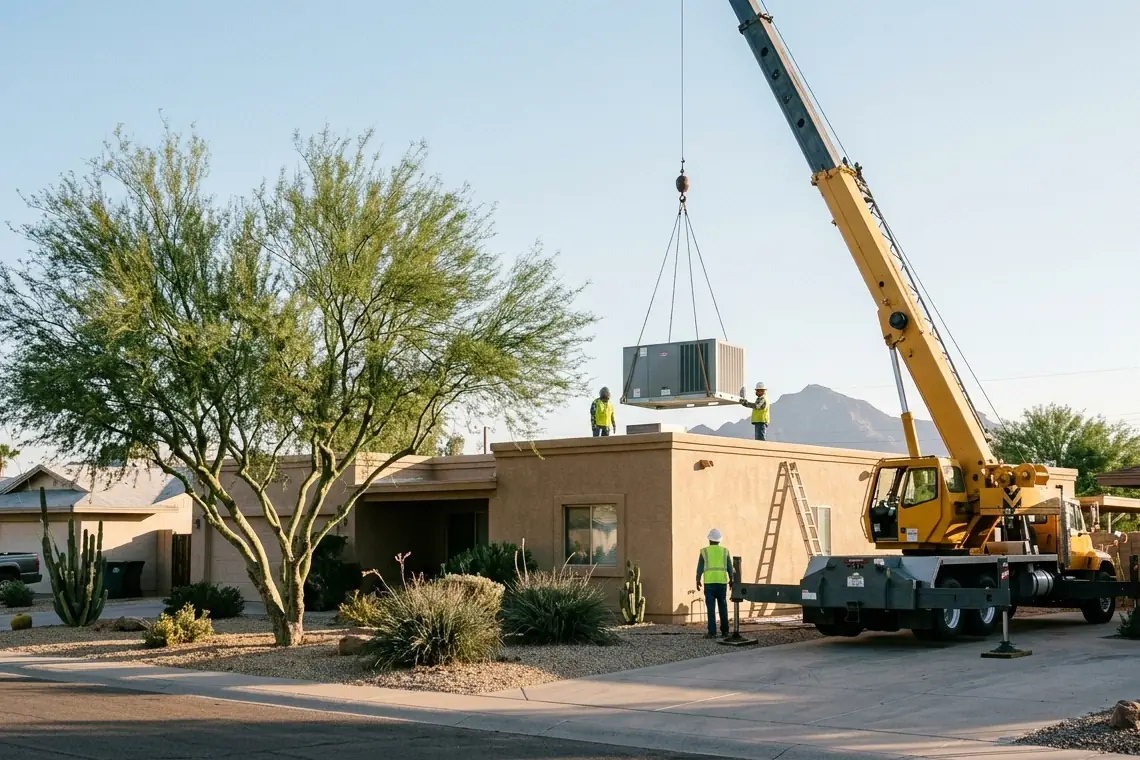
Swapping a package unit is a bigger job than replacing a split system condenser. The whole heating and cooling system sits in one cabinet, so everything changes at once. On a roof, that means scheduling a crane, fitting the new unit to the existing roof curb or building an adapter, sealing the curb against water and air leaks, and reconnecting power and gas. On a ground pad, it means aligning ducts through the wall and leveling the pad.
The payoff can be substantial. Many older Phoenix package units were installed when efficiency ratings were far lower, and they've been baking on roofs for well over a decade. A new unit rated under SEER2 standards for the Southwest region uses less power to move the same heat, and current models use A2L refrigerants such as R-454B or R-32. That matters when the system runs for months through APS or SRP time-of-use rates.
Our replacement visits start with a load calculation and a curb check, not a guess based on the old unit's size. Original package units were sometimes oversized or undersized, and the house may have changed since, with new windows, added insulation or a room addition. We size the new unit to the home as it stands now, then walk you through gas-electric, heat pump and straight cool options with prices.
Phoenix package units work in some of the harshest conditions in the country. A new unit needs enough capacity for 115°F afternoons and July nights in the upper 80s, with a cabinet and coil coating that hold up to sun, dust and monsoon wind. Heat pump package units are a good fit here, since winters are mild and they handle most cold nights efficiently, while gas-electric models suit homes that already have gas service.
Efficiency counts more here than in cooler states because of long run hours and time-of-use rates. Arizona falls under the Southwest region's higher minimum efficiency rules for central AC, so new units start from a better baseline. Choosing a two-stage or variable-speed model can lower costs further and improve comfort. Check current APS or SRP programs before you buy, since rebates change often and may favor certain efficiency levels.
Typical cost
Typical installed residential package unit. A range, not a quote: the real number depends on what the technician finds. Full price guide
Most residential package unit replacements in Phoenix fall in this range, depending on size, efficiency and fuel type. Crane lifts, curb adapters and electrical upgrades are the usual extras. The real number depends on what the technician finds during the load calculation and curb check, and every option is priced before you commit.
| Line item | Typical range |
|---|---|
| Straight cool package unit replacement | $8,465 to $12,875 |
| Gas-electric or heat pump package unit replacement | $9,685 to $16,875 |
| Roof curb adapter fabrication | $685 to $1,465 |
How we handle it
The technician measures the home, notes windows, insulation and orientation, and calculates the cooling load. We also measure the roof curb or pad and ducts to plan how the new unit connects.
You see gas-electric, heat pump and straight cool choices with efficiency levels and prices. We explain how each one fits your home, utility plan and existing gas or electrical service.
For rooftop jobs, we book a crane and plan the lift route, schedule around weather and handle any required permits so the work moves ahead without surprises on install day.
Refrigerant is recovered from the old unit, power and gas are disconnected, and the crane lifts the cabinet off the roof. The curb is inspected and cleaned before the new unit arrives.
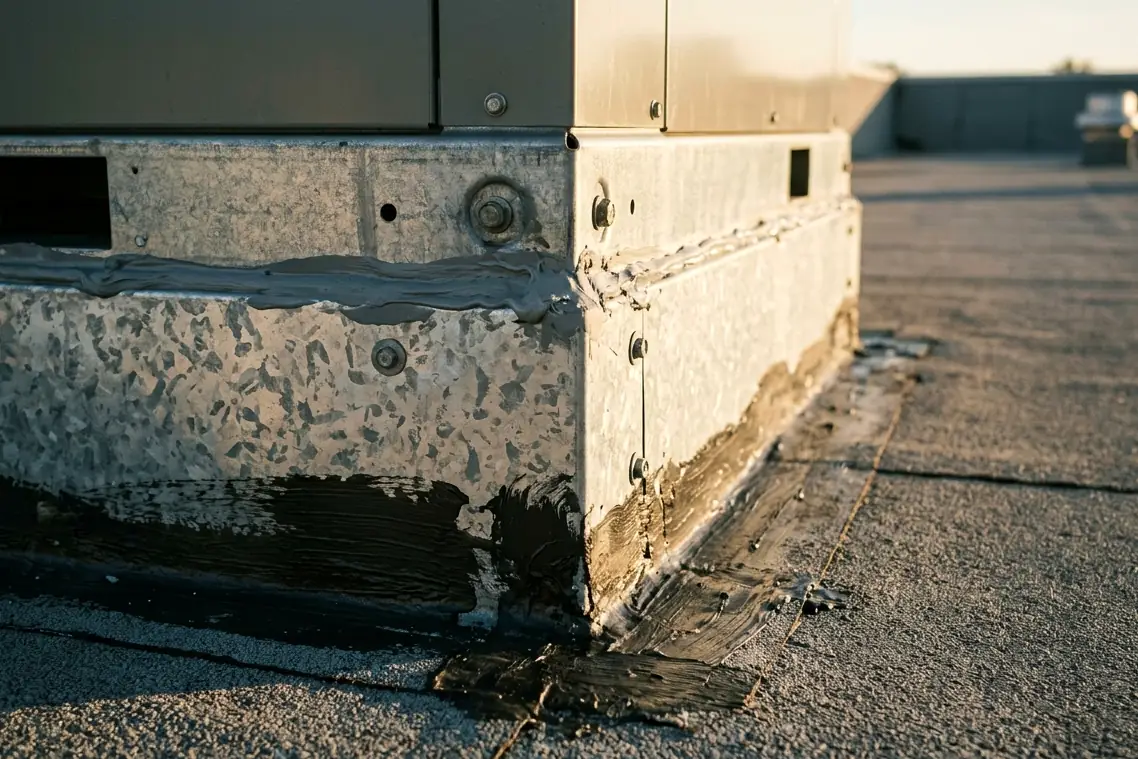
The new unit lands on the curb or an adapter, gets leveled, and the curb is sealed against air and water leaks. Ducts, drain, gas and electrical connections are completed and tested.
We run the system through cooling and heating, check refrigerant charge, temperature split, gas pressure where applicable and airflow, then show you thermostat settings and filter location.
Signs to watch
Package units in Phoenix sun and heat often wear out between 12 and 15 years. Beyond that range, repairs tend to come more often and cost more, and parts become harder to find.
A failed compressor or a cracked heat exchanger on a gas-electric unit is often the tipping point, since either repair can cost a large share of a new package unit's price.
R-22 production ended in 2020, so recharging an older package unit gets more expensive every year. Any significant leak on an R-22 unit is a strong reason to plan replacement.
If your house stays well above 82°F on 110°F afternoons even after repairs and a coil cleaning, the unit may have lost capacity or may have been undersized to begin with.
Rusted base pans, corroded cabinet panels and recurring curb leaks are signs the cabinet itself is deteriorating, and those problems often get worse after each monsoon season.
When APS or SRP bills climb year after year with no change in how you use the house, an aging package unit losing efficiency is a common reason worth checking.
Before you call
Anything beyond these checks involves electrical parts or refrigerant, so call (602) 848-9399 and let a technician take it from there.
We repair and replace Trane, Carrier, Lennox, Goodman, Rheem, Daikin and most other makes found in Valley homes.
Related work
Repairs for rooftop and ground-pad package units, including capacitors, contactors, blower motors, drains and refrigerant leaks, on gas-electric and heat pump models.
See package unit repairSpring and post-monsoon maintenance for rooftop units on homes and businesses: coil cleaning, drain flushing, belt and motor checks and electrical testing.
See rooftop unit serviceAging, R-22 or repeatedly failing systems replaced with properly sized SEER2 equipment, with ducts, drain and electrical checked before install.
See ac replacementLoad-calculated heat pump systems with matched indoor coils, correct heat strip sizing and full commissioning, designed for 115°F summers and mild Valley winters.
See heat pump installationWhere we do this
These communities make up most of the homes we serve. Each link opens the local page with ZIP codes, typical homes and the issues we see there.
Most residential rooftop replacements take one full day, including the crane lift, curb sealing and startup. Jobs that need a custom curb adapter, electrical updates or duct repairs can stretch into a second day. We plan crane timing for the morning when possible, so the new unit is running before the hottest part of the afternoon.
Sometimes that's a good option, especially if your home has an attic with space for an air handler and you want to get equipment off the roof. Converting means new ductwork connections, a line set and possibly roof patching where the old curb was. For many homes, staying with a package unit is simpler and less expensive. We'll price both if you're curious.
Size comes from a load calculation, not the old unit's tonnage. We look at square footage, insulation, windows, orientation and ductwork. Many Phoenix homes have package units that are oversized or undersized for the house as it is today. A properly sized unit cools more evenly, controls humidity better during monsoon season and avoids short cycling.
Yes. New residential AC and heat pump equipment made since 2025 uses A2L refrigerants such as R-454B or R-32. These have lower global warming potential than older refrigerants. Installation follows updated handling practices, and the new unit comes charged from the factory with any adjustments made at startup for your line lengths and conditions.
For many homes, yes. Phoenix winters are mild, with January lows typically in the mid 40s, so heat pumps handle most heating efficiently with electric heat strips as backup on the occasional cold night. If your home already has gas and you prefer furnace heat, a gas-electric package unit works well too. We'll compare running costs for your situation.
Often it does, since we inspect, clean and reseal the curb when the old unit comes off. If the leak comes from damaged roofing material around the curb, we'll point it out so a roofer can repair it while the unit is off. Fixing the roof seal during the swap is easier than trying to work around a new unit later.
A real person answers (602) 848-9399 every hour of every day, and we will tell you plainly what the next step is.