Capacitor and Contactor Replacement
The most common Valley summer failure: weak capacitors and pitted contactors tested with a meter and replaced from stock on the truck.
See capacitors & contactorsAc parts and repairs
The outdoor fan carries heat out of your AC. When it slows, squeals or stops, pressure rises fast and the compressor overheats. We repair or replace the motor before that damage spreads.
At a glance
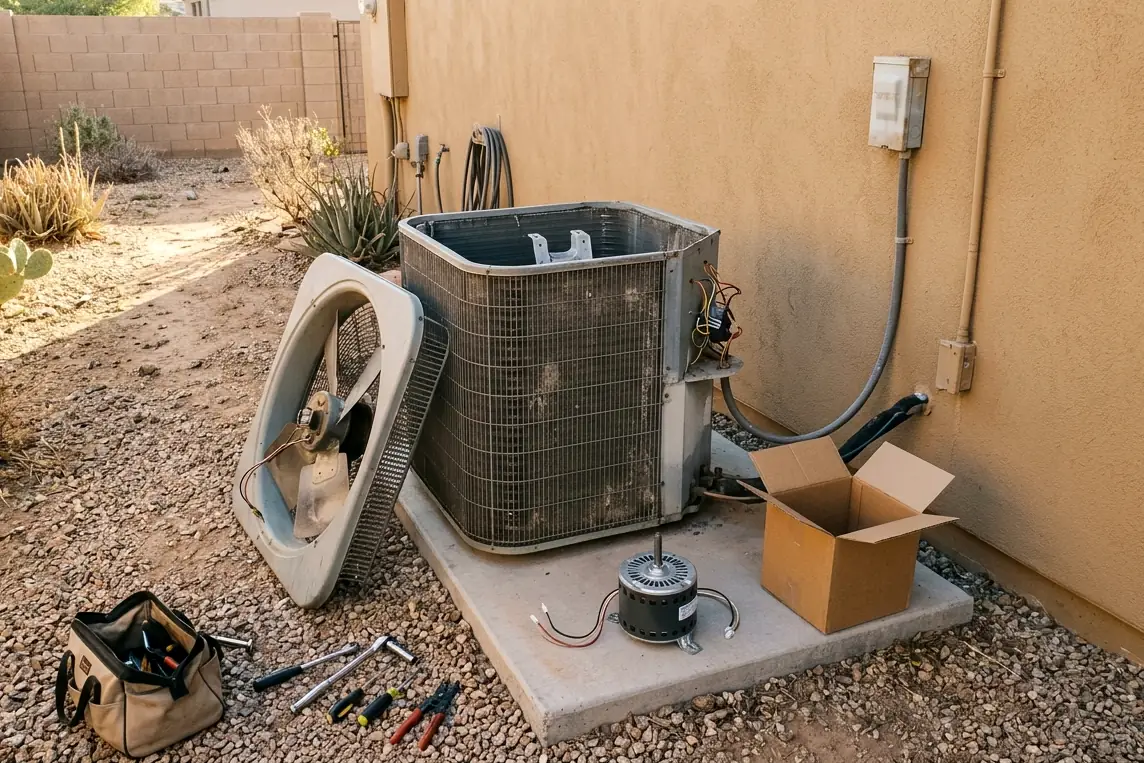
Condenser fan motor repair fixes or replaces the motor that spins the fan on top of your outdoor AC unit. That fan pulls air through the condenser coil to release heat from the refrigerant. In Phoenix, motors wear out from heat, dust and long run times. Signs include a fan that won't spin, spins slowly, makes grinding noises or stops after running a while. Without a working fan, the compressor overheats quickly.
The condenser fan sits on top of your outdoor unit, pulling air through the coil and pushing it out the top. That airflow carries away the heat your system removed from inside your home. If the fan stops or slows, heat builds inside the coil and refrigerant pressures climb. The compressor then runs hotter and can shut down on its internal overload. Left unrepaired, a failed fan motor can damage the compressor, turning a moderate repair into a much more expensive one.
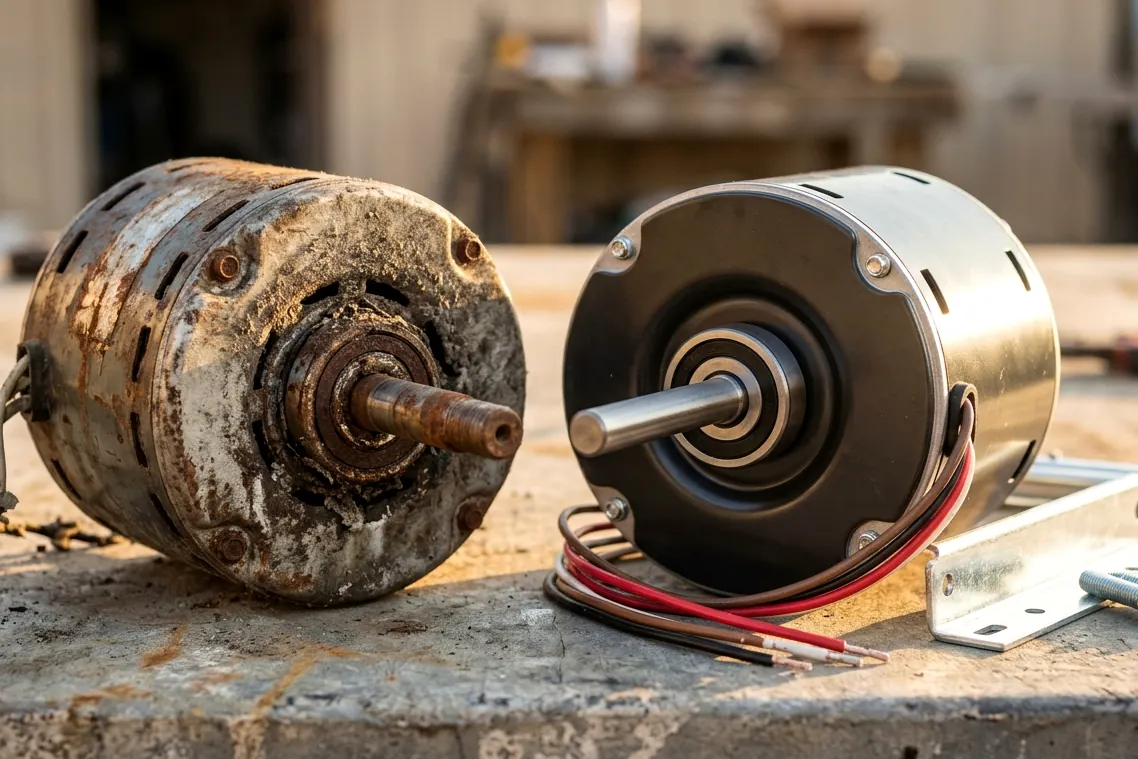
Fan motors fail in a few ways. Bearings wear out from heat and dust, causing grinding or squealing before the motor seizes. Windings can overheat and fail, especially when a weak capacitor makes the motor struggle. Some motors have internal thermal protection that shuts them off when they get too hot, then restarts them after cooling, causing intermittent operation. Fan blades can also crack, bend or loosen on the shaft, causing vibration that damages the motor and the unit's top panel.
Repair starts with testing. We check the capacitor first, since a weak capacitor often looks like a failed motor. Then we measure the motor's amp draw and winding resistance, check bearing condition by spinning the blade with power off, and inspect the blade for damage. If the motor needs replacement, we match horsepower, speed, voltage and rotation direction to the original, and replace the capacitor if needed. Our trucks carry common motor sizes, so most repairs happen the same day.
Signs to watch
If the compressor hums but the fan on top stays still, the motor or its capacitor may have failed. Shut off the system quickly to keep the compressor from overheating.
Worn bearings make grinding, squealing or rumbling noises as the motor spins. These sounds often get worse in hot weather and usually come before the motor seizes.
A fan that turns slower than usual, or starts slowly, may have a weak capacitor or failing motor windings, reducing airflow across the coil and raising pressures.
A fan that runs for a while and then stops, only to restart later, may be overheating and tripping its internal thermal protection due to wear or electrical problems.
A bent, cracked or loose fan blade can cause rattling and vibration. That stress wears the motor bearings and can damage the unit's top panel and wiring.
A burning odor near the outdoor unit can signal overheated motor windings or wiring. Turn the system off at the breaker and call for service right away.
Before you call
Anything beyond these checks involves electrical parts or refrigerant, so call (602) 848-9399 and let a technician take it from there.
How we handle it
We check the fan capacitor's microfarad rating, since a weak capacitor can make a healthy motor appear to fail. Replacing a capacitor costs much less than a motor.
With power off, we spin the blade by hand to check for rough or tight bearings, then measure winding resistance and check for shorts to ground.
If the motor runs, we measure its amp draw and compare it with the rated value. High amps indicate a struggling motor that's likely to fail soon.
We check the fan blade for cracks, bends and loose set screws, and inspect the motor mount and top panel for damage caused by vibration.
A replacement motor matches the original's horsepower, speed, voltage and rotation direction. We install a new capacitor if needed and secure the blade at the correct height.
After replacement, we run the system, verify the fan's speed and amp draw, check refrigerant pressures and confirm the unit is rejecting heat properly again.
Typical cost
Typical fan motor replacement, parts and labor. A range, not a quote: the real number depends on what the technician finds. Full price guide
A universal fan motor replacement on a standard split system sits near the low end. Variable-speed motors, brand-specific parts, rooftop package units and replacements that include a new blade and capacitor push the cost higher. These are typical Phoenix ranges, not quotes, and the real number depends on what the technician finds when testing.
| Line item | Typical range |
|---|---|
| Condenser fan motor replacement | $285 to $615 |
| Variable-speed fan motor replacement | $465 to $745 |
| Condenser fan blade replacement | $125 to $265 |
An outdoor fan motor in Phoenix works in some of the harshest conditions in the country. It sits on top of the unit, often in direct sun, moving air that can exceed 110 degrees across a hot coil. Long run times during summer mean the motor may operate for many hours without rest. Heat breaks down bearing lubrication and winding insulation, which is why fan motors are among the most common summer repairs in the Valley, often failing alongside or soon after their capacitors.
Dust and storms add more wear. Monsoon dust storms push fine grit into motor bearings, and debris blown into the unit can strike fan blades. Power surges can damage motor windings or the capacitor that helps them start. A dirty condenser coil also forces the motor to work harder to move air. During repairs, we check the coil, capacitor and blade condition, since replacing only the motor without addressing these factors can lead to another failure.
We repair and replace Trane, Carrier, Lennox, Goodman, Rheem, Daikin and most other makes found in Valley homes.
Related work
The most common Valley summer failure: weak capacitors and pitted contactors tested with a meter and replaced from stock on the truck.
See capacitors & contactorsWarm air, odd noises or a system that never shuts off. We test capacitors, refrigerant, airflow and controls, then fix the real cause.
See ac repairInside-out rinsing and coil cleaner remove packed monsoon dust from outdoor coils, lowering pressure, power draw and compressor heat.
See condenser coil cleaningConfirmed compressor failures replaced with matched parts, flushed lines and a fresh charge, or an honest comparison with a new system.
See compressor replacementWhere we do this
These communities make up most of the homes we serve. Each link opens the local page with ZIP codes, typical homes and the issues we see there.
The most common causes are a failed capacitor, a failed fan motor, a bad contactor or debris blocking the blade. In Phoenix heat, capacitors and motors wear out quickly. If the outdoor unit hums but the fan stays still, turn the system off to protect the compressor and call for testing and repair.
No. Without the fan, heat can't escape the condenser coil and refrigerant pressures rise quickly. The compressor overheats and can shut down or be damaged. Turn the system off at the thermostat and call for service. Running it without the fan risks turning a fan motor repair into a compressor replacement.
Most fan motor replacements take about one to two hours if a compatible motor is on the truck. Brand-specific or variable-speed motors may need ordering, which can add a day or two. In summer, we carry many common motor sizes to complete repairs on the first visit whenever possible.
Both can cause a fan that won't start. A technician tests the capacitor's microfarad rating and the motor's windings and bearings. If the capacitor is weak and the motor tests normal, replacing the capacitor fixes the problem for less. We always test both before recommending a motor replacement.
Phoenix heat, long run times, monsoon dust and power surges all wear fan motors faster. Bearings lose lubrication in extreme heat, and dust can work into them. Dirty coils make motors work harder, and surges can damage windings. Regular tune-ups help spot wear early, before the motor fails during peak summer.
If the blade is cracked, bent, rusted or doesn't sit securely on the shaft, replacing it with the motor is a good idea. A damaged blade causes vibration that shortens motor life. If the blade is in good condition, it can usually be reused. We inspect it during every fan motor replacement.
A real person answers (602) 848-9399 every hour of every day, and we will tell you plainly what the next step is.