Evaporative Cooler to AC Conversion
Swamp cooler removed, roof opening sealed and refrigerated air installed with properly sized ducts, electrical and drain for year-round comfort.
See cooler to ac conversionAir conditioning
A working evaporative cooler is a cheap, effective way to cool a Phoenix home through the dry months. When yours blows warm, drips through the ceiling or smells stale, we get it wet, moving and fresh again.
At a glance
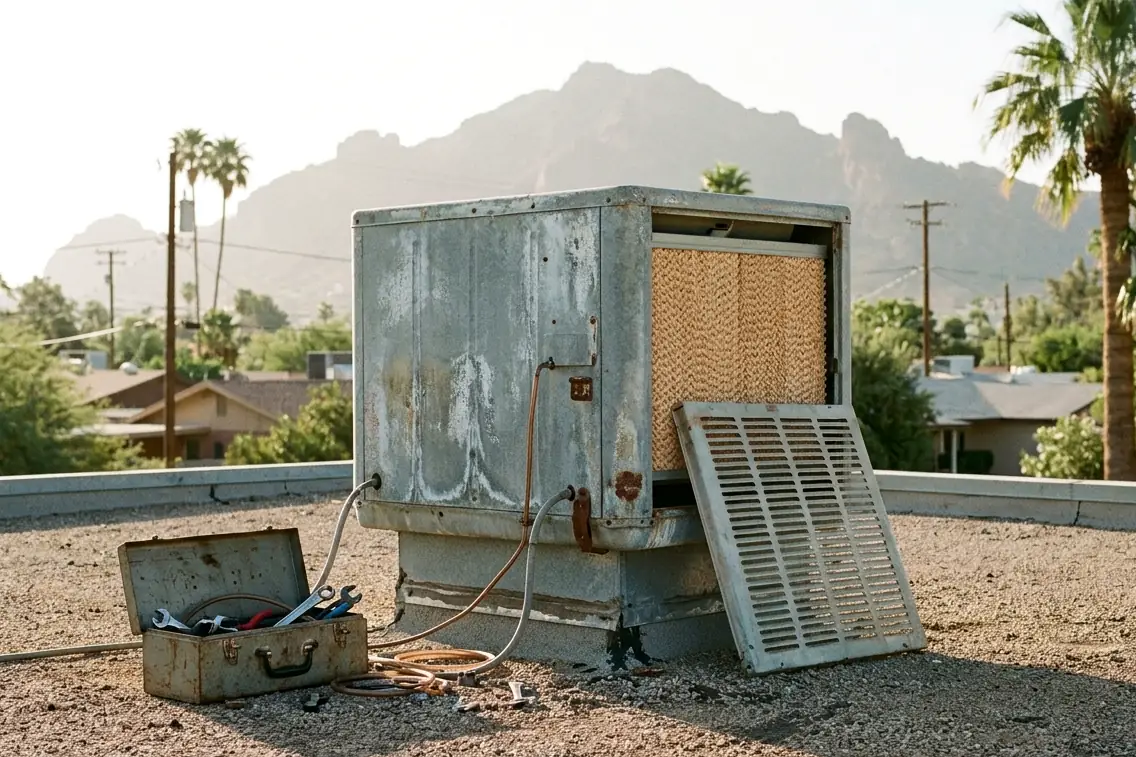
Evaporative cooler repair fixes swamp coolers that blow warm or stale air, leak, overflow or make noise. In Phoenix, coolers work best from spring through early summer, before monsoon humidity arrives. Common repairs include replacing worn pads, dead water pumps, stuck float valves, cracked water lines, slipping belts and failing blower motors. Hard water scale and dust clog distribution lines and pads quickly, so many coolers here need repairs after just a season or two.
Evaporative coolers have few parts, but each one matters. The pump lifts water from the reservoir to the distribution lines, which wet the pads evenly. The blower pulls hot, dry air through those wet pads, where evaporation drops its temperature before it enters the house. If the pump fails, pads go dry and the cooler blows hot air. If the float valve sticks, the pan overflows or runs empty. A loose belt or a weak motor means little air moves, no matter how wet the pads are.
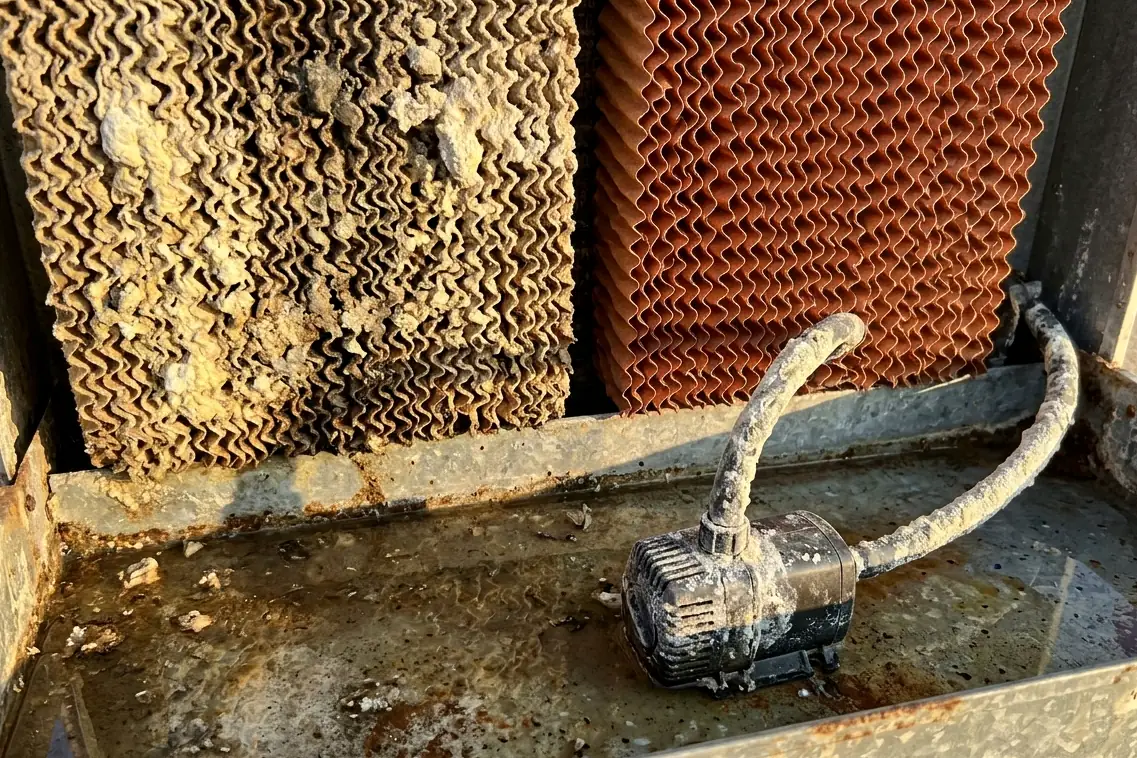
Phoenix water makes repairs more frequent. Hard water leaves mineral scale on pads, in distribution tubes and around the float valve, and that scale blocks water flow and traps odors. Dust storms add fine silt to the reservoir, which wears pump impellers and coats pads. A cooler that ran well last May can come out of winter with crusted pads, a seized pump and a cracked supply line. Our repairs address the failed part and the buildup causing the trouble.
Many older Phoenix neighborhoods still rely on rooftop down-draft coolers, sometimes alongside refrigerated air. Others use side-draft units on the ground or a wall. We repair both styles, including Champion, Phoenix Manufacturing and other common makes found across the Valley. Rooftop work takes care in summer heat, so we schedule early in the day when possible. When a cooler is badly rusted or costs more to fix than it's worth, we'll tell you plainly and explain the options.
Signs to watch
If air from the vents feels barely cooler than outside, the pads probably aren't getting wet. A failed pump, clogged distribution line or empty reservoir is the usual cause.
Stale water, algae on old pads or a dead float leaving water stagnant creates odors that blow straight into the home. Fresh pads and a cleaned pan usually fix it.
Overflowing pans, a stuck float valve or a rusted-through cooler bottom can send water down the duct and into the ceiling. Shut the water off and call us.
A worn or loose belt squeals and slaps, and dry motor or blower bearings screech. Ignoring it can let the belt snap or the motor overheat during a hot afternoon.
If the cooler runs but little air comes out, check for a slipping belt, a dirty blower wheel, clogged pads or a motor running on the wrong speed.
Water streaking down the roof or wall points to a leaking supply line, a cracked pan or a float valve that won't shut off the flow.
Before you call
Anything beyond these checks involves electrical parts or refrigerant, so call (602) 848-9399 and let a technician take it from there.
How we handle it
We confirm the water line valve is open, check the supply tubing for cracks or kinks, and then see whether the float valve fills the reservoir to the correct level.
The pump gets checked for power and flow, and distribution tubes and spider fittings are cleared of scale so water reaches every pad evenly from top to bottom.
We look at pad condition, mineral buildup and fit, and check the reservoir pan for rust, cracks and sediment that can cause leaks or odors.
Belt tension and wear, motor amp draw and speed settings, pulley alignment and blower bearings are inspected, since airflow problems often trace back to these parts.
You'll get a clear list of what failed and what it costs, along with an honest view on whether the cooler is worth repairing based on its overall condition.
After repairs, we run the cooler until pads saturate, confirm cool air at the vents, check for leaks and make sure the bleed-off line is working properly.
Typical cost
Typical swamp cooler repair visit. A range, not a quote: the real number depends on what the technician finds. Full price guide
Pad replacement, belt changes and float valve fixes sit near the low end. Blower motor replacement, pan repairs and replacing a seized pump plus lines push costs higher. Rooftop units also take more labor than side-draft models. These are typical Phoenix ranges, not quotes, and the real number depends on what the technician finds once the cooler is opened up.
| Line item | Typical range |
|---|---|
| Evaporative cooler pad replacement | $115 to $285 |
| Cooler pump and line replacement | $135 to $295 |
| Cooler blower motor replacement | $285 to $645 |
Swamp coolers are at their best in Phoenix from roughly March through mid June, when the air is hot and very dry. Evaporation can drop incoming air temperature dramatically in those conditions, often enough to keep a home comfortable for a fraction of refrigerated AC operating cost. Once monsoon season starts in mid June and humidity rises, evaporation slows and coolers lose much of their punch. Many homeowners switch to refrigerated air for July and August, then return to the cooler in early fall.
That seasonal use pattern is hard on equipment. Coolers sit wet all spring, then sit idle and dusty during monsoon or winter. Pads dry, crack and scale over. Pumps seize after months without water, and float valves stick in place. Monsoon winds blow debris into rooftop units, and below-32 winter nights, though rare, can crack exposed water lines if a cooler isn't drained. Spring startup and fall winterizing visits head off most of these problems, and we handle both.
We repair and replace Trane, Carrier, Lennox, Goodman, Rheem, Daikin and most other makes found in Valley homes.
Related work
Swamp cooler removed, roof opening sealed and refrigerated air installed with properly sized ducts, electrical and drain for year-round comfort.
See cooler to ac conversionWarm air, odd noises or a system that never shuts off. We test capacitors, refrigerant, airflow and controls, then fix the real cause.
See ac repairNew central air for additions, casitas, garages and homes without ducted cooling, sized by load calculation for Phoenix summer heat.
See ac installationBlown-in insulation and attic air sealing that slow the flow of attic heat into your rooms, so the AC runs shorter cycles on Phoenix afternoons.
See attic insulationWhere we do this
These communities make up most of the homes we serve. Each link opens the local page with ZIP codes, typical homes and the issues we see there.
Warm air usually means the pads aren't staying wet. The pump may have failed, the distribution lines may be clogged with scale, or the reservoir may be empty because of a stuck float valve. High humidity during monsoon season can also reduce cooling even when the cooler works perfectly. Our technician will test each part to find the cause.
With Phoenix hard water and dust, many households replace pads every season, and nearly all need replacement at least every two seasons. Crusted, scaled or torn pads don't hold water evenly, reduce cooling and can trap odors. If your pads look white and crunchy or have holes, replacing them is usually the first step to better cooling.
If the cooler is in decent shape and you use it mainly in spring and early summer, repairs are often worth it because coolers are cheap to run. If the pan is rusted through, the cabinet is failing, or you want dependable cooling during monsoon humidity, converting to refrigerated air may be the better investment. We'll explain both options honestly.
Yes. Rooftop coolers sit directly above a duct opening, so an overflowing pan or rusted bottom can send water through the duct and into the ceiling. Water can also run under roofing and stain walls. If you see drips or stains below the cooler, shut off its water supply and call us before the damage spreads.
Yes. We repair rooftop down-draft coolers, the most common style on older Phoenix homes, as well as side-draft coolers mounted on the ground or a wall. Parts like pumps, float valves, belts and pads differ between models, and our trucks carry common sizes. Less common parts can be ordered quickly if needed.
Yes, in most cases. Winterizing means shutting off and draining the water, disconnecting or covering the cooler and closing the damper or vent to the home. That keeps warm indoor air from escaping all winter and protects water lines on the rare nights that dip below 32 degrees. It also slows rust in the pan. We handle both winterizing and spring startup visits.
A real person answers (602) 848-9399 every hour of every day, and we will tell you plainly what the next step is.