AC Tune-Up
Capacitor tests, coil cleaning, drain flushing and refrigerant readings that catch weak parts in spring, before Phoenix summer heat finds them.
See ac tune-upCommercial and rooftop
An HVAC inspection gives you a clear picture of a system's condition, age and likely costs ahead. It's useful before buying a home, before signing a commercial lease, or when you're unsure whether to repair or replace.
At a glance
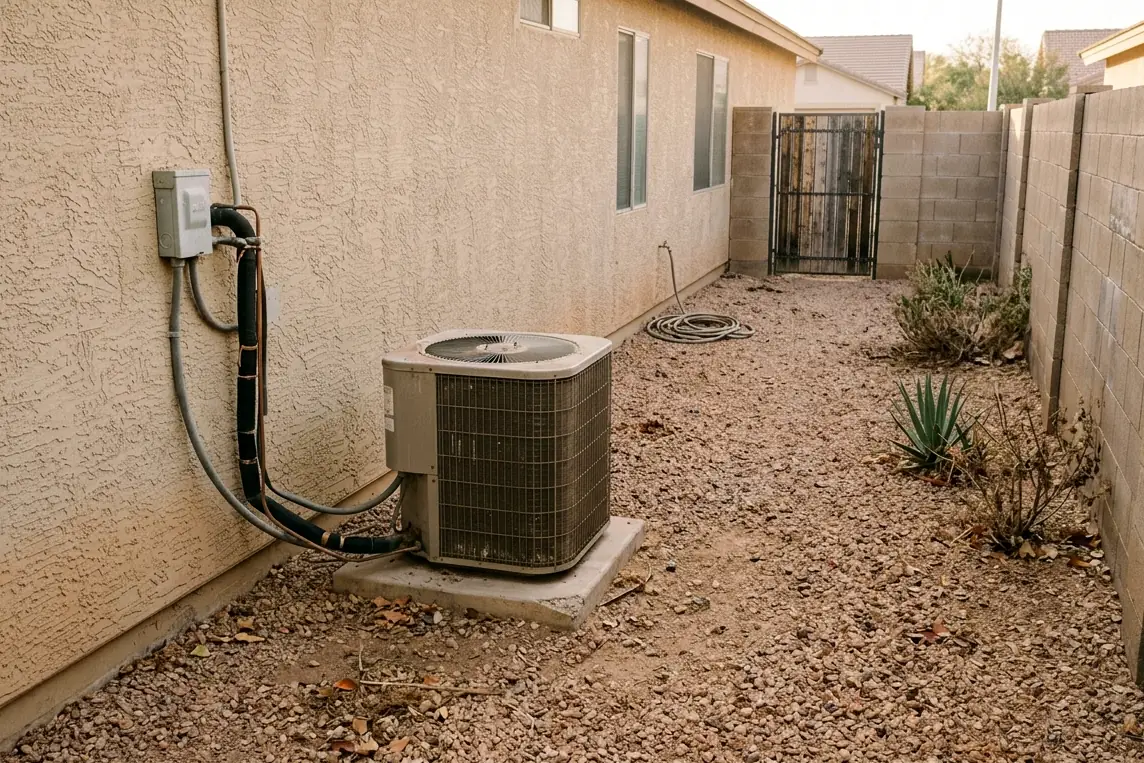
An HVAC inspection is a detailed evaluation of a heating and cooling system's condition, with a written report. A technician checks equipment age, refrigerant type, electrical parts, airflow, temperature split, ductwork, drainage and safety items such as gas connections and heat exchangers. In Phoenix, it's most useful before buying a home, before leasing a commercial space, after a major storm or when deciding whether an older system is worth repairing.
A general home inspection usually spends a few minutes on the AC: it turns on, air comes out, and the report notes the approximate age. That isn't enough to tell you whether a system will make it through next July. An HVAC inspection goes deeper, measuring how well the equipment actually performs, checking for leaks and worn parts and looking at the ducts that carry air through a hot Phoenix attic.
Buyers use our inspections to understand what they're taking on. A 14-year-old system on R-22 refrigerant with a slow leak and crushed attic ducts is a very different purchase from a 6-year-old heat pump with sealed ducts. Sellers use them to get ahead of buyer questions. Commercial tenants use them before signing a lease that makes them responsible for rooftop units they've never seen up close.
The report is written for people who don't work in HVAC. It lists each piece of equipment with its age, refrigerant type and condition, the readings we took, problems we found and a realistic sense of remaining life. Repairs are ranked by urgency with typical cost ranges, so you can negotiate, budget or plan replacement with real information instead of guesses.
Signs to watch
An inspection during the option period shows equipment age, refrigerant type, duct condition and likely repairs, giving you facts to negotiate with before closing on the house.
Many leases make tenants responsible for rooftop units. Knowing their age and condition before signing helps you negotiate repairs, replacement or rent terms with the landlord.
When an older system needs a major repair, an inspection looks at the whole system so you can decide based on overall condition, not just the part that failed.
Haboobs, power surges and roofers working near equipment can cause damage that isn't obvious. An inspection checks coils, electrical parts, curbs and ducts afterward.
If you've moved in and know nothing about the system's history, an inspection creates a baseline record of age, condition and maintenance needs for future planning.
Sellers who inspect first can fix small issues or document the system's condition, which helps avoid surprise repair requests late in the sale process.
Valley systems wear differently from those in milder climates. Condensers sit in direct sun, air handlers and ducts often live in attics that reach roughly 140 to 160°F, and many older homes have roof-mounted package units. Long summer run times wear capacitors, contactors and motors, and dust from monsoon storms packs coils. An inspection here pays close attention to those heat-related weak points and to duct condition in the attic.
Refrigerant type matters a lot in Phoenix home sales. Systems on R-22, which stopped production in 2020, cost much more to recharge, so a leak can mean replacement. We also note whether equipment meets current SEER2 efficiency levels, which affects APS or SRP bills on long summer afternoons. For gas furnaces and gas-electric package units, we check the heat exchanger and gas connections, which matter even in mild winters.
How we handle it
The technician documents every unit's make, model, serial number, age, refrigerant type and tonnage, along with thermostat type and the location of each piece of equipment.
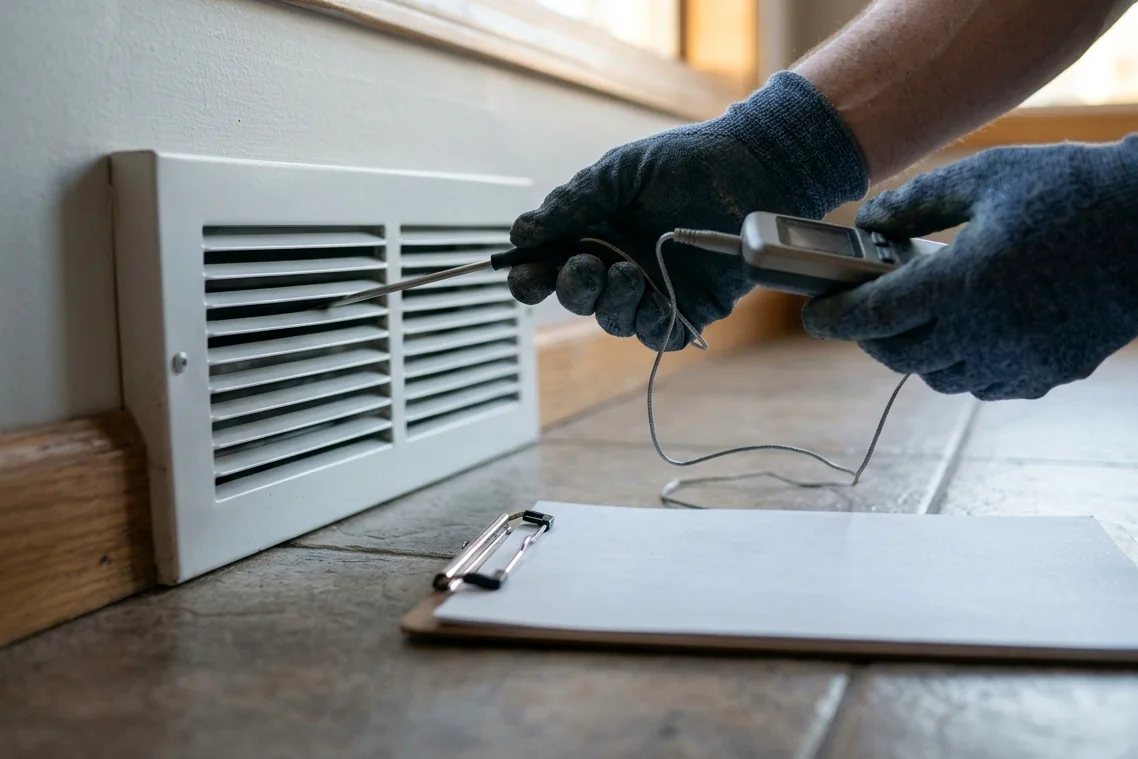
With the system running, we measure temperature split, refrigerant pressures and amperage, and test heating mode on heat pumps, heat strips or furnaces depending on the season.
Capacitors, contactors, wiring, disconnects and breakers are checked. On gas equipment, we inspect burners, venting, gas connections and the heat exchanger for cracks or corrosion.
Condenser and evaporator coils are checked for dirt, corrosion and leaks. Drain lines, pans and safety switches are tested so overflow risks are noted in the report.
We inspect accessible ducts for disconnections, crushing, torn insulation and leaks, and check airflow at supply registers to find rooms that aren't getting their share of air.
You receive a clear report with photos, readings, findings ranked by urgency and typical cost ranges for repairs, plus an estimate of remaining useful life for each unit.
Before you call
Anything beyond these checks involves electrical parts or refrigerant, so call (602) 848-9399 and let a technician take it from there.
Typical cost
Typical inspection and written report. A range, not a quote: the real number depends on what the technician finds. Full price guide
A single-system home inspection sits near the low end of this range, while homes with two systems, package units on the roof or commercial spaces with several units run higher. Duct leakage testing is optional and priced separately. The real number depends on what the technician needs to evaluate on site, and you hear the price when you schedule.
| Line item | Typical range |
|---|---|
| Residential HVAC inspection, single system | $165 to $285 |
| Residential HVAC inspection, each added system | $95 to $165 |
| Commercial HVAC inspection, per rooftop unit | $185 to $445 |
We repair and replace Trane, Carrier, Lennox, Goodman, Rheem, Daikin and most other makes found in Valley homes.
Related work
Capacitor tests, coil cleaning, drain flushing and refrigerant readings that catch weak parts in spring, before Phoenix summer heat finds them.
See ac tune-upLeaks at plenums, takeoffs, boots and returns sealed with mastic and proper fasteners, so cooling stays in the ducts and dusty attic air stays out.
See duct sealingQuarterly or twice-yearly maintenance programs for business HVAC, with filter, coil, belt and drain service plus written reports by unit for managers.
See commercial maintenanceAging, R-22 or repeatedly failing systems replaced with properly sized SEER2 equipment, with ducts, drain and electrical checked before install.
See ac replacementWhere we do this
These communities make up most of the homes we serve. Each link opens the local page with ZIP codes, typical homes and the issues we see there.
Yes. A general home inspection checks whether the system turns on and notes approximate age, but it usually doesn't measure refrigerant performance, test electrical parts or inspect ducts in detail. An HVAC inspection focuses only on heating and cooling, with readings and photos. Many Phoenix buyers schedule both during the option period for a fuller picture.
A single-system home usually takes about one to two hours, including attic and roof checks. Homes with two systems or rooftop package units take longer, and commercial inspections depend on the number of units. The written report typically follows the same day or the next business day, and we can prioritize faster delivery for real estate deadlines when possible.
It can give a realistic estimate based on age, condition, refrigerant type, repair history and performance readings. No one can predict an exact failure date, but a 15-year-old system with weak readings and an R-22 leak is very different from a well-maintained 7-year-old unit. The report explains the reasoning so you can plan.
Summer is a great time, because the system is under real load and problems show up clearly. A unit that struggles to hold 80°F on a 110°F afternoon tells you a lot. In winter, we still test cooling when it's safe to do so and focus more on heating, electrical and duct checks to give you a complete picture.
Yes, when the home has a gas furnace or a gas-electric package unit. We inspect burners, flame quality, venting, gas connections and the heat exchanger for visible cracks or corrosion. If we find a safety concern, such as a cracked heat exchanger or a gas odor, we tell you immediately and recommend the system stay off until it's repaired.
Yes, and it's a smart step when the lease makes you responsible for HVAC. We inspect each rooftop unit or split system serving the suite, record age and condition and note needed repairs. That report gives you something concrete to negotiate with the landlord, such as repairs before move-in or replacement of an aging unit.
A real person answers (602) 848-9399 every hour of every day, and we will tell you plainly what the next step is.