Duct Sealing
Leaks at plenums, takeoffs, boots and returns sealed with mastic and proper fasteners, so cooling stays in the ducts and dusty attic air stays out.
See duct sealingDucts, air and attic
Phoenix dust finds its way into every duct run. We clean supply and return ducts under negative pressure, show you camera footage before and after, and point out any leaks that keep pulling attic dust back in.
At a glance
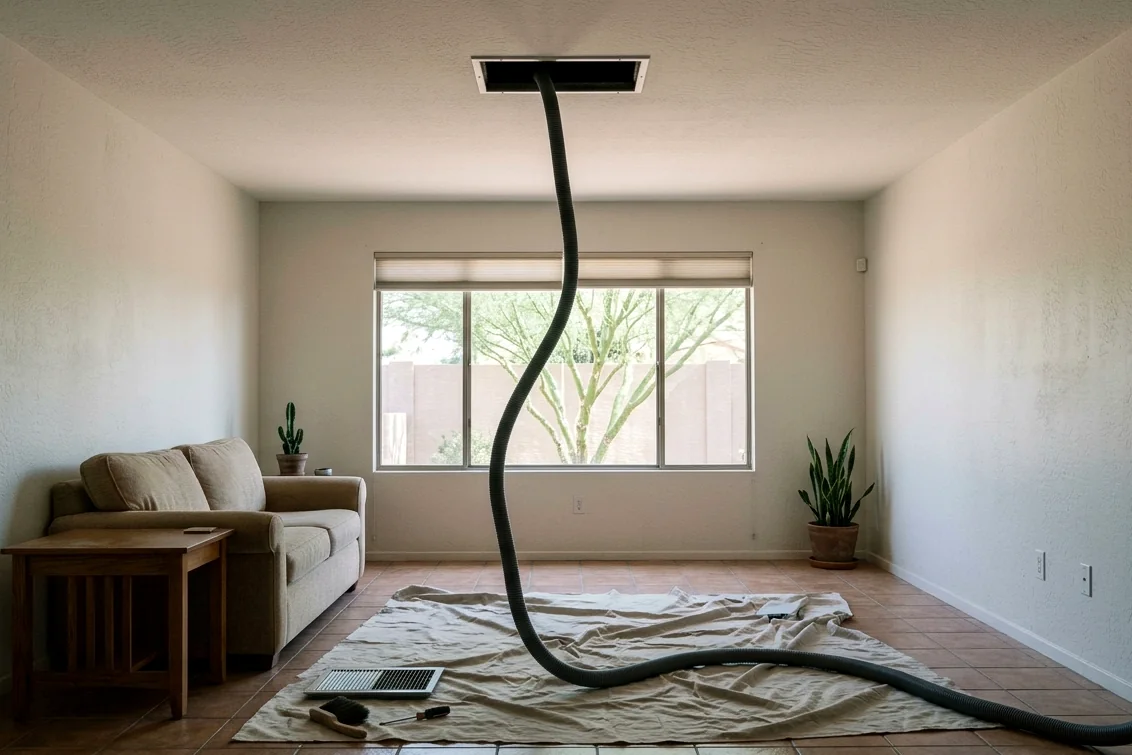
Air duct cleaning removes the dust, lint, pet hair and debris that settle inside supply and return ducts. A technician seals off the registers, connects a high-powered vacuum to the trunk line and loosens buildup with brushes and air whips. In Phoenix, it makes sense after a remodel, after moving into a home with unknown history, when vents puff dust at startup, or when filters clog much faster than 30 to 45 days.
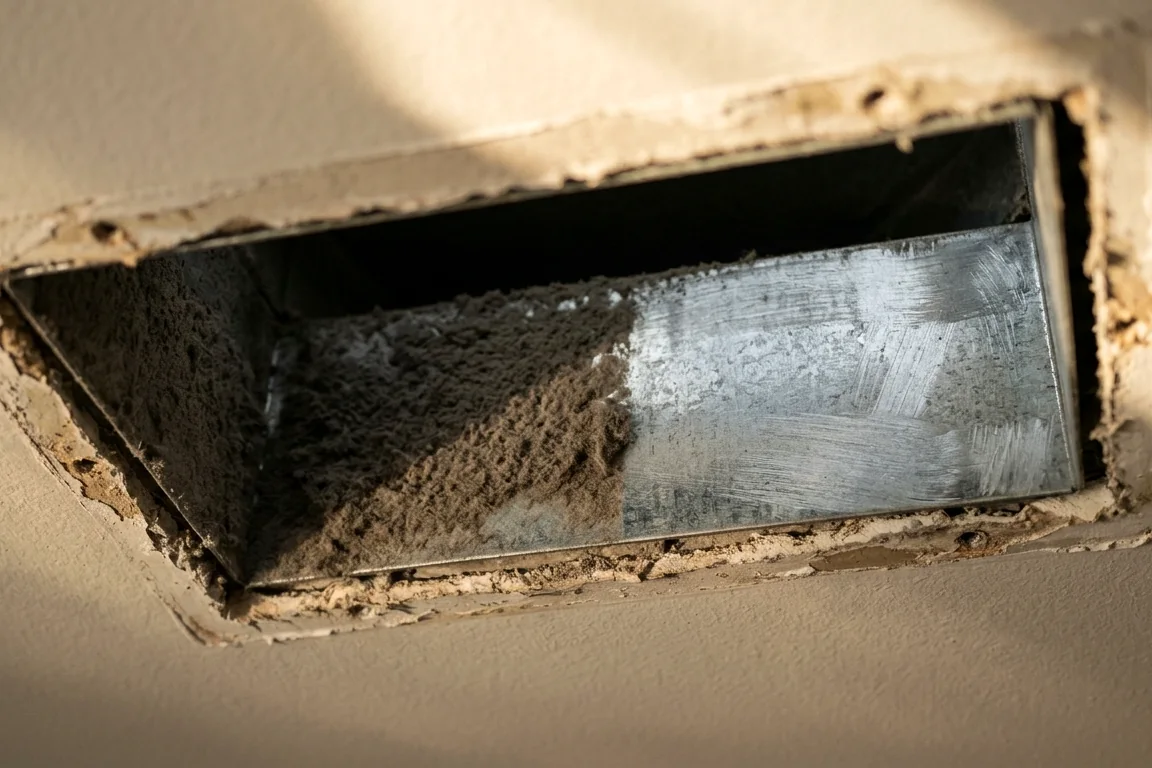
Every haboob that rolls across the Valley leaves a fine layer of dust on patios, cars and window sills. Some of that same dust ends up inside your ductwork, carried in through return grilles, leaky attic joints and gaps around the air handler. Over a few summers it builds into a gray mat along the bottom of the ducts, especially near the return. When the blower kicks on, loose particles break away and drift back into the rooms you just dusted.
Our duct cleaning visits start with a camera. Before anything gets vacuumed, the technician runs a small inspection camera into a few supply runs and the main return so you can see the actual condition on a screen. Some homes truly need a full cleaning. Others only have a dirty return box and a clogged filter, and we'll say so. That first look keeps you from paying for work your ducts don't need.
When cleaning is the right call, we seal every register, hook a negative-pressure vacuum to the trunk, and work each branch with rotating brushes and compressed-air whips. The blower wheel and return plenum get attention too, because a clean duct feeding a caked blower just moves the problem. At the end you get after-footage, a cleaner filter slot and notes on any leaks or crushed flex we found along the way.
Signs to watch
If you see a small cloud or feel grit on your hand when the system first kicks on, loose debris is sitting in the supply runs and getting pushed out with each cycle.
A 1-inch filter that turns dark gray in two or three weeks, even outside monsoon season, often points to heavy buildup on the return side that keeps feeding it.
Drywall sanding, tile cutting and stucco repair throw fine powder that settles in open registers. Even with the system off, much of it ends up inside the nearest duct runs.
A damp, stale odor at startup can come from debris mixed with condensation near the coil or return. Cleaning helps, and we also check the drain pan and coil for the source.
Homes with dogs or cats build up hair and dander along the return path. Thick clumps restrict airflow, which makes the blower work harder and the house cool more slowly.
When you buy a house, you inherit years of someone else's dust, smoke residue and pet dander. A camera look and a cleaning give you a known starting point for your family.
Most Valley homes run ductwork through the attic, where summer air reaches roughly 140 to 160°F. That heat dries out tape and mastic on older joints, and the gaps that open up let the return side pull in attic dust and insulation fibers. Monsoon storms add their own load from June 15 to September 30, pushing fine desert silt through every crack. A house here can gather duct debris noticeably faster than a home in a milder, wetter climate.
Long run times make it worse. With July nights often staying in the upper 80s, a central system may cycle almost nonstop for weeks, moving the same dusty air past the same surfaces. That constant airflow packs debris into elbows and the bottoms of trunk lines. It's also why we pair cleaning with a quick leak check: cleaning ducts that keep sucking in attic air buys you a few months, while sealing the leak keeps them clean much longer.
How we handle it
The technician inspects several supply runs and the return with a small camera, shows you the footage and confirms whether a full cleaning is actually worth doing in your home.
Drop cloths go down at each work area, and every supply and return register gets covered so the vacuum pulls debris toward the machine instead of blowing it into your rooms.
A high-volume vacuum attaches to the main trunk line near the air handler, putting the whole duct system under suction before any brushing begins on the individual branch runs.
Rotating brushes and compressed-air whips travel through each supply line, knocking loose packed dust, drywall powder and pet hair so the suction can carry all of it out of the house.
The blower wheel, return plenum and filter slot get brushed and vacuumed. A clean duct system attached to a caked blower wheel would get dirty again quickly, so these parts are part of every job.
You see the same runs on camera after cleaning, along with notes on disconnected flex, crushed sections or leaky joints we spotted. Fixing those keeps the ducts clean far longer.
Before you call
Anything beyond these checks involves electrical parts or refrigerant, so call (602) 848-9399 and let a technician take it from there.
Typical cost
Typical single-system home. A range, not a quote: the real number depends on what the technician finds. Full price guide
Most single-system Phoenix homes fall in this range for a full supply and return cleaning. Homes with two systems, long attic runs or heavy construction dust land higher. The real number depends on what the technician finds on camera, and you hear the price before any vacuum is connected to your ducts.
| Line item | Typical range |
|---|---|
| Air duct cleaning, single system | $395 to $865 |
| Air duct cleaning, each added system | $245 to $485 |
| Duct sanitizing add-on | $135 to $265 |
We repair and replace Trane, Carrier, Lennox, Goodman, Rheem, Daikin and most other makes found in Valley homes.
Related work
Leaks at plenums, takeoffs, boots and returns sealed with mastic and proper fasteners, so cooling stays in the ducts and dusty attic air stays out.
See duct sealingTorn flex, crushed runs, separated joints and failed plenum connections repaired in Phoenix attics, with airflow measured at the register before and after.
See ductwork repairDeep 4 to 5 inch media filter cabinets installed at the air handler, sized for your airflow and sealed tight so desert dust stays out of the house.
See air filtrationA measured look at dust, humidity, fresh air and odors in your home, followed by targeted fixes like better filtration, ventilation or drain repairs.
See indoor air qualityWhere we do this
These communities make up most of the homes we serve. Each link opens the local page with ZIP codes, typical homes and the issues we see there.
There's no fixed schedule that fits every house. Many Phoenix homes do well with a cleaning every three to five years, sooner if you have pets, smokers, recent remodeling or frequent monsoon dust intrusion. A camera look is the honest way to decide. If the runs look clean on screen, we'll tell you to keep changing filters and check again in a couple of years.
Cleaning by itself rarely moves a power bill much unless the buildup was heavy enough to choke airflow. The bigger savings usually come from sealing the leaks we find while cleaning. Leaky attic ducts pull in 150°F air and dump cooled air into the attic, so fixing them helps comfort and run time more than removing dust alone.
It can if the wrong tools are used. Flex duct that has baked in an attic for twenty years gets brittle, and aggressive rotary heads can tear the inner liner. Our technicians switch to softer brushes and lighter air whips on older flex, and if a section is already torn or crushed, we point it out rather than pushing a brush through it.
Most single-system homes take about three to four hours from the first camera look to the after-footage. Two-story homes, two-system homes and houses with heavy drywall dust can run most of a day. You can stay home during the work, though the vacuum is loud, and the system is back in service before the technician leaves.
If you are replacing the indoor unit too, cleaning after the new equipment is in place makes the most sense, since installation can loosen debris. If only the outdoor condenser is changing, timing matters less. Either way, tell us about the replacement plans when you call so the cleaning and the new system work together rather than overlapping.
Sometimes not. A home built in the last few years with tight, sealed ducts may only need regular filter changes. The exception is right after construction, when drywall dust and sawdust often sit in the runs. If you bought new, a camera look after the first summer shows whether cleaning is worthwhile or just a cost you can skip.
A real person answers (602) 848-9399 every hour of every day, and we will tell you plainly what the next step is.