Heat Pump Repair
Heat pump blowing cold on heat or stuck in one mode? We repair reversing valves, defrost boards, sensors, capacitors and refrigerant leaks on Valley heat pumps.
See heat pump repairPhoenix neighborhood
North Mountain village wraps around North Mountain Park, with Moon Valley on one edge and Sunnyslope on the other.
North Mountain at a glance
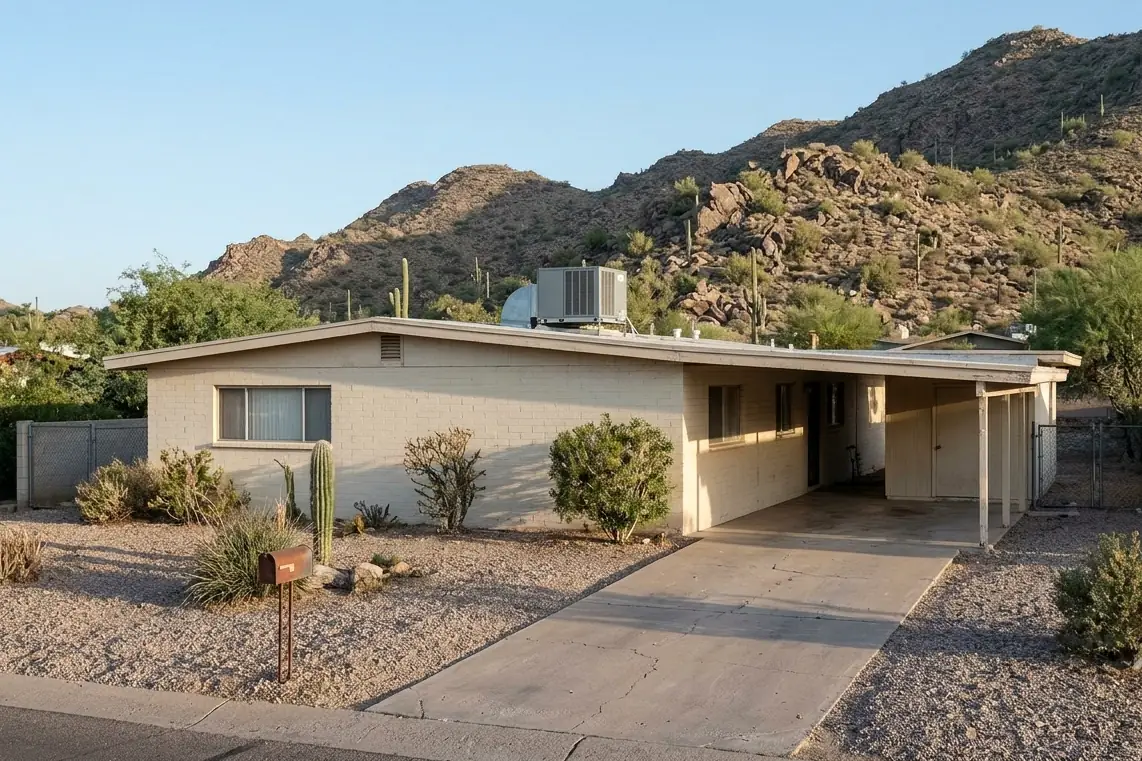
North Mountain village wraps around North Mountain Park, with Moon Valley on one edge and Sunnyslope on the other. Most streets here were built out from the 1960s through the 1980s, so you'll find single-story block and frame ranch homes, carports turned into garages and plenty of additions. Cooling setups vary from house to house: some homes still run roof-mounted package units, others have split systems with air handlers in low attics, and a few keep an old evaporative cooler on the roof as backup.
Age is the common thread. Many North Mountain systems are on their second or third replacement, often squeezed into ductwork sized for a smaller unit decades ago. Attic air above 140°F in July cooks flex duct and drain lines, and the desert slopes around the park send fine dust into condensers every monsoon. Heat pumps with electric heat strips are common for winter, along with some gas furnaces. Our technicians test airflow, temperature split and electrical parts before recommending anything, so you know exactly why a room runs warm.
Around North Mountain Park and the Seventh Street corridor below the Phoenix Mountains Preserve, the same Valley rules apply: long cooling seasons, dust that settles into coils, and monsoon storms that test electrical parts. When you call from North Mountain, the first questions are simple: is the outdoor unit running, is air coming from the vents, and what does the thermostat read. Those answers tell the technician which parts to have on the truck.
What we see here
Older North Mountain ranch homes often have ducts sized for the original system. A larger replacement unit pushes air through tight runs, causing noisy registers, weak airflow at far bedrooms and higher energy use.
Package units on flat or low-slope roofs take direct sun all day. Cracked wiring insulation, rusted base pans and worn contactors are common findings once these units pass the ten-year mark.
Heat pumps here lean on electric heat strips during chilly winter mornings. Strips that sat unused all summer can burn out or trip breakers the first cold week, often in December.
Homes close to North Mountain Park and the preserve trails catch extra grit during monsoon winds. Condenser coils and return filters load up quickly, which raises head pressure and cuts cooling.
Most-called services
Heat pump blowing cold on heat or stuck in one mode? We repair reversing valves, defrost boards, sensors, capacitors and refrigerant leaks on Valley heat pumps.
See heat pump repairRepairs for rooftop and ground-pad package units, including capacitors, contactors, blower motors, drains and refrigerant leaks, on gas-electric and heat pump models.
See package unit repairTorn flex, crushed runs, separated joints and failed plenum connections repaired in Phoenix attics, with airflow measured at the register before and after.
See ductwork repairAuxiliary heat not working or tripping breakers? We test heat strip elements, sequencers, relays, limit switches and high-voltage wiring in heat pump air handlers.
See heat strip repairLocal advice
From the ground, look for debris caught on top of the unit and listen for unusual rattling or a fan that won't spin. Inside, check that your filter isn't packed with dust. Avoid climbing onto the roof yourself. If cooling drops off after the storm, call us and a technician will clean the coil, check the contactor and capacitor, and confirm the unit is running normally.
In many 1960s and 1970s North Mountain homes, the attic insulation has settled or was thin to begin with. Adding insulation and a radiant barrier can lower attic temperatures around your ducts and air handler, which helps the system keep up in July. We'll look at your attic depth, duct location and roof type before suggesting which upgrade gives you the most for your money.
A whistling return usually means the system is pulling more air than the grille and duct can handle. That's common when a newer, larger unit replaced the original in an older North Mountain house. A clogged filter makes it worse. We can measure static pressure and, if needed, add a second return or enlarge the existing one so the system breathes properly.
Nearby
A real person answers (602) 848-9399 every hour of every day, and we will tell you plainly what the next step is.