Furnace Repair
Gas furnace not lighting, short cycling or blowing cold? We repair igniters, flame sensors, inducers and pressure switches, and check venting and combustion safety.
See furnace repairHeat pumps and heating
A fall tune-up wakes up a heating system that has sat idle since spring. We clean dust from burners or strips, test safety controls and confirm the heat comes on when you need it.
At a glance
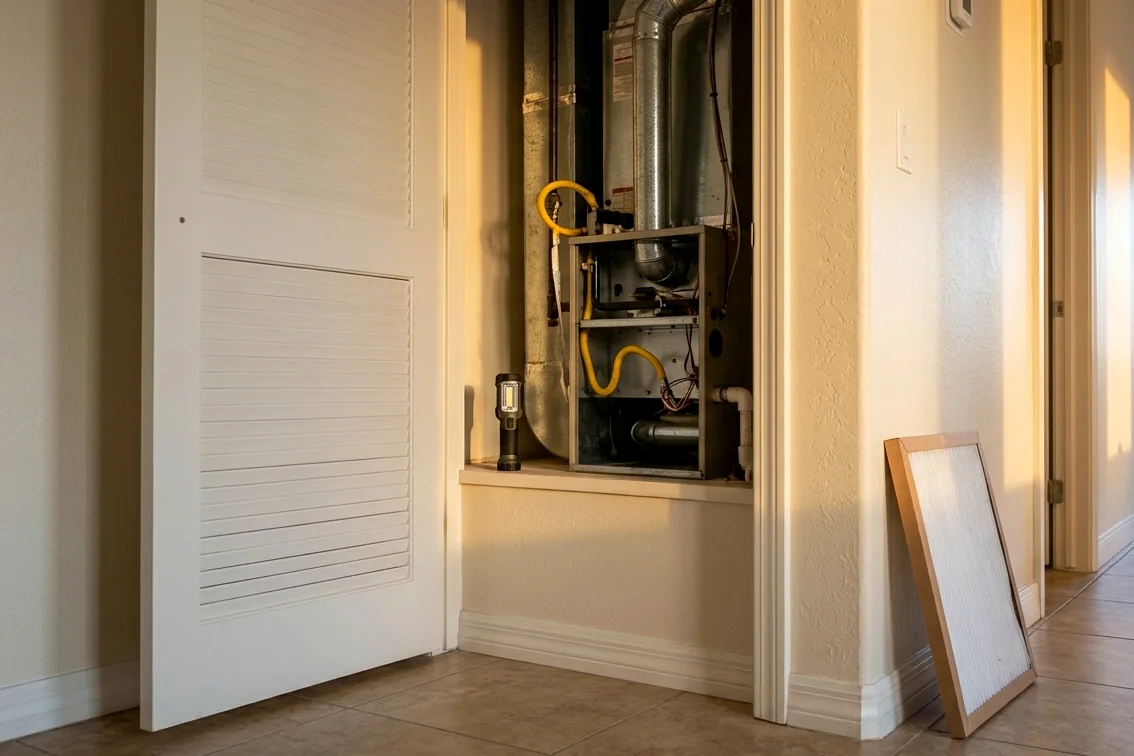
A heating tune-up is a fall inspection and cleaning of your gas furnace, heat pump or heat strips before winter use. In Phoenix it matters because heating sits unused for months while dust settles and attic heat ages parts. The visit catches dirty flame sensors, weak igniters, failing heat strips and defrost problems before the first cold night. October and early November are the best times to schedule it.
Phoenix heating systems spend most of the year doing nothing. From roughly April through October, a furnace or the heating side of a heat pump sits idle while summer heat and dust work on it. Flame sensors collect residue, heat strips gather dust, and wiring connections loosen with temperature swings. A tune-up in fall finds those issues before you need heat.
The checklist depends on your equipment. Gas furnaces get burner cleaning, flame sensor service, igniter testing, gas pressure checks, vent inspection and carbon monoxide testing. Heat pumps get reversing valve tests, defrost cycle checks and heat strip testing. Both receive a blower inspection, filter replacement and thermostat calibration. Our technicians tailor the visit to the equipment that is actually in your home.
There is also a practical benefit to scheduling early. When the first real cold front arrives, usually in late November or December, heating calls spike. Homeowners who had a tune-up in October rarely end up waiting for a repair on a cold night. If the tune-up finds a worn part, you can replace it on your schedule instead of in an emergency.
Signs to watch
Six or more months of idle time lets dust settle on burners, strips and sensors. A cleaning before first use reduces odors and prevents ignition failures.
High winter bills on heat pump homes often mean heat strips ran too often. A tune-up checks staging and lockout settings that control strip use.
Delayed ignition, repeated clicking or flame that drops out last winter usually signals a flame sensor or igniter that a tune-up can address.
A brief dusty smell is normal on the first cold night, but a lingering odor suggests heavy buildup that should be cleaned before regular winter use.
Aging furnaces and heat pumps benefit most from a yearly check, since worn parts are more likely and safety testing matters more.
Any gas furnace should be checked for venting and carbon monoxide before winter use, especially after months of possible nesting or debris in the flue.
Attic temperatures that reach roughly 140 to 160°F take a toll on heating parts even when they are not running. Rubber hoses on furnace pressure switches harden, wire insulation becomes brittle, and plastic connectors can crack. Heat pump air handlers in attics carry heat strips whose wiring and sequencers face the same heat. A fall tune-up is the moment to catch damage that summer caused.
Monsoon dust is the other factor. Fine dust passes leaky returns and loose filters and settles on furnace burners, heat strip elements and blower wheels. When heating starts, that dust burns, smells and can coat the flame sensor. Heat pumps also run cooling hard all summer, so a fall check of the outdoor coil, capacitor and contactor protects the heating season that follows.
How we handle it
A fresh filter prevents overheating and nuisance limit trips. We also check the filter size and fit so dust cannot bypass it and coat the internal components.
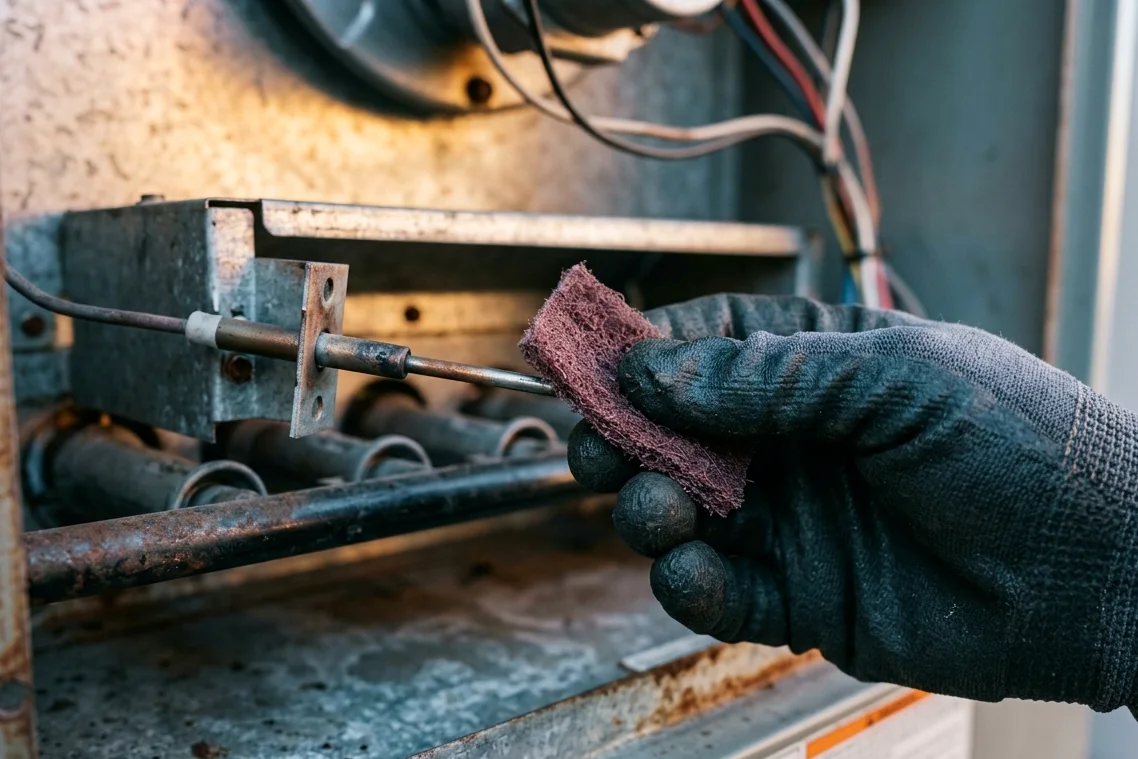
On gas furnaces, burners are cleaned of dust and debris, and the flame sensor is polished and tested for proper signal, which prevents the common light-then-shut-off failure.
We measure igniter resistance, look for hairline cracks, and check inlet and manifold gas pressure so the furnace lights reliably and burns with a clean blue flame.
For heat pumps, we test each heat strip, sequencer and limit, then force a defrost cycle to confirm the reversing valve and controls work correctly.
Flue pipes are checked for nests, blockage, loose joints and correct slope, and we test for carbon monoxide at the furnace and at the supply registers.
We confirm thermostat calibration and staging, measure temperature rise across the system, and review every reading and finding with you before we leave the home.
Before you call
Anything beyond these checks involves electrical parts or refrigerant, so call (602) 848-9399 and let a technician take it from there.
Typical cost
Typical single-system heating tune-up. A range, not a quote: the real number depends on what the technician finds. Full price guide
Most single-system heating tune-ups fall within this range, with heat pumps and furnaces priced similarly. Additional systems, roof-mounted package units or required repairs add to the total. These are typical Phoenix ranges, not a quote, and the final amount depends on what the technician finds during the inspection.
| Line item | Typical range |
|---|---|
| Gas furnace heating tune-up | $94 to $173 |
| Heat pump heating tune-up | $104 to $187 |
We repair and replace Trane, Carrier, Lennox, Goodman, Rheem, Daikin and most other makes found in Valley homes.
Related work
Gas furnace not lighting, short cycling or blowing cold? We repair igniters, flame sensors, inducers and pressure switches, and check venting and combustion safety.
See furnace repairHeat pump blowing cold on heat or stuck in one mode? We repair reversing valves, defrost boards, sensors, capacitors and refrigerant leaks on Valley heat pumps.
See heat pump repairAuxiliary heat not working or tripping breakers? We test heat strip elements, sequencers, relays, limit switches and high-voltage wiring in heat pump air handlers.
See heat strip repairSpring cooling and fall heating visits on a schedule, priority scheduling in summer and a service history that tracks your system year to year.
See maintenance plansWhere we do this
These communities make up most of the homes we serve. Each link opens the local page with ZIP codes, typical homes and the issues we see there.
October through early November is ideal. Summer heat has ended, the first real cold front has not arrived, and scheduling is easier. A tune-up then catches parts that aged during the summer before you need heat. If you have a heat pump, a spring cooling tune-up plus a fall heating tune-up matches the system's year-round workload.
Yes, ideally. A spring tune-up focuses on cooling performance, while a fall tune-up checks the reversing valve, defrost controls, heat strips and staging. Since a heat pump runs heavily in both seasons here, two visits a year match how much it works. The fall visit also catches summer wear on capacitors and contactors before heating season begins.
We clean burners and the flame sensor, test the igniter, measure gas pressure, inspect the inducer, pressure switch and limit switches, check the flue for blockage and test for carbon monoxide. We also replace the filter, inspect the blower and confirm the thermostat calls for heat correctly. You receive a summary of the readings and any recommended repairs.
It can, especially on heat pump homes. If heat strips are engaging too often because of staging settings, a dirty coil or low refrigerant, the tune-up identifies and corrects that. Strips cost much more to run than the heat pump. For gas furnaces, a clean burner and correct gas pressure help efficiency, though the savings are smaller.
Yes, arguably more so. Long idle periods allow dust buildup, nesting in vents and heat damage from summer attics. A furnace that runs only a few weeks may never shake off that buildup on its own. A yearly check also confirms venting and carbon monoxide safety, which matters regardless of how many hours the furnace runs.
Most single-system heating tune-ups take about 45 minutes to an hour and a half. Attic systems and dual-fuel setups take a bit longer. If we find a worn part, we explain it and give you a price before replacing anything. Many common parts like flame sensors and igniters are carried on the truck for same-visit repairs.
A real person answers (602) 848-9399 every hour of every day, and we will tell you plainly what the next step is.