Radiant Barrier Installation
Perforated reflective foil installed under the roof decking to cut attic heat gain, keeping ducts, air handlers and ceilings cooler through Phoenix summers.
See radiant barrierDucts, air and attic
A Phoenix attic with too little ventilation holds heat long after sunset. We add solar or powered attic fans, soffit intake and roof exhaust vents so hot air moves out and your ducts, air handler and ceilings stay cooler.
At a glance
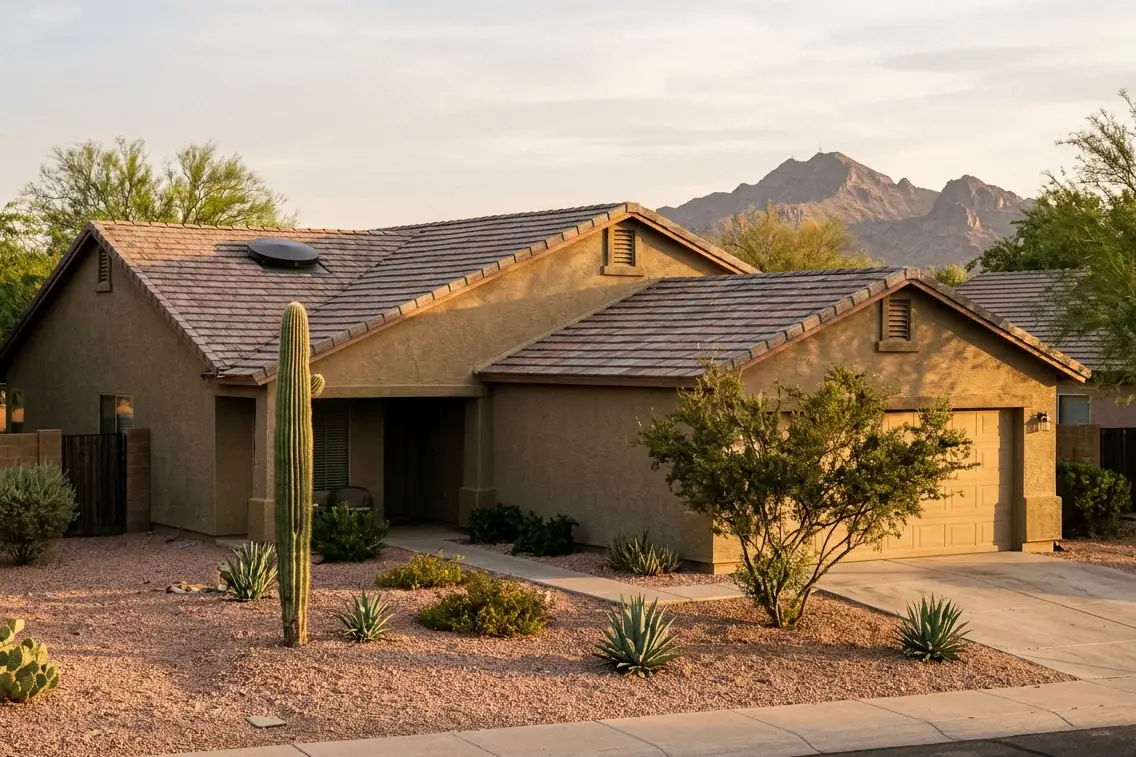
Attic fan and ventilation service improves how air moves through your attic, using soffit intake vents low on the roof and exhaust vents, ridge vents or solar and powered attic fans up high. In Phoenix it helps when the attic stays hot into the evening, when ducts and air handlers sit up there, or when vents are blocked or too few. Balanced intake and exhaust matter more than fan size.
Your attic is a big box of air sitting directly under a sun-baked roof. Without enough ventilation, the heat that builds during the day stays trapped, and the attic can remain far hotter than the outdoor air well into the evening. That lingering heat soaks into ceilings, warms the ductwork and keeps your air conditioner running after sunset, which is exactly when APS and SRP on-peak hours tend to fall.
Good attic ventilation works like a chimney. Cooler outside air enters through intake vents at the soffits or eaves, warms as it rises, and leaves through exhaust vents near the ridge or high on the roof. Attic fans, either solar-powered or wired with a thermostat, speed that exchange when natural airflow isn't enough. The key is balance: an exhaust fan with too little intake will pull air from wherever it can find it, including your living space.
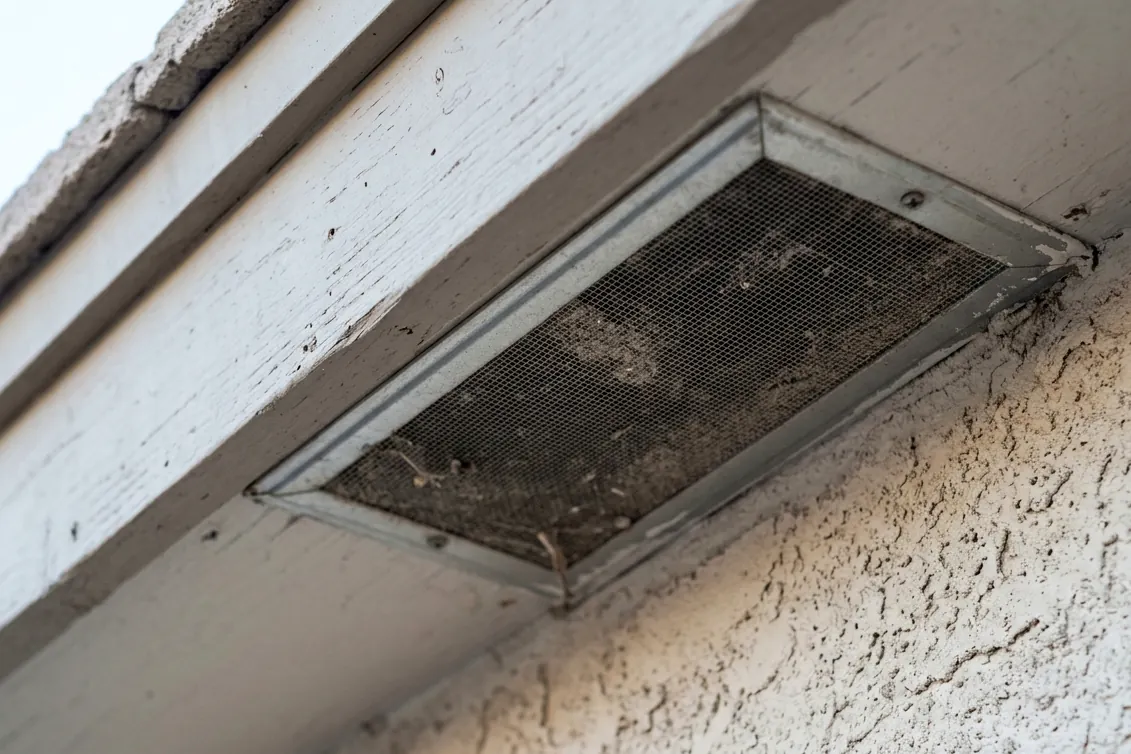
Our ventilation visits start with an honest look at what you already have. Many Valley attics have soffit vents painted over, blocked by insulation or never installed, while others have plenty of intake but weak exhaust. The technician works out the vent area your attic needs, checks for gas appliances that a fan could affect, and recommends the simplest setup that works, whether that's opening blocked soffits, adding roof vents or installing a fan.
Summer attic air in Phoenix can reach roughly 140 to 160°F, and with overnight lows staying in the upper 80s, the attic never gets a real chance to cool down on its own. Ventilation won't bring an attic down to outdoor temperature, but it can trim that peak and shorten how long heat lingers. That matters most where air handlers and ducts share the space, because every degree of attic heat works against the cold air moving through them.
Monsoon dust and rain change the picture from June through September. Exhaust vents need baffles and screens that keep blowing dust and rain out, and powered fans work best with a thermostat and humidistat so they run only when they help. Solar attic fans are popular here because the sun that heats the attic also powers the fan, with no running cost. On tile roofs, we use low-profile vents that sit with the tile lines rather than tall domes that invite leaks.
Typical cost
Typical attic fan installed, including roof work. A range, not a quote: the real number depends on what the technician finds. Full price guide
Most Phoenix homes fall in this range for one powered or solar attic fan with flashing and sealing. Adding soffit intake, baffles or extra roof vents raises the total, while reopening blocked existing vents costs less. The real number depends on what the technician finds in your attic and on your roof type, and you hear the price first.
| Line item | Typical range |
|---|---|
| Solar attic fan, installed | $565 to $1,185 |
| Powered attic fan with thermostat | $435 to $945 |
| Soffit intake vents and baffles | $285 to $765 |
How we handle it
The technician measures the attic floor area and counts existing intake and exhaust vents, then compares their open area to what the space actually needs.
From inside the attic, we look along the eaves for insulation stuffed against soffit vents, then install baffles that hold insulation back and keep the air channels open.
Gas water heaters and furnaces in the attic need their flues to draft properly. We check them so a new fan won't pull exhaust gases back into the space.
Depending on roof type and intake area, we recommend solar fans, thermostat-controlled powered fans, ridge vents or added low-profile roof vents, never more exhaust than the intake can support.
New roof openings get cut cleanly, flashed and sealed to shed monsoon rain, with screens to keep birds, bees and blowing dust out of the attic.
We confirm the fan runs, set its thermostat or humidistat, check that ceiling penetrations aren't leaking house air into the attic, and walk you through the results.
Signs to watch
If the attic still feels like an oven at 9 p.m., trapped heat is radiating into your ceilings and making the AC run long into the evening.
Soffit vents buried under insulation, painted shut or missing entirely leave exhaust vents with no fresh air supply, so air barely moves through the attic.
Excess attic heat under a shingle roof can bake the shingles from below, leading to curling and early wear on the hottest roof slopes.
Second floors and rooms under low roof sections that never cool down often sit beneath an attic with poor airflow and a lot of trapped heat.
Many Phoenix homes have a gable or roof fan that quit years ago. A seized motor or a dead thermostat leaves that vent opening doing very little.
A damp, musty attic after storms points to moisture that isn't venting out, often from roof leaks, bath fans dumping into the attic or a dripping condensate line.
Before you call
Anything beyond these checks involves electrical parts or refrigerant, so call (602) 848-9399 and let a technician take it from there.
We repair and replace Trane, Carrier, Lennox, Goodman, Rheem, Daikin and most other makes found in Valley homes.
Related work
Perforated reflective foil installed under the roof decking to cut attic heat gain, keeping ducts, air handlers and ceilings cooler through Phoenix summers.
See radiant barrierBlown-in insulation and attic air sealing that slow the flow of attic heat into your rooms, so the AC runs shorter cycles on Phoenix afternoons.
See attic insulationLeaks at plenums, takeoffs, boots and returns sealed with mastic and proper fasteners, so cooling stays in the ducts and dusty attic air stays out.
See duct sealingTorn flex, crushed runs, separated joints and failed plenum connections repaired in Phoenix attics, with airflow measured at the register before and after.
See ductwork repairWhere we do this
These communities make up most of the homes we serve. Each link opens the local page with ZIP codes, typical homes and the issues we see there.
For many Valley homes, they are. The same sun that heats your attic powers the fan, so it runs hardest during peak heat with no wiring and no electric cost. They're most effective when the attic has enough soffit intake to feed them. On homes with very little intake, we usually add vents first, because a solar fan pulling against a sealed attic accomplishes little.
It can if the attic lacks enough intake. The fan draws air from the easiest source, and that may be gaps around ceiling lights, attic hatches, plumbing penetrations and leaky ducts. That means paying to cool air that ends up in the attic. We size intake vents to support the fan and look for ceiling leaks before recommending powered ventilation for your home.
As a general guide, attic ventilation is planned at about one square foot of net vent area for every 150 to 300 square feet of attic floor, split between intake and exhaust, with intake at least equal to exhaust. Fan makers also list the intake area their fans need. We measure your attic, count what's open, and add soffit vents or baffles where the numbers fall short.
Yes, and it's a real safety concern. A strong fan with weak intake can lower attic pressure enough to pull flue gases down instead of up, spilling exhaust into the attic. That's why we check gas appliances before installing a fan and size intake generously. If a furnace or water heater shares the attic, passive vents or a carefully balanced fan may be the safer choice.
Tile roofs take low-profile vents designed to sit with the tile pattern, along with tile-style solar fans that mount under a low shroud shaped like the surrounding tiles. Tall metal domes stand out and can be harder to seal against monsoon rain. We cut and flash openings in the underlayment carefully and reset the nearby tiles, so the roof sheds water the way it did before.
Most fans run on a thermostat and will keep going if the attic is hot. A short run through a dust storm is usually fine when vents have screens and baffles. If your fan pulls in visible dust or rain during storms, it may lack proper screens or a damper. We can add those parts, and a humidistat can stop the fan from drawing in damp storm air.
A real person answers (602) 848-9399 every hour of every day, and we will tell you plainly what the next step is.