Indoor Air Quality
A measured look at dust, humidity, fresh air and odors in your home, followed by targeted fixes like better filtration, ventilation or drain repairs.
See indoor air qualityDucts, air and attic
A thin 1-inch filter struggles against Valley dust. We add a deep media filter cabinet at the air handler, size it so your blower isn't strained, and seal the edges so dusty air can't slip around it.

At a glance
Whole-home air filtration replaces or supplements the thin filter at your return grille with a deep media filter cabinet, usually 4 to 5 inches thick, mounted at the air handler. It catches far more fine dust and pollen while keeping airflow steady. In Phoenix, it's worth considering when 1-inch filters clog in a few weeks, the house dusts over quickly after monsoon storms, or someone at home has allergies.
Most Phoenix homes came with a 1-inch filter behind a ceiling or wall return grille. Those thin filters are fine for protecting the blower from large debris, but they don't hold much. In monsoon season, a cheap one can load up within a few weeks, and a high-rated 1-inch pleat can restrict airflow so much that the system runs longer and the coil gets colder than it should. Neither outcome is great for a house that cools nearly around the clock.
A media filter cabinet solves that by giving the filter more depth. The pleats in a 4 to 5 inch filter add up to many times the surface area of a thin one, so it can trap finer particles without choking the blower. It also lasts longer, often several months between changes instead of every 30 to 45 days in summer. That makes it easier to keep up with and gentler on the equipment.
Installation matters as much as the filter. The cabinet needs to match your blower's airflow, sit where it seals tightly against the return, and leave room for easy filter changes. We measure static pressure before and after so you know the system is breathing properly. If your return ductwork is undersized or leaky, we'll tell you, because the best filter in the world won't help if dusty attic air bypasses it.
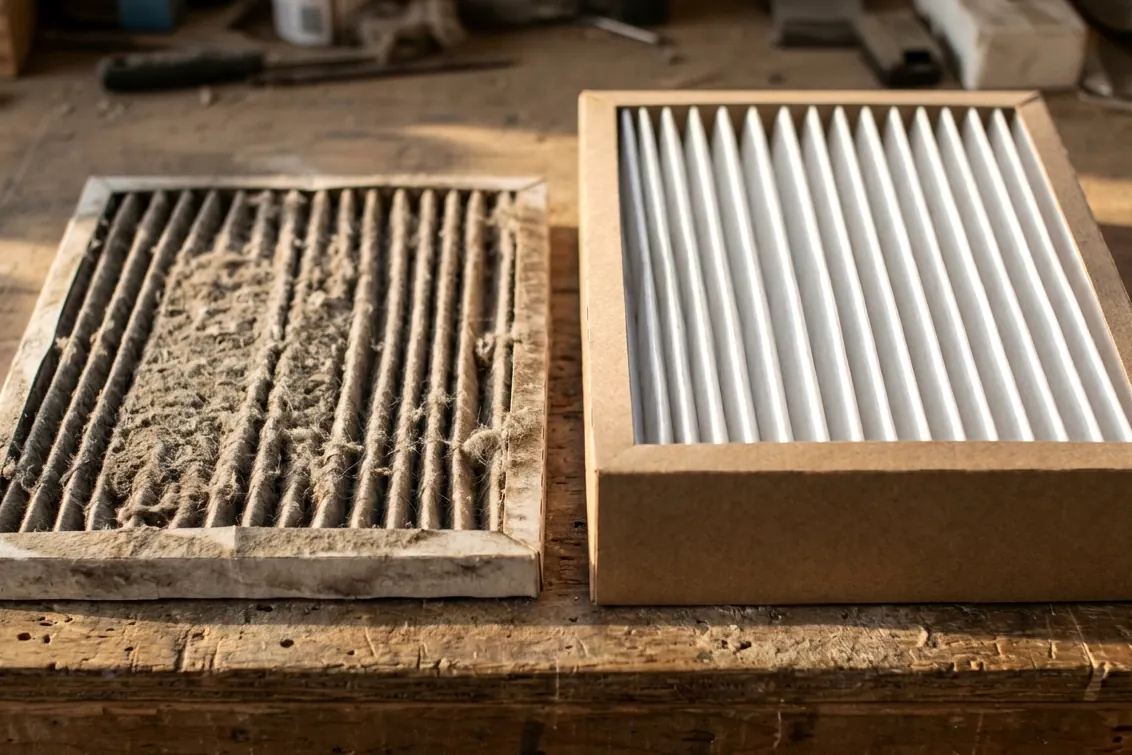
Valley dust is extremely fine. Haboobs carry silt that drifts through window seals and door gaps, and it settles back down slowly, so it stays in the air long enough to get pulled into your return. Spring adds pollen from mesquite, olive and grasses, and many homes have pets adding dander year-round. A thin filter catches the larger pieces, but much of the fine material that coats furniture slips right past it.
The catch is airflow. Phoenix systems run long hours at high load, and restricting airflow in July can ice up a coil or overheat a blower motor. That's why we size media cabinets to the blower's airflow rather than simply picking the highest-rated filter. With the right cabinet, you get better capture than a 1-inch pleat with lower resistance, and the system keeps moving the air it needs on the hottest afternoons.
Typical cost
Typical media cabinet install. A range, not a quote: the real number depends on what the technician finds. Full price guide
Most single-system homes fall in this range for a 4 to 5 inch media cabinet installed and sealed at the air handler. Homes that need return duct changes, or have two systems, run higher. The real number depends on what the technician finds at your air handler, and you get the price before work begins.
| Line item | Typical range |
|---|---|
| Media filter cabinet installation | $585 to $1,345 |
| Electronic air cleaner installation | $1,185 to $2,265 |
| Replacement 4 to 5 inch media filter | $47 to $93 |
How we handle it
The technician reads static pressure across your existing filter and coil to see how hard the blower is working now. That baseline guides cabinet size and confirms the ducts can handle it.
We look at the return duct and grille sizing. An undersized return limits any filter's performance, so if it's too small, you'll hear about that before you buy a cabinet.
Based on airflow and your goals, we recommend a cabinet size and a filter rating that balance capture with resistance, plus what replacement filters typically cost at local suppliers.
The cabinet mounts at the air handler's return connection, with every seam sealed using mastic or foil tape so air can't sneak around the filter and carry dust into the system.
The old 1-inch filter at the ceiling grille is removed or swapped for a coarse prefilter, so you aren't paying for two restrictive filters stacked in the same air path.
After installation, we retake static pressure readings, confirm airflow is in range and walk you through a filter change so it's quick and simple the next time.
Signs to watch
If your 1-inch filter is dark and caked well before the 30 to 45 day mark, it's simply too small for the dust load your home handles during a Phoenix summer.
Shelves and floors that collect a gray film within a day or two of dusting point to fine particles passing through or around the filter and circulating through every room.
Sneezing, itchy eyes or congestion that ease outdoors but flare at home can mean pollen and dander keep cycling through the system without a filter able to catch them.
A filter that sits loose in its slot, or a grille with a visible gap, lets air go around the media. Dark streaks on the frame or wall show where that bypass is happening.
A high-efficiency 1-inch filter that whistles or bows inward is restricting airflow. A deeper filter can deliver similar or better capture with much less strain on the blower.
If frequent changes keep slipping through the cracks, a deep media filter that lasts several months lowers the chance of the system running for weeks on a clogged one.
Before you call
Anything beyond these checks involves electrical parts or refrigerant, so call (602) 848-9399 and let a technician take it from there.
We repair and replace Trane, Carrier, Lennox, Goodman, Rheem, Daikin and most other makes found in Valley homes.
Related work
A measured look at dust, humidity, fresh air and odors in your home, followed by targeted fixes like better filtration, ventilation or drain repairs.
See indoor air qualityCoil-mounted UV lamps and in-duct air purifiers that keep the indoor coil and drain pan cleaner and cut musty odors, using models that produce no ozone.
See uv lights & purifiersNegative-pressure cleaning of supply and return ducts, with camera footage before and after so you can see exactly what came out of your system.
See air duct cleaningLeaks at plenums, takeoffs, boots and returns sealed with mastic and proper fasteners, so cooling stays in the ducts and dusty attic air stays out.
See duct sealingWhere we do this
These communities make up most of the homes we serve. Each link opens the local page with ZIP codes, typical homes and the issues we see there.
Many Phoenix homes do well with a mid to upper-range media filter in a 4 to 5 inch cabinet, which catches fine dust and pollen without heavy restriction. The best rating depends on your blower and return size. We measure static pressure and choose a rating your system can handle, rather than picking the highest number on the shelf.
Plenty of Valley homes change them every four to six months, sooner in a dusty monsoon season or with several pets. Check it at the three-month mark the first year to see how fast it loads in your house. That gives you a schedule based on your own dust levels rather than a general rule from the package.
It can if the filter is too restrictive for the blower. A dense 1-inch filter forces the blower to pull harder, which lowers airflow, can ice up the coil and can shorten motor life. A deep media filter spreads the same capture across much more surface area, so resistance stays lower. Sizing the filter to the system is what protects the equipment.
Yes, it's one of the most effective steps for Phoenix dust. A sealed media cabinet catches far more fine silt than a thin filter, and sealing the return keeps dust from entering through gaps. After a big haboob, check the filter a little early. If it looks heavily loaded, change it rather than waiting for the usual interval.
Electronic air cleaners can capture very fine particles, but they need their collector cells washed regularly, and some designs produce small amounts of ozone. Media cabinets are simpler: you swap the filter and you're done. For most Phoenix homes, a good media cabinet is the practical choice. We'll walk through both if fine-particle capture is your main concern.
Most attic air handlers have room for a cabinet at the return connection, though very tight attics sometimes need creative positioning or a side-access cabinet. The technician checks clearance, return duct size and how you'll reach it for filter changes. If an attic install would make filter changes impractical, we'll suggest a location you can actually reach.
A real person answers (602) 848-9399 every hour of every day, and we will tell you plainly what the next step is.