Evaporative Cooler Repair
Rooftop and side-draft swamp coolers repaired: pumps, pads, float valves, belts, motors and water lines clogged by Phoenix hard water.
See swamp cooler repairAir conditioning
A swamp cooler struggles once monsoon humidity arrives. Converting to refrigerated air gives your Phoenix home dependable cooling all summer, and we handle the roof opening, ducts and electrical as one project.
At a glance
Evaporative cooler to AC conversion replaces a swamp cooler with a refrigerated air conditioning system, usually a split system, heat pump or package unit. In Phoenix, homeowners convert because coolers lose effectiveness in monsoon humidity, need constant water and pad upkeep, and can't cool well on the hottest humid days. The project often includes removing the cooler, sealing the roof opening, adding or resizing ductwork, upgrading electrical and installing new equipment.
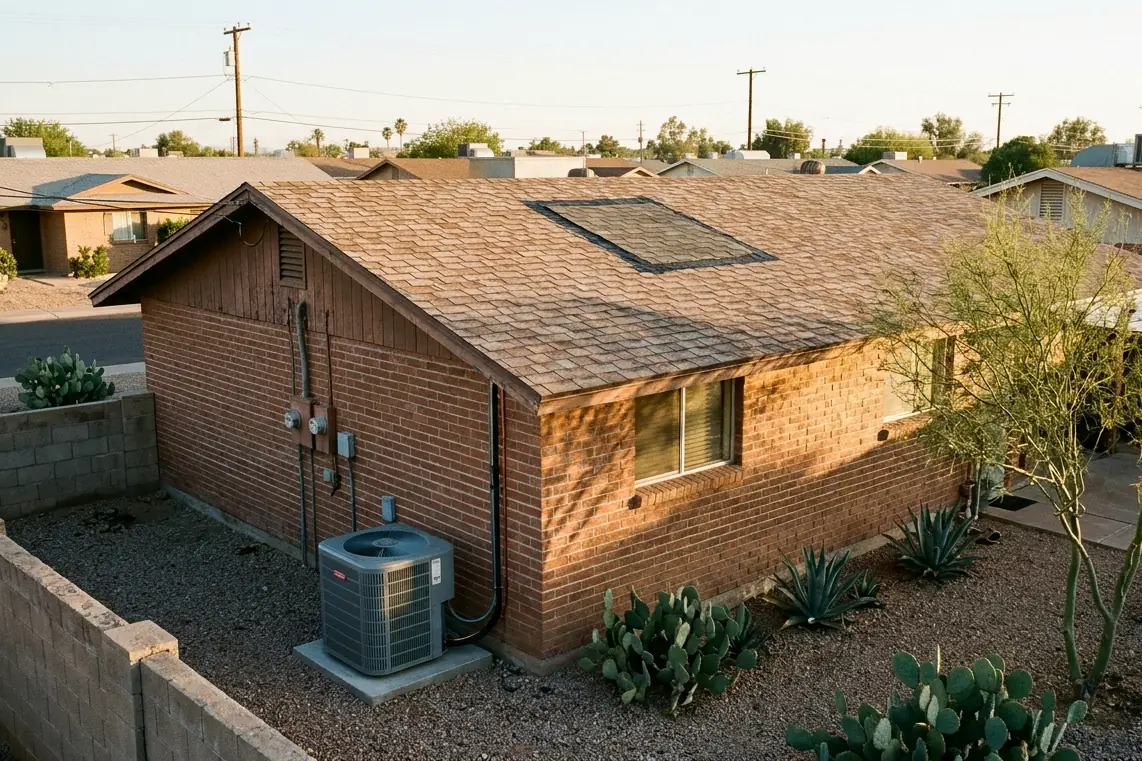
Many older homes in Phoenix were built around evaporative cooling. A rooftop cooler pushes air through a large central opening into a short duct system, sometimes just a single drop into the hallway. That setup works in dry spring weather but can't keep up when dew points climb in July and August. A conversion replaces that cooling method with refrigerated air, which cools and dries the air regardless of humidity, and pairs with a heat pump for winter heating if you choose.
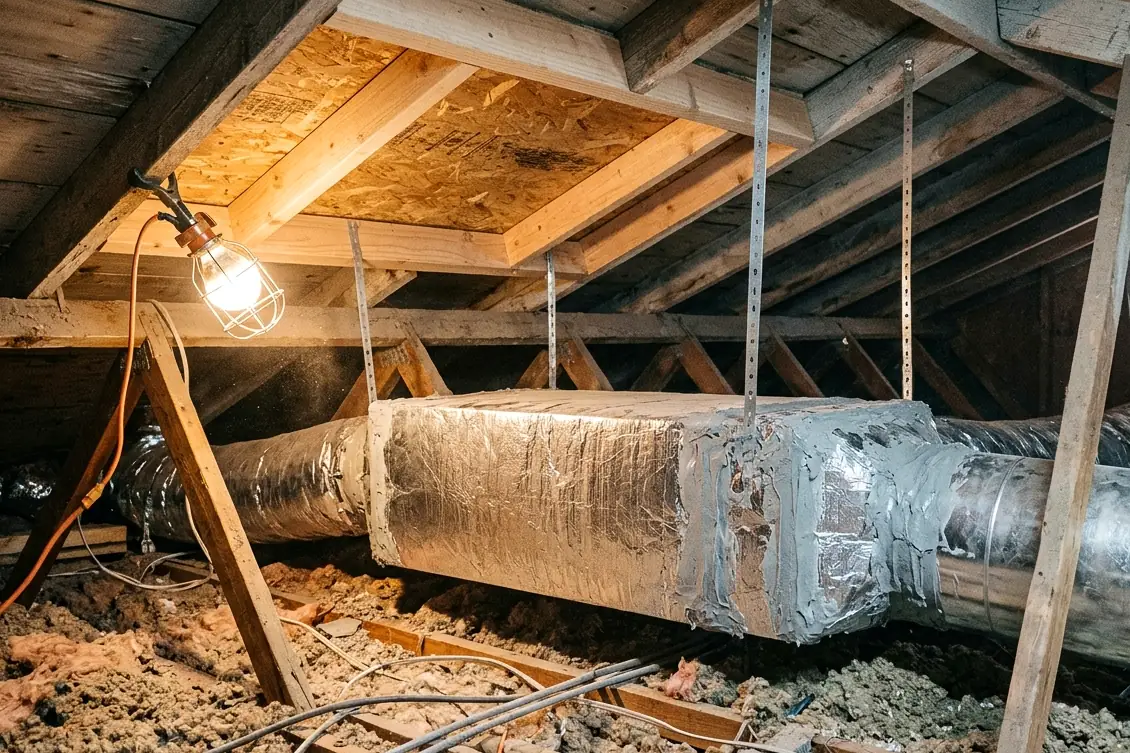
Conversions are more than swapping one box for another. Cooler ducts are often oversized at the opening and undersized or missing toward bedrooms, because coolers move huge volumes of air and rely on open windows for exhaust. Refrigerated systems need sealed, balanced ductwork with proper returns. We start with a load calculation and attic inspection, then design ductwork that reaches each room, removes the cooler and its water line, and patches or seals the roof opening to keep monsoon rain out.
Some homeowners keep the cooler for dry spring weeks and add AC for summer, while others remove the cooler entirely. Both approaches can work. Keeping both means two systems to maintain and a damper to manage between seasons. Removing the cooler simplifies upkeep and ends roof leaks from overflowing pans. We'll go over which setup fits your home and budget, along with APS or SRP rate plans and any current rebate programs you can check.
Neighborhoods from the 1950s through the 1970s, in central and west Phoenix especially, were built when evaporative cooling was the norm. Many still have the original cooler opening in the roof, a short trunk duct and little or no attic insulation. As summers bring more humid monsoon nights, and as homeowners want sealed homes with cleaner indoor air, refrigerated air has become the standard. Conversions in these homes usually include attic work, since the original duct system wasn't built for AC.
Attic conditions shape the design. Phoenix attics reach roughly 140 to 160 degrees in summer, so new ducts need proper insulation, sealed joints and short, direct runs. Some homes with low-slope roofs have little attic space, which may favor a roof-mounted package unit or ductless mini-splits instead. Electrical service in older homes may also need upgrading to handle the new compressor. We assess all of this before recommending a system, so the conversion works through a 115-degree July.
Typical cost
Typical conversion, equipment, ducts and roof work. A range, not a quote: the real number depends on what the technician finds. Full price guide
A conversion using a package unit with modest duct changes sits near the low end. Homes needing a full new duct system, electrical upgrades and a heat pump split system sit near the high end. These are typical Phoenix ranges, not quotes, and the real number depends on what the technician finds in the attic, on the roof and at the panel.
| Line item | Typical range |
|---|---|
| Cooler removal and roof opening seal | $485 to $1,265 |
| Conversion with package unit | $8,465 to $13,985 |
| Conversion with new ducts and split system | $11,475 to $18,975 |
How we handle it
We inspect the cooler, roof opening, existing ducts, attic space, insulation and electrical panel, and talk about which rooms matter most to you in summer.
A load calculation sets the capacity, and we lay out ducts and returns to reach each room. You'll see equipment options, including AC with a heat pump.
We disconnect and remove the cooler, cap its water line, and remove or repurpose the roof stand and duct drop as the new design requires.
The old cooler opening gets framed, decked and sealed to match the roof, so monsoon rain stays out and attic heat doesn't pour into the home.
New or resized ductwork goes in, sealed with mastic and insulated, along with the air handler or package unit, outdoor unit, drain lines and electrical circuit.
We test airflow at every register, verify temperature split and refrigerant charge, confirm the drain and float switch work, and show you the thermostat and filter.
Signs to watch
If your home turns warm and sticky every July and August, the cooler simply can't overcome high humidity. Refrigerated air works no matter how humid the evening gets.
Hard water scale and dust mean frequent pad changes, pump replacements and line clogs. If upkeep is a yearly headache, a conversion ends that cycle of repairs.
A rusted pan or cabinet above the roof opening can leak into ceilings. Removing the cooler and sealing the roof eliminates that source of water damage.
Coolers bring outdoor dust and pollen inside and can grow algae on wet pads. Refrigerated systems with good filtration often improve indoor air for sensitive households.
Many buyers expect refrigerated air in Phoenix. Converting before a sale or during a remodel can make the home more appealing and easier to keep comfortable.
Cooler duct systems often barely reach back bedrooms. A properly designed AC duct system delivers air to every room, including those at the far end of the house.
Before you call
Anything beyond these checks involves electrical parts or refrigerant, so call (602) 848-9399 and let a technician take it from there.
We repair and replace Trane, Carrier, Lennox, Goodman, Rheem, Daikin and most other makes found in Valley homes.
Related work
Rooftop and side-draft swamp coolers repaired: pumps, pads, float valves, belts, motors and water lines clogged by Phoenix hard water.
See swamp cooler repairNew central air for additions, casitas, garages and homes without ducted cooling, sized by load calculation for Phoenix summer heat.
See ac installationLoad-calculated heat pump systems with matched indoor coils, correct heat strip sizing and full commissioning, designed for 115°F summers and mild Valley winters.
See heat pump installationNew supply and return duct systems designed for your Phoenix home, with correct sizing, higher-rated insulation, sealed joints and measured airflow at every room.
See duct replacementWhere we do this
These communities make up most of the homes we serve. Each link opens the local page with ZIP codes, typical homes and the issues we see there.
Most conversions take two to four days. A package unit conversion with modest duct work can finish in two days, while a full duct system, electrical upgrade and split system can take three or four. Permits and inspections add some scheduling time. We'll give you a realistic timeline after inspecting the home.
Yes. Some homeowners keep the cooler for dry spring weeks and use refrigerated air during monsoon and peak summer. That setup needs a damper to close off the cooler duct when the AC runs, and you'll still maintain both systems. Others remove the cooler completely to avoid roof leaks and upkeep. We'll help you decide what fits your home.
Usually some, and often a lot. Evaporative coolers push large volumes of air through a few big openings and rely on open windows. Refrigerated systems need sealed, balanced ducts and dedicated returns. Some homes have cooler ducts that can be adapted; others need a new duct system. We inspect the attic during the estimate and design the right layout.
Often, yes. A heat pump provides cooling and heating in one system, which suits Phoenix's mild winters. Many older homes with coolers also rely on wall heaters or aging furnaces, so a heat pump conversion can replace both at once. For homes with gas service, a gas furnace with AC is another option.
We frame and deck the opening, then seal and roof over it to match the surrounding roof as closely as possible. That keeps monsoon rain out and stops hot attic air from flowing into the home. For tile roofs or complex patching, we coordinate the roofing work as part of the conversion project.
Refrigerated air uses more electricity than an evaporative cooler running in dry weather. However, many homes see smaller differences than expected once efficient SEER2 equipment, sealed ducts and better insulation come together, and you'll gain comfort during humid months. Using APS or SRP time-of-use plans and pre-cooling before peak hours also helps.
A real person answers (602) 848-9399 every hour of every day, and we will tell you plainly what the next step is.