Commercial HVAC Maintenance
Quarterly or twice-yearly maintenance programs for business HVAC, with filter, coil, belt and drain service plus written reports by unit for managers.
See commercial maintenanceCommercial and rooftop
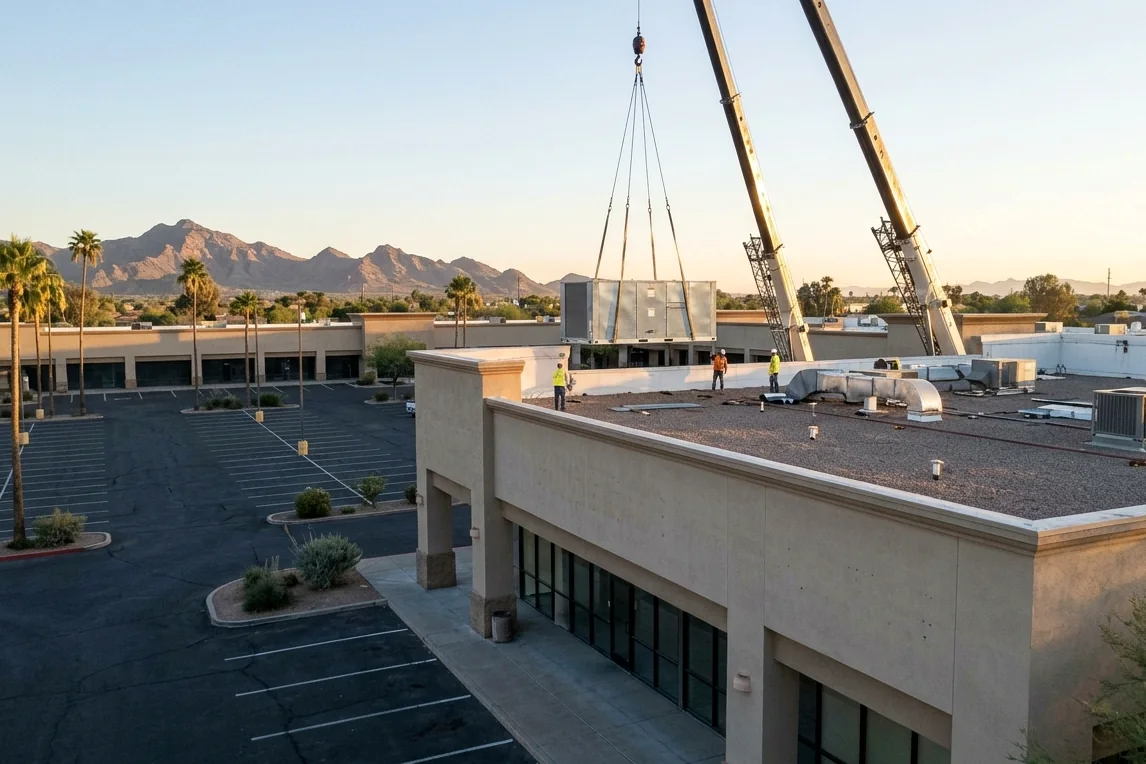
Whether you're building out a new suite or replacing tired rooftop units, we size commercial equipment to the space, plan crane lifts and curb work, and coordinate with property managers and tenants.
At a glance
Commercial HVAC installation puts new heating and cooling equipment into business spaces: rooftop units, split systems, ductless units and make-up air units. In Phoenix, it's needed for tenant build-outs, change-of-use projects like turning retail into a restaurant, and replacing rooftop units that are old, inefficient or failing. Good installs start with a load calculation for the actual use of the space and plan for crane lifts, curbs and controls.
Commercial installations in Phoenix range from swapping a single 5-ton rooftop unit over a nail salon to outfitting a new restaurant with several RTUs and a make-up air unit. The common thread is that the equipment has to match how the space is actually used. A retail suite converted into a fitness studio or a restaurant carries far more heat and needs more air than the original tenant did, and the old unit size may no longer fit.
Our process begins with a load calculation and a site visit. We look at square footage, glass, occupancy, lighting, kitchen or equipment heat, and the hours the space will run. Then we check the existing roof curbs, structural support, electrical service and gas lines. That information decides unit sizes and whether curbs, adapters or electrical upgrades are needed before any equipment gets ordered.
Installation day is planned around the business and the building. Crane lifts are scheduled early in the morning, often before stores open, and coordinated with property managers for parking lot access. Old units are removed with refrigerant recovered properly, new units are set, sealed and wired, and every system is started up and tested. You get a closeout packet with equipment details, settings and a startup report for each unit.
Commercial equipment here has to handle outdoor highs of 105 to 115°F through June, July and August, with roof decks running even hotter. Storefront glass, dark parking lots and heat from cooking, lighting and computers all add to the cooling load. A unit sized using rules of thumb from cooler climates can leave a Phoenix restaurant or office hot every afternoon, which is why a proper load calculation for this climate matters.
Efficiency is just as important. Commercial units run long hours, and APS and SRP business rate plans often include demand charges and on-peak pricing, so efficient equipment and staged or variable-speed compressors can make a real difference in monthly bills. Economizers that bring in outside air only when conditions allow help on mild spring and fall days. Check current APS or SRP business programs, since incentives change often.
Typical cost
Typical installed rooftop unit, 5 to 15 tons. A range, not a quote: the real number depends on what the technician finds. Full price guide
A single light-commercial rooftop unit sits near the low end of this range, while larger tonnage, high-efficiency models, economizers and extensive curb or electrical work push costs higher. Multi-unit projects are priced per building. The real number depends on what the technician finds during the site visit, and every option is priced in writing before work begins.
| Line item | Typical range |
|---|---|
| Light-commercial rooftop unit installation, 5 tons | $11,865 to $17,465 |
| Commercial rooftop unit installation, 10 to 15 tons | $19,685 to $34,675 |
| Commercial ductless split for a server or IT room | $4,285 to $8,965 |
How we handle it
The technician measures the space, notes glass, occupancy, equipment and hours, and inspects roof curbs, structure, electrical and gas service. A load calculation sets the right size for each unit.
You receive a written proposal with equipment options, efficiency levels, curb or electrical work and pricing. We explain the tradeoffs so owners and managers can decide with clear numbers.
We handle required permits, book crane lifts and coordinate timing with property managers, tenants and other trades so installation fits the build-out schedule or business hours.
Refrigerant is recovered from existing units, power and gas are disconnected and old units are lifted off. Curbs are inspected, cleaned and prepared or fitted with adapters as needed.
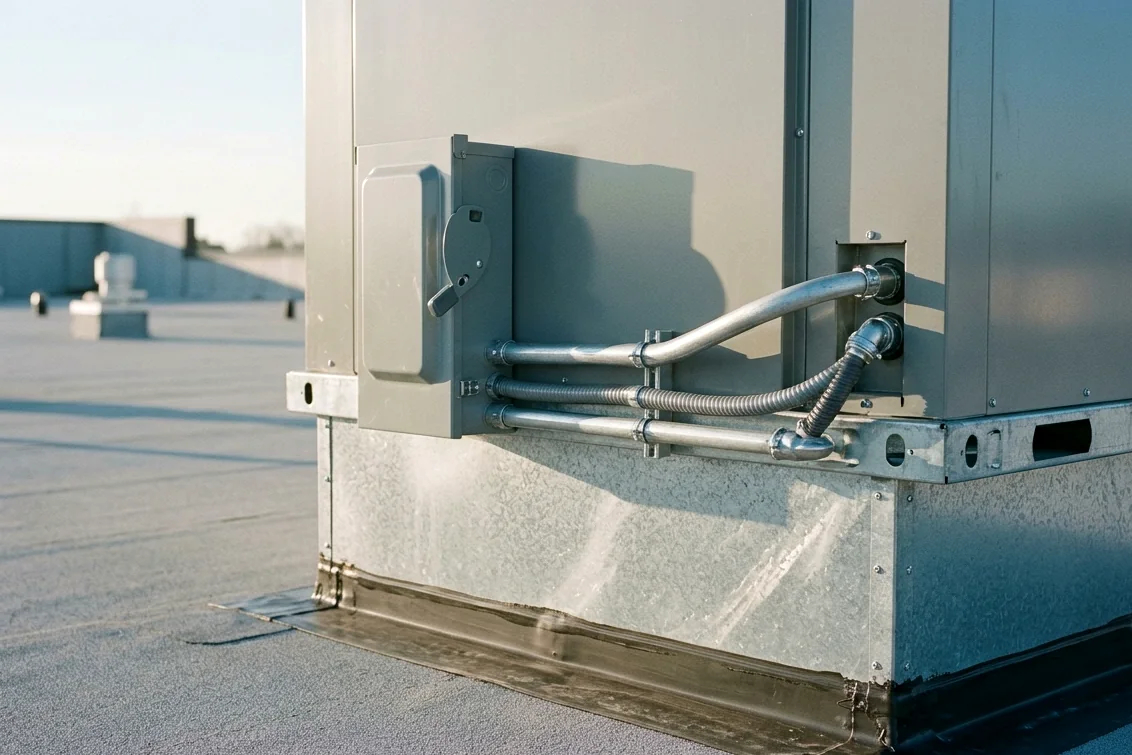
New units are craned onto curbs, leveled and sealed. Ductwork, electrical, gas and condensate connections are completed, and thermostats or building controls are installed and wired.
Each unit is started and tested for refrigerant charge, airflow, temperature split, gas pressure and controls. A closeout packet with startup reports and equipment details goes to the owner or manager.
Signs to watch
A new lease or build-out often needs HVAC sized to the new tenant's use, whether that's an office, a clinic or a restaurant, rather than whatever served the previous business.
Converting retail into a restaurant, gym or salon raises heat and ventilation needs. The existing rooftop unit may be too small, and kitchens usually need make-up air too.
Commercial RTUs in Phoenix sun often reach the end of reliable service around 12 to 18 years. Frequent repairs and rising power use signal it's time to plan replacement.
R-22 production ended in 2020, and recharging older commercial units gets more costly every year. A major leak on an R-22 RTU often justifies replacement over repair.
If a space runs hot every afternoon even after repairs and maintenance, the unit may be undersized for current occupancy or equipment heat, and a properly sized replacement is needed.
Property managers with several aging units on one roof can save time and crane costs by replacing units in planned phases rather than one at a time after failures.
Before you call
Anything beyond these checks involves electrical parts or refrigerant, so call (602) 848-9399 and let a technician take it from there.
We repair and replace Trane, Carrier, Lennox, Goodman, Rheem, Daikin and most other makes found in Valley homes.
Related work
Quarterly or twice-yearly maintenance programs for business HVAC, with filter, coil, belt and drain service plus written reports by unit for managers.
See commercial maintenanceDay and night repairs for commercial rooftop units, split systems and controls on Phoenix restaurants, retail suites, offices and small warehouses.
See commercial hvac repairCrane-lift rooftop and pad package unit replacements with curb adapters, electrical updates and new SEER2 gas-electric, heat pump or straight cool models.
See the serviceSingle-zone and multi-zone ductless systems for garages, casitas, additions and hot rooms, sized for Phoenix heat and installed with tidy line covers outside.
See mini-split installationWhere we do this
These communities make up most of the homes we serve. Each link opens the local page with ZIP codes, typical homes and the issues we see there.
A single rooftop unit replacement on an existing curb often takes one day, including the crane lift and startup. Projects that need new curbs, electrical upgrades or several units can take several days to a few weeks, depending on permits and equipment lead times. Tenant build-outs are scheduled around the general contractor's timeline so HVAC lands when the space is ready.
Size depends on dining area, kitchen equipment, glass, occupancy and hours, so a load calculation is the only reliable answer. Restaurants usually need more cooling than offices of the same size, plus make-up air to replace air pulled out by kitchen hoods. We size both together so the dining room stays comfortable and the hoods work properly.
Often yes. Crane lifts can be scheduled early in the morning before opening, and many replacements are completed in a single day. For multi-unit buildings, we can replace units in phases so most of the space keeps cooling. When a short shutdown can't be avoided, we plan it for your slowest hours and let you know ahead of time.
Not always. Replacing several units in one crane visit can save money on lifts and permits, but it's a larger upfront cost. Many property managers replace the oldest or most troublesome units first, then plan the rest over one or two budget years. Maintenance reports by unit help decide the order based on condition and repair history.
New equipment is moving to A2L refrigerants with lower global warming potential, following the same shift happening in residential equipment. Specific refrigerants depend on the unit type and manufacturer. We explain what your new units use, how that affects service down the road and why it matters for planning future repairs on the building.
Yes. Server rooms and IT closets generate steady heat around the clock and often need dedicated cooling that runs when the main building system is set back at night. A ductless split sized for the equipment load keeps temperatures stable. We look at the heat output, room size and backup needs before recommending a system.
A real person answers (602) 848-9399 every hour of every day, and we will tell you plainly what the next step is.