AC Replacement
Aging, R-22 or repeatedly failing systems replaced with properly sized SEER2 equipment, with ducts, drain and electrical checked before install.
See ac replacementAc parts and repairs
The compressor is the heart of your air conditioner, and it works hardest in Phoenix heat. When it fails, we confirm the cause, then help you decide whether replacing it or the whole system makes more sense.
At a glance
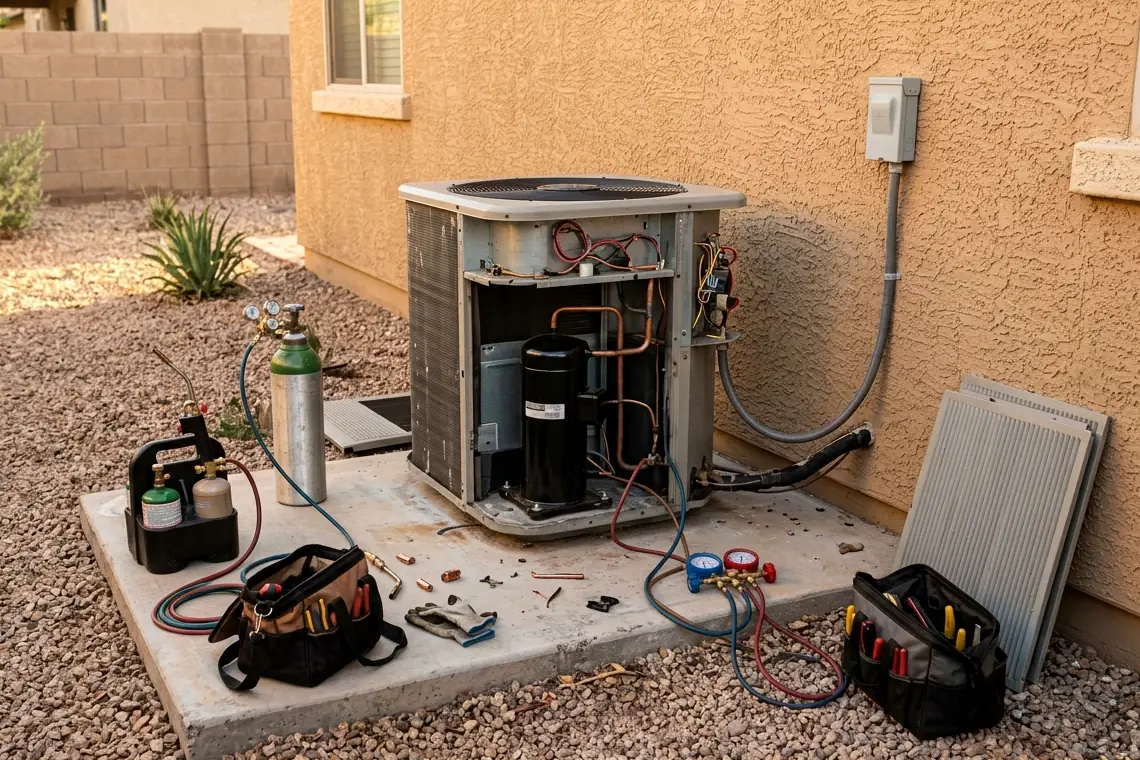
AC compressor replacement means removing a failed compressor from the outdoor unit and installing a new one, then restoring the refrigerant charge. In Phoenix, compressors fail from overheating, low refrigerant, electrical damage or dirty coils raising pressure. Signs include a unit that hums but won't start, trips breakers or blows warm air while the fan runs. On newer systems, replacement often makes sense; on older or R-22 systems, a full system replacement may be the better value.
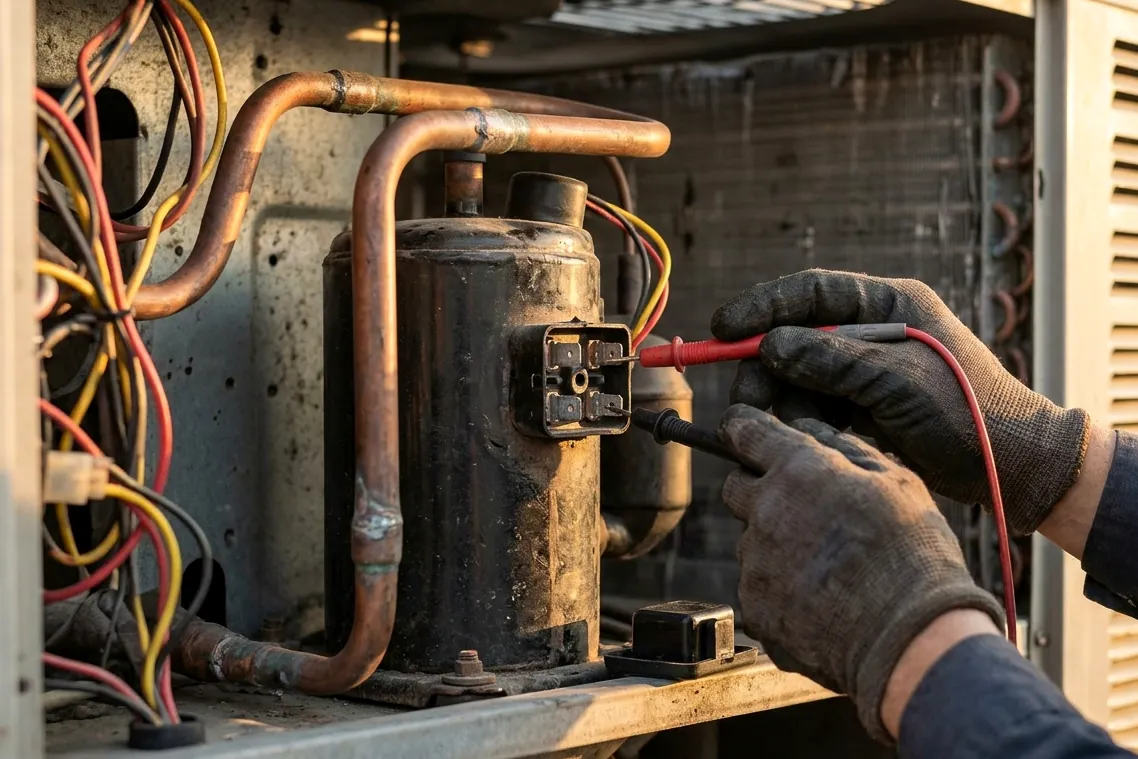
Not every system that won't cool has a bad compressor. A weak capacitor, a burned contactor or a failed hard-start circuit can make a healthy compressor look dead. Before we talk about replacing it, we test the compressor's windings with an ohmmeter, check for shorts to ground, measure amp draw on startup and look at pressures. That testing separates a $200 electrical repair from a compressor replacement, and we don't recommend the larger job unless the readings back it up.
When the compressor truly has failed, the next question is why. Compressors rarely die on their own. Low refrigerant from a leak, a dirty condenser coil that raises head pressure, a failed fan motor, poor airflow at the indoor coil or repeated short cycling all push compressors past their limits. If we replace the compressor without fixing the cause, the new one can fail too. We find and correct the underlying problem as part of the job.
Then comes the decision. If your system is under about 10 years old, still uses R-410A and is otherwise in good shape, a compressor replacement often makes sense, especially if the manufacturer's parts coverage applies. If the system is older, runs on R-22 or has other worn parts, putting a new compressor into aging equipment may not be wise. We'll give you both prices side by side, explain the trade-offs and let you choose.
Signs to watch
A loud hum without the compressor starting can mean a failed start capacitor, stuck compressor or open winding. Testing tells us which, so shut the unit off to prevent overheating.
A compressor with shorted windings or a locked rotor draws excessive current and trips the breaker. Repeatedly resetting it risks wiring damage, so call for testing instead.
If the outdoor fan spins but the large copper line stays warm and the house won't cool, the compressor may not be running or may have failed internally.
Internal mechanical damage inside the compressor can produce knocking, clanking or grinding sounds at startup or during operation. These sounds usually mean serious internal wear.
A compressor that starts and stops repeatedly may be overheating and tripping its internal overload, often because of low charge, a dirty coil or a failing fan motor.
A burning odor near the condenser can signal overheated windings or wiring. Turn the system off at the breaker and call before damage spreads.
Before you call
Anything beyond these checks involves electrical parts or refrigerant, so call (602) 848-9399 and let a technician take it from there.
How we handle it
We measure winding resistance, check for shorts to ground and test capacitors, contactors and start components, so we're sure the compressor itself has failed before recommending replacement.
We look for leaks, dirty coils, fan motor issues, airflow problems or electrical faults that may have caused the failure, so the new compressor doesn't suffer the same fate.
You'll see the cost of a compressor replacement next to a full system replacement, along with parts coverage details, system age and refrigerant type considerations.
Refrigerant is recovered properly, the failed compressor is cut out, and the system is checked for acid or burnt oil that could harm the new compressor.
The new compressor is brazed in with nitrogen flowing, a new filter drier is installed, and lines are cleaned if contamination is present from a burnout.
After pressure testing, we pull a deep vacuum, weigh in the correct charge and verify amp draw, pressures and temperature split under real operating conditions.
Typical cost
Typical compressor replacement, parts and labor. A range, not a quote: the real number depends on what the technician finds. Full price guide
Compressor replacements covered by manufacturer parts coverage cost less, since mainly labor and refrigerant are billed. Out-of-coverage compressors, larger systems and burnouts needing line cleaning push costs higher. These are typical Phoenix ranges, not quotes, and the real number depends on what the technician finds when testing the system.
| Line item | Typical range |
|---|---|
| Compressor replacement, under parts coverage | $1,285 to $2,165 |
| Compressor replacement, out of coverage | $1,785 to $3,965 |
A compressor in Phoenix may run for hours without stopping when outdoor temperatures sit above 110 degrees. Higher outdoor temperatures raise refrigerant pressures, which means the compressor works harder and runs hotter. When the condenser coil is coated with monsoon dust or the fan motor slows down, pressures climb further. Over several summers, that heat breaks down winding insulation and lubricating oil. Compressors here often fail late in the season, after months of heavy use.
Electrical stress adds to the risk. Monsoon storms bring power flickers and surges that can damage compressor windings or the capacitors that help them start. A failing capacitor forces the compressor to struggle at startup, which overheats it. Low refrigerant from an unrepaired leak also causes overheating, because cool returning refrigerant normally helps cool the compressor. That's why we check capacitors, contactors, refrigerant charge and coils during every Phoenix compressor replacement.
We repair and replace Trane, Carrier, Lennox, Goodman, Rheem, Daikin and most other makes found in Valley homes.
Related work
Aging, R-22 or repeatedly failing systems replaced with properly sized SEER2 equipment, with ducts, drain and electrical checked before install.
See ac replacementThe most common Valley summer failure: weak capacitors and pitted contactors tested with a meter and replaced from stock on the truck.
See capacitors & contactorsElectronic and dye leak detection, brazed or replaced parts, nitrogen pressure tests and a proper vacuum and recharge so the charge stays put.
See refrigerant leak repairOutdoor fan motors that stall, squeal or overheat repaired or replaced with correct horsepower, rotation and capacitor to protect the compressor.
See condenser fan motorWhere we do this
These communities make up most of the homes we serve. Each link opens the local page with ZIP codes, typical homes and the issues we see there.
They can look similar, since a failed capacitor can stop a compressor from starting. A technician tests the capacitor's microfarad rating and the compressor's windings with a meter. If the capacitor is weak and the windings test normal, replacing the capacitor fixes the problem for much less. We always test both before recommending a compressor replacement.
Often not, especially if the system uses R-22 or has other worn parts. A 12-year-old system in Phoenix has already worked many summers, and its coils and motors may fail soon after an expensive compressor replacement. If the system is in unusually good condition and uses R-410A, it might be reasonable. We'll show you both prices so you can compare.
Most compressor replacements take four to eight hours once the part is on hand. Burnouts that require flushing the system or replacing a line set can take longer. Compressors are sometimes ordered, especially brand-specific models, which can add a day or two. We'll tell you the expected timing as soon as we confirm the part.
Many manufacturers cover the compressor part itself for a period if the system was registered, though labor and refrigerant usually aren't included. Coverage terms differ by brand and model. We can look up the serial number to check manufacturer coverage, and we'll explain what is and isn't covered before you approve any of the work.
Common causes include low refrigerant from leaks, dirty condenser coils that raise pressures, failing fan motors, weak capacitors, power surges during monsoon storms and short cycling from oversized systems. Phoenix heat makes all of these worse. Regular tune-ups, prompt leak repairs and coil cleaning help compressors last longer.
Yes. If a leak, dirty coil, failing fan motor or electrical issue caused the original failure, a new compressor faces the same stress. That's why we look for the root cause during every replacement. Fixing it may add some cost, but it protects your investment in the new compressor.
A real person answers (602) 848-9399 every hour of every day, and we will tell you plainly what the next step is.