Evaporative Cooler Repair
Rooftop and side-draft swamp coolers repaired: pumps, pads, float valves, belts, motors and water lines clogged by Phoenix hard water.
See swamp cooler repairAir conditioning
A new evaporative cooler sized to your home and set up with rigid media pads, a proper bleed-off and a clean water line can cool a Phoenix house cheaply through the dry months before monsoon humidity arrives.
At a glance
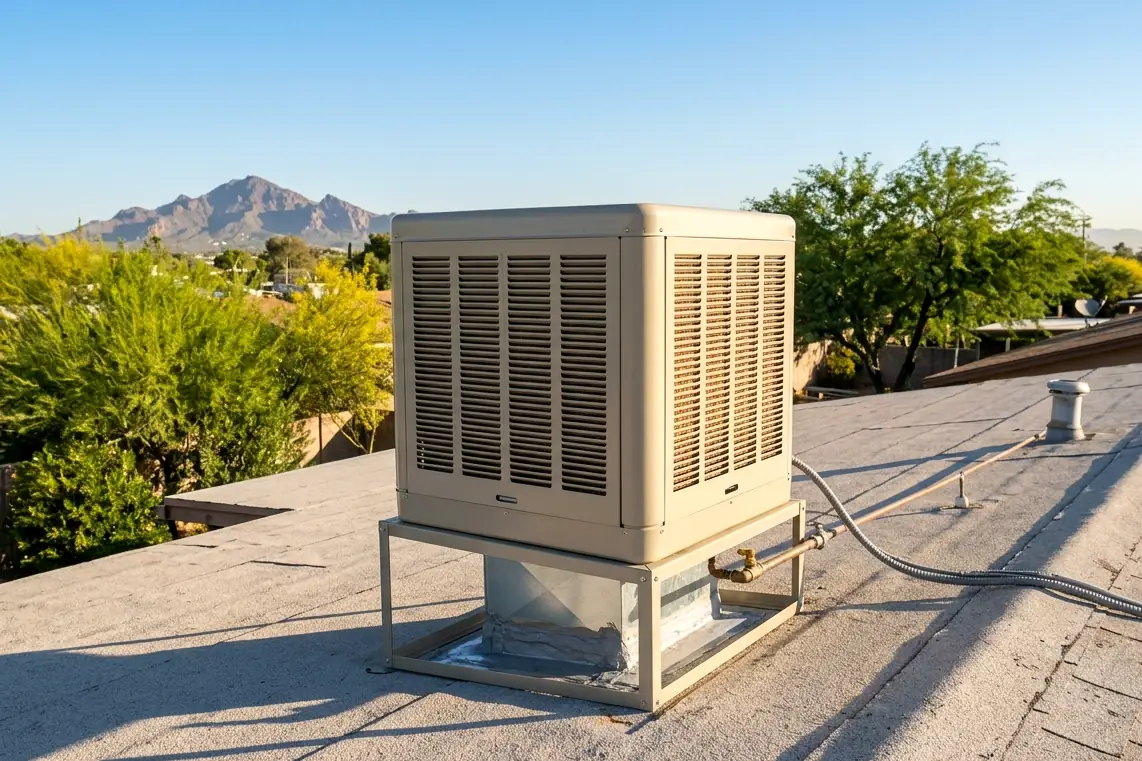
Evaporative cooler installation means setting a new roof-mount or side-draft swamp cooler, sized by CFM to your home, with its water line, float valve, pump, bleed-off and electrical connections in place. In Phoenix it makes sense when an old cooler's cabinet has rusted through, when the motor and pump keep failing, or when you want low-cost cooling for a home, garage or workshop during the dry months from spring into mid-June.
An evaporative cooler pulls hot, dry outdoor air through wet pads and pushes it into your home many degrees cooler, using a fraction of the electricity a compressor needs. In Phoenix that works beautifully from spring into early summer, when humidity often sits very low. The catch is that a cooler only performs as well as its installation. An undersized unit, a sagging stand or a water line with no bleed-off will disappoint you long before monsoon season does.
Most of the installs we handle are replacements. The old cabinet on the roof has rusted through, the pan leaks onto the roof deck, or the motor and pump have been patched so many times that a new unit costs less over the next few summers. Our technicians size the replacement by CFM rather than by whatever was there before, since many older homes carry a cooler picked decades ago for a smaller floor plan or a house that has since been added onto.
Other projects are new installs: a side-draft cooler for a garage or shop, a unit for a backyard casita, or a cooler for a home that wants low-cost cooling in the dry months. Each one gets a level stand or curb, a sealed roof penetration, a water line with its own shutoff, a bleed-off kit and a proper electrical connection. You'll also get a plain explanation of how to open windows or relief vents so the cooler can actually push air through the house.
Evaporative cooling depends on dry air. From about March through mid-June, Valley humidity usually stays low enough for a well-sized cooler to drop incoming air dramatically, and many homes stay comfortable for very little power. Once monsoon season starts on June 15, humidity spikes and the same cooler loses much of its punch. That's why spring is the best time to install: you get the full dry stretch out of the new unit, and roof work is safer before 110°F afternoons arrive.
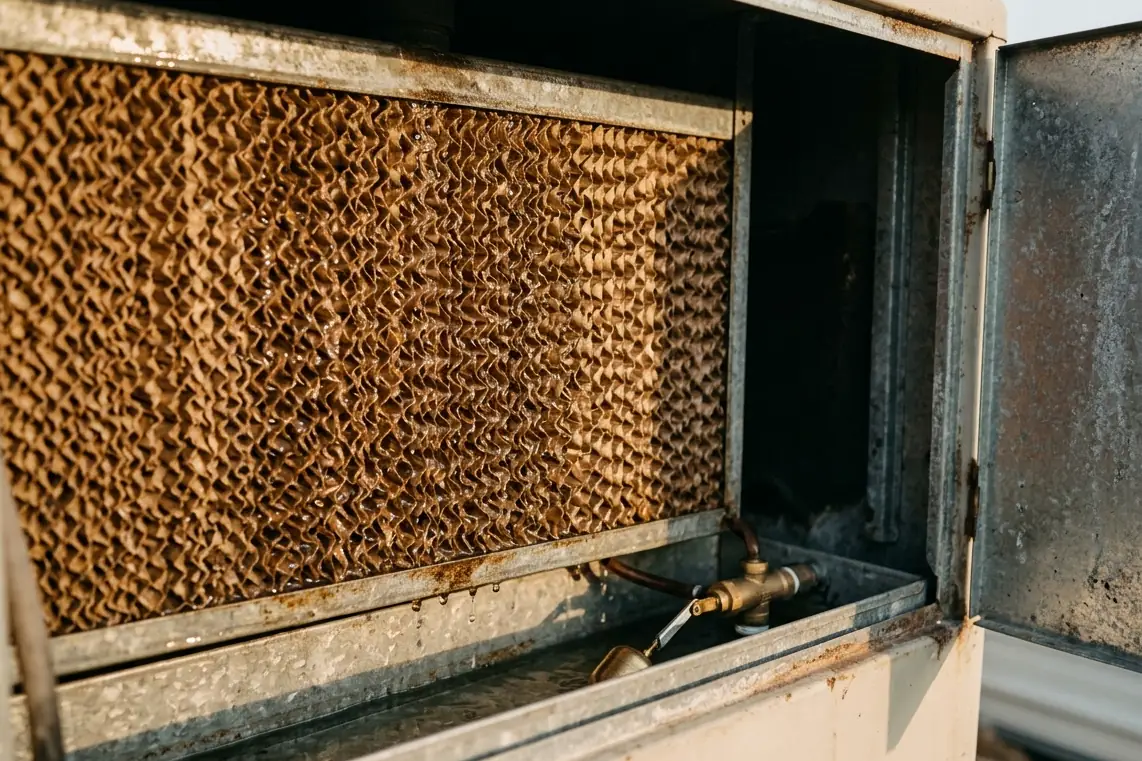
Phoenix water is hard, and that matters more for coolers than for almost any other appliance. As water evaporates off the pads, minerals stay behind and build scale on the pads, pan and pump. A bleed-off line that drains a small, steady amount of water from the pan keeps mineral levels lower and stretches pad and pump life. Roof-mount units also sit in full sun and dust storms, so we favor sturdy cabinets, rigid media and a stand that keeps the pan level and draining.
Typical cost
Typical roof-mount cooler replacement. A range, not a quote: the real number depends on what the technician finds. Full price guide
Most Phoenix homes replacing a roof-mount cooler land in this range, including the cooler, pads, water line, bleed-off and haul-away of the old unit. Side-draft units for garages cost less, while new roof openings and duct drops cost more. The real number depends on what the technician finds on your roof, and you hear it before any work starts.
| Line item | Typical range |
|---|---|
| Evaporative cooler replacement, roof-mount | $1,865 to $3,940 |
| Side-draft evaporative cooler installation | $1,385 to $2,970 |
| New evaporative cooler with roof curb and duct drop | $3,285 to $6,470 |
How we handle it
The technician measures the square footage the cooler will serve, checks ceiling heights and the duct drop size, and calculates the CFM you need rather than copying the size of the old unit.
Roof-mount down-draft units feed a central duct drop, while side-draft units sit on a wall bracket, ground stand or roof and push air sideways. We recommend the style that fits your duct, roof and space.
For replacements, we shut off water and power, drain the pan, disconnect the old cabinet and lower it off the roof, then inspect the duct drop and roof curb for rot or leaks.
The new cooler sits on a level stand or curb so the pan drains properly. Roof penetrations and the duct transition get sealed and flashed to keep monsoon rain out of the attic.
A new water line with a shutoff valve goes in, along with the float valve and a bleed-off kit set for hard water. The motor and pump then get connected to a proper electrical supply.
The cooler runs while we check pad saturation, pump flow, motor amps and airflow at the registers. You'll learn how to set relief openings, switch speeds and shut it down for winter.
Signs to watch
Once the bottom pan or side panels rust through, water drips onto the roof or down the duct drop. Patches rarely last, and a leaking pan can stain the ceilings below.
Replacing a blower motor one summer and a pump the next adds up quickly. When the cabinet is also tired, a new cooler usually costs less than another round of parts.
If rooms far from the duct drop never feel cool, even on dry spring days, the cooler may not move enough CFM for the square footage it serves.
Thick white scale on the pan, pump and pad frames means years of hard water with no bleed-off. Heavy buildup shortens pump life and blocks water flow to the pads.
A swampy odor each time the cooler kicks on points to stagnant water, rotting pads or a pan that never drains. An old, scaled cabinet can be hard to get truly clean again.
Garages and shops in Phoenix can top 110°F on summer afternoons. A side-draft cooler sized for the space makes it usable for projects, workouts or storage that can't take the heat.
Before you call
Anything beyond these checks involves electrical parts or refrigerant, so call (602) 848-9399 and let a technician take it from there.
We repair and replace Trane, Carrier, Lennox, Goodman, Rheem, Daikin and most other makes found in Valley homes.
Related work
Rooftop and side-draft swamp coolers repaired: pumps, pads, float valves, belts, motors and water lines clogged by Phoenix hard water.
See swamp cooler repairSwamp cooler removed, roof opening sealed and refrigerated air installed with properly sized ducts, electrical and drain for year-round comfort.
See cooler to ac conversionSolar and powered attic fans, soffit intake and roof exhaust vents balanced to flush hot air from Phoenix attics without pulling cool air from your rooms.
See attic fan & ventilationNew central air for additions, casitas, garages and homes without ducted cooling, sized by load calculation for Phoenix summer heat.
See ac installationWhere we do this
These communities make up most of the homes we serve. Each link opens the local page with ZIP codes, typical homes and the issues we see there.
A common rule of thumb divides the cubic footage of the space by two, which gives a CFM that replaces the air about every two minutes. A 1,500 square foot home with 8-foot ceilings holds about 12,000 cubic feet, pointing to a cooler near 6,000 CFM. Long duct runs and west-facing rooms can push that number higher. The technician confirms the size on site before recommending a model.
If your home already has a central duct drop through the roof, a down-draft roof-mount cooler usually connects most easily and spreads air through the existing registers. Side-draft coolers suit garages, shops, patios and homes where the unit sits on a wall bracket or ground stand. The right choice depends on your duct layout, your roof type and how much space you need to cool.
For most Phoenix homes, yes. Rigid media pads are thick, corrugated cellulose sheets that hold water evenly, resist sagging and usually last several seasons with a working bleed-off. Aspen pads cost less but often need replacing every year and can thin out, letting hot air slip past. Rigid media also cools a little more evenly, which you notice most on dry, 100°F spring afternoons.
Spring is ideal, roughly March through May. Installing then gives you the full stretch of dry weather when a cooler performs best, before monsoon humidity arrives in late June. Roof work is also easier before afternoons reach 110°F. If your old cooler fails in July, we can still replace it, but expect it to shine most in the dry weeks after monsoon season ends.
We strongly recommend one. As water evaporates from the pads, minerals stay behind and keep concentrating in the pan. A bleed-off kit sends a small, steady stream of pan water to a drain or a spot away from the foundation, so fresh water keeps diluting the minerals. Without it, scale builds quickly on pads, pumps and float valves, and parts wear out far sooner.
Often it can, if the opening is sound and sized close to the new unit's outlet. The technician checks the curb for rot, the duct drop for rust or leaks and the roof seal around it. When the old opening is too small for the CFM you need, or the framing is damaged, we rebuild the transition so the new cooler sits level and seals properly against monsoon rain.
A real person answers (602) 848-9399 every hour of every day, and we will tell you plainly what the next step is.