Blower Motor Repair
Vents barely blowing while the outdoor unit runs? We diagnose PSC and ECM blower motors, capacitors, modules and wheels, then repair or replace the failed part.
See blower motor repairAc parts and repairs
Your air handler holds the blower, the indoor coil, the control board and the drain pan. When any of those fail, comfort drops fast, and an attic unit can also put your ceiling at risk.
At a glance
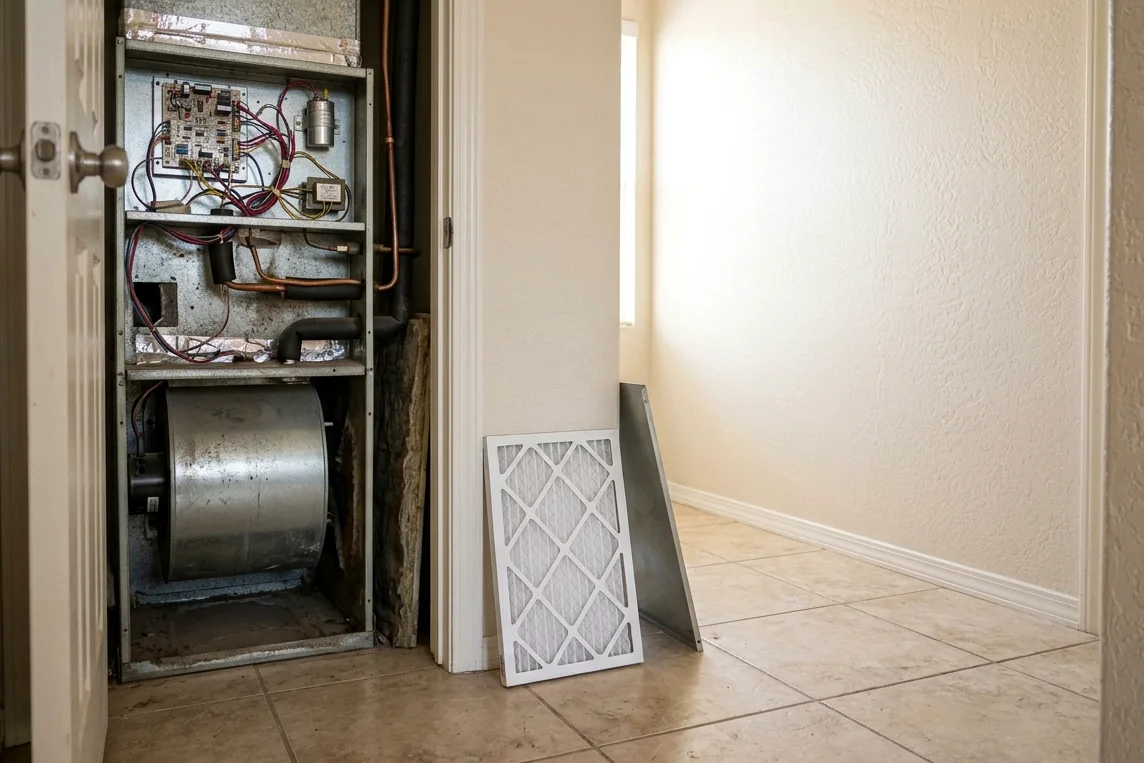
Air handler repair covers the indoor half of a split AC or heat pump system: the cabinet that holds the blower, evaporator coil, control board, heat strips and condensate pan. In Phoenix you need it when air stops moving, water drips from an attic unit, breakers trip, or the system cools unevenly. Because so many Valley air handlers sit in hot attics, problems here can damage drywall as well as comfort.
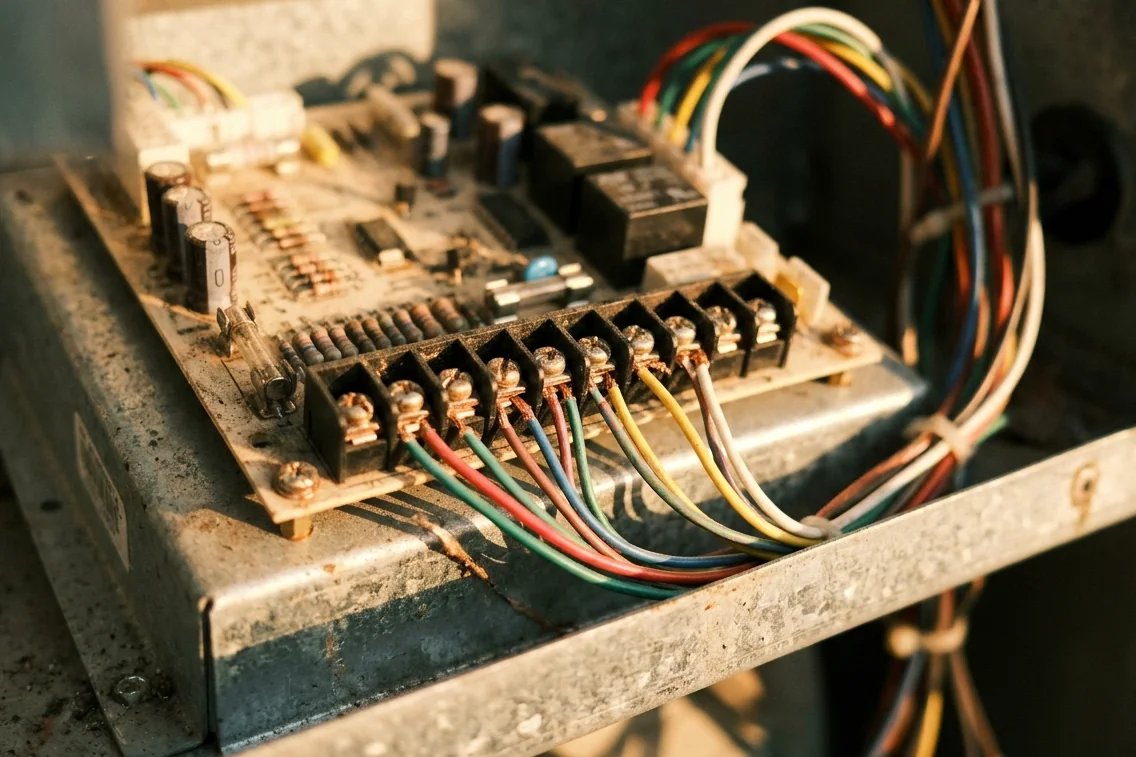
An air handler is the indoor cabinet that teams with your outdoor condenser or heat pump. Inside it you will find the blower, the evaporator coil, a low-voltage control board, a transformer, a primary drain pan and, on many heat pump systems, electric heat strips. Each part depends on the others. A dead transformer stops the whole system, a cracked pan leaks into the ceiling, and a failing relay can leave the fan running while nothing else happens.
Because the air handler is the hub of the system, an accurate diagnosis matters more than speed. A technician who swaps a control board without testing the transformer or thermostat wiring may leave you with the same symptom and a bigger invoice. Our technicians follow the signal from the thermostat through the board to each component, reading voltage at each step, so the repair addresses the actual failure point.
Phoenix homes put air handlers in attics, hall closets, garages and occasionally under stairwells. Attic units are the hardest to reach and the most likely to cause water damage when something fails. We work in all of these spaces regularly, and we bring drop cloths, lighting and pan protection so the repair does not create new problems in your living space.
Signs to watch
A brown ring below an attic air handler usually means the primary pan cracked, the drain clogged, or the secondary pan overflowed. Shut the system off to limit damage and call us.
If the thermostat has power but nothing starts, a blown low-voltage fuse, a failed transformer or a tripped float switch inside the air handler is often responsible.
When the blower runs and the outdoor unit never starts, the cooling signal may be failing at the control board or along the wire run to the condenser.
On heat pump systems with backup strips, a breaker that trips in winter often traces to a shorted heat strip element or a failed sequencer inside the air handler.
Loose panels, a worn blower mount or debris in the housing can rattle loudly through return grilles. Left alone, vibration can loosen wiring connections and damage the coil.
A sour or musty odor when the system starts often comes from standing water in the pan or growth on a wet coil. Clearing the pan and drain usually helps right away.
Before you call
Anything beyond these checks involves electrical parts or refrigerant, so call (602) 848-9399 and let a technician take it from there.
How we handle it
We confirm the thermostat is sending the right signals for fan, cooling and heat, and inspect the low-voltage wire run for rodent damage or loose splices, which are common in attic installs.
A shorted wire or water in the float switch can blow the 3 or 5 amp fuse on the board. We find the cause of the short before replacing the fuse so it does not blow again.
The primary pan, secondary pan and float switch get checked for cracks, standing water and function. A safety switch that is wired wrong can let water overflow without shutting the system down.
Relays and the blower circuit are tested under load. We check amp draw on the motor and confirm each speed tap or ECM program responds correctly to heating and cooling calls.
We look at the evaporator coil for dirt, oil spots that hint at leaks, and corrosion. On heat pump systems, the heat strips and sequencers are tested for continuity and correct staging.
After the repair we run full cycles in cooling and, where present, heating. You get a short summary of what we replaced, the readings we took and anything we noticed that may need attention later.
Typical cost
Typical air handler repair visit, by failed component. A range, not a quote: the real number depends on what the technician finds. Full price guide
Most air handler repairs involve one failed electrical part or a drain issue, which keeps them toward the lower half of this range. Control boards and coil work push costs higher. These are typical Phoenix ranges rather than a quote, and the real number depends on what the technician finds once the cabinet is open and tested.
| Line item | Typical range |
|---|---|
| Float switch or transformer replacement | $167 to $348 |
| Air handler control board replacement | $427 to $864 |
| Primary drain pan replacement | $389 to $1,184 |
An attic air handler in Phoenix spends the summer surrounded by air that can reach 140 to 160°F. Control boards, relays and transformers do not like that heat, and their solder joints and contacts degrade faster than they would in a cooler space. Plastic drain pans also turn brittle with years of heat cycling, which is why we often find hairline cracks in pans on systems around 10 to 15 years old.
Dust is the other constant. Fine Valley dust finds its way through return leaks and loose filter slots, coating the coil and the blower wheel. A dirty coil holds water longer, which feeds algae in the pan and drain. Hard water minerals add scale to the drain path as well. Keeping a filter seated tightly, and sealing a leaky return, does more for air handler life here than most people expect.
We repair and replace Trane, Carrier, Lennox, Goodman, Rheem, Daikin and most other makes found in Valley homes.
Related work
Vents barely blowing while the outdoor unit runs? We diagnose PSC and ECM blower motors, capacitors, modules and wheels, then repair or replace the failed part.
See blower motor repairClogged condensate line or a tripped float switch? We clear algae and scale, flush the drain, check pans and traps, and confirm water drains clearly again.
See ac drain line cleaningAuxiliary heat not working or tripping breakers? We test heat strip elements, sequencers, relays, limit switches and high-voltage wiring in heat pump air handlers.
See heat strip repairLeaking or corroded indoor coils replaced with matched units, brazed, pressure tested, evacuated and charged for reliable cooling.
See evaporator coilWhere we do this
These communities make up most of the homes we serve. Each link opens the local page with ZIP codes, typical homes and the issues we see there.
Most often a float switch has tripped because the drain pan is filling, or a small fuse on the control board blew due to a short in the thermostat wiring. Both cut power to the thermostat. Check the secondary pan for water first. If it is dry, the fuse or transformer is the likely cause, and we trace the short so the new fuse does not blow again.
Small cracks in plastic pans can sometimes be sealed as a short-term fix, but heat in Phoenix attics tends to reopen those repairs. A rusted metal pan cannot be reliably patched. On many units the primary pan can be replaced without pulling the whole coil, while others require partial disassembly. We look at your model and tell you which approach will actually hold up.
Some sweating happens on uninsulated suction lines during monsoon humidity, but a cabinet that drips on the outside often means air is leaking around panels or the coil housing. That cold air condenses moisture on the metal skin. Sealing panel gaps and insulating exposed lines usually fixes it. Persistent sweating can also point to low airflow, which we check during the visit.
Our technicians test this directly by jumping the thermostat signals at the board. If the system responds when we bypass the thermostat, the issue is the thermostat or its wiring. If the board receives correct signals but does not send power to the blower or condenser, the board is at fault. That simple test avoids replacing the wrong part and keeps your repair cost down.
In most cases, yes. Indoor and outdoor units are designed and rated as a pair, and newer equipment using A2L refrigerants needs an indoor coil approved for that refrigerant. Replacing only the condenser on an old air handler can reduce efficiency and comfort. If your air handler is fairly new and compatible, we will tell you so and price only what you need.
Heat strips collect a layer of dust over a long summer, and the first time they energize, that dust burns off with a short-lived smell. It should fade within an hour. A smell that lingers, gets stronger or comes with a tripped breaker can mean a failing heat strip or overheated wiring, and you should turn the system off and call us.
A real person answers (602) 848-9399 every hour of every day, and we will tell you plainly what the next step is.