AC Maintenance Plans
Spring cooling and fall heating visits on a schedule, priority scheduling in summer and a service history that tracks your system year to year.
See maintenance plansAir conditioning
A spring tune-up catches the weak capacitor, dirty coil or slow drain before July turns it into a breakdown. We test and clean the parts that fail most often in Phoenix heat.
At a glance
An AC tune-up is a thorough cleaning, testing and adjustment of your cooling system to catch problems early and keep it running efficiently. In Phoenix, the best time is March through May, before temperatures pass 100 degrees, with a second check after monsoon season for dusty or older systems. A good tune-up includes capacitor testing, coil cleaning, drain flushing, electrical checks, refrigerant readings and a temperature split measurement.
A tune-up isn't a quick look and a sticker on the unit. In Phoenix, it's the best chance to find the parts most likely to fail when the system is working hardest. Capacitors lose microfarads gradually, and one reading 10 percent low in April can fail on a 112-degree afternoon. Contactor points pit and burn. Drain lines grow algae and sludge over winter. A tune-up measures those things with meters and gauges, so you hear about problems while scheduling is easy and parts are cheap.
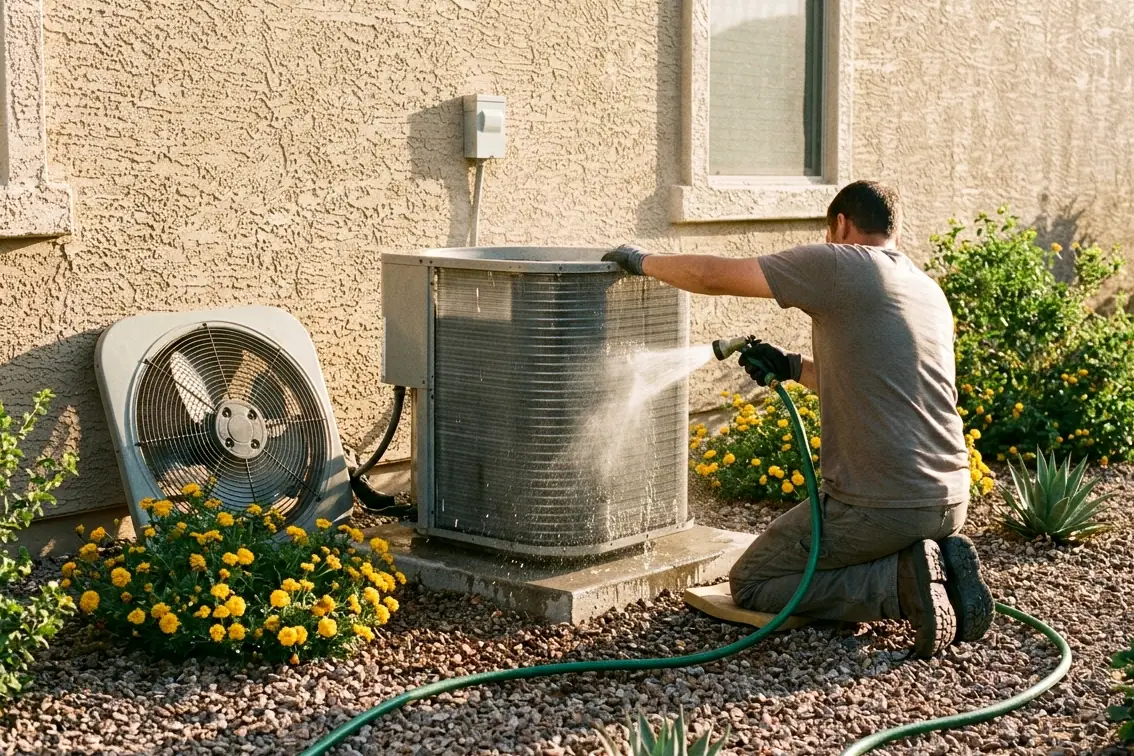
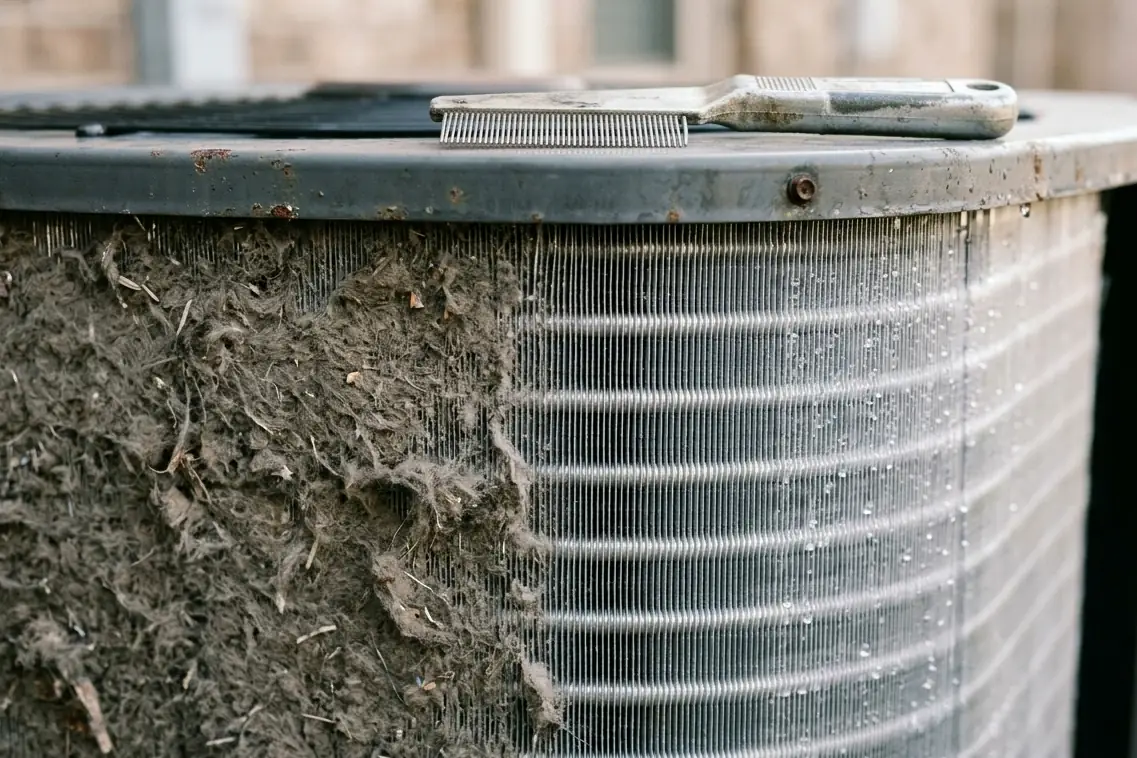
Cleaning is the other half. Fine Valley dust and last year's monsoon debris pack condenser coils, raising head pressure and power use. We rinse the coil from the inside out at the right pressure so fins stay straight, clear the area around the unit, check the blower wheel for buildup and replace or inspect the filter. A cleaner system moves heat more easily, which can mean lower APS or SRP bills and less strain on the compressor during long summer runs.
After cleaning, we measure what matters: refrigerant pressures with superheat or subcooling, compressor and fan motor amp draw, supply and return temperatures, and the condensate drain flow. Those numbers become a baseline for your system. Next time something feels off, we can compare current readings with spring readings and see what changed. You'll get a plain summary of what we found, what looks healthy and what we'd watch or replace before summer.
Signs to watch
March through May is the sweet spot, when it's warm enough to test cooling properly but well before the first 105-degree week puts weak parts to the test.
If your system went through last summer without a checkup, dust, wear and electrical stress have already taken a toll that cleaning and testing can catch early.
After haboobs and storms, coils and filters carry heavy dust, and surges may have weakened capacitors. A fall check helps older systems finish the season and prepare for next year.
A jump in cooling costs with similar weather often points to a dirty coil, low charge or a weak motor. A tune-up shows which one is pulling extra power.
When the house takes longer to cool down in the evening, the system may be losing capacity. Catching it during a tune-up costs less than an emergency call later.
Rattling panels, clicking at startup or a fan that hesitates before spinning can be early signs of a failing contactor, capacitor or motor bearing worth checking now.
A tune-up written for a mild climate misses what kills systems here. In Phoenix, an air conditioner can run 3,000 hours or more in a year, and the outdoor unit sits in direct sun on afternoons above 110 degrees. That heat accelerates capacitor wear and dries out wiring insulation, so we test every capacitor against its rating and look closely at connections for heat discoloration. Parts that are borderline in spring rarely survive August.
Dust is the other local factor. Monsoon storms between mid June and late September drive fine dust deep into condenser coils, sometimes forming a mat on the inside face that a quick hose spray won't touch. We clean from the inside out when the unit design allows. Hard water and dust also feed algae and sludge in drain lines, which is why we flush the condensate drain and test the float switch on every Phoenix tune-up, especially in attic installations.
How we handle it
We meter capacitors against their rated microfarads, inspect contactor points, tighten connections, check voltage and measure amp draw on the compressor, condenser fan and blower motors.
Power is shut off, debris is cleared, and the coil is rinsed with the right pressure to remove packed dust without bending fins. Bent fins get straightened where needed.
Gauges and temperature probes show pressures, superheat and subcooling. We compare those readings with manufacturer targets and note any signs of a leak, restriction or overcharge.
We look at the evaporator coil, blower wheel and filter, check for rust or water in the pan, and confirm the air handler cabinet is sealed and insulated.
The condensate drain gets flushed or vacuumed, and the float switch or overflow safety gets tested so a clog shuts the system off instead of soaking the ceiling.
We record temperature split and overall operation, then give you a plain summary of what looks healthy, what's wearing and what we'd fix before summer.
Before you call
Anything beyond these checks involves electrical parts or refrigerant, so call (602) 848-9399 and let a technician take it from there.
Typical cost
Typical single-system tune-up. A range, not a quote: the real number depends on what the technician finds. Full price guide
A standard tune-up for one split system or heat pump sits near the low end. Rooftop package units, heavily packed coils needing chemical cleaning and homes with two systems cost more. Parts found during the visit, like a capacitor or contactor, are quoted separately. These are typical Phoenix ranges, and the real number depends on what the technician finds.
| Line item | Typical range |
|---|---|
| AC tune-up, single system | $89 to $165 |
| Package unit tune-up | $129 to $215 |
Two-thermometer test
Hold a thermometer at a return grille, then at the supply register nearest the air handler after the AC has run 15 minutes.
Inside the normal range
A 15 to 22°F split points to a coil and charge doing their job.
Not sure? Call (602) 848-9399.
We repair and replace Trane, Carrier, Lennox, Goodman, Rheem, Daikin and most other makes found in Valley homes.
Related work
Spring cooling and fall heating visits on a schedule, priority scheduling in summer and a service history that tracks your system year to year.
See maintenance plansInside-out rinsing and coil cleaner remove packed monsoon dust from outdoor coils, lowering pressure, power draw and compressor heat.
See condenser coil cleaningClogged condensate line or a tripped float switch? We clear algae and scale, flush the drain, check pans and traps, and confirm water drains clearly again.
See ac drain line cleaningThe most common Valley summer failure: weak capacitors and pitted contactors tested with a meter and replaced from stock on the truck.
See capacitors & contactorsWhere we do this
These communities make up most of the homes we serve. Each link opens the local page with ZIP codes, typical homes and the issues we see there.
Spring, from March through May, is ideal. It's warm enough to run cooling tests properly, scheduling is easier, and weak parts get replaced before the first 105-degree week. Older systems, rooftop package units and homes near open desert also benefit from a fall check after monsoon season, when coils and filters carry the heaviest dust load.
It can. A dust-packed condenser coil forces the compressor to work against higher pressure, and a weak capacitor makes motors draw extra current. Cleaning the coil, fixing the charge and replacing tired parts help the system move heat with less effort. Results vary, but on a system running thousands of hours a year, small efficiency gains show up on APS or SRP bills.
Most single-system tune-ups take about an hour to ninety minutes. A rooftop package unit, a heavily packed coil or a system with a clogged drain can take longer. If we find a worn part, like a capacitor, and you approve replacing it, we can usually take care of it during the same visit using stock from the truck.
A tune-up measures refrigerant pressures, superheat and subcooling, which often reveal a low charge. We also look for oil stains at fittings and coils, which can mark a leak. Pinpointing the exact leak usually takes a separate leak search with electronic detectors or dye. If a tune-up shows low charge, we'll explain what we saw and the options.
Yes. Even new systems collect Valley dust on the coil, grow algae in the drain line and lose a little electrical tightness with heat cycling. Many manufacturers also expect regular maintenance as part of their coverage terms. A yearly tune-up keeps a new system running at its rated efficiency and gives you a record of maintenance.
You can gently rinse the outside of the coil with a garden hose after turning off power at the disconnect, and that helps between visits. Avoid pressure washers, which flatten fins. A tune-up adds what a hose can't: capacitor testing, refrigerant readings, electrical checks, drain flushing and inside-out coil cleaning that removes dust packed deep in the fins.
A real person answers (602) 848-9399 every hour of every day, and we will tell you plainly what the next step is.