Heat Pump Installation
Load-calculated heat pump systems with matched indoor coils, correct heat strip sizing and full commissioning, designed for 115°F summers and mild Valley winters.
See heat pump installationHeat pumps and heating
A heat pump cools your home all summer and heats it all winter, so it works more months than a straight AC. When it stops switching modes or loses capacity, we find out why.
At a glance
Heat pump repair fixes the outdoor and indoor parts of a system that both heats and cools by moving heat in either direction. In Phoenix you need it when the system blows cool air on heat, will not switch between modes, ices up and never defrosts, runs heat strips constantly, or cools poorly in summer. Reversing valves, defrost boards, capacitors and refrigerant leaks are the usual suspects.
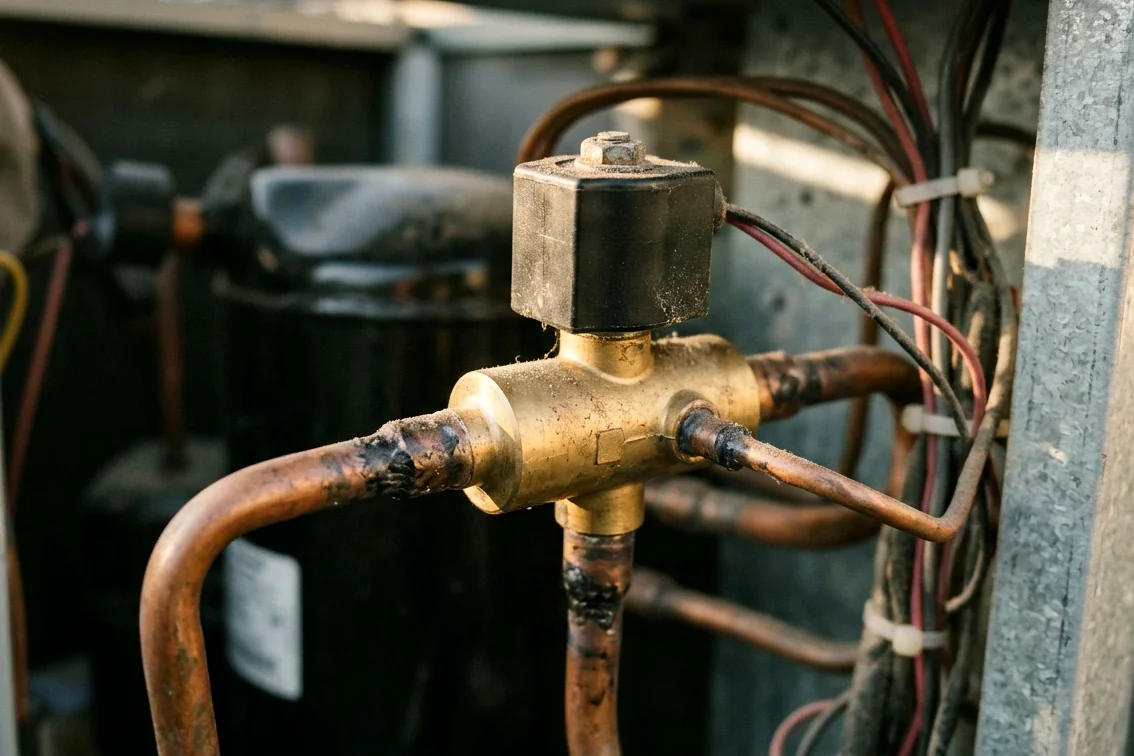
A heat pump is an air conditioner that can run backward. In summer it carries heat out of your home, and in winter a reversing valve flips the refrigerant flow so it pulls heat from outdoor air and brings it inside. That flexibility is why so many Phoenix homes use heat pumps, but it also means more parts that can fail, including the reversing valve, its solenoid, a defrost control board and outdoor temperature sensors.
Because the system runs year-round here, wear accumulates faster than on a cooling-only unit. A capacitor tired out by summer heat can quit on the first chilly December morning. A small refrigerant leak that went unnoticed in fall can cause weak heating and frequent defrost cycles once nights drop into the 40s. Many heat pump calls start with the homeowner noticing that the heat strips are doing all the work.
We approach heat pump repair by testing both modes, not just the one that failed. A reversing valve that sticks partway can cause weak heating and weak cooling at the same time. Readings on suction and discharge pressure in each mode tell us whether the problem is mechanical, electrical or refrigerant related, and whether repair or replacement makes more sense for your system's age.
Signs to watch
Lukewarm or cool air from the vents with heat selected can mean a stuck reversing valve, a failed solenoid, low refrigerant or a thermostat that is wired for the wrong valve setting.
Some frost in winter is normal, and the unit should clear it in a defrost cycle. A thick block of ice that stays points to a defrost board, sensor or charge problem.
If the system cools but will not heat, or heats but will not cool, the reversing valve or its control signal is the first thing we test.
When the auxiliary heat light stays on and your winter bill spikes, the heat pump itself may not be producing heat. Strips should assist, not carry the full load.
A short whoosh during defrost is normal. Grinding, loud rattles, or a compressor that clanks at startup are not, and they warrant a call before damage spreads.
Heat pumps cool just like AC units. Long run times, a small temperature split or warm rooms on hot afternoons suggest low charge, dirty coils or a leaking valve.
Before you call
Anything beyond these checks involves electrical parts or refrigerant, so call (602) 848-9399 and let a technician take it from there.
How we handle it
We operate the system in each mode and record temperature split and pressures. Comparing modes shows whether the reversing valve is shifting fully or leaking between sides.
The solenoid coil is checked for voltage and resistance. A failed coil is a modest fix, while a valve body that is stuck or leaking internally requires refrigerant recovery and brazing.
We test the defrost control, coil sensor and outdoor temperature sensor, then force a defrost cycle to confirm the unit switches over, clears ice and returns to heating.
Capacitors, contactors and wiring get tested under load. Heat-stressed capacitors are common in the Valley and can leave the compressor or fan unable to start reliably.
If readings point to low charge, we search for the leak before adding refrigerant. Heat pumps are sensitive to charge, and topping off without finding the leak only delays the next failure.
Finally we check that the thermostat calls for auxiliary heat only when needed and that the strips and sequencers respond correctly, so backup heat supports the heat pump instead of replacing it.
Typical cost
Typical heat pump repair, electrical part through reversing valve. A range, not a quote: the real number depends on what the technician finds. Full price guide
Most heat pump repairs involve a capacitor, contactor, sensor or defrost board and stay in the lower part of this range. Reversing valve replacement and leak repairs require refrigerant work and sit higher. These are typical Phoenix ranges, not a quote. The actual price depends on what the technician finds after testing both modes.
| Line item | Typical range |
|---|---|
| Heat pump capacitor or contactor repair | $193 to $387 |
| Defrost control board replacement | $364 to $742 |
| Reversing valve replacement | $1,287 to $2,486 |
Phoenix winters are mild, with January highs in the mid 60s and lows in the mid 40s, which suits heat pumps well. They can handle most heating hours without help from electric strips. That is also why a failing heat pump often goes unnoticed: the strips quietly take over, the house stays warm, and the only sign is a bigger APS or SRP bill in January.
Summer is the harder season. A heat pump runs through 110°F afternoons and overnight lows that stay in the upper 80s, so capacitors, contactors and compressors carry heavy loads for months. Monsoon dust packs the outdoor coil, and power surges during storms can damage defrost boards. A heat pump that struggled in August is worth checking before winter, since the same weak part often fails when the mode changes.
We repair and replace Trane, Carrier, Lennox, Goodman, Rheem, Daikin and most other makes found in Valley homes.
Related work
Load-calculated heat pump systems with matched indoor coils, correct heat strip sizing and full commissioning, designed for 115°F summers and mild Valley winters.
See heat pump installationAuxiliary heat not working or tripping breakers? We test heat strip elements, sequencers, relays, limit switches and high-voltage wiring in heat pump air handlers.
See heat strip repairElectronic and dye leak detection, brazed or replaced parts, nitrogen pressure tests and a proper vacuum and recharge so the charge stays put.
See refrigerant leak repairFall heating inspection for gas furnaces and heat pumps: flame sensor, igniter, heat strips, defrost controls, venting and carbon monoxide checks.
See heating tune-upWhere we do this
These communities make up most of the homes we serve. Each link opens the local page with ZIP codes, typical homes and the issues we see there.
During a defrost cycle the heat pump briefly switches to cooling mode to melt frost off the outdoor coil, so a few minutes of cool air can be normal. If it lasts longer, the reversing valve may be stuck, the solenoid may have failed, or refrigerant may be low. On systems with heat strips, cool air also suggests the backup heat is not engaging during defrost.
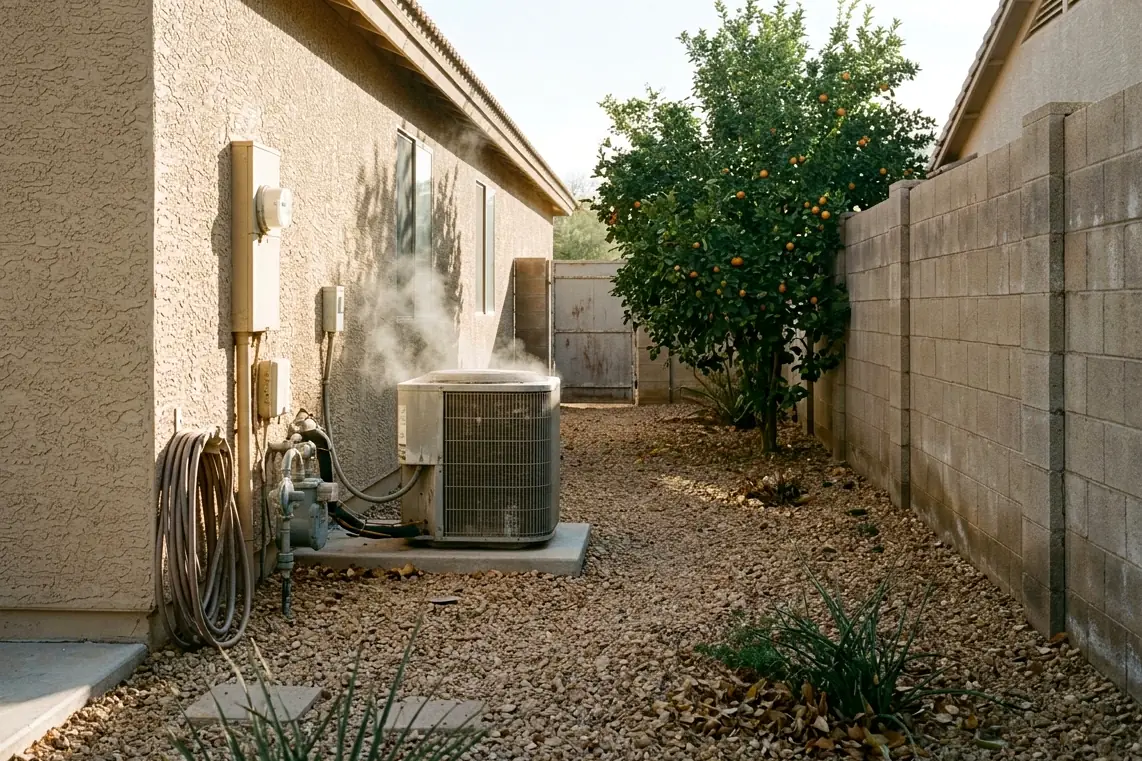
Yes, a cloud of vapor rising from the outdoor unit during defrost is normal. The unit warms the coil to melt frost, and that moisture turns to steam in cool air. You may also hear a whoosh as the reversing valve shifts. It becomes a concern only if the defrost never happens, ice keeps building, or the vapor comes with burning smells.
Most thermostats show an auxiliary heat or aux indicator when the strips are on. If that light stays on most of the time in mild Phoenix weather, the heat pump may not be producing enough heat. You can also listen at the outdoor unit while heating: if the fan and compressor are not running, the strips are doing all the work.
Sometimes the valve itself is fine and only the solenoid coil has failed, which is a straightforward electrical fix. A valve that sticks may occasionally loosen when cycled under pressure, but that relief is usually temporary. If the valve leaks internally or will not shift, replacement is the reliable fix, and on older systems we compare that cost against a new heat pump.
The cooling side needs the same care, including coil cleaning, capacitor testing and drain clearing. Heat pumps also need the reversing valve, defrost controls and heat strips checked, ideally in fall before the mode change. Because a heat pump runs both summer and winter here, a spring and a fall visit fit its workload better than one visit a year.
R-22 production ended in 2020, so recharging an older heat pump is expensive and supplies keep tightening. A small electrical repair can still make sense to get you through a season. For a refrigerant leak, a reversing valve or a compressor problem on an R-22 system, replacement usually offers better value, and we will show you both prices so the choice is clear.
A real person answers (602) 848-9399 every hour of every day, and we will tell you plainly what the next step is.