HVAC Zoning Systems
Motorized dampers and separate thermostats that split one system into zones, fixing hot upstairs floors and sunbaked west rooms in Phoenix homes.
See zoning systemsAc parts and repairs
A thermostat that matches your equipment and your utility plan can trim summer bills and stop short cycling. We install, wire and program it so heat pumps, staging and pre-cooling work the way they should.
At a glance
Thermostat installation replaces or upgrades the control that tells your heating and cooling system when to run. In Phoenix it is worth doing when your old thermostat is unreliable, you want to pre-cool before APS or SRP on-peak hours, you have a heat pump with backup heat strips that needs correct staging, or you are adding a smart model. Correct wiring, especially the common wire, matters more than the brand you choose.
A thermostat looks like a small part, but it controls every start and stop your system makes. The wrong model, or the right model wired poorly, can cause short cycling, run heat strips when the heat pump could handle the load, or leave the fan running all night. In Phoenix, where an AC can run most of the day from May through September, those small control errors add up quickly on the power bill.
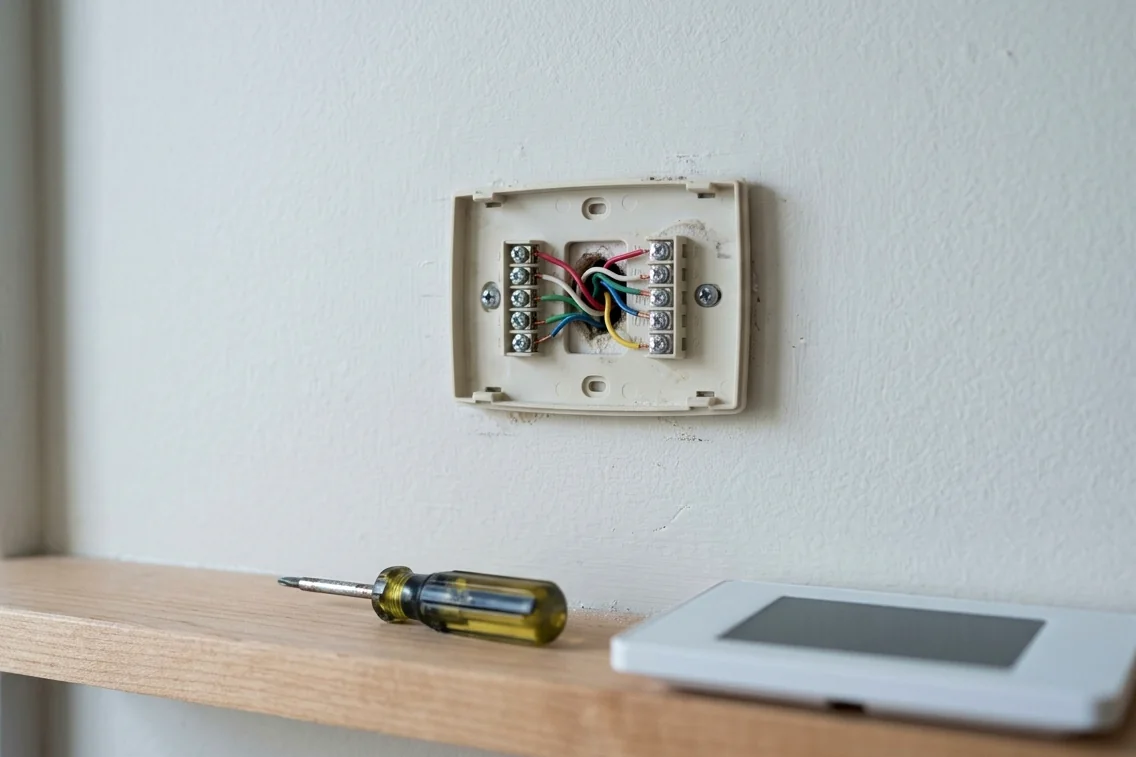
Many smart thermostats need a constant 24-volt common wire to stay powered. Older Valley homes often have only two or four conductors at the wall, and installers sometimes skip the common wire and rely on power stealing, which can make some systems chatter or drop out. Our technicians check the wire count at both the wall and the air handler, and run a new cable or add an adapter where it is needed.
Configuration is the other half of the job. Heat pump systems need the reversing valve set correctly, and auxiliary heat should be locked out above a sensible outdoor temperature so heat strips do not run on mild winter mornings. Two-stage and variable-speed equipment needs its own settings too. Before we leave, we program a schedule around your utility plan and show you how to adjust it.
Both APS and SRP offer time-of-use plans with on-peak hours in the late afternoon and evening, right when summer heat peaks. A thermostat that pre-cools the house a few degrees before on-peak begins, then lets it drift slightly, can shift a large share of cooling into cheaper hours. The house holds that coolness better when the attic and ducts are in good shape, so we sometimes mention those too.
Placement matters more here than in milder climates. A thermostat on a west-facing wall, in a hallway that bakes in afternoon sun, or near a kitchen will read high and run the system longer than needed. Smart models with remote room sensors help in two-story homes, where upstairs bedrooms can run several degrees warmer than the living room on a 112°F afternoon.
Typical cost
Typical thermostat installed, including setup. A range, not a quote: the real number depends on what the technician finds. Full price guide
Price depends mostly on the thermostat you pick and whether new wiring is needed. A basic programmable model on existing wire sits at the low end, while smart thermostats with room sensors or new cable runs land higher. These are typical Phoenix ranges, not a quote, and the real number depends on what the technician finds at the wall and air handler.
| Line item | Typical range |
|---|---|
| Programmable thermostat installed | $168 to $293 |
| Smart thermostat installed and configured | $286 to $487 |
| New thermostat cable run | $124 to $238 |
How we handle it
We confirm whether you have a straight AC with a gas furnace, a heat pump with heat strips, a dual-fuel setup, or multi-stage equipment, since each needs different thermostat terminals and settings.
Wire count and condition get checked at the wall plate and the air handler. If a common wire is missing, we pull a new cable or install an adapter rated for your equipment.
The new base is mounted on a level plane, holes from the old unit are patched where practical, and wires are labeled so future service is easy for anyone who opens it.
We set heat pump reversing valve logic, auxiliary heat lockouts, stage timing, fan behavior and compressor protection delays so the thermostat matches what your equipment expects to see.
Together we set a schedule that suits your household and your APS or SRP plan, with pre-cooling before on-peak hours and sensible setbacks for nights and workdays.
Each mode runs through a full cycle while we watch the equipment respond. We confirm smart features connect to your Wi-Fi and show you how to use the app.
Signs to watch
A screen that dims, flickers or goes dark between battery changes often signals a failing thermostat or a power problem in the low-voltage circuit feeding it.
If the reading says 76°F but rooms feel warmer, the sensor may be failing or the thermostat sits in a poor spot, such as a sunny wall or near a supply vent.
Starting and stopping every few minutes wears compressors and wastes energy. An incorrect cycle rate setting or a faulty thermostat is a frequent and inexpensive cause to rule out.
Without a schedule, your AC may work hardest during APS or SRP on-peak hours. A programmable model lets you pre-cool earlier when rates are lower.
If your heat pump bill jumps on cool mornings, auxiliary heat may be engaging too often. Proper thermostat staging and lockout settings reduce how often strips turn on.
Older mechanical units drift over time and cannot follow a schedule. Mercury models also need careful handling, and we remove them responsibly during the upgrade.
Before you call
Anything beyond these checks involves electrical parts or refrigerant, so call (602) 848-9399 and let a technician take it from there.
We repair and replace Trane, Carrier, Lennox, Goodman, Rheem, Daikin and most other makes found in Valley homes.
Related work
Motorized dampers and separate thermostats that split one system into zones, fixing hot upstairs floors and sunbaked west rooms in Phoenix homes.
See zoning systemsHeat pump blowing cold on heat or stuck in one mode? We repair reversing valves, defrost boards, sensors, capacitors and refrigerant leaks on Valley heat pumps.
See heat pump repairCapacitor tests, coil cleaning, drain flushing and refrigerant readings that catch weak parts in spring, before Phoenix summer heat finds them.
See ac tune-upNew central air for additions, casitas, garages and homes without ducted cooling, sized by load calculation for Phoenix summer heat.
See ac installationWhere we do this
These communities make up most of the homes we serve. Each link opens the local page with ZIP codes, typical homes and the issues we see there.
A common approach is to cool the house to around 74 to 76°F in the hours before on-peak begins, then raise the setpoint a few degrees during on-peak and bring it back down afterward. The exact numbers depend on your comfort, insulation and plan hours. We set up a starting schedule during installation and explain how to fine-tune it after seeing a couple of bills.
Most current smart thermostats support heat pumps with auxiliary heat, but they must be wired and configured correctly. The reversing valve terminal, auxiliary heat terminal and lockout settings all need to match your equipment. When those are set right, the thermostat lets the heat pump handle mild winter mornings and saves the heat strips for genuinely cold nights or defrost cycles.
That usually means it is not getting steady 24-volt power. Without a common wire, some thermostats draw power through the heating or cooling circuit, which can cause random restarts or clicking. We check the wiring at the air handler and either connect an unused conductor as a common wire, install an adapter, or run new thermostat cable to fix it for good.
It can help, especially with a smart thermostat that uses remote sensors to average temperatures or favor occupied rooms. A thermostat alone cannot fix undersized ducts, a leaky supply run or a hot attic, though. If an upstairs room stays several degrees warmer, we check airflow to that room during the visit and tell you whether ductwork or zoning would make a bigger difference.
Ideally on an interior wall in a commonly used space, about five feet up, away from direct sun, supply vents, kitchens and exterior doors. Walls that face west or sit near large windows read high in the afternoon and cause long run times. If your current spot is poor, we can move the thermostat while installing the new one.
Not always, but it is often a good idea. New variable-speed and two-stage equipment may need a communicating or multi-stage thermostat to use all its features, and an older thermostat may not support heat pump staging properly. When you replace equipment, we tell you whether your existing thermostat will work fully or whether an upgrade would let the system perform as designed.
A real person answers (602) 848-9399 every hour of every day, and we will tell you plainly what the next step is.