Package Unit Replacement
Crane-lift rooftop and pad package unit replacements with curb adapters, electrical updates and new SEER2 gas-electric, heat pump or straight cool models.
See the serviceCommercial and rooftop
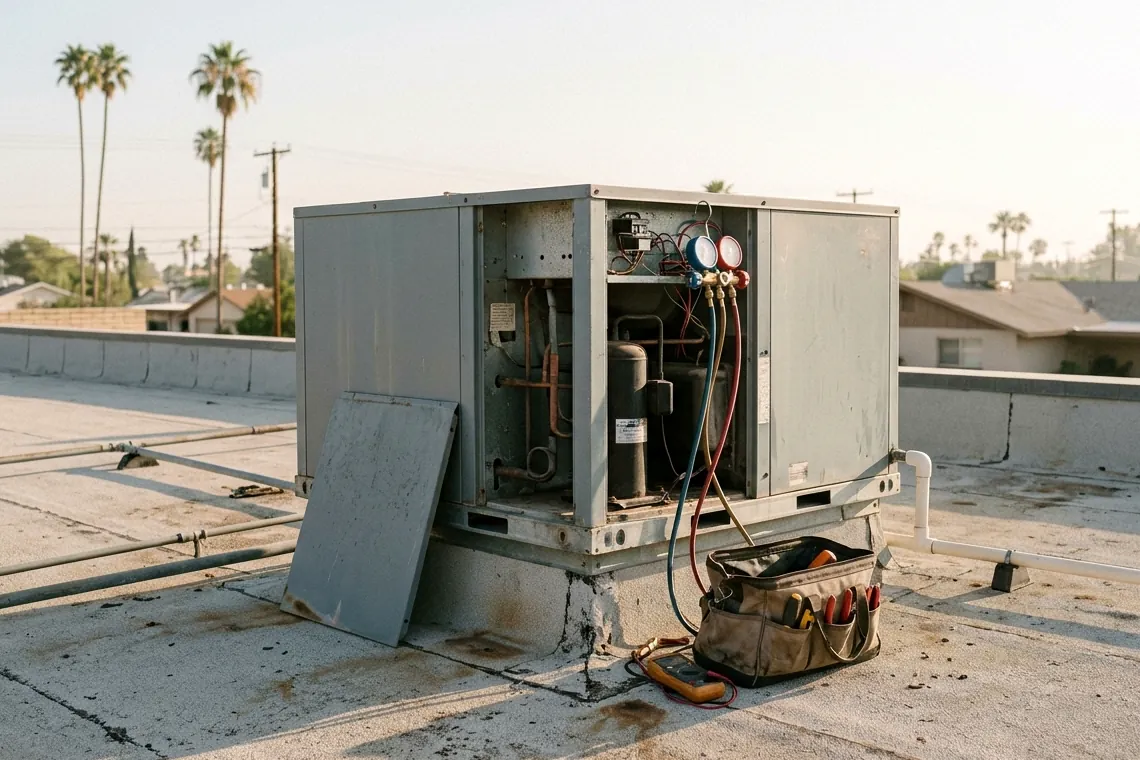
A package unit puts the compressor, coils, blower and controls in one cabinet, usually on your roof or a ground pad. We repair all of it, from capacitors and contactors to blower motors and refrigerant leaks.
At a glance
Package unit repair fixes all-in-one heating and cooling systems that sit on a roof or a pad beside the house. Common Phoenix package units are straight cool, gas-electric or heat pump models. You need repair when the unit blows warm air, hums without starting, trips the breaker, leaks water through the ceiling or roof curb, or makes grinding or buzzing noises. Summer heat and monsoon surges cause most failures.
Package units are everywhere in Phoenix, especially on 1970s and 1980s ranch homes, manufactured homes and many townhomes. Instead of an outdoor condenser and an attic air handler, everything lives in one box: compressor, condenser coil, evaporator coil, blower and controls. On gas-electric models, a furnace section sits inside too. Ducts drop through the roof curb, or run through a wall from a ground pad, to deliver air to the house.
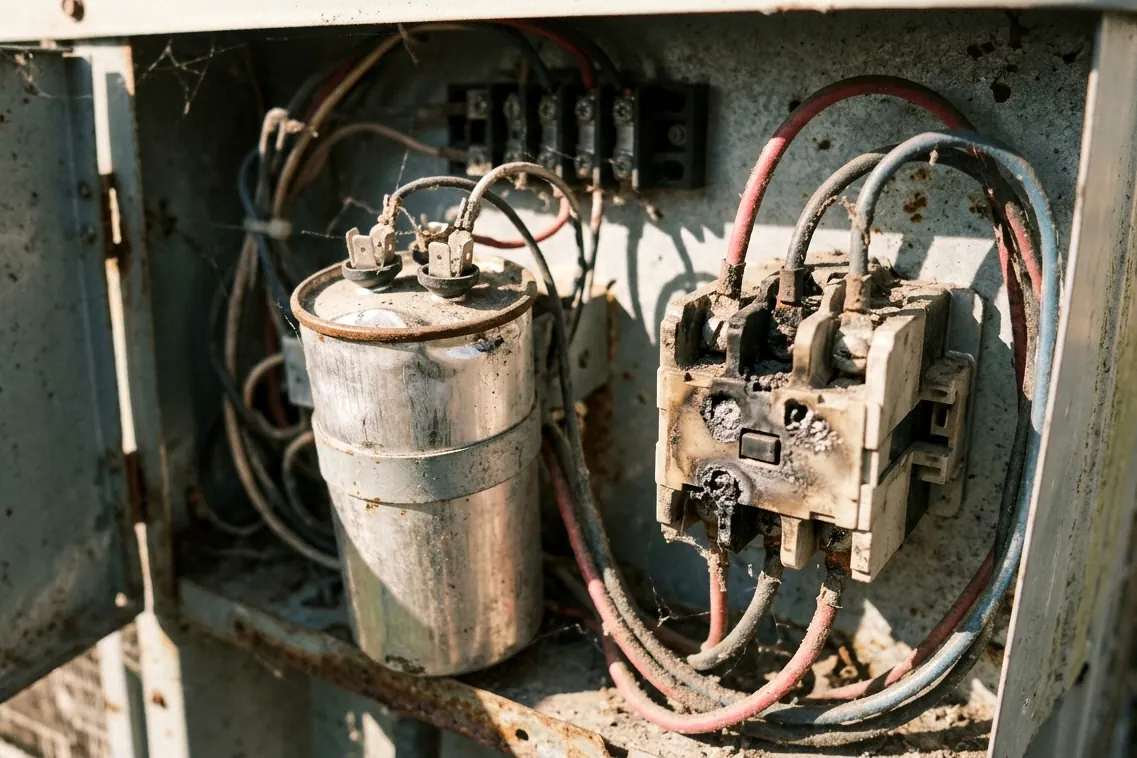
That design is simple, but it puts every component in direct sun. A rooftop unit in July sits on a deck that's far hotter than the air temperature, and its controls, wiring and electrical parts bake all afternoon. Capacitors and contactors fail often, blower motors run hot, and condensate drains can back up into the roof curb. When a package unit stops cooling, it usually takes the whole house with it.
Our technicians carry common package unit parts and work safely on Phoenix rooftops. We check the electrical side first, since that's where most summer failures start, then look at refrigerant pressures, temperature split, blower operation and the drain. On gas-electric units, we also inspect the burners and heat exchanger in fall. You'll get a clear explanation of the failure and the repair options before any part goes in.
Signs to watch
If vents are blowing room-temperature or warm air while the unit is running, it could be a failed capacitor, compressor trouble, low refrigerant or a stuck contactor in the cabinet.
A unit that hums or clicks without the compressor or fan spinning often has a weak or failed capacitor. Running it that way can overheat the compressor, so turn it off and call.
Package unit drains can clog with algae and dust, overflowing the pan into the roof curb and down through the ceiling. A water stain near a supply register is a common early warning.
Repeated breaker trips usually point to an electrical problem such as a shorted motor, failing compressor or damaged wiring. Resetting it over and over can make the damage worse.
Grinding, squealing or rattling from the roof often means a failing blower or condenser fan motor bearing, a loose panel or debris in the fan blades after a monsoon wind.
On gas-electric units, a strong burning smell beyond the first few minutes of fall startup, or any gas odor, needs immediate attention. Shut it off and call us right away.
Before you call
Anything beyond these checks involves electrical parts or refrigerant, so call (602) 848-9399 and let a technician take it from there.
How we handle it
When you call, we ask what the unit is doing, whether breakers have tripped and if you see water, so the technician arrives with the right parts and a head start on the likely cause.
The technician sets up ladder access, checks roof conditions, then shuts off power at the disconnect before opening panels. On gas-electric units, the gas supply is checked as part of the safety review.
Capacitors, contactors, fuses and wiring get tested with meters. Heat-damaged connections and pitted contacts are common on rooftop units and often explain intermittent cooling problems.
With the unit running, we read refrigerant pressures, measure temperature split and check blower operation. Those numbers show whether the problem is charge, airflow or the compressor.
You get a clear explanation of what failed and why, the repair options and the price before work begins. If the unit is old enough that repair is a poor investment, we'll say so plainly.
After the repair, the unit runs through a full cycle while the technician confirms temperatures, amperage and drainage. Panels go back on securely so monsoon winds can't loosen them.
Typical cost
Typical package unit repair. A range, not a quote: the real number depends on what the technician finds. Full price guide
Simple fixes like a capacitor or contactor fall near the low end of this range, while blower motors, refrigerant leak repairs and gas valve work land higher. Compressor failures on package units cost more and are priced separately. The real number depends on what the technician finds on your roof, and you hear it before any repair begins.
| Line item | Typical range |
|---|---|
| Package unit capacitor or contactor | $215 to $435 |
| Package unit blower motor replacement | $685 to $1,485 |
| Package unit drain and pan repair | $185 to $395 |
Rooftop package units take the brunt of Phoenix weather. The cabinet sits in direct sun on a hot roof deck, so electrical parts run well above the outdoor air temperature. Capacitors are the most common summer failure part in the Valley, and package units are no exception. With July nights often staying in the upper 80s, the unit may run almost continuously for weeks, leaving parts little chance to cool between cycles.
Monsoon season adds dust and power trouble. Haboobs pack condenser coils and filters with fine dust, which pushes head pressure and temperatures up, and power flickers and surges can kill capacitors and contactors in a single storm. Roof curbs also take a beating from heat cycling, which can open gaps that leak air or water. A careful repair visit checks those weak points along with the part that actually failed.
We repair and replace Trane, Carrier, Lennox, Goodman, Rheem, Daikin and most other makes found in Valley homes.
Related work
Crane-lift rooftop and pad package unit replacements with curb adapters, electrical updates and new SEER2 gas-electric, heat pump or straight cool models.
See the serviceSpring and post-monsoon maintenance for rooftop units on homes and businesses: coil cleaning, drain flushing, belt and motor checks and electrical testing.
See rooftop unit serviceThe most common Valley summer failure: weak capacitors and pitted contactors tested with a meter and replaced from stock on the truck.
See capacitors & contactorsPackage units, under-floor ducts and crossover connections in manufactured homes, repaired with parts sized for mobile home systems.
See mobile home ac repairWhere we do this
These communities make up most of the homes we serve. Each link opens the local page with ZIP codes, typical homes and the issues we see there.
Many package units in the Valley last around 12 to 15 years, though rooftop sun exposure and heavy summer run time can shorten that. Regular coil cleaning, drain service and electrical checks help them reach the upper end. Once a unit passes 15 years and needs a major repair, comparing repair cost with replacement usually makes sense.
Package unit drains carry condensate off the roof, and when the line clogs with algae or dust, the pan overflows. Water can then run through the roof curb or into the supply duct and show up as a ceiling stain. Clearing the drain and checking the curb seal usually fixes it. Ignoring it can damage drywall and insulation.
Yes. Gas-electric package units combine cooling with a gas furnace section, and our technicians repair igniters, flame sensors, gas valves, inducer motors and limit switches. We also check the heat exchanger for cracks during heating service. If you ever smell gas near the unit or inside the house, leave the area and call the gas utility first.
It depends on the repair. Electrical fixes like a capacitor or contactor are often worth doing on an R-22 unit. Repairs that require a large refrigerant recharge get expensive, since R-22 production ended in 2020 and remaining supplies cost more. When an R-22 package unit needs refrigerant work, we'll show you repair and replacement costs side by side.
Yes. Many manufactured homes in the Phoenix area use ground-mounted package units connected through a crossover duct under the home. We repair those units and check the duct connections underneath, since disconnected or crushed crossover ducts are a common reason a manufactured home feels hot even when the unit itself is working.
Monsoon power flickers and surges are hard on capacitors, contactors and control boards, and dust storms pack the condenser coil, which drives temperatures up. If your unit quits right after a storm, check for a tripped breaker first. If it won't restart, call us. A surge protector on the unit can help reduce future storm damage.
A real person answers (602) 848-9399 every hour of every day, and we will tell you plainly what the next step is.