Furnace Replacement
Gas furnaces sized for mild Valley winters, matched to your AC coil and blower needs, installed with corrected venting, gas connections and combustion testing.
See furnace replacementHeat pumps and heating
Phoenix furnaces sit idle most of the year, so the first cold night often reveals a dirty flame sensor or a cracked igniter. We find the failed part and check for safe combustion and venting.
At a glance
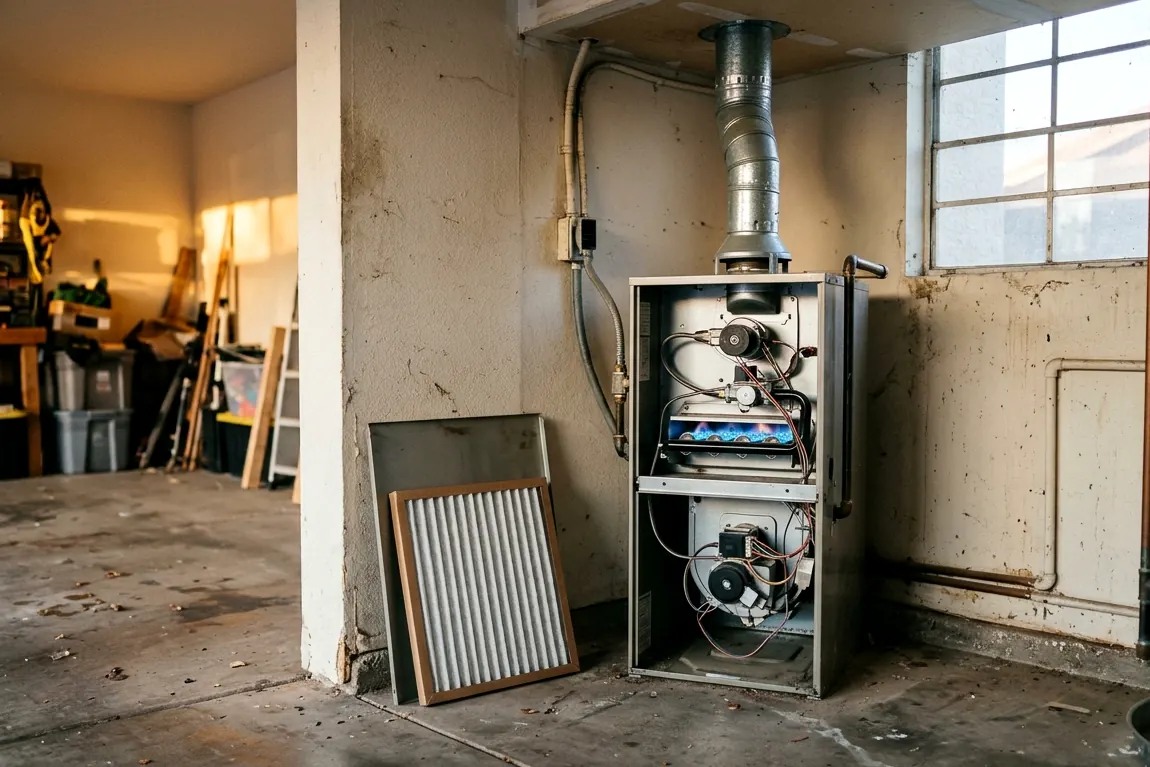
Furnace repair fixes gas furnaces that will not light, light and then shut off, blow cold air, or cycle constantly. In Phoenix you usually need it on the first chilly nights of November or December, after months of the furnace sitting unused while dust settled inside. Igniters, flame sensors, pressure switches, inducer motors and limit switches are the usual failures, and every repair should include a combustion and carbon monoxide safety check.
Gas furnaces in the Valley have an unusual life. They might run a few hundred hours a year, then sit for seven or eight months in an attic or closet that bakes over 140°F. Dust settles on the burners and flame sensor, spiders nest in the vent, and rubber hoses on pressure switches harden in the heat. When the first cold front arrives, those small issues show up all at once.
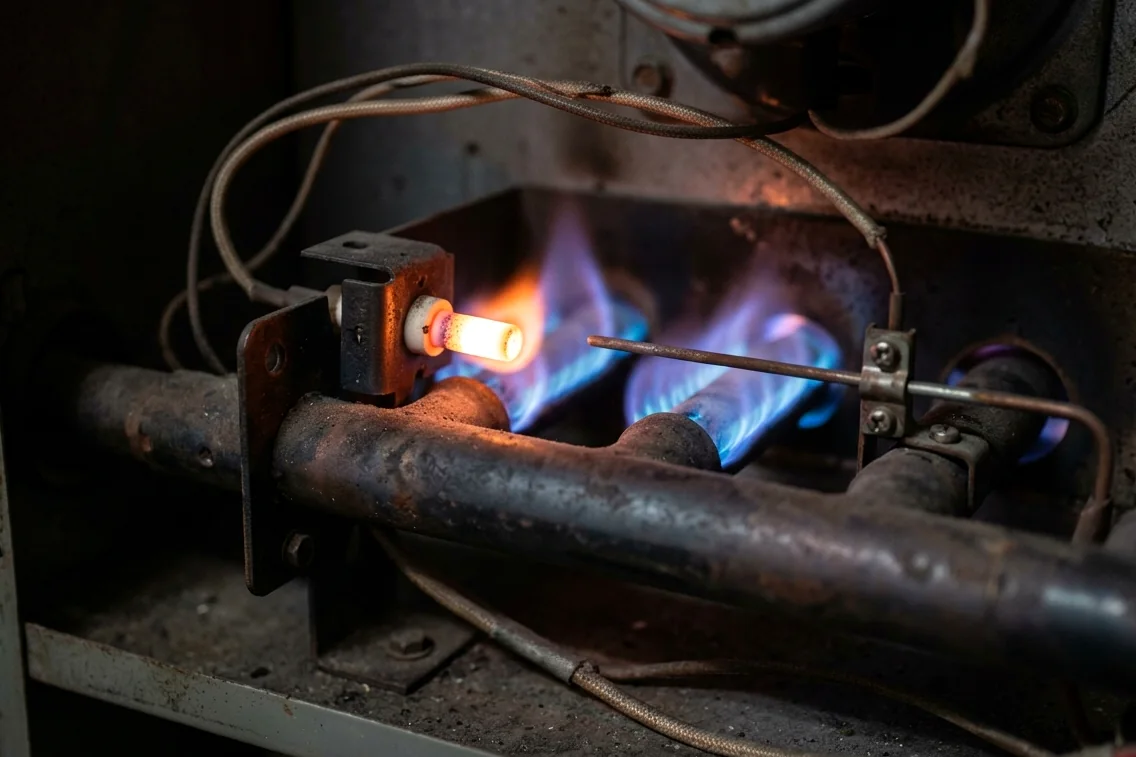
Modern furnaces use a sequence of safety checks before they light. The inducer motor clears the heat exchanger, a pressure switch confirms the vent is open, the igniter glows, the gas valve opens, and the flame sensor proves fire is present. If any step fails, the control board stops and usually flashes a code. Reading that code and testing the component it names leads to an accurate repair.
Safety is part of every furnace call. A cracked heat exchanger or blocked vent can send combustion gases into the home. Our technicians check burner flame, venting, gas pressure and carbon monoxide levels during the repair, and we tell you plainly if something needs immediate attention. If you ever smell gas, leave the house and call your gas utility first, then call us.
Signs to watch
Repeated clicking without flame often means a cracked or weak igniter, a gas valve not opening, or a pressure switch that is not confirming the vent is clear.
Flame that appears for a few seconds and then disappears usually points to a dirty flame sensor. Cleaning or replacing it is one of the most common winter repairs.
If the fan blows but the burners never light, the furnace may be locked out after failed ignition attempts, or the thermostat fan may be set to On.
A furnace that runs a few minutes, stops, then restarts may be overheating from a clogged filter or failing limit switch, or the flame sensor may be marginal.
A boom when burners light usually means delayed ignition from dirty burners. Gas builds briefly before lighting, which stresses the heat exchanger and should be fixed promptly.
Dust burning off for a few minutes at the first startup is normal. A smell that persists, or any odor of gas, is not, and the furnace should be shut off.
Before you call
Anything beyond these checks involves electrical parts or refrigerant, so call (602) 848-9399 and let a technician take it from there.
How we handle it
Most furnaces store fault codes on the control board. We read the LED pattern, then watch a full ignition sequence to see which step fails.
Hot surface igniters are checked for resistance and cracks, and flame sensors are tested for microamp signal. A weak sensor is cleaned or replaced as needed.
We confirm the inducer motor runs at proper speed and the pressure switch closes. Cracked hoses, blocked ports or obstructed vents are common causes of failure.
Burners are cleaned of dust and debris, and gas pressure is measured at the valve. Correct pressure ensures a clean flame and proper heat output.
The flue is checked for blockages and correct slope. We inspect the heat exchanger for cracks and test for carbon monoxide near the furnace and supply registers.
After the repair we run the furnace through several cycles, measuring temperature rise and confirming the limit switch, blower and thermostat all respond as designed.
Typical cost
Typical gas furnace repair visit. A range, not a quote: the real number depends on what the technician finds. Full price guide
Many furnace repairs in Phoenix involve a flame sensor cleaning or igniter replacement and stay at the lower end of this range. Inducer motors, control boards and gas valves cost more. These are typical Phoenix ranges, not a quote, and the actual price depends on what the technician finds once the furnace is opened and tested.
| Line item | Typical range |
|---|---|
| Flame sensor cleaning or replacement | $158 to $287 |
| Hot surface igniter replacement | $214 to $436 |
| Inducer motor or control board replacement | $587 to $1,246 |
Phoenix winters are mild, with January lows in the mid 40s and an occasional night near 32°F. That means a gas furnace might run only a few weeks of the year. The long idle stretch lets dust build on burners and flame sensors, and attic heat over the summer dries out wiring insulation, hoses and gaskets. Many furnace calls in late fall involve parts that aged during the summer rather than during use.
Furnaces here usually share a cabinet with the AC evaporator coil and blower, so a summer of heavy cooling also matters. A clogged filter from monsoon dust affects heating too, and condensate from the AC coil can drip onto furnace components if the pan rusts. A heating check in October or November catches these problems before the first cold front, when repair schedules fill quickly.
We repair and replace Trane, Carrier, Lennox, Goodman, Rheem, Daikin and most other makes found in Valley homes.
Related work
Gas furnaces sized for mild Valley winters, matched to your AC coil and blower needs, installed with corrected venting, gas connections and combustion testing.
See furnace replacementFall heating inspection for gas furnaces and heat pumps: flame sensor, igniter, heat strips, defrost controls, venting and carbon monoxide checks.
See heating tune-upIndoor unit misbehaving? We repair air handler control boards, relays, transformers, drain pans, float switches and wiring in attics, closets and garages across Phoenix.
See air handler repairLoad-calculated heat pump systems with matched indoor coils, correct heat strip sizing and full commissioning, designed for 115°F summers and mild Valley winters.
See heat pump installationWhere we do this
These communities make up most of the homes we serve. Each link opens the local page with ZIP codes, typical homes and the issues we see there.
After months unused, dust settles on the heat exchanger and burners. The first time they heat up, that dust burns off and produces a brief odor that should fade within an hour. Opening a window helps. If the smell lingers, grows stronger, or smells like gas or melting plastic, turn the furnace off and call us before running it again.
Because Phoenix furnaces run only part of the year, a yearly cleaning during a fall heating tune-up usually keeps the sensor working. Dust and combustion residue form a thin coating that weakens the signal, causing the furnace to light and then shut off. If yours does that, the sensor is the first thing we check, and cleaning is often all it needs.
It is less common here than in cold climates because furnaces run fewer hours, but it still happens, especially on older units, oversized furnaces or those with restricted airflow. A cracked heat exchanger can let combustion gases mix with your home's air. We inspect it on every repair and test for carbon monoxide, and if we find a crack we explain your options clearly.
Furnaces in Phoenix often last a long time because they run so little, so age alone is not a reason to replace one. If a repair is modest and the heat exchanger is sound, repairing often makes sense. When the heat exchanger is cracked, multiple major parts are failing, or you are replacing the AC, a new furnace or a heat pump is worth considering.
If the blower runs without the burners lighting, the furnace may have locked out after several failed ignition attempts, often from a weak flame sensor or igniter. It can also mean the high limit switch tripped from overheating, usually due to a clogged filter. Check the filter and thermostat, then call us so we can read the board code and test the failed part.
Yes, any home with gas appliances should have working carbon monoxide detectors, ideally near sleeping areas and on each level. Furnaces that sit unused most of the year can develop vent blockages from nests or debris, which raises the risk when they start up. We test for carbon monoxide during every furnace repair and tune-up as part of the visit.
A real person answers (602) 848-9399 every hour of every day, and we will tell you plainly what the next step is.