Ductwork Repair
Torn flex, crushed runs, separated joints and failed plenum connections repaired in Phoenix attics, with airflow measured at the register before and after.
See ductwork repairDucts, air and attic
Small gaps at duct joints, boots and plenums add up to a lot of cooled air lost to the attic. Sealing them helps every room cool faster and keeps dusty attic air out of your system.
At a glance
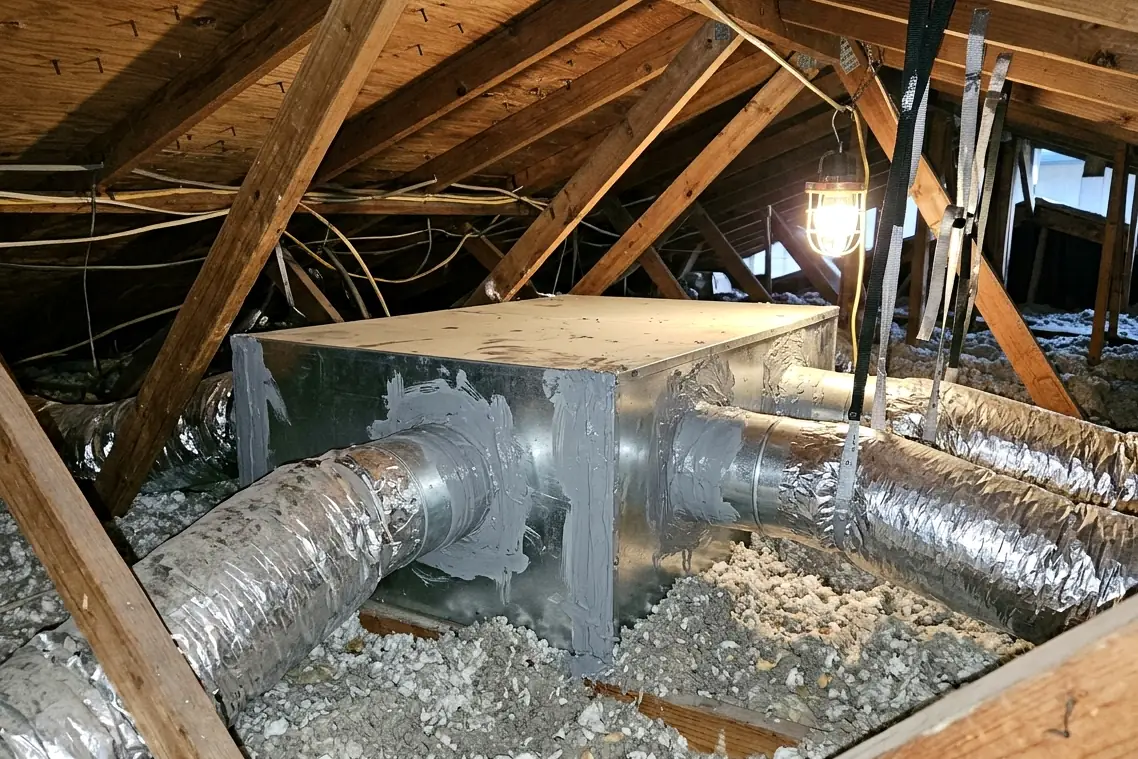
Duct sealing closes the gaps and leaks in your existing ductwork where cooled air escapes or hot, dusty attic air gets pulled in. In Phoenix it helps when your system runs long, rooms are uneven, dust builds quickly indoors, or bills seem high for your home. Leaks commonly sit at the plenum, boots, branch takeoffs and return connections. Mastic sealant and proper fasteners hold up far better in attic heat than tape.
Every duct system has joints, and every joint is a possible leak. Supply leaks push cooled air into the attic before it reaches your rooms. Return leaks pull hot, dusty attic air into the system, adding heat the AC has to remove and dirt your filter has to catch. In a Phoenix summer, both kinds of leaks force the system to run longer to hold the temperature you set.
Duct sealing focuses on the places where leaks are most common. The connection between the air handler and the supply plenum, branch takeoffs from the trunk, the boots where ducts meet ceiling registers, and the return box and filter grille are frequent offenders. Many of these were taped when the house was built, and that tape has long since failed in attic heat.
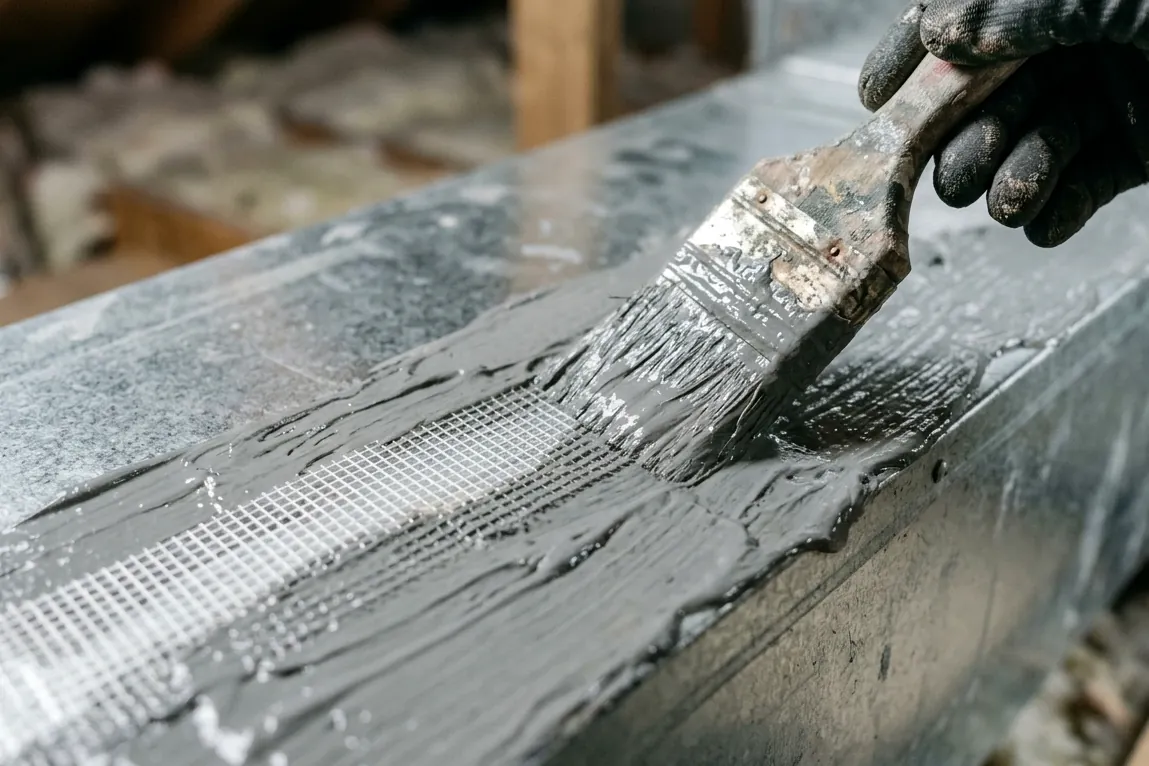
Our technicians seal accessible joints with mastic, a thick paste that cures into a flexible seal and stays in place through attic temperature swings. Larger gaps get mesh tape embedded in mastic, and loose connections are mechanically fastened before sealing. Boots are sealed to the drywall from the attic side, which also blocks a common path for attic dust to enter rooms around the register.
Signs to watch
If your AC rarely cycles off even on moderate days, leaks may be wasting cooling. Sealing helps the system satisfy the thermostat sooner.
Fast dust buildup on furniture, especially after monsoon storms, can come from return leaks drawing unfiltered attic air directly into the system.
Dust streaks around the edges of supply registers often show attic air leaking in around the boot, a classic sign the boot is not sealed.
Leaks along a branch can starve the rooms at the end of that run, leaving them warmer than rooms closer to the air handler.
If you notice cool spots or moving air around ducts in the attic, that cooled air is escaping through gaps before it reaches the house.
A whistling return or a filter grille that rattles can mean the return is pulling air through gaps around the box instead of through the filter.
In a mild climate, a leaky duct in a 90°F attic wastes some energy. In Phoenix, where attic temperatures can reach roughly 140 to 160°F, the same leak on the return side pulls in air so hot that it can erase much of the cooling the AC just produced. Because ducts here sit in that extreme heat for months, sealing them tends to make a bigger difference than in cooler regions.
Dust is the other local reason. Phoenix attics collect fine dust from monsoon storms and everyday desert wind. Return leaks pull that dust into the system, clogging filters faster, coating coils and spreading through rooms. Sealing the return box, filter grille and nearby joints keeps the filter doing its job and slows the buildup that leads to coil cleanings and drain clogs.
How we handle it
We follow the supply and return ducts in the attic, noting failed tape, open seams, loose connections and boots that are not sealed to the ceiling drywall.
Joints that have pulled apart are reconnected and secured with screws or clamps before sealing, because sealant alone will not hold a separating joint in place.
Mastic is brushed over seams, takeoffs and collars in a thick, even coat. Larger gaps get fiberglass mesh tape embedded in the mastic for a durable, flexible seal.
Each supply boot is sealed to the ceiling from the attic side, stopping attic air and dust from entering around the register and reducing dust streaks.
The return box, filter grille frame and supply plenum connections at the air handler are sealed, since these high-pressure points often leak the most in any system.
We measure airflow at the registers and static pressure at the air handler afterward, confirming that sealing improved delivery to the rooms without creating new restrictions.
Before you call
Anything beyond these checks involves electrical parts or refrigerant, so call (602) 848-9399 and let a technician take it from there.
Typical cost
Typical whole-home duct sealing with mastic. A range, not a quote: the real number depends on what the technician finds. Full price guide
Sealing the main plenum, return and accessible joints in a single-story home sits near the lower end of this range. Larger homes, many boots and two-story duct systems cost more. These are typical Phoenix ranges, not a quote. The final price depends on what the technician finds in the attic and how many joints need sealing.
| Line item | Typical range |
|---|---|
| Plenum and return box sealing | $487 to $863 |
| Whole-home duct sealing | $974 to $1,893 |
We repair and replace Trane, Carrier, Lennox, Goodman, Rheem, Daikin and most other makes found in Valley homes.
Related work
Torn flex, crushed runs, separated joints and failed plenum connections repaired in Phoenix attics, with airflow measured at the register before and after.
See ductwork repairNew supply and return duct systems designed for your Phoenix home, with correct sizing, higher-rated insulation, sealed joints and measured airflow at every room.
See duct replacementBlown-in insulation and attic air sealing that slow the flow of attic heat into your rooms, so the AC runs shorter cycles on Phoenix afternoons.
See attic insulationNegative-pressure cleaning of supply and return ducts, with camera footage before and after so you can see exactly what came out of your system.
See air duct cleaningWhere we do this
These communities make up most of the homes we serve. Each link opens the local page with ZIP codes, typical homes and the issues we see there.
It varies widely by home, but leaky ducts are among the most common sources of wasted cooling. Because Phoenix ducts sit in attics that reach roughly 140 to 160°F, even modest leaks have a noticeable effect on run time and comfort. We inspect your ducts and show you where the leaks are so you can judge the value of sealing.
For most joints, yes. Mastic cures into a thick, flexible seal that holds up through years of attic heat. Foil tape rated for HVAC can work on some flat seams, but adhesive can weaken in extreme heat. Cloth duct tape is the weakest option and often fails within a season. We use mastic as the primary sealant and mechanical fasteners where joints need support.
It often helps a lot. Return leaks pull dusty attic air into the system, bypassing the filter. Sealing the return box, filter grille and nearby joints keeps that dust out. Sealing boots to the drywall also stops attic dust from entering around registers. Many homeowners notice slower dust buildup on furniture and longer filter life after sealing.
If your ducts are in reasonable shape, properly sized and mostly intact, sealing is a cost-effective improvement. If they are brittle, torn in many places, undersized or contaminated, sealing will not fix the underlying problems and replacement is the better path. We inspect the ducts first and recommend the approach that fits their condition.
Mastic applied correctly over clean, fastened joints typically lasts for many years, far longer than tape. The seal stays flexible through attic temperature swings. Joints can still be disturbed if people work in the attic or if ducts are bumped, so it is worth a quick check after any attic work like solar or insulation installs.
Yes. A new system is rated on the assumption that air reaches the rooms. Leaky ducts reduce delivered cooling and increase run time, which hides the efficiency you paid for. Sealing ducts during or soon after an AC replacement helps the new equipment perform closer to its rating and keeps dusty attic air away from the new coil.
A real person answers (602) 848-9399 every hour of every day, and we will tell you plainly what the next step is.