AC Repair
Warm air, odd noises or a system that never shuts off. We test capacitors, refrigerant, airflow and controls, then fix the real cause.
See ac repairAir conditioning
Manufactured homes have their own way of moving air, with package units outside and ducts running under the floor. We repair those systems every week across Phoenix parks and private lots.
At a glance
Mobile home AC repair covers the cooling systems built for manufactured homes, usually a package unit or split system feeding a duct run in the floor, plus the crossover duct that joins sections in a double-wide. In Phoenix, these homes heat up quickly because of thinner walls and roofs, so a weak or failed system is felt fast. Common repairs include capacitors, contactors, torn belly ducts, disconnected crossovers and clogged drains.
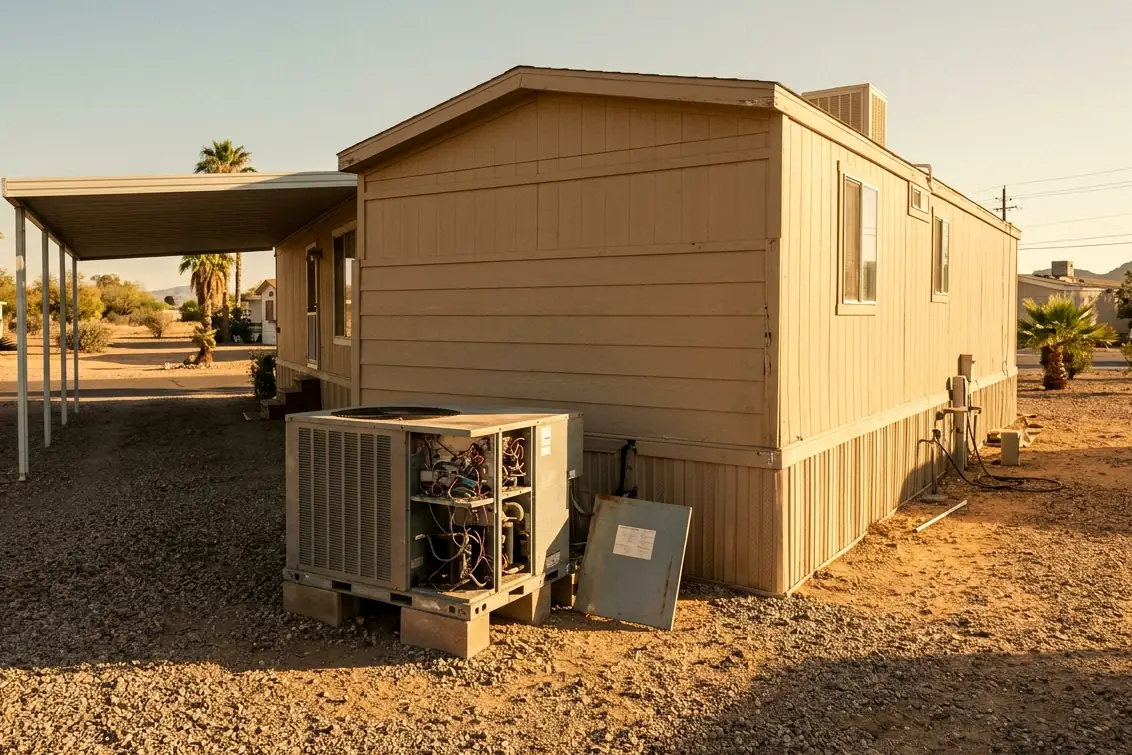
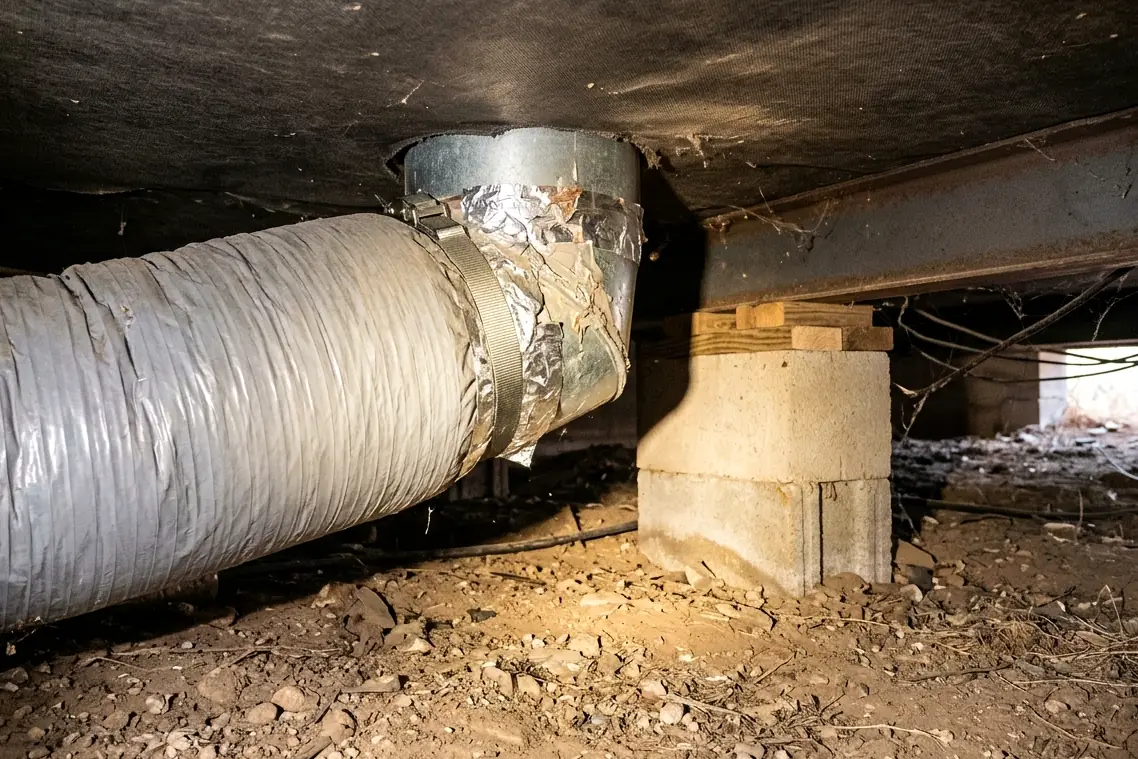
Manufactured homes cool differently than site-built houses, and repairs need to account for that. Most use a package unit or a split system sitting beside the home, with a supply duct running down the center of the floor and registers cut into the floor rather than the ceiling. Return air often comes through a central grille or the furnace closet. In a double-wide, a flexible crossover duct under the home connects the two halves, and when that duct sags, tears or pops loose, one side gets almost no air.
Heat gain is the other challenge. Thinner walls, lower ceilings and metal or low-slope roofs let Phoenix sun soak into the home quickly. A system that works on a site-built house might struggle to keep up in a manufactured home of the same size. Many older homes in Valley parks run equipment well past 15 years old, sometimes original to the home. We repair those systems carefully and tell you honestly when a part costs more than the system is worth.
Most visits start under or beside the home. We test the capacitor, contactor and fan motors on the outdoor unit, measure refrigerant readings, then look at the duct system: the crossover, the trunk line under the floor, the belly wrap and the connections at the unit. Rodents, cats and old repairs often leave ducts open to the crawlspace. Fixing those leaks can make a dramatic difference in how cool the home stays on a July afternoon.
Signs to watch
In a double-wide, a warm half usually means the crossover duct under the home has come loose, collapsed or torn. The other side gets all the air while yours bakes.
Low airflow at floor vents can come from a crushed trunk line, a torn belly duct leaking into the crawlspace, a dirty blower wheel or a clogged return filter.
Package units in Phoenix sun lose capacitors often. A hum with a still fan blade means power is reaching the unit but a motor can't start, so turn it off.
If the floor feels chilly near the trunk line but rooms stay warm, cooled air may be leaking into the space under the home through gaps in the belly board.
Package unit drains in manufactured homes often run straight to the ground. Puddles in odd places, or water under the home, suggest a cracked drain or overflowing pan.
A damp, musty odor can mean water standing in the duct or pan, or crawlspace air being pulled into the return through a gap in the system.
Before you call
Anything beyond these checks involves electrical parts or refrigerant, so call (602) 848-9399 and let a technician take it from there.
How we handle it
We start with the home's size, whether it's single or double-wide, and where cooling feels weakest, since that points straight to the unit, the crossover or the floor ducts.
Capacitors, contactors, fan motors and compressor amp draw get tested on the package unit or condenser, along with refrigerant readings and a close look at the coil.
Our technician inspects the crossover duct, the trunk line connection, belly board openings and any old repairs, looking for disconnects, tears, sags and crushed sections.
We compare airflow and temperature at floor registers across the home, which shows whether air is reaching each room or escaping before it gets there.
You'll hear what failed and what it costs, including any duct work under the home. For older systems, we'll also tell you if replacement makes more sense.
After repairs, we run the system, check temperature split, confirm airflow at each floor register and make sure the drain flows away from the home.
Typical cost
Typical manufactured home ac repair. A range, not a quote: the real number depends on what the technician finds. Full price guide
Electrical repairs on the outdoor unit, such as a capacitor or contactor, fall at the lower end. Crossover duct replacement, belly duct repairs and motor replacements cost more. Compressor work and full replacements are priced separately. These are typical Phoenix ranges, not quotes, and the real number depends on what the technician finds at the unit and under the home.
| Line item | Typical range |
|---|---|
| Crossover duct replacement | $245 to $585 |
| Belly duct and board repair | $285 to $765 |
A manufactured home in Phoenix faces the same 110-degree afternoons as any house, but with less insulation and thermal mass to slow heat gain. Interior temperatures can climb quickly once the system stops, especially in single-wides with metal roofs. That makes reliable cooling a safety concern, particularly for the many retirees and families living in Valley parks. A system that falls behind by a few degrees each afternoon often ends up running nonstop into the night when lows stay in the upper 80s.
The space under the home matters too. Crawlspaces in desert parks collect dust, debris and sometimes animals looking for shade. Belly board tears let warm air reach the ducts, and pests chew flex crossover ducts. Package units sitting on blocks beside the home take full sun and monsoon dust. Our repairs address the unit, the ducts and the under-floor connections together, because fixing a capacitor while half the cool air leaks under the floor only solves part of the problem.
We repair and replace Trane, Carrier, Lennox, Goodman, Rheem, Daikin and most other makes found in Valley homes.
Related work
Warm air, odd noises or a system that never shuts off. We test capacitors, refrigerant, airflow and controls, then fix the real cause.
See ac repairRepairs for rooftop and ground-pad package units, including capacitors, contactors, blower motors, drains and refrigerant leaks, on gas-electric and heat pump models.
See package unit repairTorn flex, crushed runs, separated joints and failed plenum connections repaired in Phoenix attics, with airflow measured at the register before and after.
See ductwork repairThe most common Valley summer failure: weak capacitors and pitted contactors tested with a meter and replaced from stock on the truck.
See capacitors & contactorsWhere we do this
These communities make up most of the homes we serve. Each link opens the local page with ZIP codes, typical homes and the issues we see there.
Yes. We work in manufactured home communities across Phoenix and the surrounding Valley, including age-restricted parks, family parks and homes on private lots. Many parks have rules about access and work hours, and we follow them. Let us know the park name and any gate or check-in instructions when you call so the technician can arrive without delays.
The most common cause is the crossover duct under the home. That flexible duct joins the two halves, and it often sags, tears or disconnects, especially if animals or past work disturbed it. When that happens, nearly all the cool air stays on the side with the unit. Replacing or reconnecting the crossover usually fixes the problem.
The basic cooling parts are similar, but manufactured home systems are designed for floor duct systems and limited space. Many are package units or downflow systems built specifically for manufactured housing. Ducts are smaller and run under the floor. When repairing mobile home AC, we use parts and duct materials suited to those systems.
If the system is under about 12 years old and the repair is an electrical part or duct fix, repairing usually makes sense. If the unit is older, runs on R-22 and needs a compressor or major refrigerant work, replacement is often the better value. We'll show you both numbers so you can decide based on your budget and plans.
Yes, often a lot. When cooled air leaks into the crawlspace through torn belly ducts or a loose crossover, the system runs longer to cool the home, and some rooms never get comfortable. In Phoenix, where systems already run many hours, sealing those leaks can noticeably lower APS or SRP bills and help the equipment last longer.
Turn the system off if the outdoor unit hums without the fan spinning, then check the breaker and thermostat. Close blinds, run fans and move to the coolest room. Manufactured homes heat quickly, so call (602) 848-9399 right away, and tell us if anyone in the home is elderly, very young or has a health condition.
A real person answers (602) 848-9399 every hour of every day, and we will tell you plainly what the next step is.