AC Repair
Warm air, odd noises or a system that never shuts off. We test capacitors, refrigerant, airflow and controls, then fix the real cause.
See ac repairAir conditioning
A failed air conditioner at 9 p.m. in July isn't something that can wait until Monday. Phone us any hour and a technician heads out with the parts most likely to get you cooling again tonight.
At a glance
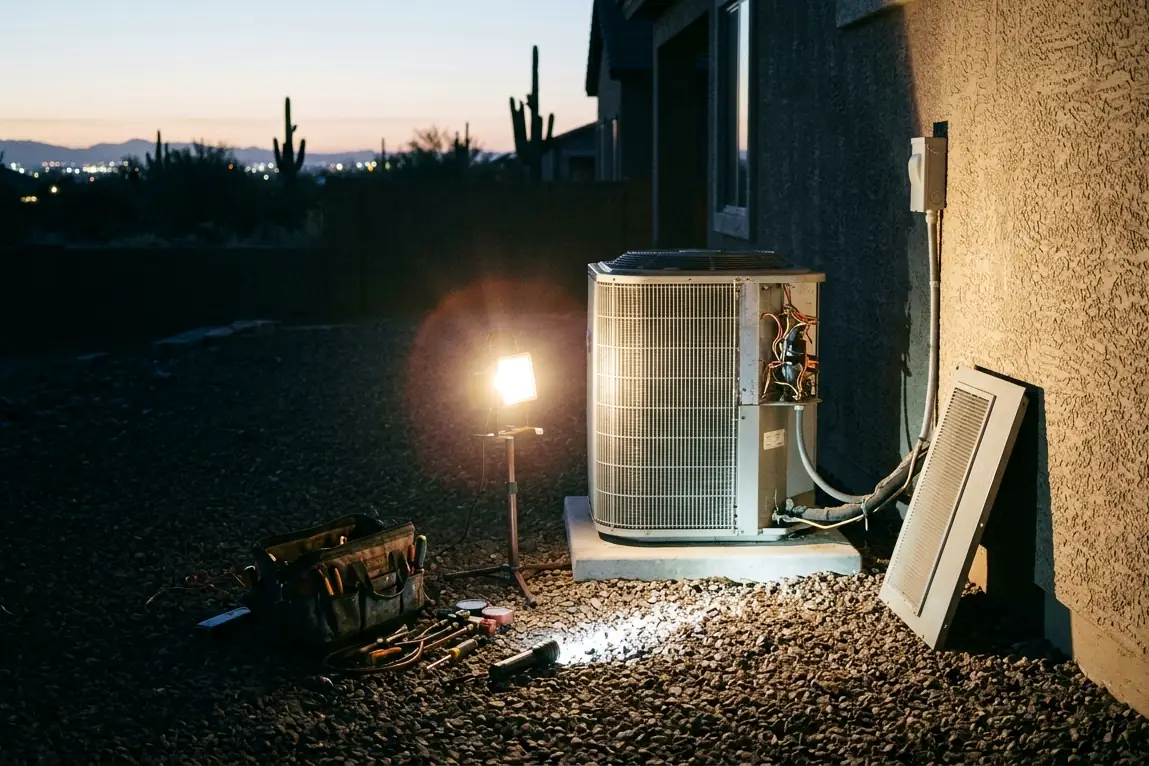
Emergency AC repair is after-hours, weekend or holiday service for an air conditioner that has stopped cooling or is putting the home at risk. In Phoenix, a dead system in summer is an emergency when the indoor temperature is climbing past the mid 80s, when vulnerable people or pets are home, or when you see water leaking, smell burning or hear grinding. We answer (602) 848-9399 around the clock and dispatch nights, weekends and holidays.
Phoenix heat doesn't take the night off, and neither does our phone. July lows can stay above 90 degrees, so a house without cooling at midnight keeps getting hotter instead of easing off. When you call (602) 848-9399 after hours, you reach a person who asks a few quick questions, sorts out how urgent the situation is and gets a technician moving. There's no voicemail maze and no waiting until morning to find out when help arrives.
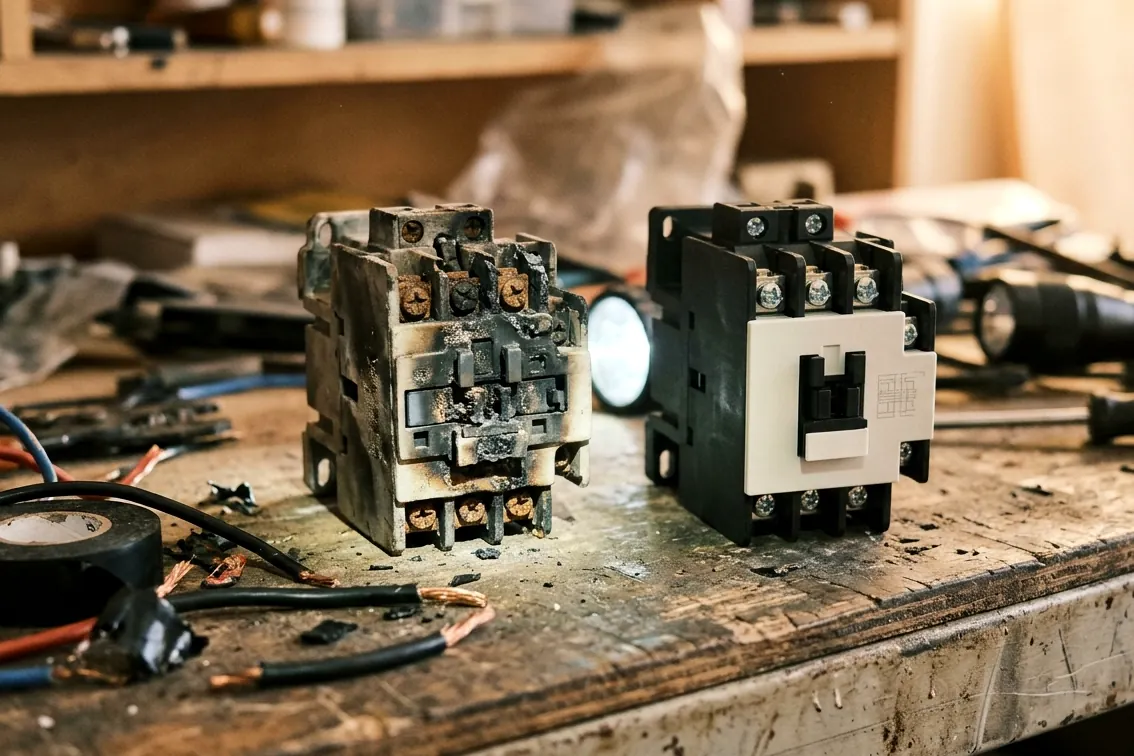
Emergency calls are where preparation pays off. Our trucks carry the parts that cause most summer breakdowns in the Valley: dual run capacitors in common sizes, contactors, condenser fan motors, fuses, float switches, hard-start kits and drain line supplies. That stock lets us finish most after-hours repairs on the first visit. If the fault turns out to be a compressor or a coil, we'll make the system safe, explain the options and line up the larger repair as quickly as the part allows.
We also help you stay safe while you wait. If the thermostat reads past the mid 80s and someone at home is elderly, very young, pregnant or has a medical condition, tell us right away. Close blinds on sunny windows, run ceiling fans, drink water and use the coolest room in the house. If anyone shows signs of heat illness, such as confusion, a racing pulse or no sweating, call 911 first, then call us.
Signs to watch
If the system has stopped entirely and outdoor temperatures are above 100 degrees, indoor heat builds fast. Homes with seniors, infants, pets or medical needs should treat this as urgent.
An electrical or hot-dust smell that doesn't fade can mean a blower motor overheating or wiring burning. Turn the system off at the thermostat and the breaker, then call us.
An overflowing attic drain pan can soak insulation and drywall in hours. Shut the AC off to stop the condensate, put down towels and call so we can clear the line.
Metal-on-metal noise from the condenser often means a fan motor bearing has failed or a blade is striking something. Continuing to run it can wreck the motor or the coil.
One trip might be a fluke after a monsoon surge. A breaker that trips again right away points to a short or a failing compressor and shouldn't be reset over and over.
Visible smoke, sparks or melted wiring at the outdoor unit or air handler is a fire hazard. Cut power at the breaker, keep clear and call the fire department if it continues.
Before you call
Anything beyond these checks involves electrical parts or refrigerant, so call (602) 848-9399 and let a technician take it from there.
How we handle it
Dial (602) 848-9399 at any hour and a real person picks up. We take your address, the symptoms and who is in the home, so the most urgent calls get handled first.
Based on the symptoms, we may ask you to switch the system off, set it to fan only or shut off the breaker. That step can protect the compressor from further damage.
Your technician arrives with the most common failure parts for Phoenix systems on board, along with gauges, meters and a drain vacuum, so the likely fixes can happen on the spot.
We go straight to the high-probability faults first, like capacitors, contactors, fan motors, float switches and fuses, while still confirming the cause with readings instead of guesses.
Before work begins, you'll hear the cause and the price in plain terms, including any after-hours rate. You approve it, or we make the system safe and talk through options.
Once repaired, we watch the system run through a full cycle, check amp draw and temperature split, and confirm the drain is clear so the fix holds through the night.
Typical cost
Typical after-hours repair, parts and labor. A range, not a quote: the real number depends on what the technician finds. Full price guide
Emergency visits cost more than a weekday appointment because a technician is on the road at night, on weekends or on holidays. The repair itself is usually the same capacitor, contactor, motor or drain fix we see during the day. These ranges are typical for Phoenix, not quotes, and the real number depends on what the technician finds when testing.
| Line item | Typical range |
|---|---|
| After-hours emergency dispatch | $149 to $259 |
| Overflow and float switch repair | $185 to $395 |
Many Phoenix air conditioners fail in the evening, not at noon, and there's a reason. By late afternoon a system has run hard for eight or more hours against heat above 110 degrees, and a weak capacitor or overheated contactor finally gives out. Monsoon storms usually roll in during the evening too, bringing power flickers and surges that knock out marginal parts. That's why our busiest emergency hours tend to fall between 5 p.m. and midnight from June through September.
Time-of-use rate plans from APS and SRP add another wrinkle. Many households pre-cool in the early afternoon, then let the system coast through on-peak hours. When the AC quits during that window, the home may already be warming before anyone notices. Overnight lows near 90 mean there's no cool night air to open the windows for. In Phoenix, a dead system after dark is a real problem, so we staff nights and weekends in summer to handle it.
Two-thermometer test
Hold a thermometer at a return grille, then at the supply register nearest the air handler after the AC has run 15 minutes.
Inside the normal range
A 15 to 22°F split points to a coil and charge doing their job.
Not sure? Call (602) 848-9399.
We repair and replace Trane, Carrier, Lennox, Goodman, Rheem, Daikin and most other makes found in Valley homes.
Related work
Warm air, odd noises or a system that never shuts off. We test capacitors, refrigerant, airflow and controls, then fix the real cause.
See ac repairThe most common Valley summer failure: weak capacitors and pitted contactors tested with a meter and replaced from stock on the truck.
See capacitors & contactorsOutdoor fan motors that stall, squeal or overheat repaired or replaced with correct horsepower, rotation and capacitor to protect the compressor.
See condenser fan motorConfirmed compressor failures replaced with matched parts, flushed lines and a fresh charge, or an honest comparison with a new system.
See compressor replacementWhere we do this
These communities make up most of the homes we serve. Each link opens the local page with ZIP codes, typical homes and the issues we see there.
Yes. Our phone at (602) 848-9399 is answered 24/7, including weekends and holidays. In the hottest months, we keep technicians on call overnight because July nights in Phoenix can stay above 90 degrees. A no-cooling call with vulnerable people in the home moves to the front of the line, and we'll tell you an honest arrival window when you call.
If the system is completely down while it's above 100 degrees outside, if water is leaking into the house, or if you smell burning, call right away. Seniors, infants, pets or anyone with health concerns at home also make it urgent. A system that's cooling but a bit weaker than usual can often wait for a daytime visit at a lower rate.
The repair parts and labor are usually priced the same; the difference is the after-hours dispatch, which typically runs $149 to $259 on top of the repair. Late-night and holiday calls sit at the higher end. You'll hear the full price, including that dispatch amount, before any work starts, so there's no surprise on the invoice.
Most of the time, yes. The parts behind most Phoenix summer breakdowns, like capacitors, contactors, fan motors, fuses and float switches, travel on our trucks. If the problem is a compressor, a coil or a brand-specific board, we'll make the system safe, explain the options and schedule the larger repair as soon as the part is available.
Close blinds on sun-facing windows, run ceiling fans, keep everyone in the coolest interior room and drink plenty of water. Damp cloths on the neck and wrists help. Keep pets indoors with water. If anyone becomes confused, dizzy, stops sweating or has a racing pulse, call 911 immediately, since those can be signs of serious heat illness.
Often it is. Monsoon power surges and flickers commonly kill capacitors, contactors and control boards, and wind can push debris into the outdoor unit. Check the breaker and thermostat first. If the outdoor unit hums without the fan spinning, or stays silent with power on, turn the system off and call us, since running it can damage the compressor.
A real person answers (602) 848-9399 every hour of every day, and we will tell you plainly what the next step is.