Duct Sealing
Leaks at plenums, takeoffs, boots and returns sealed with mastic and proper fasteners, so cooling stays in the ducts and dusty attic air stays out.
See duct sealingDucts, air and attic
A 150°F attic pushes heat through every thin spot in your ceiling. We measure insulation depth, seal the gaps that leak air into the attic and blow in new insulation to a level suited to Phoenix summers.
At a glance
Attic insulation service adds or replaces the material on top of your ceiling to slow the heat flowing down from a hot attic. In Phoenix, many older homes have thin, compressed or patchy insulation that lets attic heat pour into living spaces. You need more when ceilings feel warm in summer, rooms under the roof stay hot after sunset, your AC runs nearly nonstop, or a measurement shows only a few inches left.
On a July afternoon, the air in a Phoenix attic can reach roughly 140 to 160°F. Your ceiling drywall is the only thing between that heat and your living room, and insulation is what keeps the drywall from turning into a radiator. When insulation is thin, settled or missing in patches, heat moves straight through, and the AC has to remove it all over again. Rooms under the roof feel warm long after the sun sets.
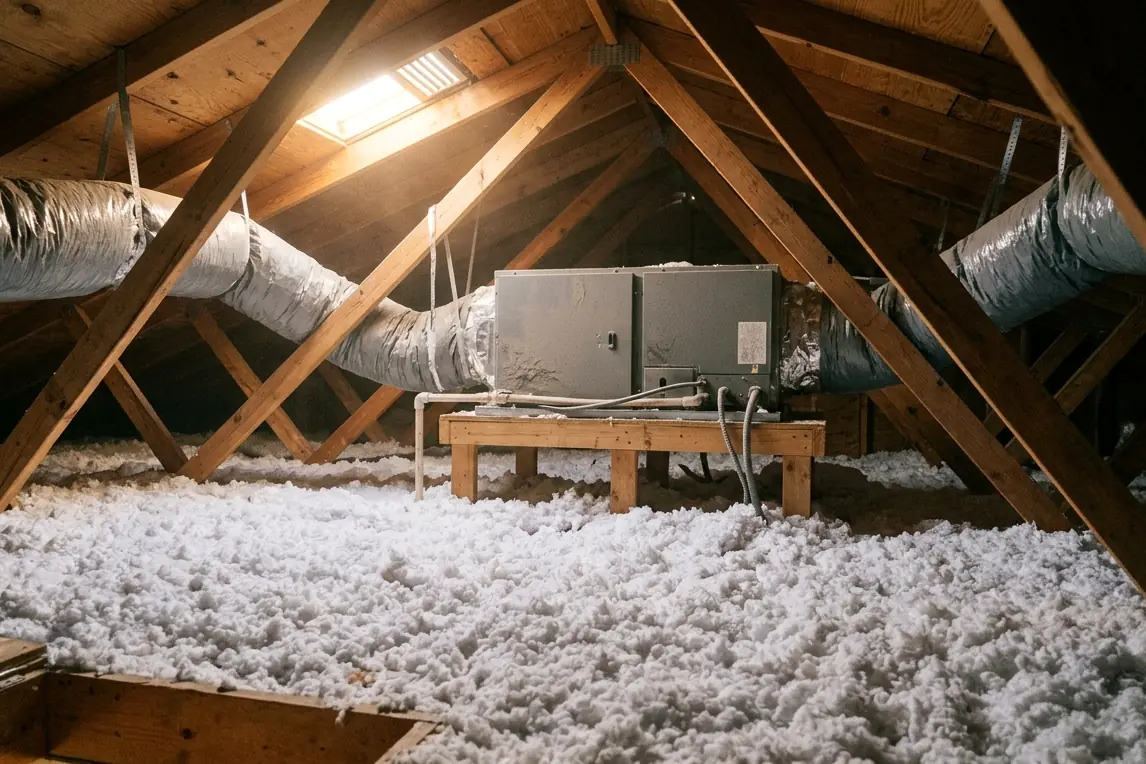
We work on attic insulation because it directly changes how hard your cooling system works. A technician measures existing depth in several spots, looks for compressed or displaced sections around the air handler and walkways, and checks for open gaps at top plates, can lights and plumbing chases. Those gaps let conditioned air leak into the attic, so sealing them first gets more value from every inch of insulation added afterward.
Most Valley homes get blown-in fiberglass or cellulose, which fills around joists and wiring better than rolled batts. We protect the air handler stand, keep insulation clear of recessed light fixtures that aren't rated for contact, and baffle soffit vents so the attic can still breathe. When we're done, you get before and after depth photos and a clear idea of how the change should feel in your home.
Desert sun heats roof decks fast, and tile and shingle roofs can both send a lot of that heat into the attic below. Many Valley homes also place the air handler and most ductwork in that same attic, so the equipment is working inside the hottest part of the house. Better ceiling insulation reduces heat entering the rooms, and sealing gaps keeps cooled air from leaking up through the ceiling into the attic.
Older Phoenix homes from the 1960s through the 1980s often have insulation that has settled after decades, and some were built with very little to begin with. Newer homes usually started with more, but solar installs, cable runs and pest work can leave bare patches. Attic heat also bakes into the house during on-peak hours on APS and SRP time-of-use plans, so stronger insulation helps pre-cooling hold longer.
Typical cost
Typical blown-in top-up with air sealing. A range, not a quote: the real number depends on what the technician finds. Full price guide
Most single-story Phoenix homes fall in this range for air sealing plus a blown-in top-up over existing insulation. Removing old or damaged material first, or larger attics, push the cost higher. The real number depends on what the technician finds in your attic, and you hear the price before any material is ordered.
| Line item | Typical range |
|---|---|
| Blown-in attic insulation top-up | $1,465 to $3,885 |
| Attic air sealing | $485 to $1,145 |
| Old insulation removal | $1,285 to $2,765 |
How we handle it
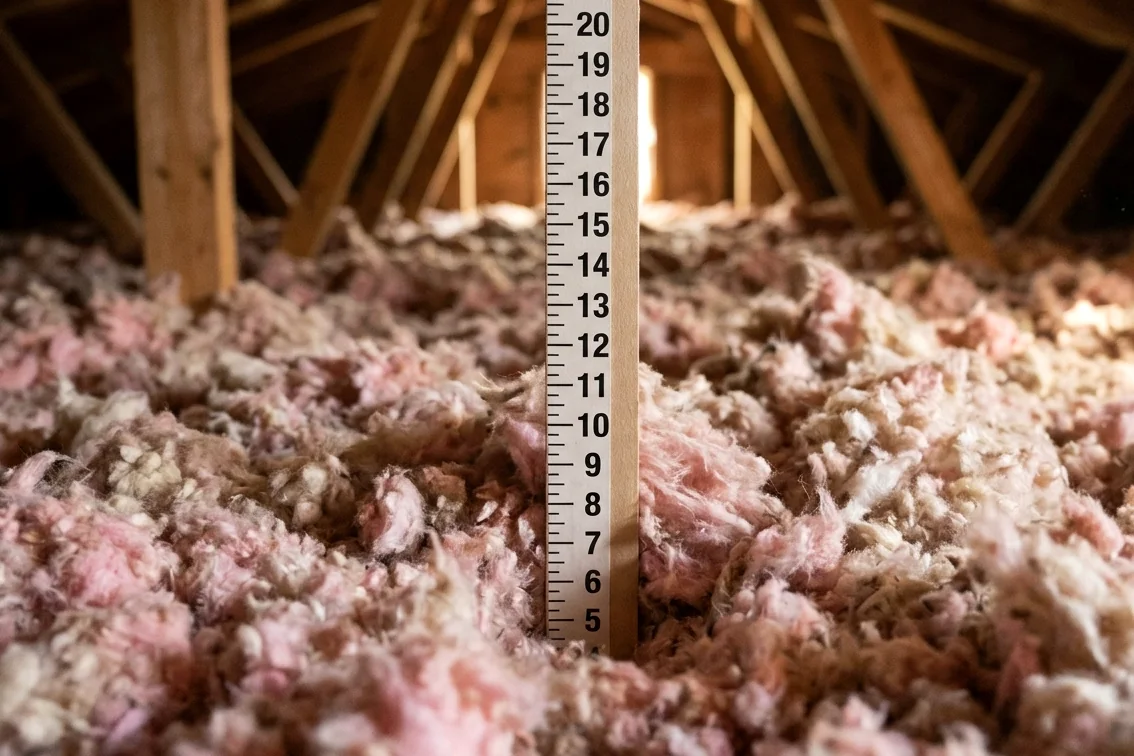
The technician measures existing insulation in multiple spots, photographs thin or bare areas and notes the material type so we can plan how much to add and where.
We look for older recessed lights that can't be covered, exposed wiring, pest damage and roof leaks. Any of these get addressed or flagged before new insulation goes down.
Gaps around top plates, plumbing chases, wire penetrations and the attic hatch get sealed with foam or caulk, so conditioned air stops leaking up and dust stops streaking the insulation.
Baffles at the eaves keep new insulation from blocking soffit vents, so the attic can still move air and the roof deck doesn't trap even more heat during summer afternoons.
A blowing machine fills the attic floor to an even target depth, working around joists, wiring and the air handler stand while keeping walkways and service access clear.
We set depth markers, take after photos and show you the results, including the hatch insulation and weatherstrip so the attic opening doesn't become a weak spot.
Signs to watch
Press your palm against a ceiling on a hot day. If it feels noticeably warm, attic heat is moving through, and the insulation above that spot is likely too thin to stop it.
Bedrooms at the far end of a ranch house, or rooms directly under a low roof section, often sit over the thinnest insulation, where it was compressed or never fully installed.
When the system rarely shuts off on 105°F days, a lot of that load may be heat soaking through the ceiling rather than a problem with the equipment itself.
If you look into the attic and see the tops of ceiling joists sticking up, there are only a few inches of insulation left, far less than a Phoenix home needs.
Cable installers, solar crews and roofers often push insulation aside to reach wires or framing. Those bare patches act like windows for attic heat right into the rooms below.
Gray or black streaks on insulation show where air is leaking from the house into the attic, carrying dust with it. Those spots need air sealing before new material goes on.
Before you call
Anything beyond these checks involves electrical parts or refrigerant, so call (602) 848-9399 and let a technician take it from there.
We repair and replace Trane, Carrier, Lennox, Goodman, Rheem, Daikin and most other makes found in Valley homes.
Related work
Leaks at plenums, takeoffs, boots and returns sealed with mastic and proper fasteners, so cooling stays in the ducts and dusty attic air stays out.
See duct sealingNew supply and return duct systems designed for your Phoenix home, with correct sizing, higher-rated insulation, sealed joints and measured airflow at every room.
See duct replacementMotorized dampers and separate thermostats that split one system into zones, fixing hot upstairs floors and sunbaked west rooms in Phoenix homes.
See zoning systemsCapacitor tests, coil cleaning, drain flushing and refrigerant readings that catch weak parts in spring, before Phoenix summer heat finds them.
See ac tune-upWhere we do this
These communities make up most of the homes we serve. Each link opens the local page with ZIP codes, typical homes and the issues we see there.
Energy guidance for hot climates like Phoenix generally points to considerably more insulation than many older Valley homes have, often well over a foot of blown material depending on type. We measure what you have, compare it with current recommendations for this climate and quote a top-up to reach that range. Homes with good existing coverage may need only targeted patches.
It helps by reducing how much heat flows through the ceiling, which is a large part of the cooling load in a single-story Phoenix home. Even with good insulation, a system designed to hold about 20°F below outdoor temperature may still sit near 80°F inside on the very hottest days. Insulation shortens run times and steadies room temperatures.
Yes. Insulation slows heat moving through the ceiling, but it doesn't stop air leaking through gaps around wires, pipes and top plates. Those leaks pull conditioned air up into the attic and let dusty attic air sneak back down. Sealing first makes the new insulation more effective, and it's much harder to reach those gaps once fresh material covers them.
For most existing homes, blown-in insulation is the practical choice. It fills around joists, wiring and irregular framing better than batts, which often leave gaps at the edges. Batts work well in open, regularly spaced framing, like a new addition. Either material performs well when installed to full depth without voids or compression.
It can, though crews work early in the day when attic temperatures are lower and take breaks to stay safe. Many homeowners choose spring or fall for attic projects, but summer is when the difference is most noticeable. If you're dealing with rooms that won't cool, waiting until October isn't always the best answer.
It keeps the area around them from getting hotter, but ducts lying in the attic still sit in very hot air above the insulation. That's why we often pair insulation with duct sealing or adding insulation wrap on ducts. We keep insulation clear of the air handler service side so future repairs aren't blocked by material piled against the cabinet.
A real person answers (602) 848-9399 every hour of every day, and we will tell you plainly what the next step is.