Ductwork Repair
Torn flex, crushed runs, separated joints and failed plenum connections repaired in Phoenix attics, with airflow measured at the register before and after.
See ductwork repairDucts, air and attic
When ducts are worn out from decades of attic heat, poorly sized or patched in too many places, a new system can lower run times and even out room temperatures. We design it for your home and equipment.
At a glance
Duct replacement removes an old duct system and installs new supply and return ducts designed for your home and equipment. In Phoenix it makes sense when ducts are 20 or more years old, brittle from attic heat, undersized for your AC, damaged in many places, or contaminated by pests or water. A properly designed system with higher-rated insulation can reduce run times and help a new AC deliver its rated efficiency.
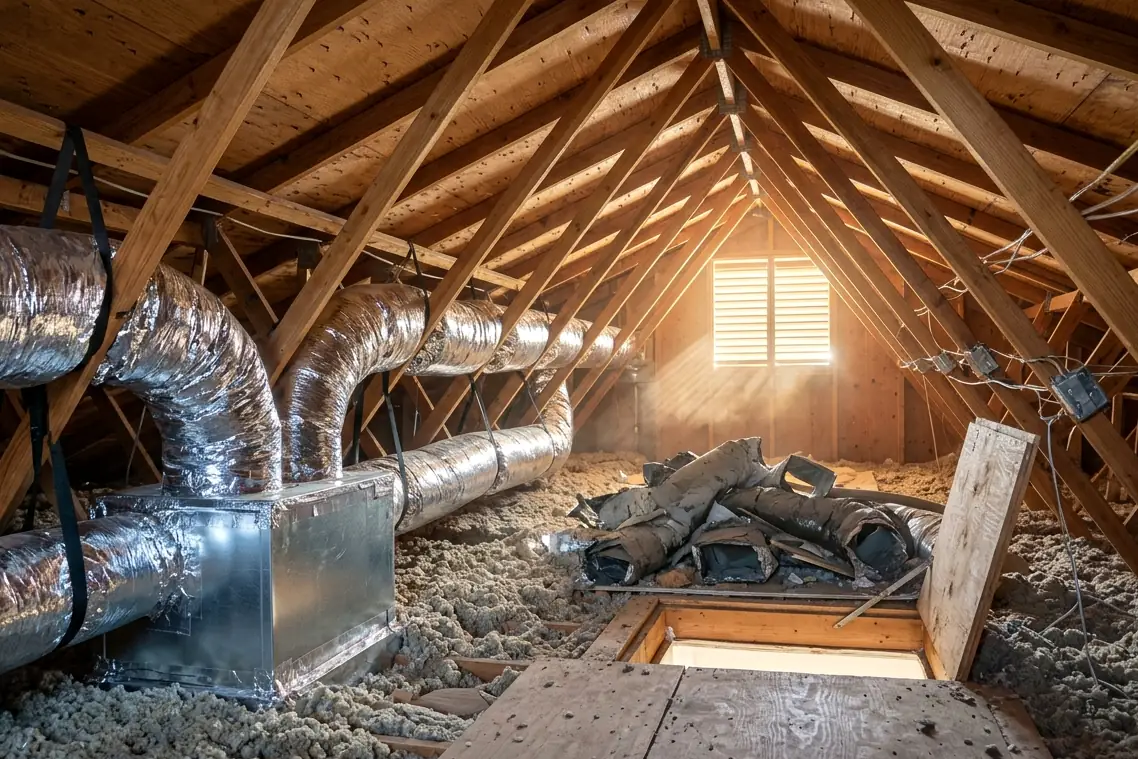
Duct systems last a long time, but Phoenix attics push them hard. After two decades of summers above 140°F, flex duct jackets crack, inner liners tear, sealant fails and insulation compresses. Many older homes also have ducts that were never sized well to begin with, built with one large trunk and a few long branches. Patching may help for a while, but at some point a new system is the better investment.
Replacing ducts is a design job, not just a swap. Our technicians measure each room's cooling load, then size supply branches and returns to deliver the right airflow to each space. We look at the location of the air handler, the attic layout and the return path, since too little return air is one of the most common problems in Valley homes. Proper design keeps the system quieter and more even.
Installation focuses on details that matter in the heat. Ducts are supported to keep them round and straight, joints are mechanically fastened and sealed with mastic, and insulation rated for Phoenix attics is used throughout. When the new system is in, we measure airflow at each register and static pressure at the air handler to confirm the design works as planned.
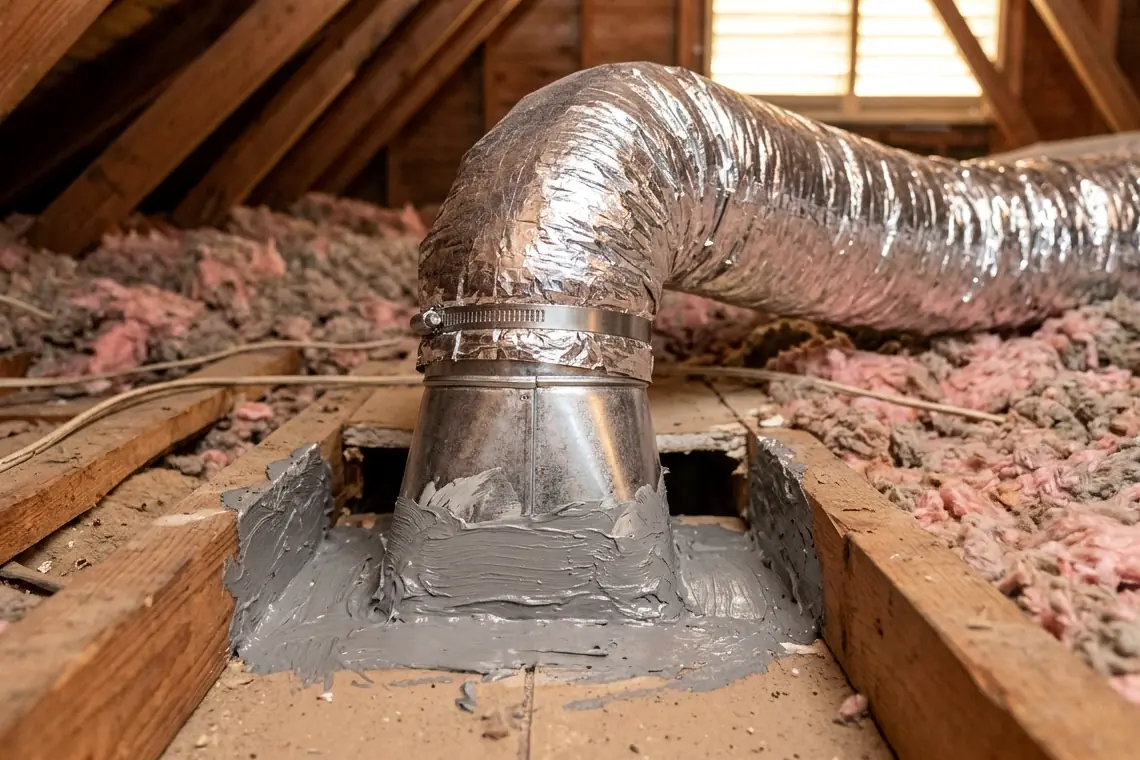
In most Valley homes, the ducts sit in the hottest part of the house. With attic temperatures reaching roughly 140 to 160°F, any heat gain through the duct walls warms the cooled air before it reaches the room. Higher-rated insulation slows that heat gain, and shorter, straighter runs reduce the time air spends in the attic. Both make a measurable difference on long summer afternoons.
Return air is often overlooked. Many older Phoenix homes have a single central return, which can starve the system of air and pressurize bedrooms when doors close. A new duct design may add returns or transfer grilles so air flows back to the air handler without restriction. Good return design also reduces the chance of pulling dusty attic air through leaks, which matters during monsoon season.
Typical cost
Typical whole-home duct system replacement. A range, not a quote: the real number depends on what the technician finds. Full price guide
A single-story home with an accessible attic and a simple layout sits near the lower end of this range. Larger homes, two-story designs, added returns or tight attics push it higher. These are typical Phoenix ranges, not a quote, and the final price depends on what the technician finds during the attic survey and load calculation.
| Line item | Typical range |
|---|---|
| Duct replacement, single-story home | $4,687 to $7,943 |
| Duct replacement, larger or two-story home | $7,386 to $11,847 |
| Added return air run | $487 to $893 |
How we handle it
We measure each room's size, windows and exposure to determine how much airflow it needs, which forms the basis for sizing every branch and return.
Trunk, branch and return locations are planned around the attic framing and the air handler position, keeping every run as short, straight and direct as practical.
Old ducts are disconnected and removed from the attic, along with damaged boots and fittings. We protect ceilings, floors and living areas below during the removal.
New insulated ducts, boots and fittings are installed, supported and fastened. Joints are sealed with mastic, and boots are sealed to the drywall to stop attic air leaks.
The supply plenum and return connections are fitted and sealed at the air handler, with transitions sized to keep static pressure in the right range.
We measure airflow at each register and static pressure at the system, then adjust dampers so each room receives the airflow it was designed for.
Signs to watch
Older flex duct often has a brittle jacket, crumbling liner and compressed insulation. At that age, many sections are failing at once and repairs keep piling up.
If one section gets fixed and another fails months later, the system is wearing out as a whole. Replacement ends the cycle of piecemeal repairs.
Persistent hot and cold rooms despite a working AC often point to ducts that were undersized or poorly laid out from the start.
A new, efficient system cannot deliver its rating through leaky or undersized ducts. Replacing ducts at the same time protects the investment in new equipment.
Ducts contaminated by rodents, nesting or roof leaks can carry odors and debris into the home. Replacement removes the damaged material completely.
Whistling registers and a loud air handler often mean the ducts are too small for the system, raising static pressure and stressing the blower motor.
Before you call
Anything beyond these checks involves electrical parts or refrigerant, so call (602) 848-9399 and let a technician take it from there.
We repair and replace Trane, Carrier, Lennox, Goodman, Rheem, Daikin and most other makes found in Valley homes.
Related work
Torn flex, crushed runs, separated joints and failed plenum connections repaired in Phoenix attics, with airflow measured at the register before and after.
See ductwork repairLeaks at plenums, takeoffs, boots and returns sealed with mastic and proper fasteners, so cooling stays in the ducts and dusty attic air stays out.
See duct sealingAging, R-22 or repeatedly failing systems replaced with properly sized SEER2 equipment, with ducts, drain and electrical checked before install.
See ac replacementMotorized dampers and separate thermostats that split one system into zones, fixing hot upstairs floors and sunbaked west rooms in Phoenix homes.
See zoning systemsWhere we do this
These communities make up most of the homes we serve. Each link opens the local page with ZIP codes, typical homes and the issues we see there.
It varies with material and installation, but many flex duct systems in Phoenix attics show significant wear after 15 to 25 years. Heat dries out jackets and sealants, and insulation compresses over time. Some well-installed systems last longer, while poorly supported ones fail sooner. An inspection tells you whether your ducts have years left or are near the end.
If your ducts are old, leaky or undersized, replacing them at the same time is often a smart move. A new high-efficiency AC cannot reach its rated performance through ducts that lose air or restrict flow. If the ducts are in good condition and properly sized, sealing and minor repairs may be enough. We test them and give you an honest assessment.
Most single-story homes take one to two days. Larger or two-story homes and projects that add returns may take two to three days. In summer, we start early to work in the attic during cooler morning hours. Your cooling is typically restored at the end of each workday so the house does not sit without air conditioning overnight.
Many homeowners see lower run times and better comfort after replacing badly leaking or undersized ducts, which can reduce bills. The size of the change depends on how bad the old ducts were. Because Phoenix ducts sit in such hot attics, reducing leaks and heat gain through better insulation tends to make a bigger difference here than in cooler climates.
Higher insulation ratings slow heat gain through the duct walls, which matters a lot in attics that reach roughly 140 to 160°F. Many Phoenix installations use duct with a higher rating than the minimum because the extra cost is modest compared with the comfort and energy benefit. We explain the options and recommend what fits your attic and budget.
Usually only minimally. New ducts connect to existing register openings in most cases. If registers need to be relocated or returns added, we cut new openings and install clean grilles. Small patches may be needed where old registers are removed. We discuss any ceiling work during planning so you know what to expect.
A real person answers (602) 848-9399 every hour of every day, and we will tell you plainly what the next step is.