AC Repair
Warm air, odd noises or a system that never shuts off. We test capacitors, refrigerant, airflow and controls, then fix the real cause.
See ac repairCounty coverage
Maricopa County holds most of the Valley, so the homes we work on here range from 1950s block ranches in central Phoenix to stucco subdivisions finished last year on the West Valley edge.
Maricopa County at a glance
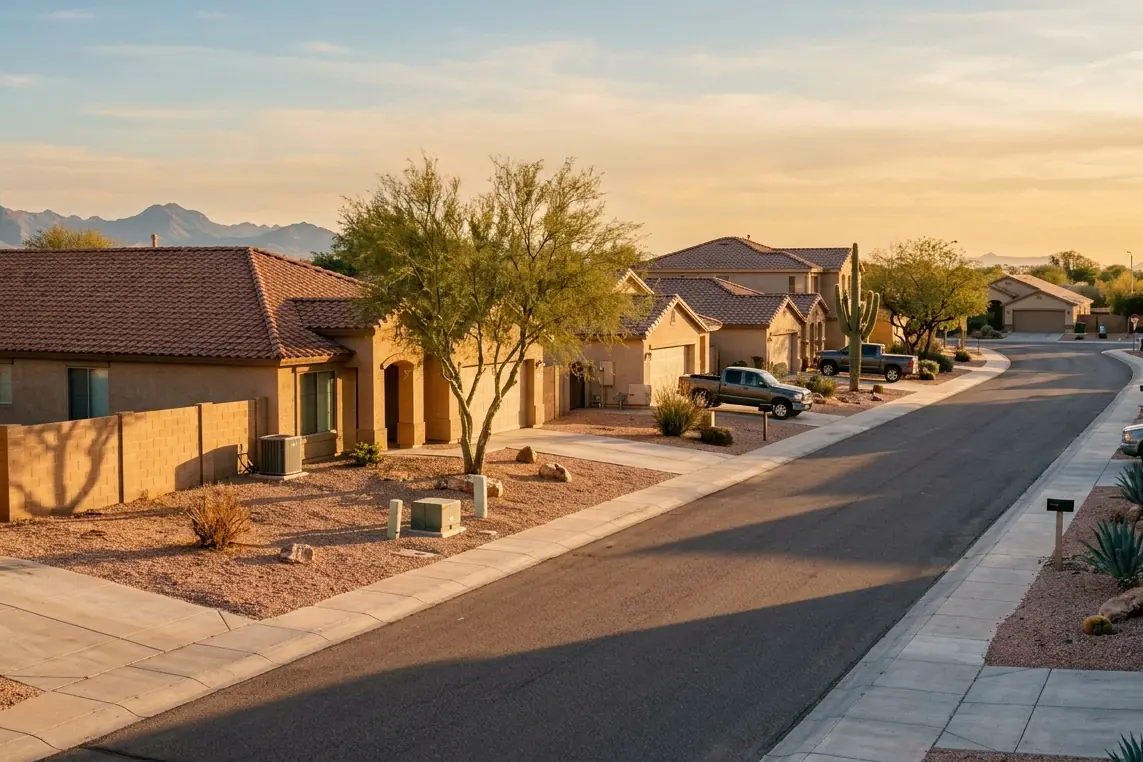
Maricopa County holds most of the Valley, so the homes we work on here range from 1950s block ranches in central Phoenix to stucco subdivisions finished last year on the West Valley edge. That spread shows up in the equipment. Older neighborhoods lean on roof-mounted package units and evaporative coolers, while most homes built since the 1980s run split systems with the air handler in a hot attic. Heat pumps are the most common setup in newer tracts, and gas furnaces show up mostly in older custom homes and some North Valley areas.
Summer is the real test across the county. Highs of 105 to 115°F stretch from June through August, and overnight lows in the upper 80s give a system almost no recovery time. Monsoon storms add fine dust to condenser coils and power surges that take out capacitors. Our technicians drive the Loop 101, Loop 202 and I-10 every day, and the trucks carry the common failure parts so most repairs finish on the first visit. If your home is anywhere in the county, give us a call and we'll tell you honestly what the system needs.
Around the Loop 101 and Loop 202 corridors that ring the Valley, the same Valley rules apply: long cooling seasons, dust that settles into coils, and monsoon storms that test electrical parts. Calls from Maricopa County come straight to our office on East Camelback Road. Tell us what the system is doing, whether anyone at home is elderly, very young or unwell, and how hot the house is right now; that decides how we order the day.
What we see here
Heat wears capacitors faster than anything else in the system. Across the county they are the part we replace most often in summer, usually after a hot week or a monsoon power flicker.
Haboobs and construction dust coat outdoor coils with a fine layer that blocks airflow. Pressure climbs, the compressor runs hotter, and cooling drops off just when the afternoon heat peaks.
Algae and hard-water sludge plug condensate lines on attic air handlers. When the pan overflows, the first sign is often a stained ceiling or water dripping from a light fixture.
Plenty of homes still run equipment from before 2010 that uses R-22. With production ended in 2020, recharging it gets costly, so a leak on one of these systems usually starts a repair-or-replace talk.
Most-called services
Warm air, odd noises or a system that never shuts off. We test capacitors, refrigerant, airflow and controls, then fix the real cause.
See ac repairThe most common Valley summer failure: weak capacitors and pitted contactors tested with a meter and replaced from stock on the truck.
See capacitors & contactorsInside-out rinsing and coil cleaner remove packed monsoon dust from outdoor coils, lowering pressure, power draw and compressor heat.
See condenser coil cleaningAging, R-22 or repeatedly failing systems replaced with properly sized SEER2 equipment, with ducts, drain and electrical checked before install.
See ac replacementLocal advice
We cover Phoenix and its neighborhoods plus the surrounding cities, from Scottsdale, Tempe and Mesa to Glendale, Peoria, Surprise, Goodyear and Buckeye. Our office sits on Camelback Road, which keeps central and East Valley calls quick. Farther West Valley and North Valley homes are on our regular routes too, so call and we'll give you a realistic arrival window.
Often, yes. Most residential systems are designed to hold about 20°F below the outdoor temperature on the hottest days, so 78 to 82°F indoors at 115°F outside can be normal operation. If the house keeps climbing past that, or the air from the vents feels barely cool, a technician should check the charge, the coil and the airflow.
Most newer homes in the county use heat pumps with electric heat strips as backup, and that works well in a mild winter with January lows in the mid 40s. Gas furnaces are common in older custom homes. Either can be the right choice, so we look at what your home already has, your gas service and your bills before suggesting a change.
Nearby
A real person answers (602) 848-9399 every hour of every day, and we will tell you plainly what the next step is.