AC Tune-Up
Capacitor tests, coil cleaning, drain flushing and refrigerant readings that catch weak parts in spring, before Phoenix summer heat finds them.
See ac tune-upAc parts and repairs
Your outdoor coil is where the heat from inside your home gets dumped. When Valley dust packs those fins, the whole system strains. A deep cleaning lets it breathe again.
At a glance
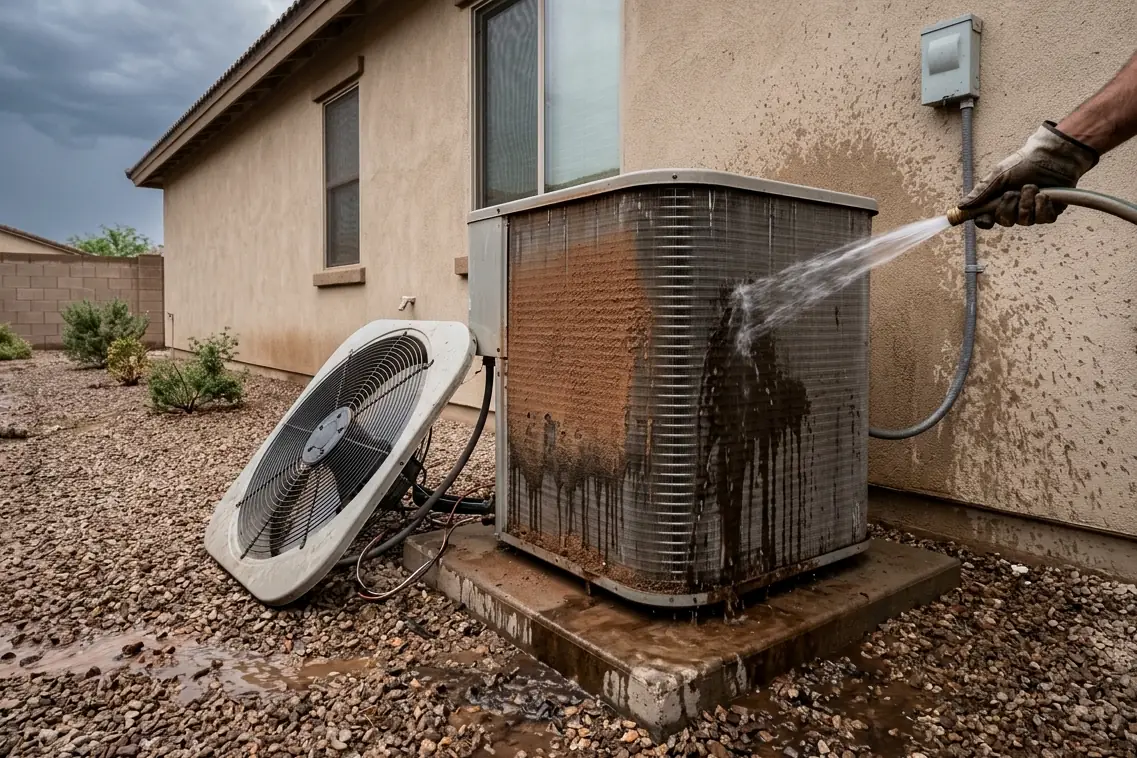
Condenser coil cleaning removes dust, dirt, cottonwood fluff, grass clippings and grease from the outdoor unit's coil so it can release heat efficiently. In Phoenix, monsoon dust storms pack coils with fine silt that a garden hose can't fully remove. A dirty coil raises refrigerant pressure, increases power use and makes the compressor run hotter. Most Phoenix systems benefit from a professional cleaning each spring, plus another after a heavy monsoon season.
The condenser coil is the large finned grid wrapping around your outdoor unit. Hot refrigerant flows through its tubes, and the fan pulls outdoor air across the fins to carry heat away. When dust coats those fins, air can't pass through easily and heat stays trapped in the refrigerant. The system then runs at higher pressures and temperatures, which forces the compressor to work harder and draw more power. On a 112-degree afternoon, that extra strain can be the difference between steady cooling and an overload trip.
Phoenix dust is especially stubborn. It's fine enough to work deep into the coil, where it mixes with humidity during monsoon season and cakes into a mat on the inside face. Spraying from the outside often pushes that dirt deeper. A proper cleaning starts from the inside: we shut off power, remove the top fan assembly when the design allows, rinse outward through the coil, and use a coil cleaner made for aluminum fins when buildup is heavy.
Coil cleaning also gives us a close look at the outdoor unit's condition. Bent fins can be straightened with a fin comb. Corrosion, especially along the bottom where sprinkler water hits, can be spotted early. Oil stains on the coil may point to a refrigerant leak. We'll also clear the base pan of debris and check that the unit sits level with enough clearance from walls and shrubs. After cleaning, we measure operating pressures so you can see the improvement.
Signs to watch
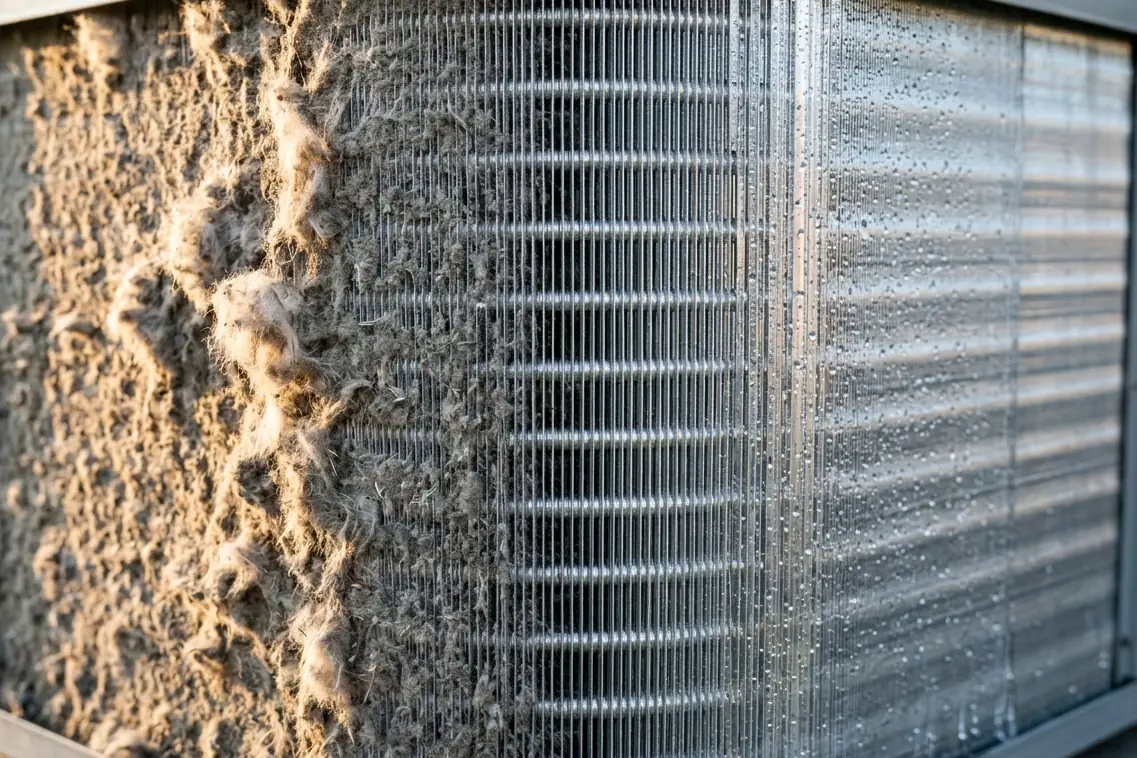
If the coil looks gray, matted or packed with cottonwood fluff, leaves or grass, airflow through the fins is restricted. What you see outside is often worse on the inside face.
A single monsoon dust storm can coat an outdoor coil heavily. If your system seems weaker after a storm, a cleaning may restore much of its lost capacity.
A dirty coil reduces how much heat the system can reject, so it runs longer to reach the thermostat setting, especially during late afternoon hours above 105 degrees.
Rising APS or SRP bills with similar weather and habits can come from a dirty coil forcing the compressor to draw more power for the same amount of cooling.
When pressures climb too high, the compressor's internal overload can shut it off. If the unit stops on hot afternoons and restarts later, coil cleaning is a first check.
The air leaving the top of the condenser should feel hot, but if airflow seems weak and the cabinet is unusually hot, the coil may be clogged and trapping heat.
Few places put more dirt on an outdoor coil than Phoenix. Monsoon season, from mid June through September, brings dust storms that can drop visibility to near zero and coat everything outside with fine silt. Homes near open desert, construction sites, farm fields or unpaved lots get even more. Cottonwood fluff in spring, palm debris, grass clippings from mowing and dog hair all stick to dusty fins. By late summer, many coils are carrying a thick layer that cuts heat transfer noticeably.
Heat magnifies the effect. A condenser working at 115 degrees already runs at high pressure, and a dirty coil pushes it closer to its limits. Sprinkler water containing hard minerals can leave scale on the lower fins, which traps dust and speeds corrosion. Block walls and tight side yards reduce airflow further. That's why we suggest cleaning each spring and checking again after heavy monsoon seasons, especially for older systems and rooftop package units that sit in full sun all day.
How we handle it
We turn off the outdoor disconnect and confirm there's no voltage at the unit before working on it, protecting both the technician and the equipment's electrical components.
Leaves, weeds and debris around and inside the unit are removed, and we inspect the coil for bent fins, corrosion, oil stains and damage that need attention.
When the unit design allows, we lift the top panel and fan assembly carefully so the coil can be rinsed from the inside out without stressing the wiring.
For heavy buildup or grease, we apply a cleaner made for aluminum coils, letting it work into the fins to loosen packed dust and grime before rinsing.
Using controlled water pressure, we rinse outward through the coil, pushing dirt out the way it came in. Bent fins are straightened with a fin comb afterward.
After reassembly, we restore power, run the system and check pressures and amp draw, confirming the coil now rejects heat efficiently and the fan runs smoothly.
Before you call
Anything beyond these checks involves electrical parts or refrigerant, so call (602) 848-9399 and let a technician take it from there.
Typical cost
Typical outdoor coil cleaning per unit. A range, not a quote: the real number depends on what the technician finds. Full price guide
A standard rinse with light cleaner on a split system sits near the low end. Heavily packed coils, units with corrosion, rooftop package units and double-row coils that need extra cleaner and time push the cost higher. These are typical Phoenix ranges, not quotes, and the real number depends on what the technician finds when the unit is opened up.
| Line item | Typical range |
|---|---|
| Condenser coil cleaning, split system | $115 to $245 |
| Package unit coil cleaning | $165 to $345 |
We repair and replace Trane, Carrier, Lennox, Goodman, Rheem, Daikin and most other makes found in Valley homes.
Related work
Capacitor tests, coil cleaning, drain flushing and refrigerant readings that catch weak parts in spring, before Phoenix summer heat finds them.
See ac tune-upConfirmed compressor failures replaced with matched parts, flushed lines and a fresh charge, or an honest comparison with a new system.
See compressor replacementOutdoor fan motors that stall, squeal or overheat repaired or replaced with correct horsepower, rotation and capacitor to protect the compressor.
See condenser fan motorSpring cooling and fall heating visits on a schedule, priority scheduling in summer and a service history that tracks your system year to year.
See maintenance plansWhere we do this
These communities make up most of the homes we serve. Each link opens the local page with ZIP codes, typical homes and the issues we see there.
Most Phoenix systems benefit from a professional cleaning every spring before temperatures pass 100 degrees. Homes near desert, fields or construction, rooftop package units and older systems often benefit from a second cleaning after monsoon season. Between visits, you can gently rinse the outside of the coil after turning off power.
No. Pressure washers can flatten the delicate aluminum fins, blocking airflow even more than dirt does. They can also damage the coil's tubes or force water into electrical components. A garden hose with moderate pressure is safe for light rinsing. Heavy buildup needs inside-out cleaning and the right coil cleaner.
Often, yes. A dirty coil makes the compressor work at higher pressure and draw more current for the same cooling. Cleaning restores heat transfer, which can reduce run time and power use. The savings depend on how dirty the coil was, but in a long Phoenix cooling season, even modest improvements add up on APS or SRP bills.
Monsoon dust storms carry fine silt that clings to the coil's fins, and the outdoor fan pulls that dusty air straight through the unit. Humidity during monsoon season makes dust stick and cake. Rain can then wash some of it deeper. That's why many Phoenix coils look much worse in September than they did in May.
Yes. Our AC tune-ups include a condenser coil cleaning along with electrical testing, refrigerant readings and drain flushing. If you only need a coil cleaning, perhaps after a dust storm, we can schedule that as a separate service. For heavily packed coils, chemical cleaning may be quoted as an added step.
Over time, yes. A dirty coil raises refrigerant pressure and temperature, forcing the compressor to work harder and run hotter. In Phoenix heat, that extra stress can trip overloads and shorten compressor life. Regular coil cleaning is one of the simplest ways to protect your system's most expensive component.
A real person answers (602) 848-9399 every hour of every day, and we will tell you plainly what the next step is.