AC Repair
Warm air, odd noises or a system that never shuts off. We test capacitors, refrigerant, airflow and controls, then fix the real cause.
See ac repairOur home city
Phoenix covers a lot of ground, and the city's HVAC needs change block by block.
Phoenix at a glance
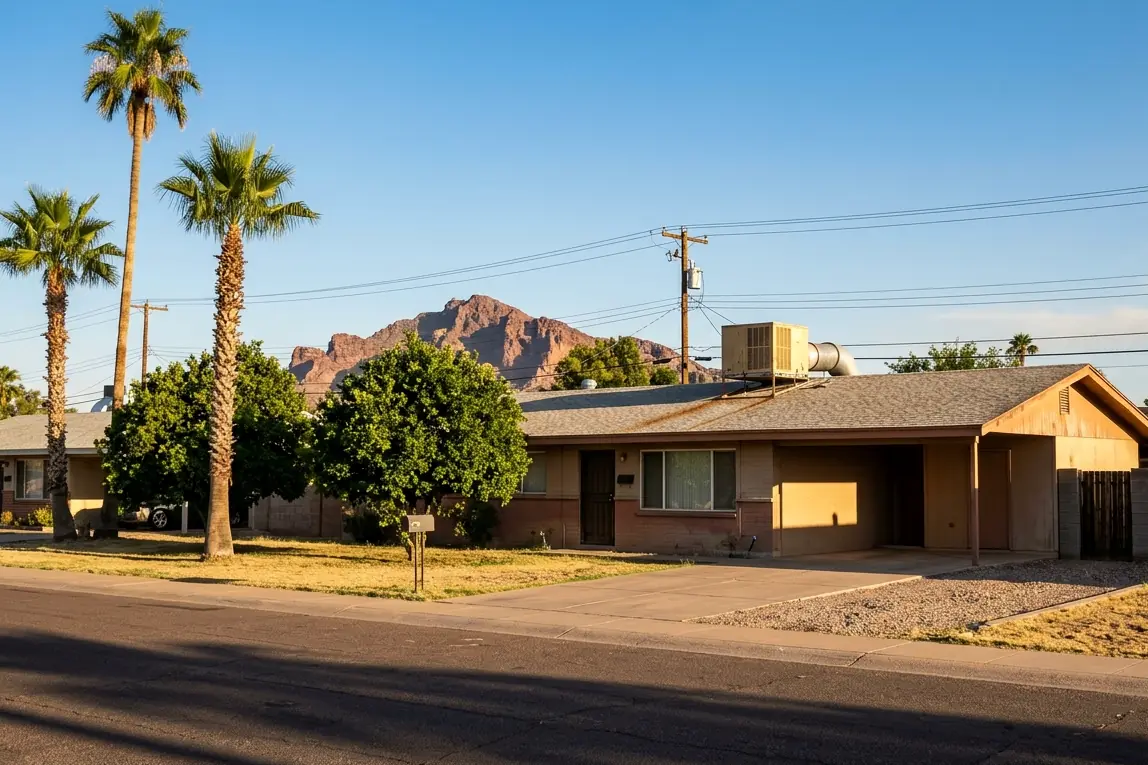
Phoenix covers a lot of ground, and the city's HVAC needs change block by block. Central neighborhoods near downtown and Encanto have prewar and mid-century homes that started with evaporative coolers and got ductwork added later. The ranch homes of the 1950s through 1970s often rely on roof package units or split systems with tight attics. North and south of the core, master-planned areas from the 1980s onward mostly run heat pumps with attic air handlers. We work on all of it, from decades-old package units to new A2L refrigerant systems.
The city's heat is what makes every repair urgent. Summer highs of 105 to 115°F and July nights that stay in the upper 80s keep a system running nearly around the clock, and attic air near 150°F pushes air handlers and ducts hard. Our office sits on Camelback Road in the Biltmore area, which puts most of Phoenix within a reasonable drive. Phones are answered 24/7, and you'll talk with someone who can get a technician moving, not a voicemail box.
Around Camelback Mountain and the Phoenix Mountains Preserve, the same Valley rules apply: long cooling seasons, dust that settles into coils, and monsoon storms that test electrical parts. Calls from Phoenix come straight to our office on East Camelback Road. Tell us what the system is doing, whether anyone at home is elderly, very young or unwell, and how hot the house is right now; that decides how we order the day.
What we see here
Run capacitors weaken with heat, and Phoenix summers wear them out faster than almost anywhere. A humming outdoor unit with a fan that won't spin is the classic sign of a failed capacitor.
Air handlers in attics near 150°F run hotter, and their blower motors and control boards fail sooner. Drain pans overflow up there too, which can stain the ceilings below.
A system low on refrigerant has a leak somewhere. Common spots are the evaporator coil, Schrader valves and brazed joints, and topping it off without finding the leak only buys a few weeks.
Power flickers during summer storms can burn contactors, capacitors and control boards. If the AC quit right after a storm rolled through, surge damage is a strong first suspect.
Most-called services
Warm air, odd noises or a system that never shuts off. We test capacitors, refrigerant, airflow and controls, then fix the real cause.
See ac repairNights, weekends and holidays, a person answers and a technician rolls with capacitors, contactors and motors on board to restore cooling fast.
See emergency ac repairThe most common Valley summer failure: weak capacitors and pitted contactors tested with a meter and replaced from stock on the truck.
See capacitors & contactorsElectronic and dye leak detection, brazed or replaced parts, nitrogen pressure tests and a proper vacuum and recharge so the charge stays put.
See refrigerant leak repairLocal advice
It depends on the day's call volume and where you live, but our office on Camelback Road keeps most of Phoenix within a reasonable drive. We answer around the clock, give you an honest arrival window when you call and stay in touch if it changes. On the hottest days, homes with elderly residents, infants or medical needs go to the front of the line.
Most Phoenix repair visits fall in a typical range of about $185 to $465 for common parts like capacitors, contactors and fan motors. Refrigerant leaks, coils and compressors run higher. The real number depends on what the technician finds, and you'll hear the price before any work starts, so the invoice holds no surprises.
Yes, often. Many Phoenix ranch homes from the 1950s through the 1970s have package units sitting on flat or low-slope roofs. We repair and replace them, check the roof curb and duct connections, and look at the condensate drain while we're up there. Older package units on R-22 get a straight talk about repair versus replacement.
Nearby
A real person answers (602) 848-9399 every hour of every day, and we will tell you plainly what the next step is.