Mini-Split Repair
Error codes, dripping heads or weak cooling on a ductless system? We repair inverter boards, sensors, condensate drains, fan motors and flare leaks on mini-splits.
See mini-split repairHeat pumps and heating
Ductless mini-splits cool and heat individual rooms without ductwork. They work well for garages, casitas, additions and that one bedroom your central system never quite reaches.
At a glance
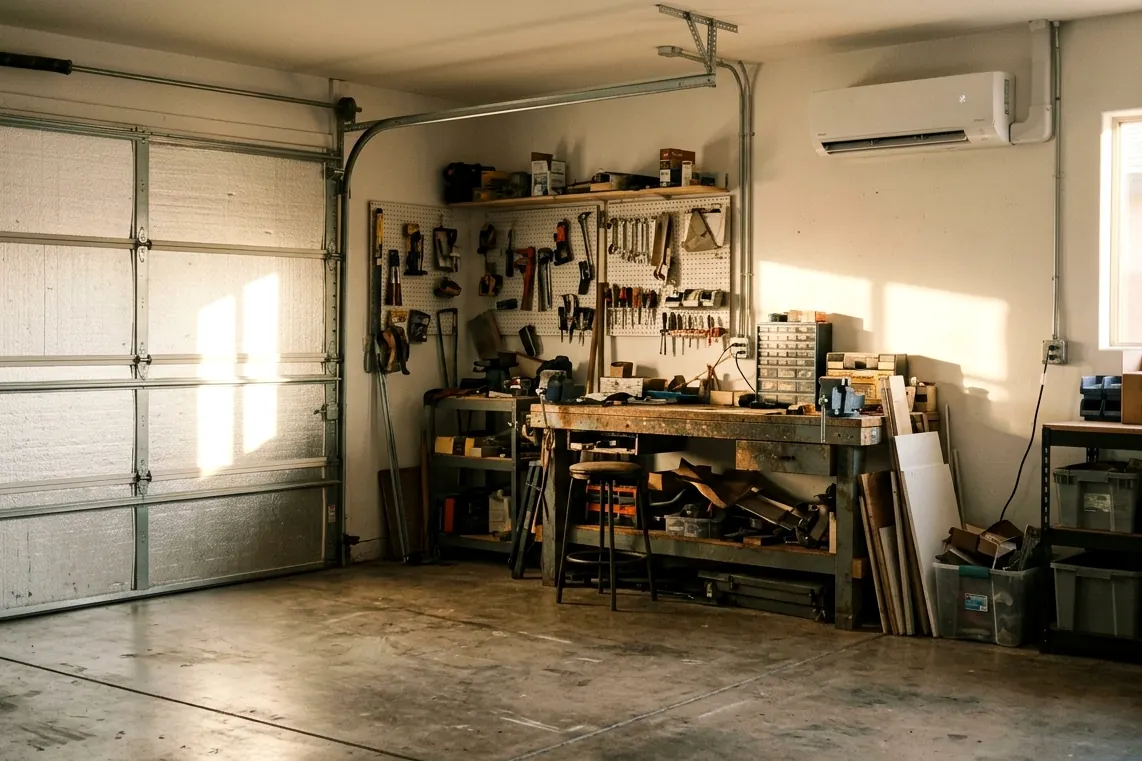
Ductless mini-split installation adds a small outdoor heat pump connected by refrigerant lines to one or more wall, ceiling or floor units indoors. In Phoenix it suits garages, casitas, converted patios, additions, workshops and hot upstairs rooms where extending ducts is impractical. Mini-splits cool and heat efficiently, run quietly, and let each room set its own temperature, but they must be sized for 115°F afternoons.
A mini-split is a heat pump without ducts. An outdoor condenser connects through a small wall opening to an indoor head that blows conditioned air directly into the room. Single-zone systems serve one space, and multi-zone systems run several indoor heads from one outdoor unit. Because there are no attic ducts losing cool air, mini-splits deliver nearly all of their capacity where you need it.
In the Valley, mini-splits solve problems central systems struggle with. Garage workshops and home gyms can hit 120°F without cooling. Casitas and guest houses often sit too far from the main system for ducts to make sense. Patio rooms and additions built after the original home frequently get a single duct run that cannot keep up. A properly sized ductless unit handles each of those spaces independently.
Placement determines how well a mini-split works. The indoor head needs to throw air across the room, away from obstructions, with a clear path for the condensate line. The outdoor unit should sit where it gets airflow and, ideally, some afternoon shade. We plan both locations with you, run lines in neat covers, and size the system for the room's heat gain rather than its square footage alone.
Room-size charts written for milder climates underestimate Phoenix loads. A garage with a west-facing door, or a casita with a flat roof, gains far more heat than an interior bedroom of the same size. We calculate heat gain from walls, roof, windows and doors, then choose a capacity that holds the room comfortable at 110°F and above. Inverter mini-splits slow down rather than shutting off, which helps on long afternoons.
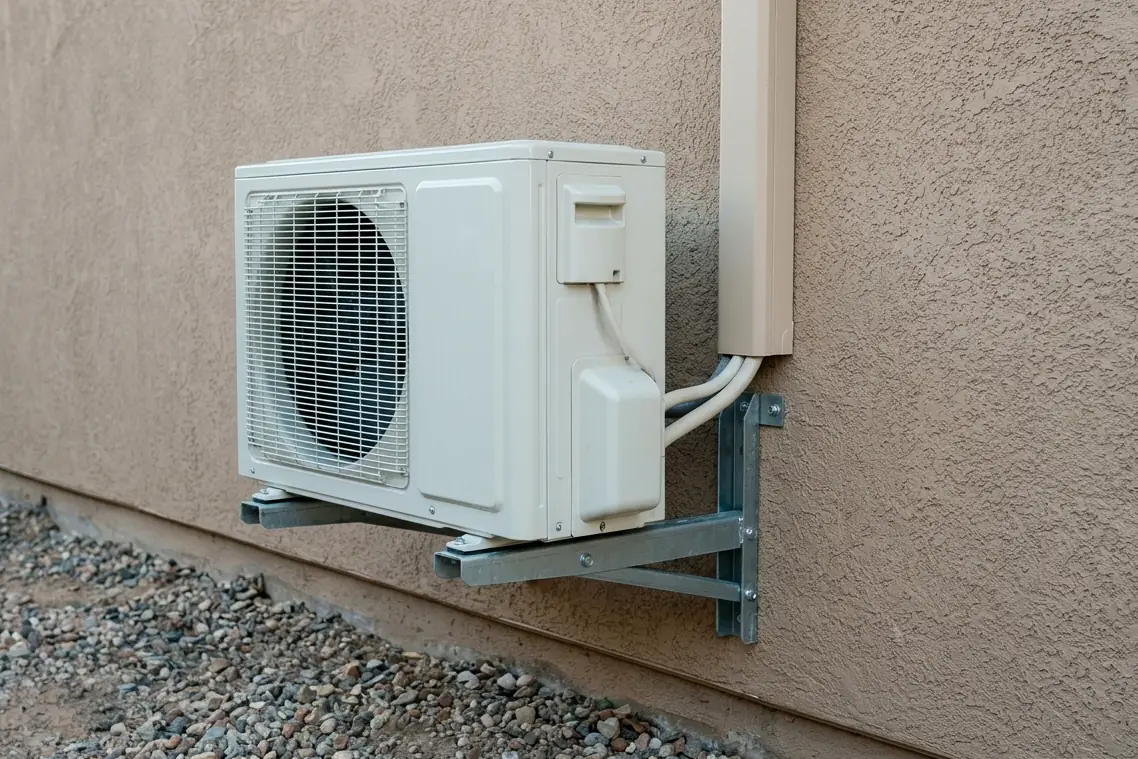
The outdoor unit faces the same heat and dust as any condenser. Mounting it on a pad or wall bracket with clearance for airflow, and away from reflected heat off block walls when possible, helps it run efficiently. Monsoon dust settles into the indoor filters as well, so we show you how to rinse them. Condensate lines need a sensible path to the outside so water from humid days drains away from walls.
Typical cost
Typical mini-split installed, single zone through multi-zone. A range, not a quote: the real number depends on what the technician finds. Full price guide
A single-zone mini-split for a garage or bedroom sits at the lower end, while multi-zone systems serving three or four rooms cost more. Line length, wall construction and electrical work also affect pricing. These are typical Phoenix ranges rather than a quote, and the real number depends on what the technician finds during the site visit.
| Line item | Typical range |
|---|---|
| Single-zone mini-split installed | $3,865 to $6,448 |
| Two-zone mini-split installed | $6,875 to $9,936 |
| Three or four zone mini-split installed | $9,765 to $14,783 |
How we handle it
We look at wall exposure, roof type, windows, door insulation and how the room is used, then calculate the capacity needed for Phoenix summer afternoons and winter mornings.
Together we pick indoor head locations with good air throw and the outdoor spot with airflow and a clean line route. Multi-zone systems get a layout for every head.
A small sleeved opening is cut through the exterior wall for refrigerant lines, wiring and the condensate drain, sealed against dust and insects once lines are in place.
The indoor head is mounted level on its bracket. Lines run in UV-resistant covers outside, and the condenser sits on a pad or wall bracket with proper clearance.
We pull and hold a deep vacuum before opening the refrigerant valves, then verify pressures, supply temperatures and drain flow in both cooling and heating modes.
You get a walkthrough of the remote or app, filter cleaning, and sensible settings for time-of-use pricing, including when to let the unit run continuously at a moderate setpoint.
Signs to watch
Uninsulated Phoenix garages trap heat all afternoon. A mini-split sized for the space and its door insulation can make a workshop or home gym usable in summer.
Detached casitas are often too far from the main system for ductwork. A dedicated ductless unit gives guests their own temperature control without affecting the main house.
Rooms added after the original build often have a single undersized duct. A mini-split adds the cooling those spaces need without reworking the main ducts.
Second-story rooms under a hot roof can run several degrees warmer than downstairs. A ductless head lets that room cool down without overcooling the rest of the house.
Older homes cooled by evaporative coolers struggle during monsoon humidity. Mini-splits can add refrigerated cooling to key rooms without installing a full duct system.
Cooling a single office during work hours, rather than the whole house, can lower bills on time-of-use plans while keeping the space comfortable.
Before you call
Anything beyond these checks involves electrical parts or refrigerant, so call (602) 848-9399 and let a technician take it from there.
We repair and replace Trane, Carrier, Lennox, Goodman, Rheem, Daikin and most other makes found in Valley homes.
Related work
Error codes, dripping heads or weak cooling on a ductless system? We repair inverter boards, sensors, condensate drains, fan motors and flare leaks on mini-splits.
See mini-split repairSwamp cooler removed, roof opening sealed and refrigerated air installed with properly sized ducts, electrical and drain for year-round comfort.
See cooler to ac conversionLoad-calculated heat pump systems with matched indoor coils, correct heat strip sizing and full commissioning, designed for 115°F summers and mild Valley winters.
See heat pump installationMotorized dampers and separate thermostats that split one system into zones, fixing hot upstairs floors and sunbaked west rooms in Phoenix homes.
See zoning systemsWhere we do this
These communities make up most of the homes we serve. Each link opens the local page with ZIP codes, typical homes and the issues we see there.
Yes, if it is sized for the real heat load. Phoenix garages can exceed 120°F, and uninsulated doors and walls add a lot of heat. We calculate the load and often recommend door insulation or weatherstripping alongside the unit. With a properly sized inverter mini-split and those improvements, a garage workshop or gym can stay comfortable through summer afternoons.
A typical wall-mounted head is around three feet wide and needs several inches of clearance above for airflow and a few feet of open space in front for the air to throw across the room. It usually sits high on an exterior wall to keep the line route short. If wall space is tight, ceiling cassettes or floor consoles are alternatives we can discuss.
Yes. Mini-splits are heat pumps, so they heat as well as cool. Phoenix winters are mild enough that a mini-split can comfortably heat a casita or room through nearly every night. Many models keep producing heat well below 32°F, which covers the rare cold snap. There are no heat strips to manage, and the remote lets guests set their own temperature.
It depends on layout. A multi-zone system uses one outdoor unit for several rooms, saving wall and yard space. Separate single-zone systems cost a bit more in total but keep each room independent, so if one unit needs service the others keep running. For a casita plus garage on opposite sides of a property, separate units often make more sense.
They do. The washable filters in each indoor head should be rinsed every few weeks in summer, more often after a dust storm. The indoor coil and blower wheel benefit from a professional cleaning every year or two, since dust and moisture can grow mildew there. The outdoor coil needs the same rinse and inspection as any condenser to keep efficiency up.
For specific rooms, it can work very well. Mini-splits provide refrigerated cooling that stays effective during monsoon humidity, when swamp coolers lose much of their effect. For a whole house, a ducted system or evaporative cooler conversion may be more practical. We look at your floor plan and help you decide whether ductless heads, central air or a mix gives the best result.
A real person answers (602) 848-9399 every hour of every day, and we will tell you plainly what the next step is.