Heat Pump Repair
Heat pump blowing cold on heat or stuck in one mode? We repair reversing valves, defrost boards, sensors, capacitors and refrigerant leaks on Valley heat pumps.
See heat pump repairHeat pumps and heating
A properly sized heat pump handles Phoenix summers and mild winters with one outdoor unit. We calculate your home's load, match indoor and outdoor equipment, and commission it so you get the efficiency you paid for.
At a glance
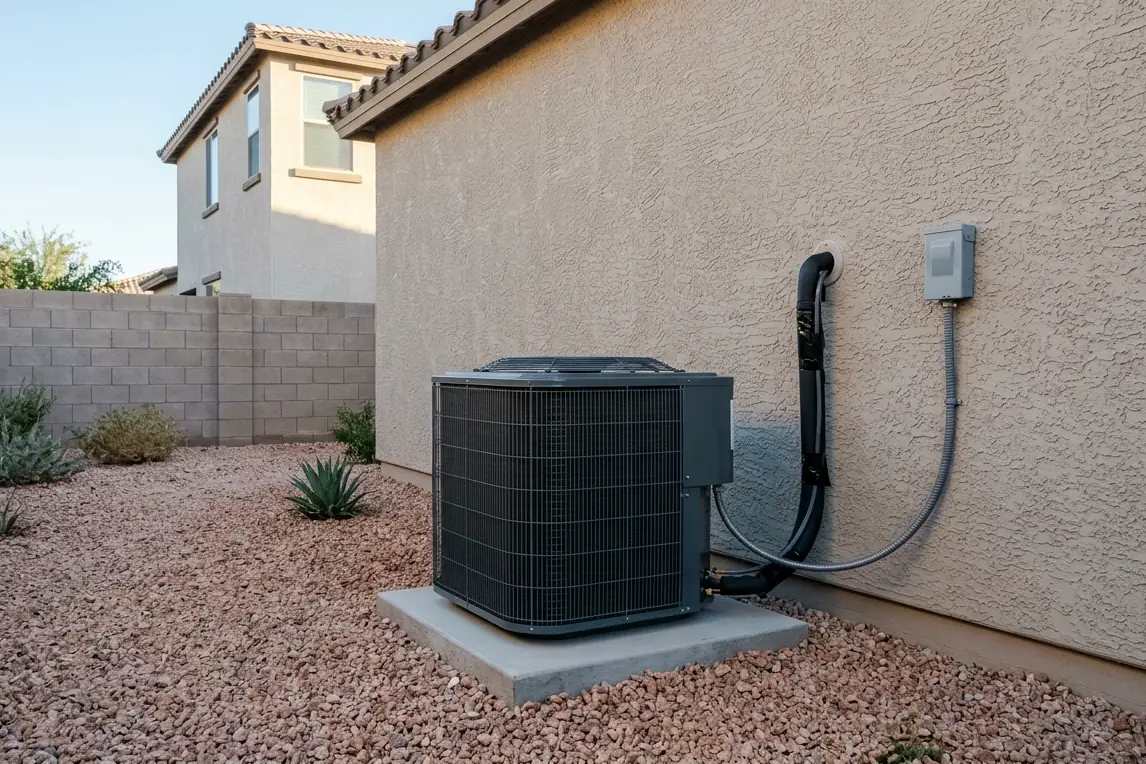
Heat pump installation replaces an old AC, heat pump or gas furnace setup with a system that both cools and heats by moving heat. In Phoenix it makes sense when your current system is aging, uses R-22, needs a major repair, or you want to drop gas heating. New equipment uses A2L refrigerants and SEER2 ratings, and correct sizing for 115°F afternoons matters more than any single feature.
Heat pumps have become a common choice for Phoenix homes because the climate plays to their strengths. Summers demand strong cooling, which a heat pump delivers just like a central AC. Winters are mild enough that the heat pump can supply most heating hours efficiently, with electric heat strips covering the occasional night near 32°F. One outdoor unit handles both jobs, and there is no gas furnace to maintain.
Sizing is where many installs go wrong. Copying the old tonnage onto the new unit can repeat a mistake made 20 years ago. Our technicians calculate the load based on your home's square footage, window exposure, insulation, duct location and orientation. An oversized heat pump short cycles and leaves rooms clammy during monsoon humidity, while an undersized one runs nonstop through July afternoons.
Equipment made since 2025 uses A2L refrigerants such as R-454B or R-32, and it carries SEER2 ratings. Arizona falls under the Southwest region, which has higher minimum efficiency rules for central systems than northern states. We explain the efficiency tiers that make sense for your usage, the indoor coil or air handler that must pair with the outdoor unit, and the heat strip size your winter needs.
Most residential systems are designed to hold about 20°F below the outdoor temperature on the hottest days. At 115°F outside, 78 to 82°F indoors can be normal operation. A load calculation tells us what capacity is needed to meet that target in your specific home, with attic ducts and west-facing glass accounted for. Getting it right avoids both short cycling and nonstop run times.
Winter sizing is simpler here than in colder states, yet it still matters. Heat strips are sized to cover defrost cycles and the few nights that dip toward 32°F, and the thermostat is set to lock them out above a sensible outdoor temperature. Pairing the right strip size with correct staging keeps winter bills reasonable on APS and SRP time-of-use plans.
Typical cost
Typical complete split heat pump system installed. A range, not a quote: the real number depends on what the technician finds. Full price guide
Heat pump pricing depends on capacity, efficiency tier, staging and how much of the existing ductwork and electrical can stay. A single-stage system in a modest home sits toward the low end, while variable-speed equipment in a larger home reaches the top. These are typical Phoenix ranges, not a quote, and the final number depends on what the technician finds during the survey.
| Line item | Typical range |
|---|---|
| Single-stage heat pump system installed | $8,465 to $11,937 |
| Two-stage heat pump system installed | $10,875 to $14,663 |
| Variable-speed heat pump system installed | $13,285 to $17,894 |
How we handle it
We measure rooms, note window exposure, insulation and duct location, then calculate cooling and heating loads. The survey also checks electrical capacity, pad condition and refrigerant line routes.
You see two or three matched systems with SEER2 ratings, staging type and typical cost differences. We explain which features earn their price in Phoenix and which rarely do.
Refrigerant is recovered from the old system before disconnection. Old units are hauled away, and the pad, disconnect and line set are inspected for reuse or replacement.
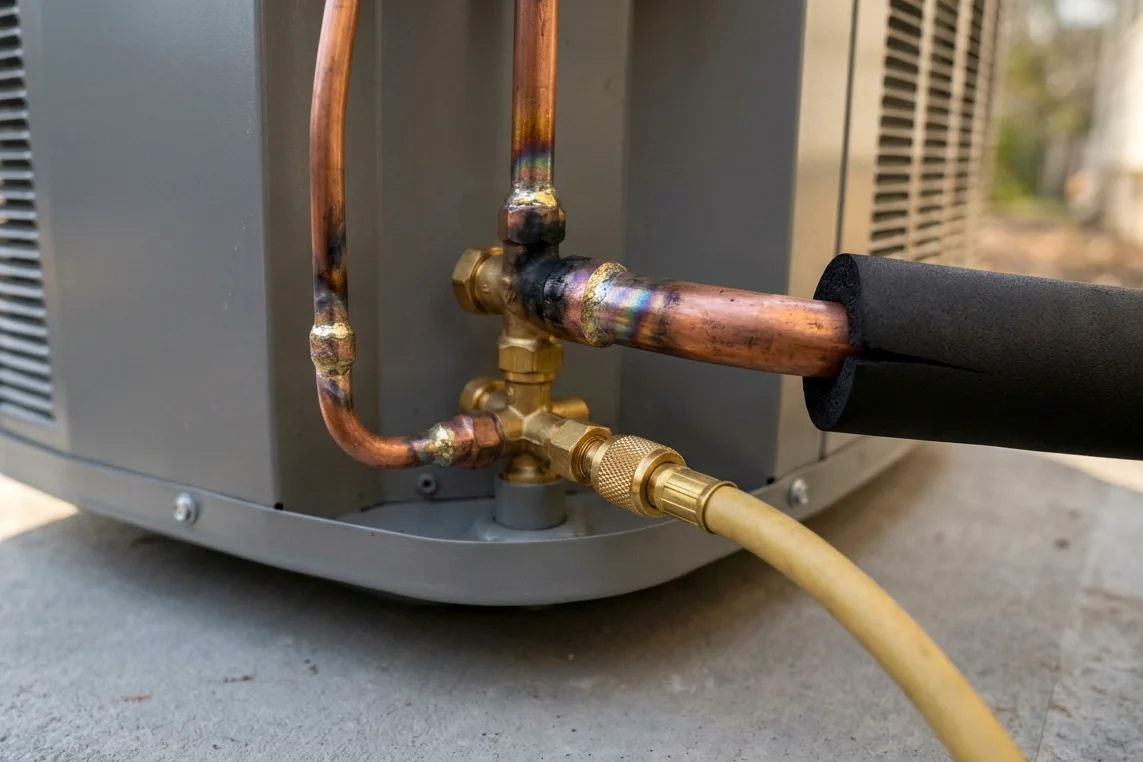
The outdoor unit is set level on its pad, the matched air handler or coil goes in, and refrigerant lines are brazed with nitrogen flowing to prevent internal scale.
We pull a deep vacuum and confirm it holds before releasing refrigerant. Wiring, disconnect, heat strip circuits and thermostat are connected and configured for heat pump operation.
The system runs in cooling and heating while we verify charge, airflow, temperature split, defrost operation and strip staging. You get a walkthrough of the thermostat and filter care.
Signs to watch
Heat pumps here work both seasons, so they often wear sooner than cooling-only units. Rising repair calls and falling efficiency on an older system point toward planning a replacement.
R-22 production ended in 2020, and recharging a leaking older system costs more every year. Replacement removes that ongoing refrigerant expense and risk.
If heat strips carry most of your heating, January bills climb. A modern heat pump produces far more heat per dollar than electric strips alone.
Some homeowners switch from a gas furnace and AC to a single heat pump system, removing a gas appliance and simplifying service to one outdoor unit.
A failed compressor, reversing valve or indoor coil on an aging system is a natural point to compare repair cost with a new, more efficient heat pump.
Hot rooms in summer and cool rooms in winter can stem from an undersized system or poor ducts. A new install is the moment to correct both together.
Before you call
Anything beyond these checks involves electrical parts or refrigerant, so call (602) 848-9399 and let a technician take it from there.
We repair and replace Trane, Carrier, Lennox, Goodman, Rheem, Daikin and most other makes found in Valley homes.
Related work
Heat pump blowing cold on heat or stuck in one mode? We repair reversing valves, defrost boards, sensors, capacitors and refrigerant leaks on Valley heat pumps.
See heat pump repairAging, R-22 or repeatedly failing systems replaced with properly sized SEER2 equipment, with ducts, drain and electrical checked before install.
See ac replacementNew supply and return duct systems designed for your Phoenix home, with correct sizing, higher-rated insulation, sealed joints and measured airflow at every room.
See duct replacementSmart, programmable or simple digital thermostats wired correctly for heat pumps, staging and time-of-use schedules, then tested through full heating and cooling cycles.
See thermostat installationWhere we do this
These communities make up most of the homes we serve. Each link opens the local page with ZIP codes, typical homes and the issues we see there.
For most Phoenix homes, yes. Winters are mild, with lows typically in the mid 40s, so a heat pump can supply most heating hours efficiently. Electric heat strips handle defrost cycles and the occasional night near 32°F. Homeowners who switch from straight electric heat often notice lower winter bills, and those switching from gas trade a furnace for one outdoor unit that does both jobs.
A straightforward replacement of an existing split heat pump usually takes one full day. Jobs that involve new ductwork, a new electrical circuit, a switch from gas furnace to heat pump, or a hard-to-reach attic air handler can stretch into a second day. We schedule early starts in summer to finish attic work before the hottest hours of the afternoon.
Arizona falls in the Southwest region, which has higher minimum efficiency requirements than northern states, so every new system meets a solid baseline. Going above the minimum makes sense if your system runs long hours, you work from home, or you plan to stay many years. We show you the price difference between tiers so you can weigh it against your actual summer usage.
Often you can, provided the ducts are sized correctly, sealed and in good condition. Attic ducts in Phoenix take a beating from heat, and older flex duct can sag, tear or separate at joints. We inspect and test the ducts during the survey. If they leak heavily or restrict airflow, repairing or replacing them helps the new heat pump reach its rated efficiency.
A2L refrigerants, such as R-454B and R-32, are the newer refrigerants used in heat pumps and AC equipment made since 2025. They have lower global warming impact than R-410A and are classed as mildly flammable, so installation follows updated safety practices. For you, the main point is that the indoor and outdoor units must be designed for the same refrigerant and installed by technicians trained on it.
In most cases, yes. Indoor and outdoor units are rated as matched pairs, and a new A2L heat pump requires an indoor coil designed for that refrigerant. An older air handler may also have a worn blower and heat strips near the end of their life. Replacing both together gives you the rated efficiency, matched components and a system that works as one design.
A real person answers (602) 848-9399 every hour of every day, and we will tell you plainly what the next step is.