Ductless Mini-Split Installation
Single-zone and multi-zone ductless systems for garages, casitas, additions and hot rooms, sized for Phoenix heat and installed with tidy line covers outside.
See mini-split installationHeat pumps and heating
Ductless systems are reliable, but inverter electronics, condensate pumps and indoor coils still fail. When a head blinks, drips or stops cooling, we read the codes and test the part behind them.
At a glance
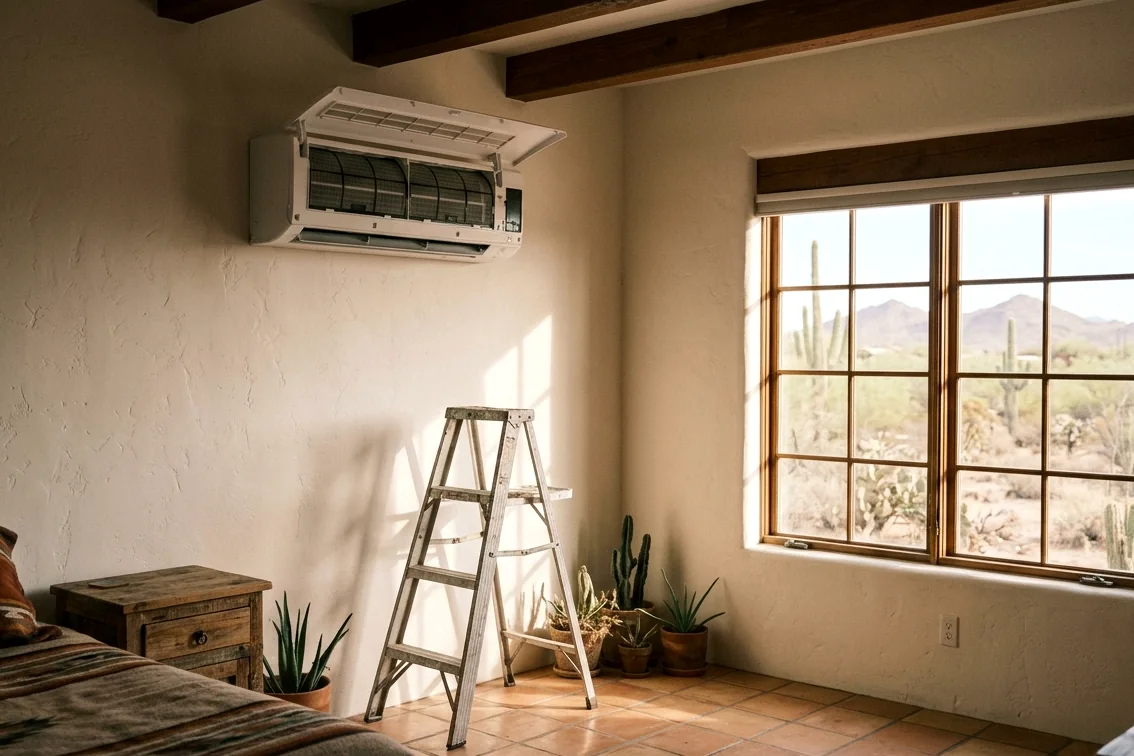
Mini-split repair fixes ductless systems, the wall, ceiling or floor heads connected to a small outdoor inverter heat pump. In Phoenix you need it when a head shows a blinking error code, drips water down the wall, blows room-temperature air, runs but cannot keep up on hot afternoons, or the outdoor unit stops starting. Common causes include clogged drains, failed sensors, inverter board faults and slow refrigerant leaks at flare fittings.
Mini-splits rely on electronics more than traditional systems do. An inverter board in the outdoor unit varies compressor speed, and thermistors throughout the system report temperatures to the controls. When one of those sensors drifts or a board fails, the system usually stops and flashes an error code on the indoor head. Those codes differ between Mitsubishi Electric, Daikin, Fujitsu and other brands, so the first step is reading them correctly.
Water problems are the other frequent call. Each indoor head has its own small drain pan and line. When dust and algae clog it, water drips down the wall below the head or sprays out with the airflow. Heads installed far from an exterior wall sometimes use a condensate pump, and those pumps fail more often than gravity drains do. Clearing the drain or replacing a pump is usually quick work.
Refrigerant leaks on mini-splits tend to appear at the flare connections where lines meet the indoor and outdoor units. A flare that was not torqued correctly can seep slowly for years before cooling drops off. We find the leak with electronic detection and bubble tests, remake the flare or replace the fitting, then pull a vacuum and recharge to the manufacturer's weight.
Signs to watch
A flashing LED or code on the head means the system detected a fault. The pattern points to a sensor, communication, drain or inverter issue, which guides where testing starts.
Drips from below the head usually mean a clogged drain line, a failed condensate pump or a head that is mounted slightly off level, letting water spill from its pan.
If the fan runs but the air is barely cool, the outdoor unit may not be starting, refrigerant may be low, or the indoor coil may be too dirty to absorb heat.
No fan or compressor outside often traces to a communication fault between units, a tripped breaker, a failed inverter board or wiring damaged by heat or rodents.
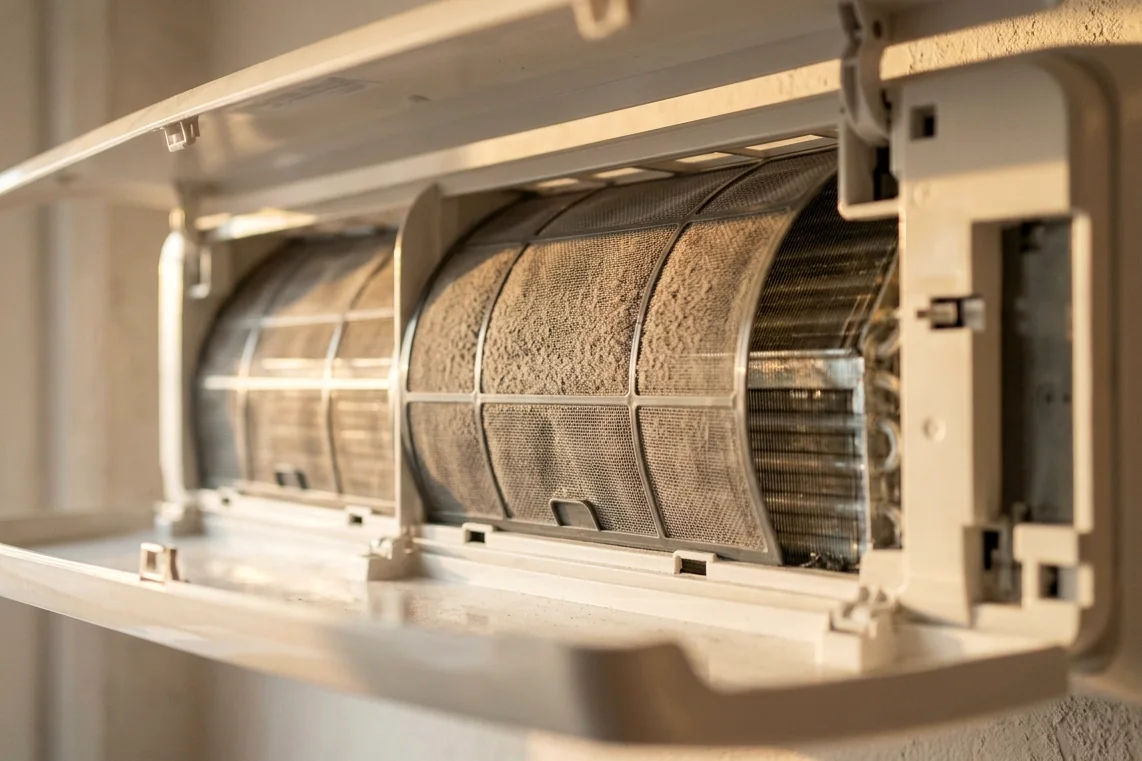
Indoor heads collect dust and moisture on the coil and blower wheel. Mildew growth produces a sour smell and can reduce airflow, and a deep cleaning usually resolves it.
Frost on the copper lines or the indoor coil points to low charge, a dirty filter or a failing indoor fan motor. Running it iced can harm the compressor.
Before you call
Anything beyond these checks involves electrical parts or refrigerant, so call (602) 848-9399 and let a technician take it from there.
How we handle it
We pull stored fault codes from the head or remote, then confirm them with direct measurements, since some codes point to a symptom rather than the root cause.
Thermistors are checked for correct resistance at known temperatures, and the communication wiring between indoor and outdoor units is tested for voltage and loose connections.
We check input power, look for burned components, and test the compressor and fan outputs. Some faults require only a fuse or reactor, while others need a full board replacement.
Each head's drain is flushed and tested. Condensate pumps are checked for float function and flow, and heads are leveled so water stays in the pan.
If charge is low, we test every flare and joint. Faulty flares are remade with proper torque, followed by a deep vacuum and a recharge by weight.
Dirty indoor coils and blower wheels are cleaned with a drain-safe rinse. We finish by measuring supply temperature and airflow at each head in both cooling and heating.
Typical cost
Typical ductless repair, drain or sensor through inverter board. A range, not a quote: the real number depends on what the technician finds. Full price guide
Drain clearing and sensor replacement keep most mini-split repairs near the lower end. Inverter boards, fan motors and leak repairs with recharging sit higher. These are typical Phoenix ranges, not a quote. The real cost depends on what the technician finds after reading codes and testing components on your specific system.
| Line item | Typical range |
|---|---|
| Mini-split drain or sensor repair | $176 to $384 |
| Mini-split flare leak repair and recharge | $486 to $1,137 |
| Mini-split inverter board replacement | $693 to $1,687 |
Inverter electronics do not love heat. Outdoor units mounted against a west-facing block wall can sit in reflected afternoon heat well above the air temperature, and the inverter board inside works harder to stay cool. Power surges during monsoon storms are another risk for these boards. A surge protector on the outdoor disconnect is an inexpensive way to reduce that exposure.
Dust affects the indoor heads more than people expect. Mini-split filters are fine mesh screens, and after a haboob they can clog in days. Dust that passes them settles on the coil and the blower wheel, which then stays damp during humid monsoon weeks and grows mildew. Garage and workshop heads collect even more debris, so they benefit from more frequent filter rinses and periodic deep cleaning.
We repair and replace Trane, Carrier, Lennox, Goodman, Rheem, Daikin and most other makes found in Valley homes.
Related work
Single-zone and multi-zone ductless systems for garages, casitas, additions and hot rooms, sized for Phoenix heat and installed with tidy line covers outside.
See mini-split installationElectronic and dye leak detection, brazed or replaced parts, nitrogen pressure tests and a proper vacuum and recharge so the charge stays put.
See refrigerant leak repairClogged condensate line or a tripped float switch? We clear algae and scale, flush the drain, check pans and traps, and confirm water drains clearly again.
See ac drain line cleaningHeat pump blowing cold on heat or stuck in one mode? We repair reversing valves, defrost boards, sensors, capacitors and refrigerant leaks on Valley heat pumps.
See heat pump repairWhere we do this
These communities make up most of the homes we serve. Each link opens the local page with ZIP codes, typical homes and the issues we see there.
A blinking light is how most ductless systems report a fault. The number of blinks or the code on the display tells a technician whether the issue is a sensor, drain, communication or inverter problem. Codes differ by brand, so write down the pattern before resetting. Some faults clear after a power cycle, but a code that returns usually means a part needs testing.
Monsoon humidity sends more water through the drain line, so a partial clog that went unnoticed in spring can overflow quickly. A head that is slightly off level or a failing condensate pump can cause the same symptom. Turn the head off to limit wall damage and call us. We clear the drain, test the pump and check the mounting so it stays dry.
A properly sized and working mini-split should keep a room reasonably comfortable, though like any system it may run continuously on the hottest days. If the room warms noticeably in the afternoon, the unit may be undersized, the filters or coil may be dirty, or refrigerant may be low. We measure supply temperature and output to tell you which applies.
Most homes benefit from a professional deep cleaning of the indoor coil and blower wheel every one to two years, with filter rinses every few weeks in summer. Garages, workshops and homes near desert lots collect more dust and may need yearly cleaning. If you notice a musty smell or reduced airflow, that is usually a sign the head is due.
Many ductless systems give long service when maintained, so repairs like sensors, drains and fan motors are usually worthwhile. A failed compressor or inverter board on an older unit, particularly one using discontinued parts, may cost enough to make replacement the better choice. We give you the repair price and a replacement estimate so you can compare them directly.
When the outdoor fan runs but the head blows warm, the compressor may not be starting, the refrigerant charge may be low, or an electronic expansion valve may be stuck. In multi-zone systems, a valve serving one head can fail while others work. We check pressures and valve operation to find out which part is responsible.
A real person answers (602) 848-9399 every hour of every day, and we will tell you plainly what the next step is.