Heat Pump Repair
Heat pump blowing cold on heat or stuck in one mode? We repair reversing valves, defrost boards, sensors, capacitors and refrigerant leaks on Valley heat pumps.
See heat pump repairHeat pumps and heating
Electric heat strips back up your heat pump during defrost and on the coldest Valley nights. When an element burns out or a sequencer fails, the house cools off fast and breakers may trip.
At a glance
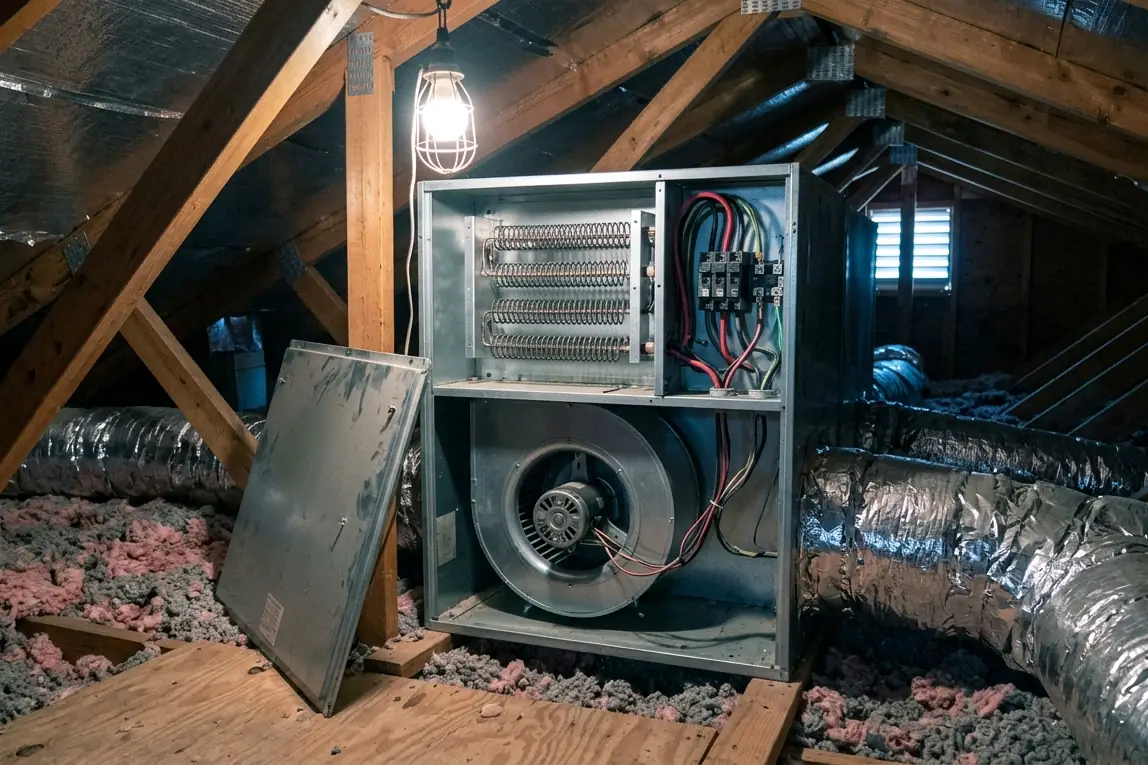
Heat strip repair fixes the electric resistance heaters inside a heat pump air handler, sometimes called auxiliary or emergency heat. In Phoenix you need it when air turns cool during defrost cycles, emergency heat produces nothing, a breaker trips when heat starts, or you smell burning that does not fade. Burned elements, failed sequencers or relays, tripped limit switches and heat-damaged wiring are the usual causes.
Most heat pump systems in Phoenix have electric heat strips mounted inside the air handler, just past the blower. They are simple coils of resistance wire that glow hot when energized. The thermostat calls for them when the heat pump needs help, during defrost cycles, or when you select emergency heat. Because they draw a lot of current, they usually sit on their own large breakers.
Strips rarely run in Phoenix, which is why problems often hide until a cold week in December or January. A burned-open element, a sequencer that no longer closes, or a limit switch that has tripped and stayed open can all leave the strips dead. You may not notice until the heat pump goes into defrost and the vents blow cool for several minutes, or until a night near 32°F arrives.
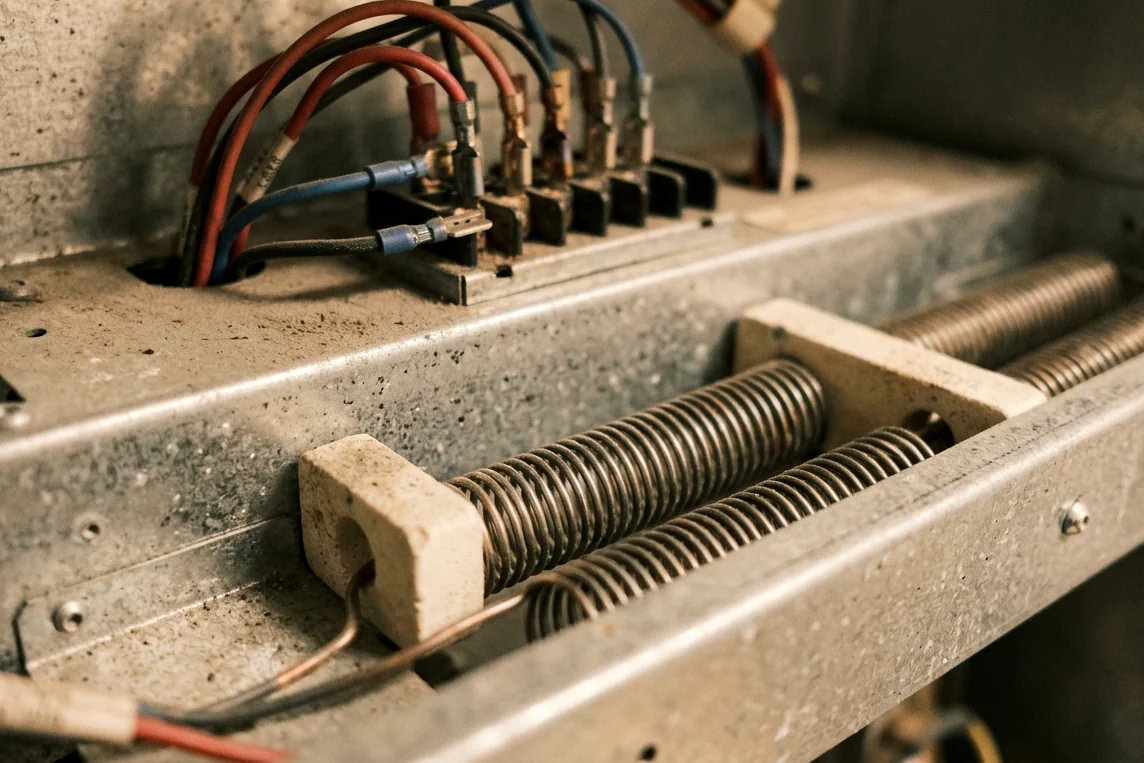
Heat strip work involves high voltage and high current, so it needs careful testing. Our technicians check each element for continuity, measure amp draw on each stage, inspect sequencers or relays, and look closely at wire terminals for heat discoloration. Loose or overheated connections at the strip terminals are a real fire risk, and we repair or replace them rather than simply restoring power.
Signs to watch
During defrost the heat pump briefly cools, and strips should warm that air. If vents blow cold for several minutes in winter, at least one stage may be dead.
Selecting emergency heat runs only the strips. If the blower runs but the air stays cool, the elements, sequencers or strip breakers are likely the problem.
A strip breaker that trips seconds after heat engages can mean a shorted element, a failing breaker or overheated wiring. Do not keep resetting it.
A short dusty smell on first use is normal. A sharp electrical or burning smell that stays, or comes with discolored wiring, means turning the system off.
On the coldest Phoenix nights, the heat pump leans on strips. If the house struggles to warm then, one or more strip stages may have failed.
If the thermostat shows auxiliary heat running but supply air temperature does not rise, the strips are receiving a call but not producing heat.
Before you call
Anything beyond these checks involves electrical parts or refrigerant, so call (602) 848-9399 and let a technician take it from there.
How we handle it
We verify the thermostat sends the auxiliary or emergency heat signal to the air handler and that staging and lockout settings are not preventing the strips from running.
Each strip circuit's breaker and voltage at the air handler are tested. A worn breaker that trips under normal load is replaced so the circuit stays protected.
With power off, every heating element is checked with a meter. A burned-open coil shows no continuity and is replaced with a correctly rated element or strip kit.
Sequencers stage the strips on one at a time to avoid surges. We test each one for proper closing and timing, since a failed sequencer leaves good elements idle.
Terminals are checked for discoloration, loose screws and melted insulation. Limit and thermal cutoff switches are tested so they open on overheating and reset properly.
After repair, we measure amp draw on each stage and confirm supply air temperature rises as expected, then run a defrost cycle to check that strips engage on cue.
Typical cost
Typical heat strip repair, sequencer through strip kit. A range, not a quote: the real number depends on what the technician finds. Full price guide
Replacing a sequencer, relay or limit switch keeps many heat strip repairs at the lower end of this range. A full heat strip kit, multiple elements or wiring repairs cost more. These are typical Phoenix ranges, not a quote. The real cost depends on what the technician finds once the air handler is opened and each stage is tested.
| Line item | Typical range |
|---|---|
| Heat strip sequencer or relay replacement | $174 to $368 |
| Heat strip element replacement | $286 to $593 |
| Complete heat strip kit replacement | $547 to $968 |
With January lows typically in the mid 40s, a Phoenix heat pump handles most heating by itself, and heat strips may run only a few hours each winter. That low use is the good news and the bad news. Strips last a long time, but a failure can go unnoticed for a season or two, especially if you only rely on them during brief defrost cycles.
Summer is hard on strips even though they are off. In attic air handlers, the strips, sequencers and wiring sit in air that reaches roughly 140 to 160°F for months. Wire insulation dries out, terminal screws loosen with heat cycling, and dust from monsoon storms settles on the elements. A fall heating check that includes strip testing catches these problems before the first cold front.
We repair and replace Trane, Carrier, Lennox, Goodman, Rheem, Daikin and most other makes found in Valley homes.
Related work
Heat pump blowing cold on heat or stuck in one mode? We repair reversing valves, defrost boards, sensors, capacitors and refrigerant leaks on Valley heat pumps.
See heat pump repairIndoor unit misbehaving? We repair air handler control boards, relays, transformers, drain pans, float switches and wiring in attics, closets and garages across Phoenix.
See air handler repairFall heating inspection for gas furnaces and heat pumps: flame sensor, igniter, heat strips, defrost controls, venting and carbon monoxide checks.
See heating tune-upSmart, programmable or simple digital thermostats wired correctly for heat pumps, staging and time-of-use schedules, then tested through full heating and cooling cycles.
See thermostat installationWhere we do this
These communities make up most of the homes we serve. Each link opens the local page with ZIP codes, typical homes and the issues we see there.
Heat strips are electric heating elements inside the air handler that back up your heat pump. In Phoenix they mainly run during defrost cycles and on the few nights cold enough that the heat pump needs help. Most heat pump air handlers here include them. They are not used much, but when they fail, defrost cycles turn uncomfortable and cold snaps feel colder indoors.
That is often a defrost cycle. The heat pump reverses briefly to melt frost on the outdoor coil, and heat strips should warm the air during that time. If the air blows cold for several minutes, the strips may not be working, the thermostat may not be calling for them during defrost, or a sequencer has failed. A quick test tells us which.
No. A strip breaker that trips repeatedly is warning you about a short, an overloaded circuit or overheated wiring. Resetting it over and over can damage the breaker and wiring and creates a fire risk. Reset it once. If it trips again, leave it off, use the heat pump alone if it is working, and call us to test the circuit and strips.
Electric strips use far more power than a heat pump to produce the same heat, so a bill can climb quickly if they run often. In a properly working Phoenix system, strips should run sparingly. If your winter bill is unusually high, the heat pump may be underperforming or the thermostat may be engaging strips too readily. Both are worth checking.
Emergency heat shuts off the heat pump and runs only the electric strips. It is meant for situations when the heat pump has failed and you need warmth until it is repaired. Using it routinely costs more on your APS or SRP bill. If you find yourself needing emergency heat, call us so we can find out why the heat pump is not carrying the load.
Yes, and most of the time it is harmless. Dust that settled on the strips over a long summer burns off the first time they run, causing a brief smell. If the odor is sharp, smells like hot plastic, lasts more than an hour, or comes with a tripped breaker, turn the system off. That can mean overheated wiring or a failing element that needs attention.
A real person answers (602) 848-9399 every hour of every day, and we will tell you plainly what the next step is.