Air Duct Cleaning
Negative-pressure cleaning of supply and return ducts, with camera footage before and after so you can see exactly what came out of your system.
See air duct cleaningDucts, air and attic
Lint packed into a dryer vent slows every load and heats the dryer far past normal. We clean the full run, from the dryer connection to the roof or wall hood, and measure airflow when we finish.
At a glance
Dryer vent cleaning removes lint packed inside the duct that carries hot, moist air from your dryer to the outside. Many Phoenix homes vent through the roof or a long wall run, so lint settles in elbows and at the hood. You need cleaning when loads take more than one cycle, the laundry room gets hot, the dryer shuts off mid-cycle, or you smell scorching. Most homes benefit from a cleaning every year or two.
A dryer pushes warm, damp air and loose fibers out through a narrow duct every time you run a load. The lint trap catches most of it, but not all. The rest coats the walls of the vent, collects at every bend and builds a plug near the exterior hood. As the opening shrinks, drying times stretch, the dryer cabinet runs hotter, and the heating element or gas burner cycles longer than it was designed to.
Lint is also highly flammable, which is why a clogged vent is more than an annoyance. Fire safety officials around the country list dryer vents among the common causes of household fires, and the risk climbs when a vent hasn't been touched in years. Cleaning it is a short, inexpensive job compared with replacing a burned-out dryer or dealing with smoke damage in a laundry room.
Our technicians clean from both ends. A rotary brush system runs from the laundry room connection toward the exit while a vacuum pulls debris out, and the roof or wall hood gets cleared by hand. We check the transition hose behind the dryer, replace crushed foil or vinyl sections with semi-rigid metal, and confirm the hood damper opens and closes properly. Then we take an airflow reading so you know the run is actually open.
Signs to watch
Towels and jeans that come out damp after a full timed cycle usually mean moist air can't escape fast enough, so the dryer is running long against a restricted vent.
A blocked vent pushes heat back into the cabinet and the room. If the laundry area feels warmer than the rest of the house during a load, the exhaust path deserves a look.
Many dryers have a high-limit safety switch that trips when the cabinet overheats. Frequent shutdowns, or a dryer that stops and restarts on its own, often trace back to a clogged vent.
A hot, dusty or scorched odor during drying can mean lint is sitting close to the heat source. Stop using the dryer and have the vent checked before running the next load.
Fuzz collecting around the exterior flap, or a flap that stays stuck open, signals buildup at the exit. On roof vents, lint often mats around the cap where you can't see it.
With the dryer running, you should feel a strong, warm stream at the hood. A faint push or no movement at all means the run is partly blocked somewhere along the way.
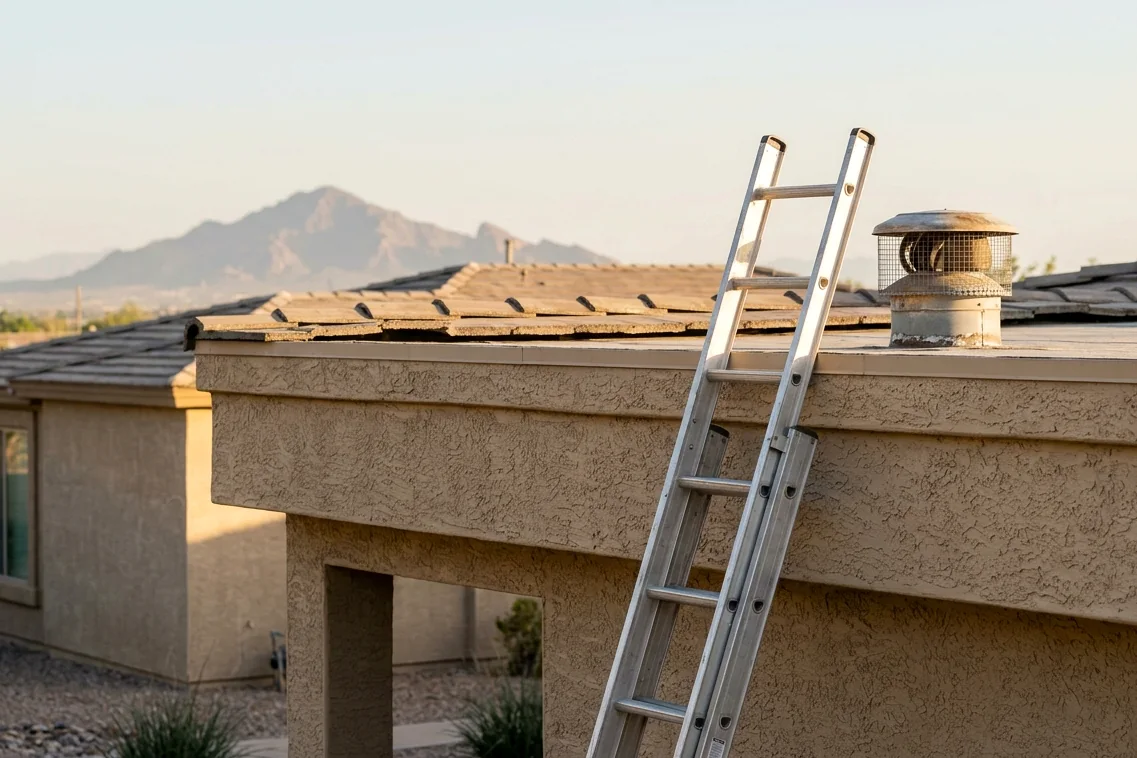
Many single-story Valley homes route the dryer vent straight up through the attic and out a roof cap, since the laundry room sits in the middle of the floor plan. Those vertical runs fight gravity: damp lint drops back down and collects at the first elbow above the dryer. Long horizontal attic runs in larger homes have the same trouble at every turn, and a vent that bakes in a 150°F attic tends to have its joints and tape come loose.
Desert birds add another wrinkle. Pigeons, sparrows and finches like the warm, sheltered spot inside a roof cap or wall hood, and a single nest can close off most of the opening. Monsoon dust also clings to the damp lint at the exit and hardens into a crust. Our technicians clear nests, replace damaged caps with guarded versions and check the roof seal so a cleaning doesn't create a new leak.
How we handle it
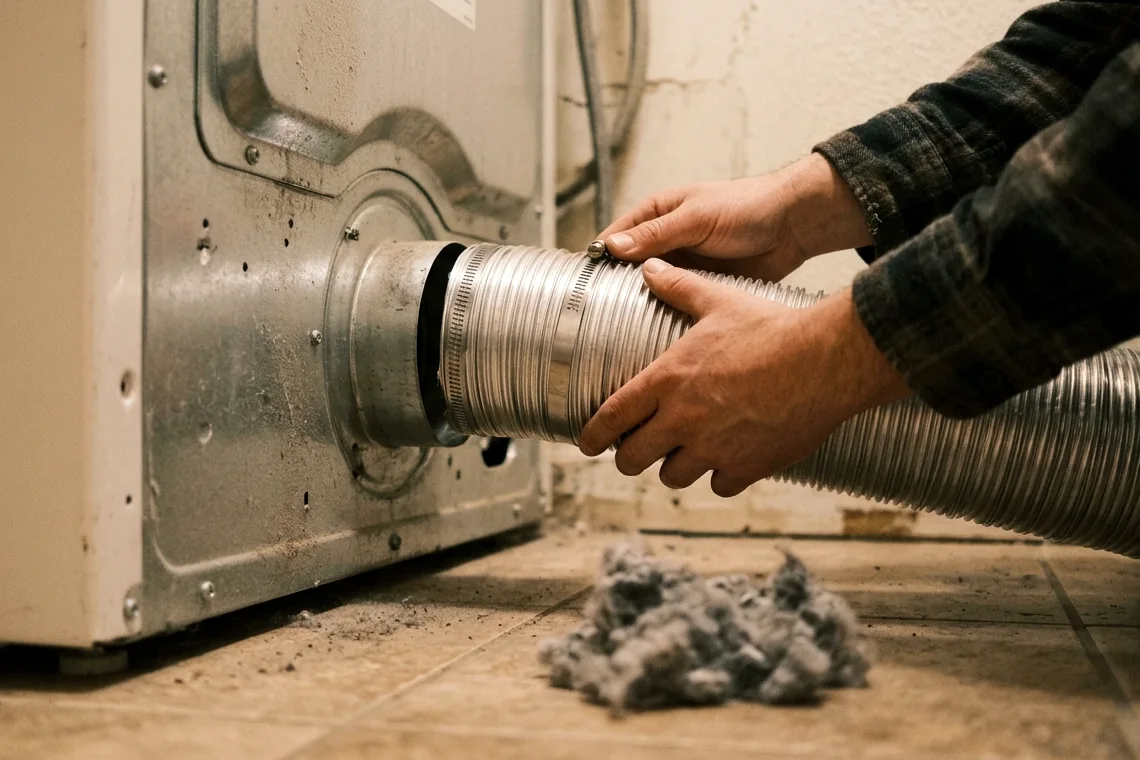
The technician slides the dryer out, disconnects the transition hose and checks it for kinks, crushing or tears. Foil or vinyl hoses that are damaged get flagged for replacement with semi-rigid metal.
Before cleaning, we take an airflow reading at the exterior hood with the dryer running. That number gives a clear before-and-after comparison so you know how restricted the vent really was.
Flexible rods with a spinning brush head travel the full length of the vent, breaking up packed lint along the walls and at every elbow without tearing the duct material.
A high-suction vacuum pulls loosened lint out at the laundry end while the exterior hood or roof cap is cleared by hand, so debris doesn't drop back into the wall or attic.
Nests, matted lint and stuck dampers come out of the exterior termination. Broken caps and missing bird guards get replaced so the opening stays clear between cleanings.
The dryer is reconnected with a proper transition hose, pushed back without crushing it, and run while we take a second airflow reading at the exit to confirm the vent is open.
Before you call
Anything beyond these checks involves electrical parts or refrigerant, so call (602) 848-9399 and let a technician take it from there.
Typical cost
Typical single dryer vent. A range, not a quote: the real number depends on what the technician finds. Full price guide
Short wall-exit vents sit at the low end of this range, while roof exits, long attic runs and vents packed with nests or years of lint run higher. The real number depends on what the technician finds once the dryer is pulled out, and we give you the price before cleaning starts.
| Line item | Typical range |
|---|---|
| Dryer vent cleaning, wall exit | $135 to $215 |
| Dryer vent cleaning, roof exit | $175 to $295 |
| Dryer vent hood or roof cap replacement | $145 to $365 |
We repair and replace Trane, Carrier, Lennox, Goodman, Rheem, Daikin and most other makes found in Valley homes.
Related work
Negative-pressure cleaning of supply and return ducts, with camera footage before and after so you can see exactly what came out of your system.
See air duct cleaningA measured look at dust, humidity, fresh air and odors in your home, followed by targeted fixes like better filtration, ventilation or drain repairs.
See indoor air qualityBlown-in insulation and attic air sealing that slow the flow of attic heat into your rooms, so the AC runs shorter cycles on Phoenix afternoons.
See attic insulationA detailed written evaluation of equipment age, condition, ducts and safety items, useful before buying a Phoenix home or deciding on repair versus replacement.
See hvac inspectionWhere we do this
These communities make up most of the homes we serve. Each link opens the local page with ZIP codes, typical homes and the issues we see there.
For a typical family, once a year works well, especially for roof-exit vents and long attic runs. Smaller households with short wall vents can often go two years. If you run several loads a day, have pets that shed or notice drying times getting longer, check it sooner. The lint trap alone never keeps a vent fully clear.
Yes. Lint ignites easily, and a restricted vent traps heat inside the dryer cabinet and duct. Gas and electric dryers both rely on airflow to keep temperatures in a safe band. When the exit is choked, internal parts run hotter, and an overheated element or burner can catch nearby lint. Regular cleaning removes that fuel source.
Vertical runs make lint fall back toward the dryer, and roof caps sit where birds like to nest and dust collects. A wall vent with a short, straight path simply has fewer places for lint to stop. If your laundry room sits mid-house, a roof exit may be the only practical option, so plan on more frequent cleaning.
If we find a joint that has pulled apart or tape that has failed in the attic, we reconnect it with foil tape and clamps during the visit when it's reachable. A disconnected dryer duct dumps hot, damp, lint-heavy air into attic insulation, so it's worth fixing on the spot rather than leaving it for later.
Vinyl hoses and thin foil accordion hoses crush easily and trap lint in their ridges, so most dryer makers recommend against them. Semi-rigid aluminum or rigid metal duct holds its shape and has smoother walls. When we find a vinyl or crushed foil connection behind your dryer, we'll recommend swapping it during the cleaning visit.
In most cases, yes. When a vent has been restricting airflow, loads that took ninety minutes often finish in a normal single cycle after cleaning. If drying is still slow after the vent tests clear, the dryer itself may have a worn heating element, a failed thermostat or a gas valve issue, and we'll tell you so before you spend more.
A real person answers (602) 848-9399 every hour of every day, and we will tell you plainly what the next step is.