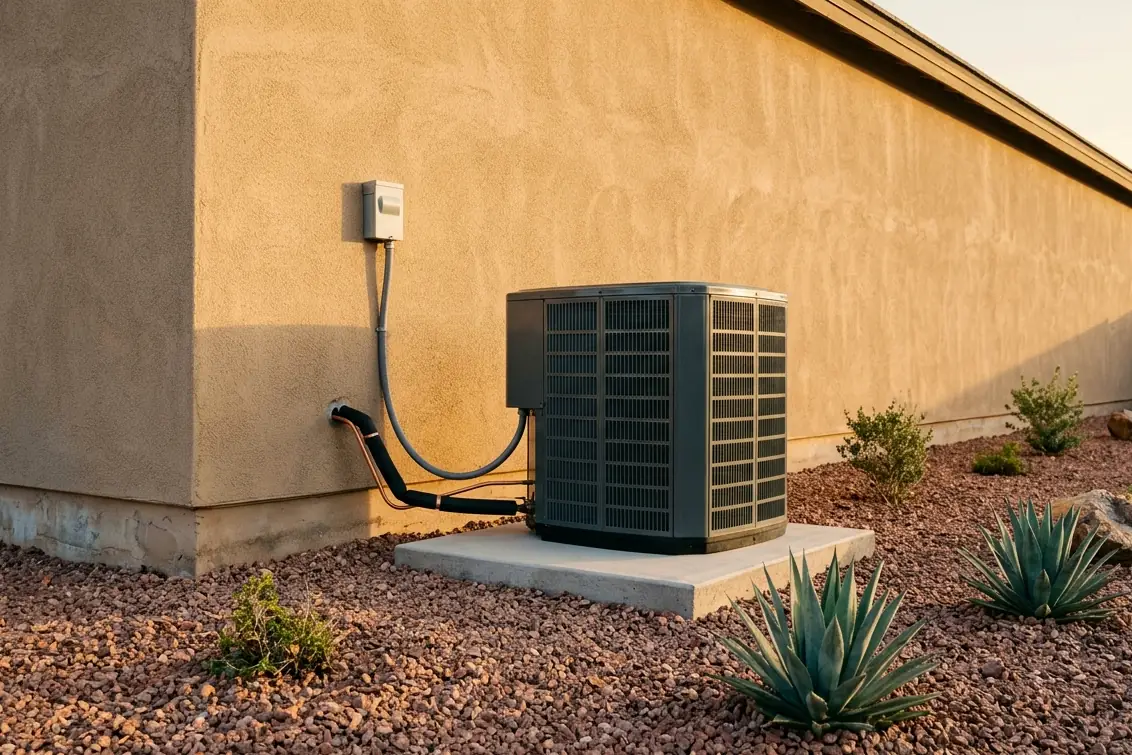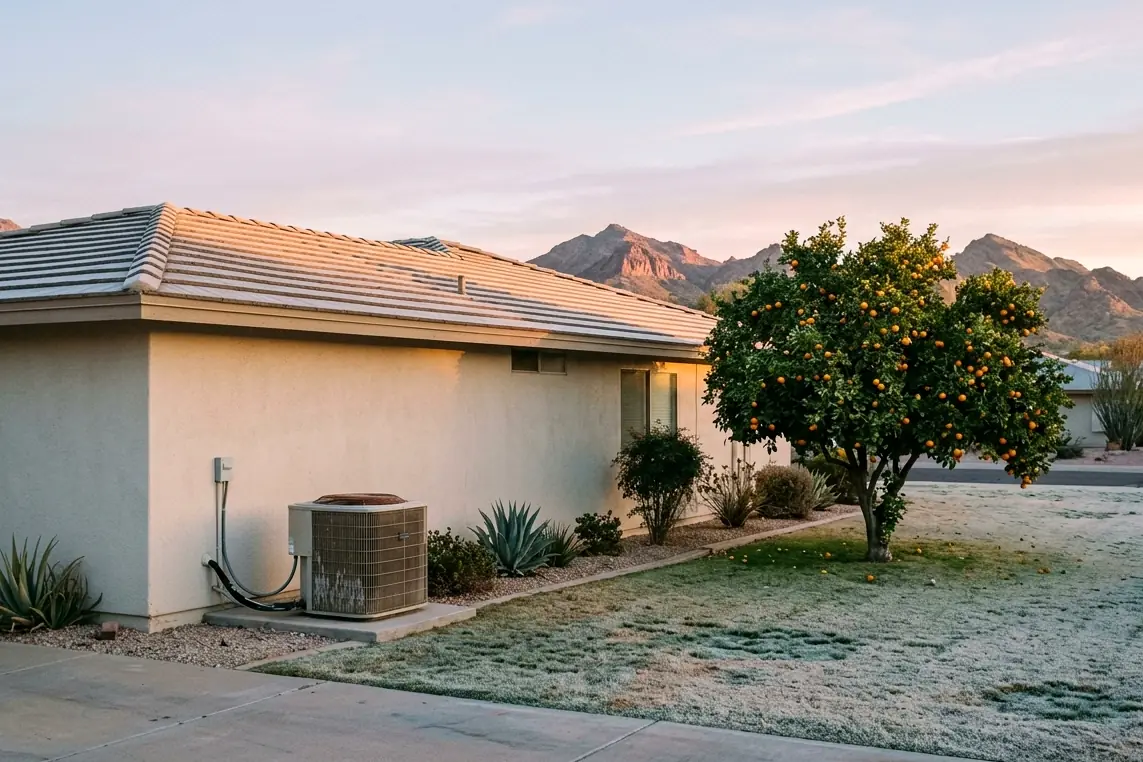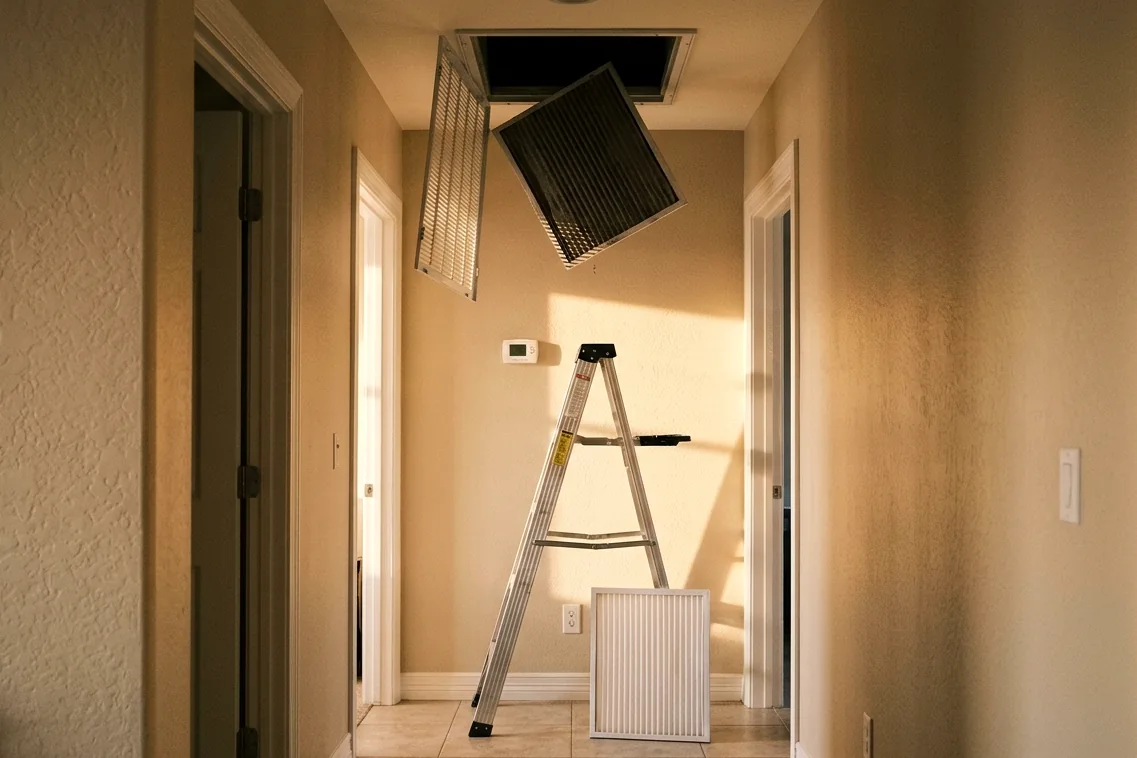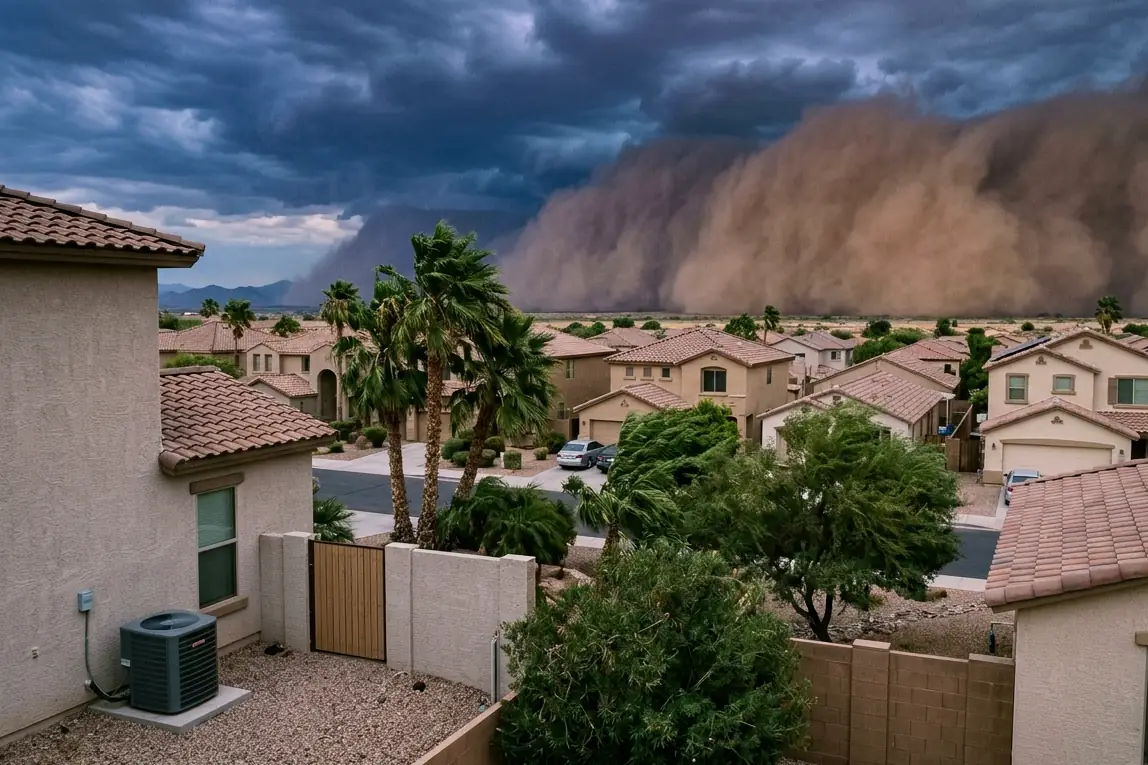
After a haboob, check and replace the air filter, look at the outdoor condenser coil for packed dust, clear debris from around the unit and watch for warm air or a silent outdoor fan. Monsoon dust clogs coils and filters, while power flickers and surges can damage capacitors and contactors. If the system hums without starting, trips a breaker or blows warm air after a storm, call for service.
What does a haboob actually do to an air conditioner?
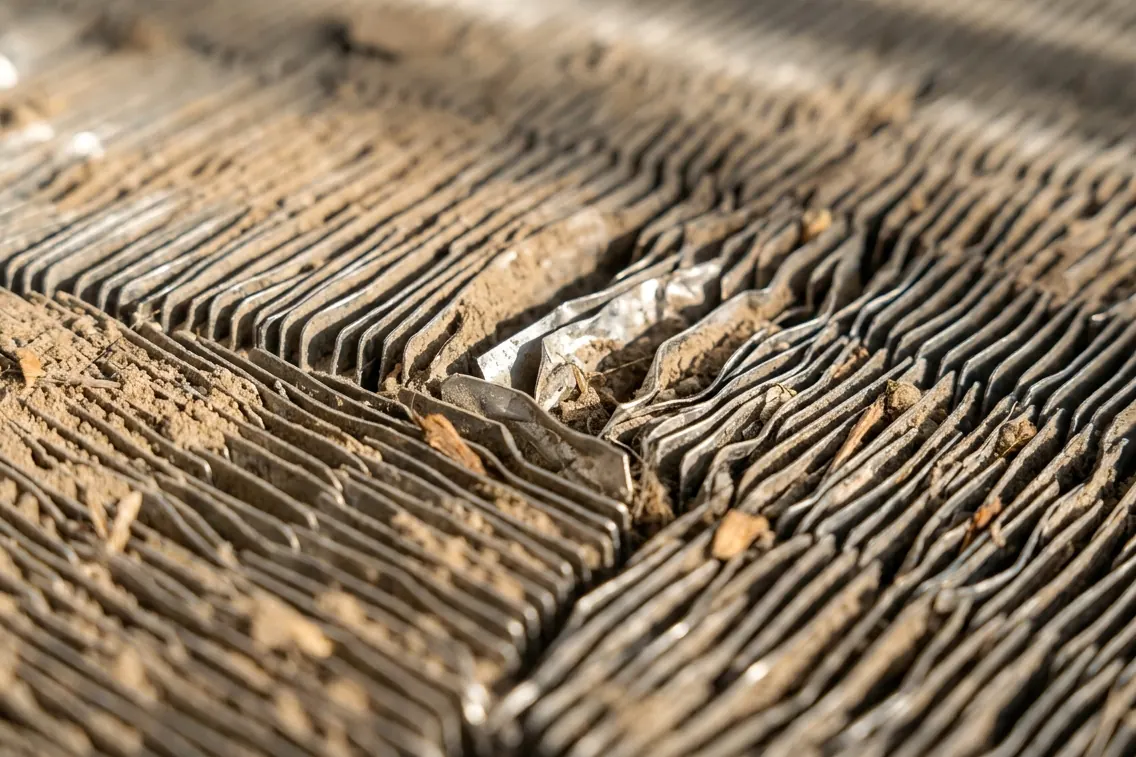
Monsoon season runs from June 15 to September 30, and the dust storms it brings are made of extremely fine particles. When a wall of that dust hits a running condenser, the outdoor fan pulls huge volumes of dirty air straight through the coil fins. The dust settles into the fins and mixes with any moisture or residue already there, forming a mat that blocks the coil from releasing heat. Indoors, the return side pulls in dust that slips past doors and windows, loading the filter far faster than normal.
A coil that cannot shed heat drives system pressures up. The compressor works harder, draws more current and runs hotter, all during the hottest part of the year. On a 110°F evening after a storm, that extra strain can be enough to trip a high-pressure safety switch or push a worn part over the edge. The house warms, the system runs longer to compensate, and a small dust problem becomes a breakdown if nobody catches it.
Why do storms knock out capacitors and contactors?
The electrical side takes a hit too. Monsoon storms bring lightning, wind-blown lines and grid switching, which show up at your house as power flickers, brief outages and voltage surges. Each time power drops and returns while the AC is running, the compressor and fan motors try to restart, sometimes against high refrigerant pressure. That puts a heavy load on the start and run capacitors, which are already the most common summer failure part in the Valley because heat wears them down.
Contactors suffer as well. These switches close to send power to the outdoor unit, and rapid on-off cycling during a flicker can pit or weld their contacts. A stuck contactor can leave the outdoor unit running even when the thermostat calls for no cooling, while a burned one may keep it from starting at all. A surge can also damage the control board in some systems.
What can you safely check once the storm passes?
Wait until the wind and lightning have fully moved on and the power has been steady for a while. Then work through a few simple checks in order, starting indoors and moving outside. None of these involve opening the electrical panel on the outdoor unit, which holds capacitors that can keep a dangerous charge even with the power off. If anything looks burned, smells hot or sounds wrong, stop and call.
- Pull the air filter and replace it if it looks brown or gray
- Clear branches, palm fronds and trash from around the condenser
- Look at the outdoor coil fins for a visible layer of packed dust
- Confirm the outdoor fan spins when the system calls for cooling
- Feel the supply air for a clear drop in temperature
- Check the main panel for a tripped AC breaker and reset once
Should you rinse the condenser coil yourself?
A gentle rinse can help, if you do it carefully. Shut off power at the outdoor disconnect box and at the breaker first. Use a garden hose with a soft spray, never a pressure washer, and spray from the inside of the coil outward if the top is accessible, or straight through the fins from outside if it is not. Hard pressure folds the thin aluminum fins and causes more airflow trouble than the dust did.
Valley water is hard, so a rinse leaves some mineral residue behind, and plain water will not dissolve dust that has caked with moisture and pollen over several storms. Heavy buildup usually needs a proper coil cleaning with a coil-safe cleaner and a careful rinse, plus a check of fin condition and system pressures afterward. If you see dust packed deep into the fins, or the unit is on a roof, leave it to a technician.
Why does a cooler feel useless during monsoon humidity?
Homes that rely on evaporative coolers notice a different monsoon problem. A swamp cooler lowers air temperature by evaporating water, and it works best when the air is dry, as it usually is in spring and early summer. Once monsoon humidity arrives, the air can hold far less additional moisture, so the cooler cannot drop the temperature as much and the house starts to feel damp and warm.
Dust adds to that. Cooler pads load up with storm dust and mineral scale, which reduces airflow and can leave a musty smell. Changing pads, cleaning the reservoir and checking the pump after a big storm helps, but on muggy August days many cooler owners find they need refrigerated air to stay comfortable. That is often when people start asking about converting from a cooler to AC.
How can you prepare before the next dust storm?
Most monsoon damage is easier to prevent than to repair. A pre-season tune-up in April or May lets a technician clean the coils, test capacitor values against their ratings and catch a contactor that is already pitted before it fails on the first stormy night in July. Small habits around the house help too, and they cost very little compared with an emergency visit on a crowded storm night.
- Keep spare filters on hand and change them after every big storm
- Trim shrubs and trees back about two feet from the condenser
- Consider a whole-home surge protector for the electrical panel
- Schedule coil cleaning and capacitor testing before June
- Clear roof drains and debris around rooftop package units
When is a post-storm problem a call for help?
Call if the outdoor unit hums or clicks without the fan turning, if the breaker trips a second time, if the air from the vents is warm, or if the system runs but the house keeps heating up. Those signs often mean a failed capacitor, a damaged contactor or a coil so packed that pressures are climbing. Running the system in that condition can overheat the compressor. Our technicians answer (602) 848-9399 around the clock, including the nights right after a storm when calls stack up.