Whole-Home Air Filtration
Deep 4 to 5 inch media filter cabinets installed at the air handler, sized for your airflow and sealed tight so desert dust stays out of the house.
See air filtrationDucts, air and attic
Clean-feeling air in a desert home comes down to dust control, ventilation and humidity. We measure what's going on in your house first, then recommend only the equipment or repairs that address what we find.

At a glance
Indoor air quality service looks at the dust, humidity, ventilation and odors inside your home and how your HVAC system affects them. In Phoenix, the usual problems are fine desert dust slipping past basic filters, very dry winter air, stale air in tightly sealed homes and musty odors from wet drain pans. You need it when the house gets dusty fast, smells stuffy, or people at home wake up with dry eyes and throats.
People in Phoenix spend most of the summer sealed indoors with the windows shut and the AC running. The air inside gets recycled through the same system over and over through the day. Whatever dust, cooking smoke, pet dander or chemical odor enters the house tends to stay there, and the HVAC system either helps clear it or keeps stirring it around. That's why indoor air quality work starts at the air handler and ductwork rather than with a countertop gadget.
Our approach is measurement first. A technician checks particle counts in a few rooms, reads humidity and carbon dioxide levels, measures static pressure across the filter and coil, and looks at the return side for leaks pulling in attic or garage air. Those readings separate a filtration problem from a ventilation problem or a moisture problem. Each one has a different fix, and guessing wrong wastes money on equipment that doesn't help.
The fixes range from simple to involved. Sometimes a better filter cabinet, a sealed return and a cleaned drain pan make a dramatic difference for a few hundred dollars. Other homes benefit from a fresh-air ventilator, a whole-home humidifier for winter, or coil-mounted UV to keep the indoor coil clean. You'll see the readings, hear the options in plain terms and choose what fits your home and budget.
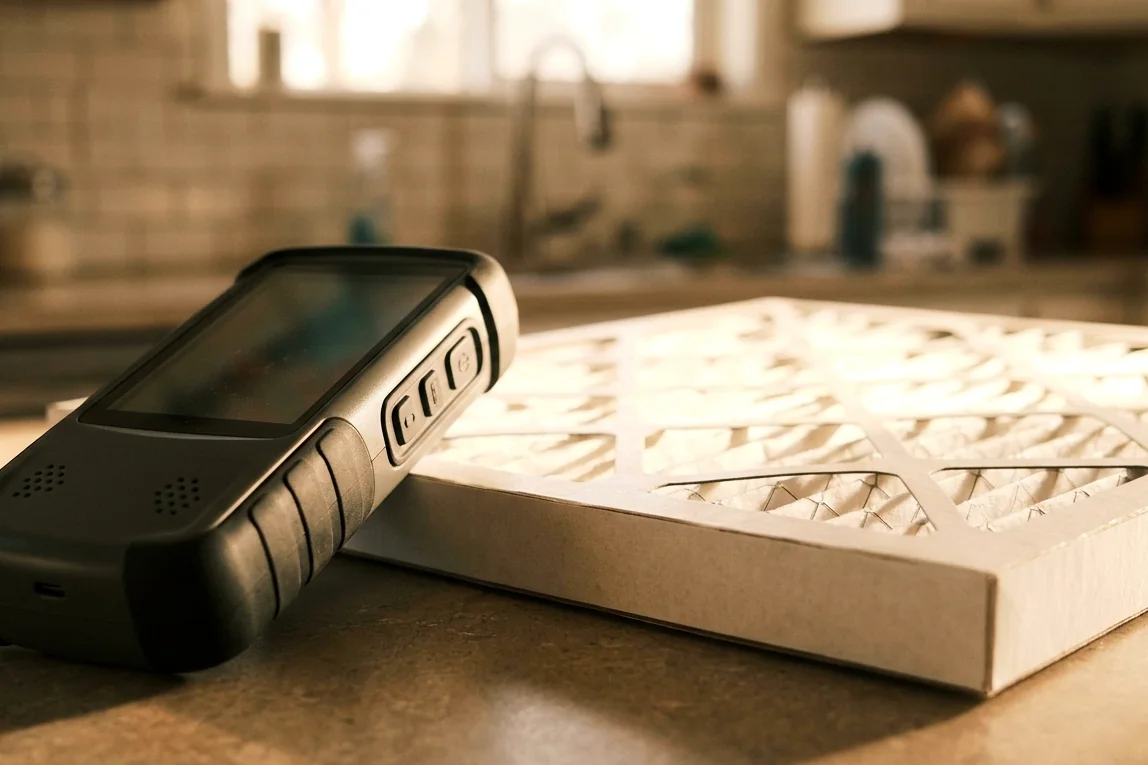
Phoenix air brings a particular mix: very fine dust that rides in on monsoon winds, pollen from desert trees and grasses in spring, and long stretches without rain that keep everything dry. On high-pollution days, regional air quality alerts also tell people to limit time outdoors, which pushes everyone inside with the windows closed. Indoor air quality then depends almost entirely on what the HVAC system filters, how tight the ducts are and how much fresh air comes in.
Humidity swings are the other local factor. Winter indoor humidity can fall low enough to dry out skin, wood floors and furniture, while the monsoon pushes outdoor dew points up and makes condensate drains work overtime. A drain that overflows in August can leave damp insulation and a musty smell in September. Good indoor air work in Phoenix accounts for both seasons instead of treating the house as if it lived in one climate year-round.
Typical cost
Assessment through common upgrades. A range, not a quote: the real number depends on what the technician finds. Full price guide
An assessment visit sits at the low end of this range, and many homes stop there after a few small repairs. Equipment like a fresh-air ventilator or whole-home humidifier lands higher. The real number depends on what the technician finds during testing, and every option comes with a price before any work begins.
| Line item | Typical range |
|---|---|
| Indoor air quality assessment | $149 to $265 |
| Fresh-air ventilator (ERV) installation | $2,185 to $4,675 |
| Whole-home humidifier installation | $685 to $1,365 |
How we handle it
We start with your observations: which rooms bother you, when smells show up, how fast dust returns and whether anything changed recently, like a remodel, a new pet or a new roof.
Portable meters record particle counts, humidity, temperature and carbon dioxide in several rooms. Readings are compared with outdoor levels so we know whether the problem starts inside or comes in.
The technician inspects filter fit, measures static pressure, looks at the indoor coil and pan, and flushes the drain line if water is sitting where it shouldn't be.
Gaps around the filter slot, a torn return boot or an unsealed air handler closet can pull attic or garage air into the system. We locate them with smoke and pressure checks.
You get the readings and a short list of fixes, ranked by impact and cost. Simple repairs come first, and equipment is recommended only where the numbers support spending on it.
After repairs or equipment are in, we repeat the key readings so you can see the change in particle counts, humidity or carbon dioxide instead of taking it on faith.
Signs to watch
If tables and TV stands collect a visible film two or three days after dusting, fine particles are getting past the filter or entering through leaky return ducts in the attic.
Bedrooms that feel heavy or stale in the morning, especially with doors closed, can point to low fresh air and rising carbon dioxide in a tightly sealed newer home.
A damp, basement-like smell when the AC starts often comes from standing water in the drain pan, a slow drain line or growth on the indoor coil inside the air handler.
In winter, Phoenix indoor humidity can drop very low. Static zaps, cracked lips and dry, itchy eyes are common signs the air has very little moisture left in it.
Car exhaust, gasoline or paint odors drifting into living spaces suggest the return duct or air handler closet is pulling air from the attached garage through gaps.
When kitchen smells or wildfire smoke hang around for days, the home may lack enough filtration and air exchange to clear them out in a reasonable amount of time.
Before you call
Anything beyond these checks involves electrical parts or refrigerant, so call (602) 848-9399 and let a technician take it from there.
We repair and replace Trane, Carrier, Lennox, Goodman, Rheem, Daikin and most other makes found in Valley homes.
Related work
Deep 4 to 5 inch media filter cabinets installed at the air handler, sized for your airflow and sealed tight so desert dust stays out of the house.
See air filtrationCoil-mounted UV lamps and in-duct air purifiers that keep the indoor coil and drain pan cleaner and cut musty odors, using models that produce no ozone.
See uv lights & purifiersNegative-pressure cleaning of supply and return ducts, with camera footage before and after so you can see exactly what came out of your system.
See air duct cleaningClogged condensate line or a tripped float switch? We clear algae and scale, flush the drain, check pans and traps, and confirm water drains clearly again.
See ac drain line cleaningWhere we do this
These communities make up most of the homes we serve. Each link opens the local page with ZIP codes, typical homes and the issues we see there.
Our visits measure airborne particle counts, relative humidity, temperature and carbon dioxide in several rooms, plus static pressure across the filter and coil. We also look for leaks that pull air from the attic or garage. We don't run lab mold or chemical testing, and if the readings point toward something our meters can't measure, we say so plainly.
Not every home does. If winter readings show indoor humidity staying very low and you deal with static, dry skin or cracking wood, a whole-home humidifier on the furnace or air handler can help. It's sized to add moisture gently, and in Phoenix it typically runs only a few months a year, then gets shut off well before monsoon season.
In tightly built newer homes with high carbon dioxide readings, often yes. An energy recovery ventilator brings in outdoor air while transferring much of its heat to the outgoing stale air, so you aren't paying to cool raw 110°F air. Older, leakier homes usually get enough air exchange already and benefit more from sealing and filtration.
Yes, and it's one of the most common sources we find. A slow or clogged condensate line leaves water standing in the pan under the coil, and in a warm attic that water grows slime and smells musty. The odor rides the airflow into every room. Flushing the line, cleaning the pan and keeping the drain clear often fixes the smell entirely.
Better filtration and sealed returns make the biggest difference for monsoon dust. A 4 to 5 inch media filter cabinet catches far more fine particles than a thin 1-inch filter, and sealing gaps around the return keeps dusty attic air out. During a haboob, setting the thermostat fan to auto rather than on also limits how much dust gets pulled through leaks.
Most assessments take about ninety minutes to two hours for a typical single-system home. That covers the room readings, a look at the filter, coil, drain and return, and a conversation about what the numbers mean. Two-system homes or homes with complicated attic duct layouts can take longer, and repairs found during the visit are priced before we start them.
A real person answers (602) 848-9399 every hour of every day, and we will tell you plainly what the next step is.