Refrigerant Leak Repair
Electronic and dye leak detection, brazed or replaced parts, nitrogen pressure tests and a proper vacuum and recharge so the charge stays put.
See refrigerant leak repairAc parts and repairs
Your indoor coil is where cooling actually happens. When it leaks or corrodes, refrigerant escapes and cooling fades. We replace it with a coil matched to your system and set the charge correctly.
At a glance
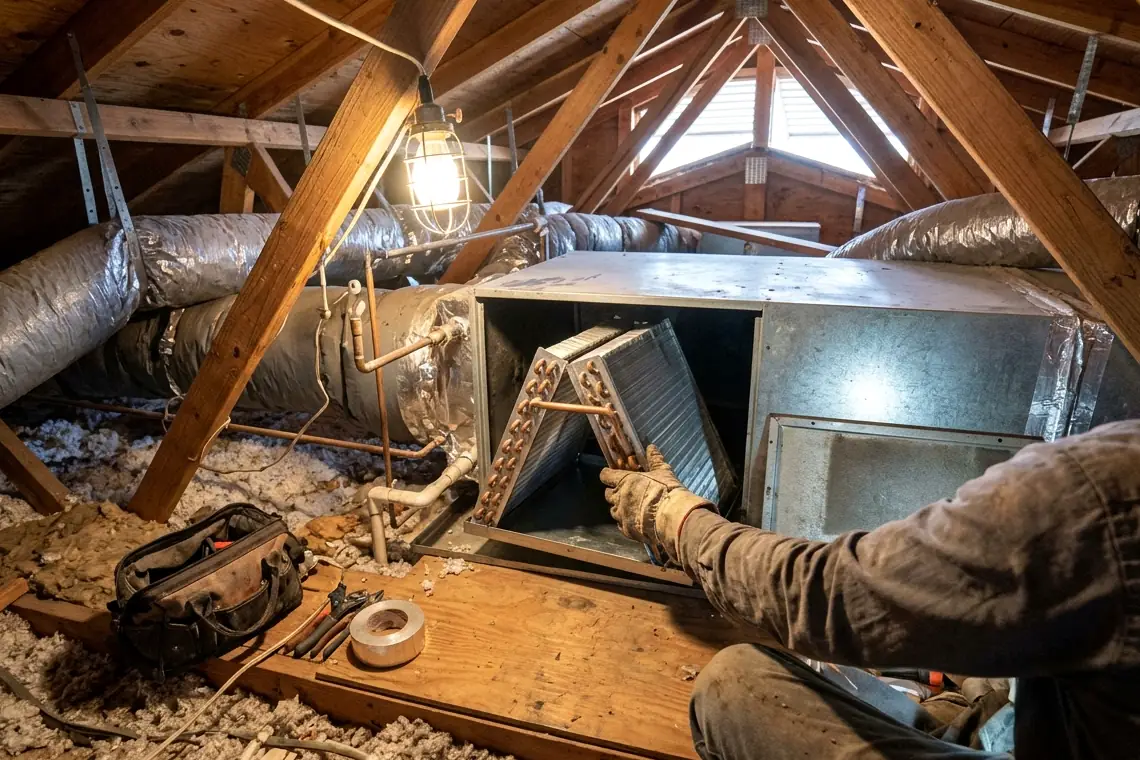
Evaporator coil replacement means removing the indoor coil, which absorbs heat from your home's air, and installing a new one matched to your outdoor unit. In Phoenix, coils fail from refrigerant leaks caused by corrosion, vibration and age, especially in hot attic installations. Signs include repeated refrigerant loss, ice on the coil, weak cooling and water problems. Replacing the coil requires refrigerant recovery, brazing, pressure testing, evacuation and a correct recharge.
The evaporator coil sits inside your air handler or on top of your furnace. Cold refrigerant flows through its tubes, and your blower pushes warm indoor air across the fins. The refrigerant absorbs heat and moisture condenses on the coil, draining into a pan. When the coil develops leaks, refrigerant escapes and the system can no longer absorb enough heat to keep your home comfortable. Repeated refrigerant top-offs are often the first clue that the coil itself has failed.
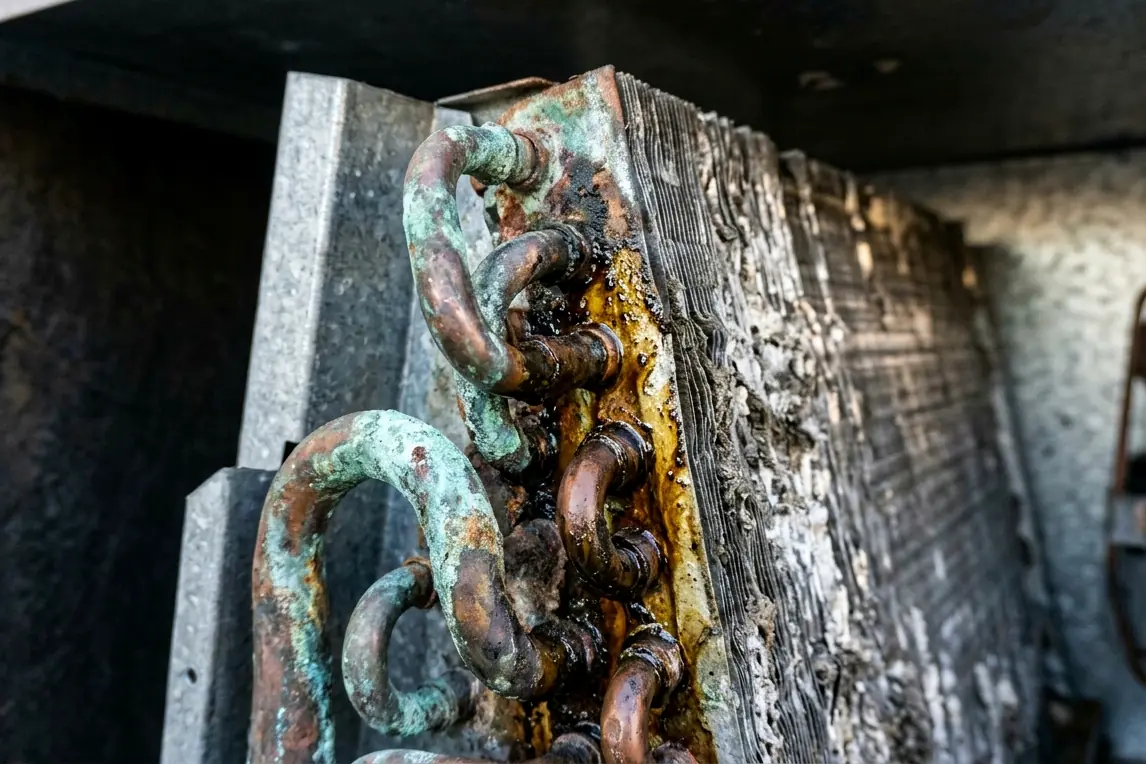
Coil leaks are common in older systems and in some newer ones. Copper coils can develop tiny pinholes from formicary corrosion, a type of corrosion caused by certain household chemicals and moisture. Aluminum coils resist that problem but can crack at joints. Vibration and constant temperature swings stress brazed joints. In Phoenix attics, extreme heat accelerates wear. Some coil leaks can be repaired, but pinhole leaks spread across the coil usually mean replacement is the lasting fix.
Replacing a coil isn't just swapping a part. The new coil has to match the outdoor unit's capacity and refrigerant type, and it has to fit the air handler or furnace cabinet properly. The metering device must suit the system, whether a fixed orifice or expansion valve. We also check the drain pan and float switch, since a new coil often comes with a new pan. If the system is old or uses R-22, we'll compare coil replacement with full replacement.
Many Phoenix homes have air handlers in attics that reach roughly 140 to 160 degrees during summer afternoons. The evaporator coil inside that air handler sees a huge temperature difference between the cold refrigerant inside and the surrounding attic heat. That constant stress, along with vibration from the blower, wears on brazed joints over many seasons. Dust that slips past filters can coat the coil, reducing airflow and increasing the chance of icing.
Moisture also plays a role. During monsoon season, humidity rises and the coil removes more water from the air, keeping the coil and pan wet for longer periods. Combined with dust and certain household chemicals, that environment can encourage corrosion on copper coils. A clogged drain line in an attic installation can let water sit in the pan, rusting it and soaking the ceiling. We inspect the drain system and pan whenever we replace an evaporator coil.
Typical cost
Typical indoor coil replacement, parts and labor. A range, not a quote: the real number depends on what the technician finds. Full price guide
Coils covered by manufacturer parts coverage and easy-access installs sit near the low end. Larger coils, tight attic access, R-22 systems and replacements that include a new drain pan or metering device push the cost higher. These are typical Phoenix ranges, not quotes, and the real number depends on what the technician finds during testing and inspection.
| Line item | Typical range |
|---|---|
| Evaporator coil, under parts coverage | $985 to $1,745 |
| Evaporator coil, out of coverage | $1,465 to $3,285 |
How we handle it
We use electronic leak detection, soap bubbles or nitrogen pressure testing to confirm the indoor coil is the leak source, ruling out fittings, valves and line sets.
We select a coil that matches your outdoor unit's capacity and refrigerant type and fits the air handler or furnace cabinet, with the correct metering device.
Refrigerant is recovered from the system properly, and power is shut off so the indoor unit can be opened and the old coil removed safely.
The old coil and pan are removed, the new coil is set in place, and connections are brazed with dry nitrogen flowing through the tubing to prevent internal scaling.
We pressurize the system with nitrogen to confirm there are no leaks, then pull a deep vacuum to remove moisture and air from the lines before charging.
The correct refrigerant charge is weighed in, then we verify superheat or subcooling, temperature split and drain operation with the system running normally for a full cycle.
Signs to watch
If the system needs refrigerant added each summer, and leak testing points to the indoor coil, replacement usually stops the cycle of losses and costly recharges.
Low refrigerant from a coil leak can cause ice to form on the coil and suction line. Ice blocks airflow and can damage the compressor if ignored.
If the system has a clean filter, proper airflow and a working compressor but still cools weakly, a leaking or restricted coil may be the cause.
Greenish or white corrosion, oily spots or damaged fins visible through the access panel can point to leaks or structural damage inside the coil.
A corroded or damaged coil pan can leak water into the attic or ceiling. Replacing the coil often includes replacing the drain pan beneath it.
A faint hissing near the air handler can mean refrigerant escaping from the coil. Turn the system off and call for leak testing to confirm.
Before you call
Anything beyond these checks involves electrical parts or refrigerant, so call (602) 848-9399 and let a technician take it from there.
Two-thermometer test
Hold a thermometer at a return grille, then at the supply register nearest the air handler after the AC has run 15 minutes.
Inside the normal range
A 15 to 22°F split points to a coil and charge doing their job.
Not sure? Call (602) 848-9399.
We repair and replace Trane, Carrier, Lennox, Goodman, Rheem, Daikin and most other makes found in Valley homes.
Related work
Electronic and dye leak detection, brazed or replaced parts, nitrogen pressure tests and a proper vacuum and recharge so the charge stays put.
See refrigerant leak repairIndoor unit misbehaving? We repair air handler control boards, relays, transformers, drain pans, float switches and wiring in attics, closets and garages across Phoenix.
See air handler repairClogged condensate line or a tripped float switch? We clear algae and scale, flush the drain, check pans and traps, and confirm water drains clearly again.
See ac drain line cleaningAging, R-22 or repeatedly failing systems replaced with properly sized SEER2 equipment, with ducts, drain and electrical checked before install.
See ac replacementWhere we do this
These communities make up most of the homes we serve. Each link opens the local page with ZIP codes, typical homes and the issues we see there.
Small leaks at accessible joints can sometimes be repaired. Pinhole leaks spread across the coil, widespread corrosion or leaks deep inside the coil usually mean replacement is more reliable. We'll locate the leak and explain whether repair is practical, along with the costs of each option, before you make a decision.
Common causes include formicary corrosion in copper coils, vibration stress at brazed joints, and constant temperature swings in hot attics. Household chemicals, such as some cleaners and adhesives, can contribute to corrosion. Replacing the coil with one designed to resist these issues, such as an aluminum coil, can reduce future leaks.
Most coil replacements take four to eight hours, based on attic access, the air handler design and whether the drain pan needs replacing. If the coil must be ordered, scheduling may take a few days. In summer, we try to complete attic work early in the day to avoid peak heat.
You can, but it's not always the best value. If your system is over 12 years old or uses R-22, a coil replacement may cost a large share of a new system. The outdoor unit and compressor may also be near the end of their lives. We'll compare coil replacement with full replacement so you can choose.
Not always. If your outdoor unit is relatively new and uses the same refrigerant as the replacement coil, we can match the coil to it. If the outdoor unit is older or uses R-22, finding a compatible coil can be difficult, and replacing both may make more sense. We'll explain the options during the estimate.
If the old coil was leaking or restricted, yes. A new coil with the correct refrigerant charge absorbs heat properly again, improving cooling and humidity removal. You may notice shorter run times and better comfort during monsoon humidity. We verify performance after installation to make sure the system works as designed.
A real person answers (602) 848-9399 every hour of every day, and we will tell you plainly what the next step is.