Condenser Coil Cleaning
Inside-out rinsing and coil cleaner remove packed monsoon dust from outdoor coils, lowering pressure, power draw and compressor heat.
See condenser coil cleaningAc parts and repairs
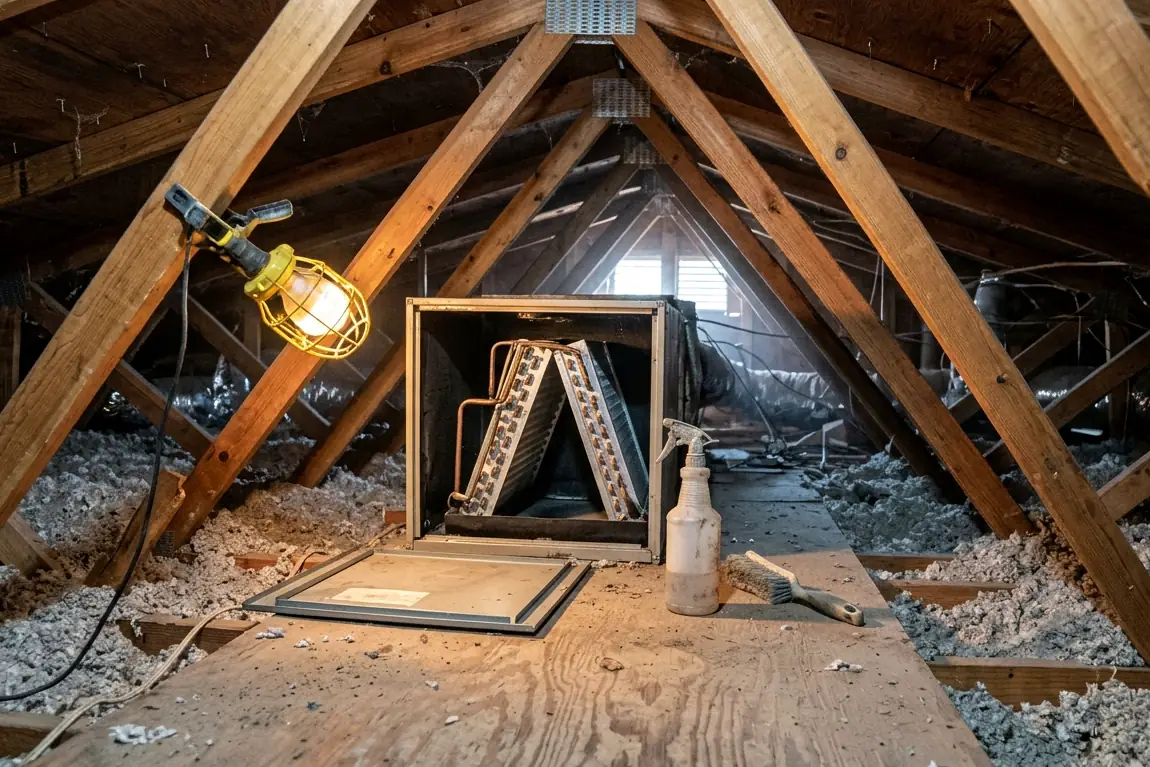
Your evaporator coil sits inside the air handler or package unit, where dust and biofilm build up out of sight. A careful cleaning restores airflow and cooling capacity, and it often clears that musty startup smell too.
At a glance
Evaporator coil cleaning removes the dust, lint and slimy biofilm that collect on the indoor coil, the part that pulls heat and moisture out of your home's air. A coated coil blocks airflow, cuts cooling capacity and can make the coil ice up. In Phoenix it's worth doing when your temperature split falls below about 15°F, filters have been skipped, the system smells musty, or the coil hasn't been checked in a few years.
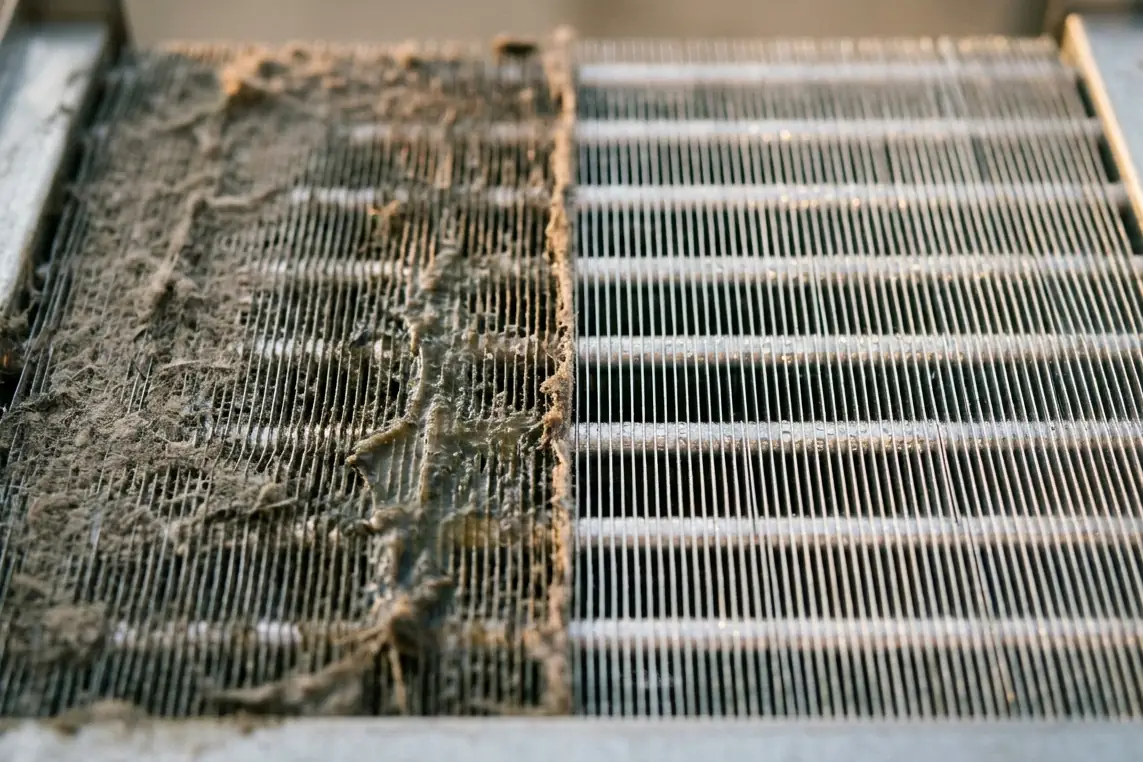
The evaporator coil is the cold half of your air conditioner. Warm house air passes over its fins, refrigerant inside the tubes absorbs the heat, and moisture condenses and runs to the drain pan. Because the coil stays wet through cooling season, any dust that slips past the filter sticks to it. Over time that dust mixes with mold spores and bacteria to form a sticky biofilm that coats the fins and slowly chokes the airflow through them.
Unlike the outdoor condenser coil, which you can see and rinse with a hose, the indoor coil hides inside a sealed cabinet in the attic, closet, garage or rooftop package unit. Most homeowners never see it until something goes wrong: the house stops reaching the thermostat setting, the vents feel weak, or ice forms on the refrigerant lines. By then the coil may be matted so thick that a flashlight can't shine through the fins at all.
Our cleaning targets that hidden buildup. The technician opens the coil cabinet, inspects both faces of the coil, and applies a cleaner suited to the coil material, along with soft brushes and low-pressure water where it's safe. The drain pan and condensate line get cleaned too, since the sludge that comes off the coil has to go somewhere. You'll see before and after photos, plus temperature split readings that show the difference in plain numbers.
Signs to watch
If air barely moves even with a fresh filter and the blower running, a matted coil may be blocking the path between the return and the supply ducts.
When air leaving a supply register is less than about 15°F cooler than the return air, a dirty coil is one of the first things worth checking.
Restricted airflow lets the coil run too cold, so moisture turns to ice on the coil and the larger copper line. Turn cooling off and call us before the ice spreads.
A damp, locker-room odor when cooling begins often comes from biofilm on the coil and slime in the drain pan, where moisture and dust sit together all summer.
A coated coil can't absorb heat as quickly, so the system runs longer to reach the same temperature, which shows up as higher APS or SRP bills in July.
One missed filter change in Phoenix dust can let a season's worth of debris reach the coil. If filters were neglected for a while, assume the coil needs a look.
Valley homes pull in a remarkable amount of fine dust, especially from June 15 through September 30 when haboobs roll through. Filters catch most of it, but a 1-inch filter that goes 60 or 90 days in summer starts letting debris slip around its edges and through the media. The evaporator coil is the next thing in the airflow path, and because it stays wet for hours on end, that dust doesn't blow through. It sticks, layer by layer.
Run time makes the problem grow quickly here. With July lows often in the upper 80s, many systems cool almost around the clock for weeks, so the coil stays wet and warm, which suits biofilm growth perfectly. A coil that loses even part of its airflow cuts capacity on exactly the days you need every bit of it. On a 115°F afternoon, that lost capacity can decide whether your house holds near 80°F or creeps several degrees higher.
How we handle it
The technician records the temperature split, checks static pressure and airflow, and notes refrigerant line temperatures so you have a clear baseline to compare against after cleaning.
With power off, we open the coil cabinet or access panel, inspect both coil faces with a light, and photograph the buildup, bent fins and drain pan condition.
A cleaner suited to aluminum or copper fins goes on evenly and soaks into the biofilm. Harsh acid cleaners stay off indoor coils, since they can damage fins and leave lingering odors.
Soft brushes loosen matted debris, and where the cabinet allows, low-pressure water rinses it into the pan. Bent fins get straightened with a fin comb to reopen the airflow paths.
Sludge washed off the coil heads for the drain pan, so we clean the pan, flush the condensate line and add a pan treatment that slows new algae and slime growth.
After the system runs for several minutes, we measure the temperature split and airflow again, then walk you through the before and after photos and numbers.
Before you call
Anything beyond these checks involves electrical parts or refrigerant, so call (602) 848-9399 and let a technician take it from there.
Typical cost
Typical in-place indoor coil cleaning. A range, not a quote: the real number depends on what the technician finds. Full price guide
Most Phoenix homes fall in this range for an in-place cleaning of an accessible indoor coil, including the drain pan and a line flush. Heavily matted coils that must come out of the cabinet cost more. The real number depends on what the technician finds once the panel is open, and you hear the price before cleaning begins.
| Line item | Typical range |
|---|---|
| Evaporator coil cleaning, in place | $215 to $485 |
| Evaporator coil pull, deep clean and reinstall | $645 to $1,285 |
| Drain pan treatment add-on | $85 to $185 |
We repair and replace Trane, Carrier, Lennox, Goodman, Rheem, Daikin and most other makes found in Valley homes.
Related work
Inside-out rinsing and coil cleaner remove packed monsoon dust from outdoor coils, lowering pressure, power draw and compressor heat.
See condenser coil cleaningLeaking or corroded indoor coils replaced with matched units, brazed, pressure tested, evacuated and charged for reliable cooling.
See evaporator coilClogged condensate line or a tripped float switch? We clear algae and scale, flush the drain, check pans and traps, and confirm water drains clearly again.
See ac drain line cleaningCapacitor tests, coil cleaning, drain flushing and refrigerant readings that catch weak parts in spring, before Phoenix summer heat finds them.
See ac tune-upWhere we do this
These communities make up most of the homes we serve. Each link opens the local page with ZIP codes, typical homes and the issues we see there.
The condenser coil sits outside in the metal cabinet and mostly collects dry dust, leaves and grass clippings. The evaporator coil sits inside your air handler or package unit, stays wet all summer and builds sticky biofilm that a garden hose can't reach. Cleaning it means opening a sealed cabinet, using coil-safe cleaners, and dealing with the drain pan and line that carry the sludge away.
Biofilm acts like a damp blanket over the fins. It narrows the gaps air passes through, so the blower moves less air, and it insulates the metal, so the coil absorbs heat more slowly. Both effects cut the cooling your system delivers. On a mild day you might not notice, but in a Phoenix heat wave, a coated coil can leave your house several degrees above the thermostat.
There's no single schedule, because filter habits matter most. Homes that change filters every 30 to 45 days in summer may only need a coil cleaning every few years. Homes with pets, skipped filter changes or loose filter slots that let air bypass often need it sooner. We check the coil during tune-ups and tell you whether it actually needs cleaning or can wait.
In many homes it helps a lot, because the odor often comes from biofilm on the coil and slime in the drain pan. Cleaning both, then flushing the condensate line, removes much of the source. If the smell lingers afterward, the cause may be dirty ducts, a damp return box or a hidden water leak, and we'll explain what we saw during the visit.
Usually not. Most coils can be cleaned in place through an access panel or by opening the plenum, then resealing it afterward. Removal is reserved for coils so matted that cleaners can't penetrate, or coils buried where no tool can reach both faces. That job involves recovering refrigerant and brazing lines back together, so it costs more and we only suggest it when in-place cleaning won't work.
We don't recommend it for most homeowners. Reaching the coil means opening sealed panels near electrical parts, and foaming cleaners can overflow a clogged pan into your ceiling. Some products also leave residue or attack aluminum fins. If you want to help your coil, the most effective step is changing filters on time and making sure the filter fits its slot without gaps.
A real person answers (602) 848-9399 every hour of every day, and we will tell you plainly what the next step is.