The biggest Phoenix savings come from pre-cooling before APS or SRP on-peak hours, holding a steady thermostat setting, keeping filters and coils clean, sealing leaky attic ducts and adding attic insulation. Shading west and south windows helps too. If your system is older or uses R-22, a high-efficiency replacement can cut cooling costs noticeably. Check current utility rebate programs, since they change often.
How do time-of-use plans change the strategy?
Both APS and SRP offer time-of-use plans, which charge more for electricity during late-afternoon and evening on-peak hours and less at other times. If you are on one of these plans, when your AC runs matters almost as much as how much it runs. The goal is to do more of the cooling work during lower-cost hours and coast through on-peak hours with as little runtime as comfort allows.
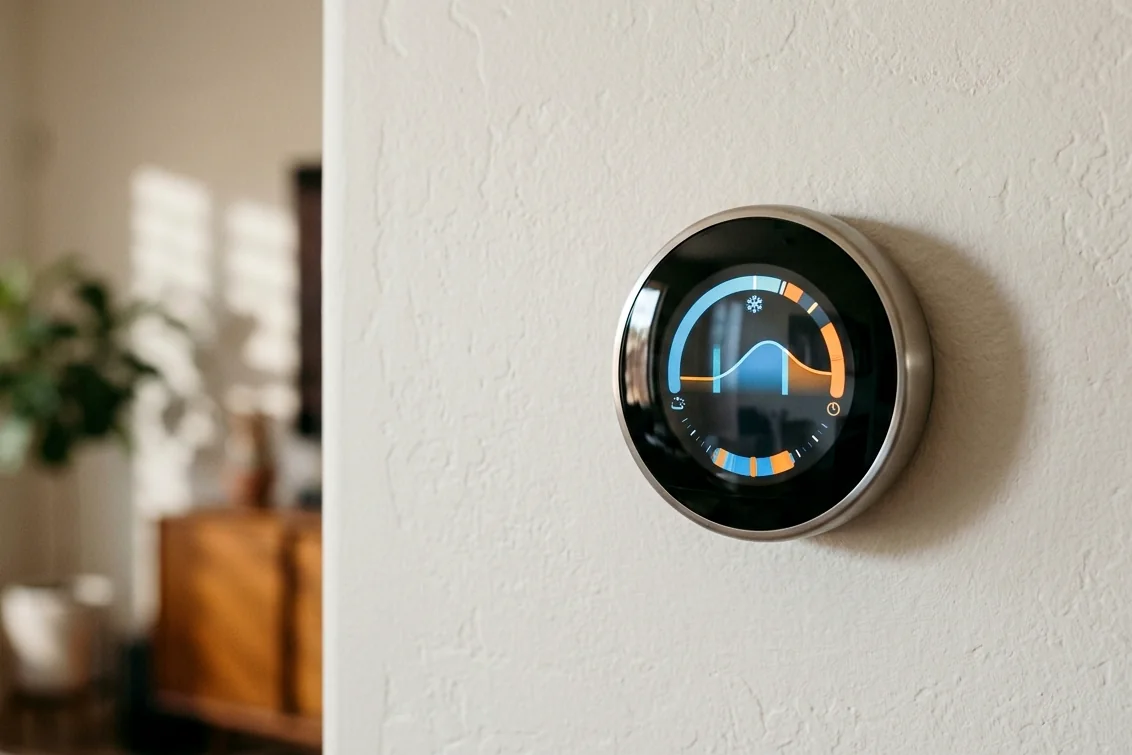
Pre-cooling is the main tool. A few degrees of extra cooling in the morning and early afternoon lets your home's walls, floors and furniture store coolness. When on-peak pricing starts, you raise the setting a couple of degrees and the house drifts up slowly instead of the system running hard at the most expensive time. Check your plan's exact on-peak hours on your bill, since they differ by plan and season.
- Pre-cool a few degrees before on-peak hours begin
- Raise the setting two to four degrees during on-peak
- Avoid big swings that force long recovery runs
- Use a programmable or smart thermostat for the schedule
Why does a steady setting usually beat big setbacks?
In milder climates, turning the AC way up while you are at work saves energy. In a Phoenix summer, the calculation is different. When the outdoor temperature is 112°F and overnight lows stay in the upper 80s or above 90°F, a house that warms to 88°F during the day takes hours to pull back down. The system may run nonstop through on-peak hours trying to recover, which can cost more than holding a moderate setting would have.
A better approach for most households is a modest setback of a few degrees, timed to finish recovering before on-peak hours begin, or a steady setting combined with pre-cooling. Remember that most residential systems are designed to hold about 20°F below the outdoor temperature on the hottest days, so a very low setting on a 115°F afternoon only lengthens the run without making the house noticeably cooler.
Which system checks save the most energy?
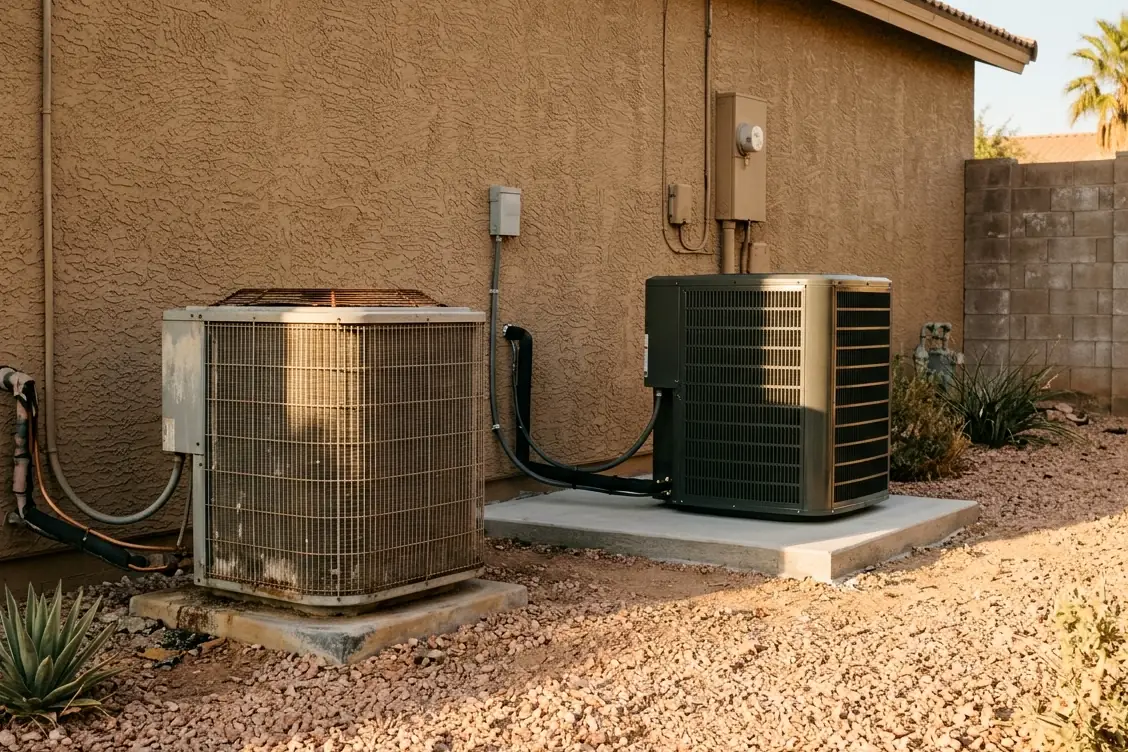
An air conditioner that is dirty, low on charge or starved for air uses more electricity to deliver less cooling. A yearly tune-up before the heat arrives addresses the most common energy wasters in Valley systems. Many of these issues develop slowly, so the system keeps running and the only symptom is a bill that creeps higher each summer while the house feels a little less comfortable every year.
- Change 1-inch filters every 30 to 45 days in summer
- Clean the outdoor condenser coil of dust and debris
- Clean the indoor evaporator coil if it is coated
- Verify correct refrigerant charge and find any leaks
- Test capacitors and the blower motor for weak performance
- Clear the condensate drain so the system runs normally
How much do attic ducts and insulation matter?
Quite a lot in Phoenix. Attic air can reach roughly 140 to 160°F in summer, and many homes have their air handler and most of their ductwork up there. A leaky supply duct dumps cooled air into that superheated attic, and a leaky return duct pulls hot, dusty attic air into the system. Either way, you pay to cool air that never reaches your rooms, and the system runs longer to compensate.
Duct sealing at joints, boots and the air handler connection often makes a noticeable difference, especially in older homes where tape has failed over the years. Adding attic insulation slows how much heat soaks through the ceiling into your living space. Together, these upgrades reduce the load on the AC every hour it runs, which matters more here than almost anywhere.
What simple habits around the house help?
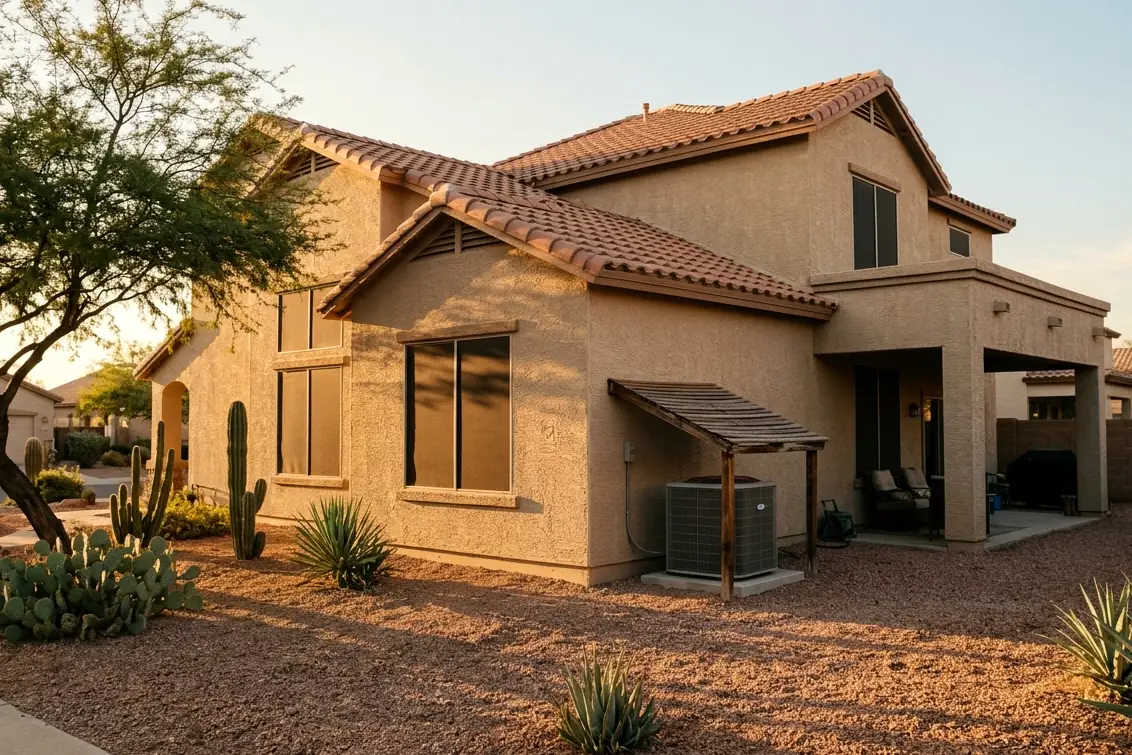
Small changes add up over a long Phoenix summer that often stretches from May into October. The sun's heat through windows, especially on the west and south sides, is one of the largest sources of heat gain in a house. Anything that blocks that sun before it hits the glass helps. Reducing heat you generate indoors during the hottest hours helps too, and none of these habits cost much.
- Close blinds or shades on west and south windows by midday
- Use exterior sun screens on windows that get afternoon sun
- Run ceiling fans only in rooms where people are sitting
- Cook, run the dryer and the dishwasher outside on-peak hours
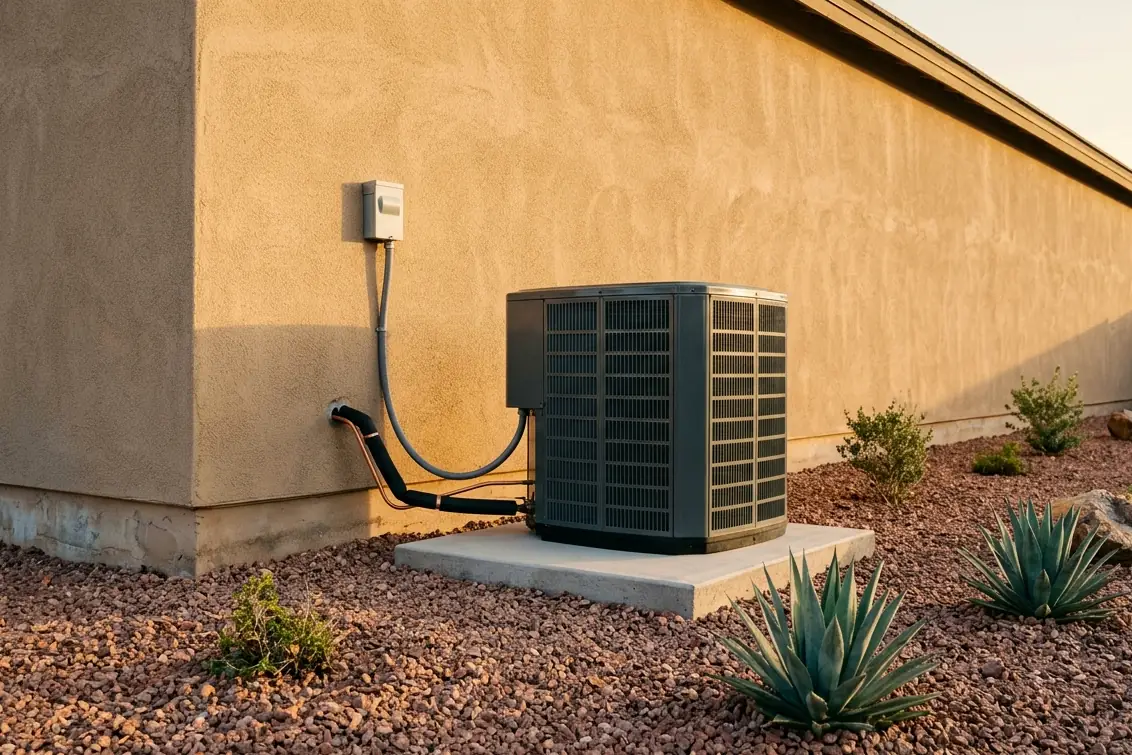
- Keep shrubs trimmed two feet from the outdoor unit
When does replacing the system pay off?
If your system is older, uses R-22 refrigerant or needs frequent repairs, a new high-efficiency system can lower cooling costs noticeably. Arizona falls in the Southwest region, which has higher minimum efficiency rules for central AC, and new equipment is rated under SEER2, a test that better reflects real-world duct conditions. Variable-speed and two-stage systems often run at lower speeds for long periods, which suits the Valley's long cooling season and helps with on-peak usage.
Replacement only pays off fully when the installation is done right, which means a proper load calculation, ductwork that can deliver the airflow the new system needs, and correct refrigerant charge at startup. A high-efficiency unit connected to leaky, undersized ducts will never reach its rating. Before you replace, check current APS or SRP rebate programs, since amounts and qualifying equipment change often.
How can we help you cut cooling costs?
Our technicians start with what you already have. A tune-up shows whether coils, charge, airflow and electrical parts are costing you money. A duct and attic inspection shows how much cooled air you are losing. From there, we lay out the changes that will make the biggest difference for your home and budget, whether that is a simple cleaning, duct sealing, insulation, a smart thermostat or a new system. Call (602) 848-9399 any day of the year to set up a visit.