Most residential AC systems are designed to hold roughly 20°F below the outdoor temperature on the hottest days. At 115°F outside, an indoor reading of 78 to 82°F can be normal operation rather than a breakdown. Heat becomes a real problem when the indoor temperature keeps climbing past that range, the air from the vents feels warm, the outdoor fan stops, or ice forms on the refrigerant lines.
What can your AC realistically hold on a 115°F afternoon?
Residential air conditioners are sized around a design condition, not the record high. In practice, most systems in the Valley are built to keep the house about 20°F cooler than the air outside when the sun is at its worst. That means a thermostat set to 74°F may read 79°F or 80°F at 5 p.m. in July, even though every part of the system is healthy and running exactly as intended. We get plenty of calls on those afternoons, and many of them end with good news rather than a repair.
The reason is simple physics. An air conditioner moves heat from inside to outside, and the outdoor coil has to be hotter than the outdoor air to release that heat. When it is 115°F in the shade and hotter still beside a west-facing wall, the gap the condenser works with gets narrow. Capacity drops as the outdoor temperature rises, right when the house is gaining heat fastest through the roof, walls and windows. A system that easily held 72°F in May may simply run nonstop in July.
Why do Phoenix nights make the heat harder on your system?
In many places an AC catches up overnight. Phoenix does not give it that break. July lows often stay in the upper 80s and can stay above 90°F, so the condenser keeps working at night and the house never fully sheds the heat it soaked up during the day. Walls, slabs and furniture hold warmth like a battery. By the next morning the system is starting from behind, and the cycle repeats through the whole stretch of extreme heat.
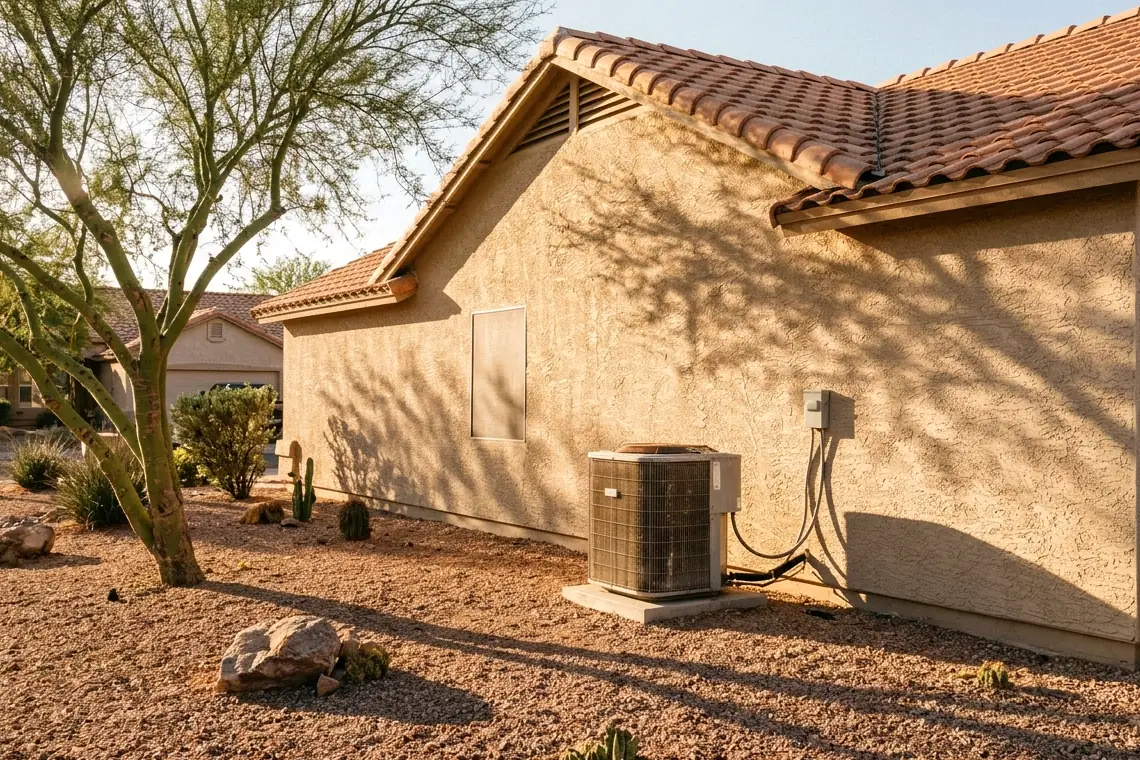
Attics add to it. Attic air in a Phoenix summer can reach roughly 140 to 160°F, and that is where many air handlers and duct runs live. Cool air traveling through a leaky or thinly insulated duct in that space picks up heat before it ever reaches your rooms. Homes with roof-mounted package units face a similar load, since the whole unit sits on a hot roof deck in direct sun from sunrise to sunset.
Which signs mean the heat has become an actual failure?
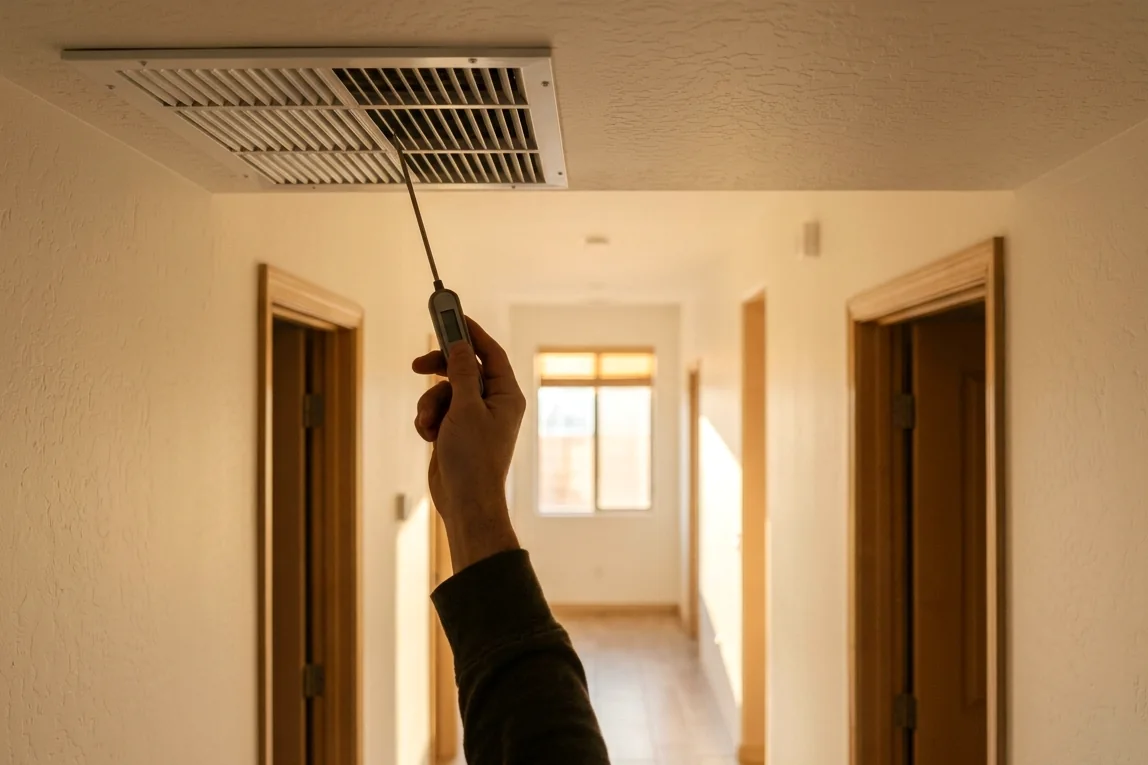
A struggling system and a failing system can look alike at first, so watch the details. A healthy system in extreme heat runs long cycles, blows noticeably cool air and holds a fairly steady indoor temperature, even if that temperature is higher than you would like. A failing one loses ground: the house warms a degree or two every hour, the air at the registers feels lukewarm, or something outside sounds wrong.
- The house keeps warming hour after hour instead of leveling off
- Air at the vents feels barely cooler than the room
- The outdoor fan sits still while the unit hums or clicks
- Ice or heavy frost on the copper line at the outdoor unit
- A breaker that trips again after one reset
- Water spotting a ceiling below an attic air handler
What pushes a healthy system past its limit in summer?
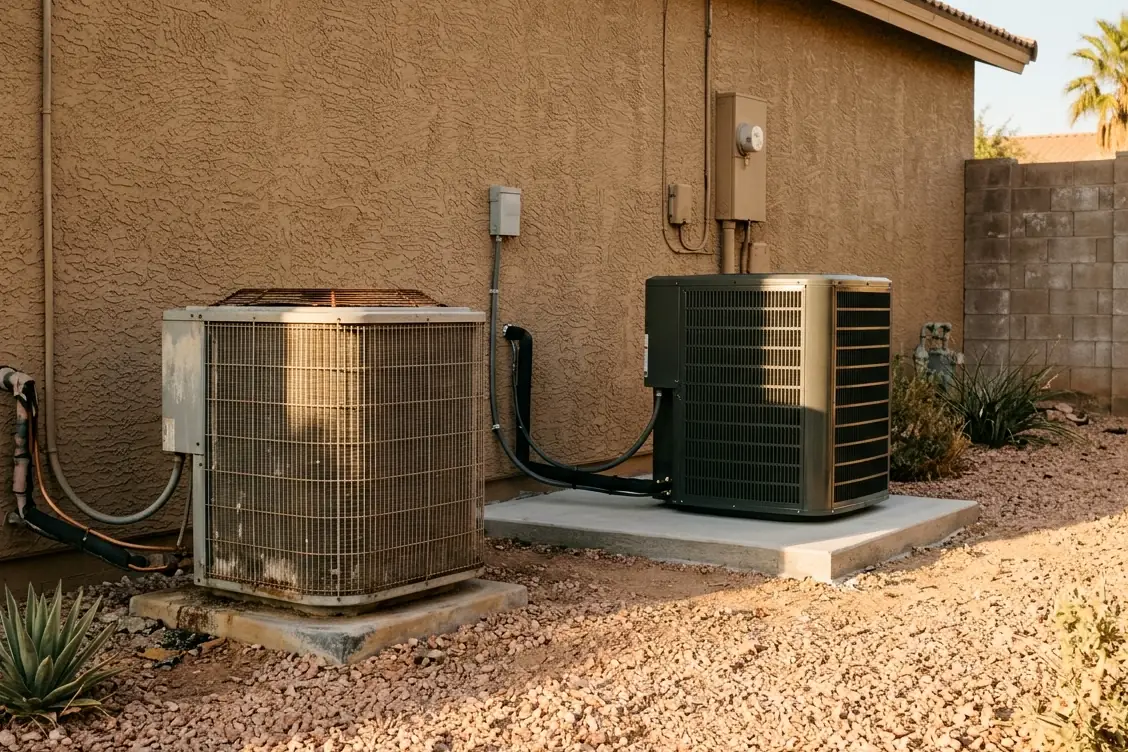
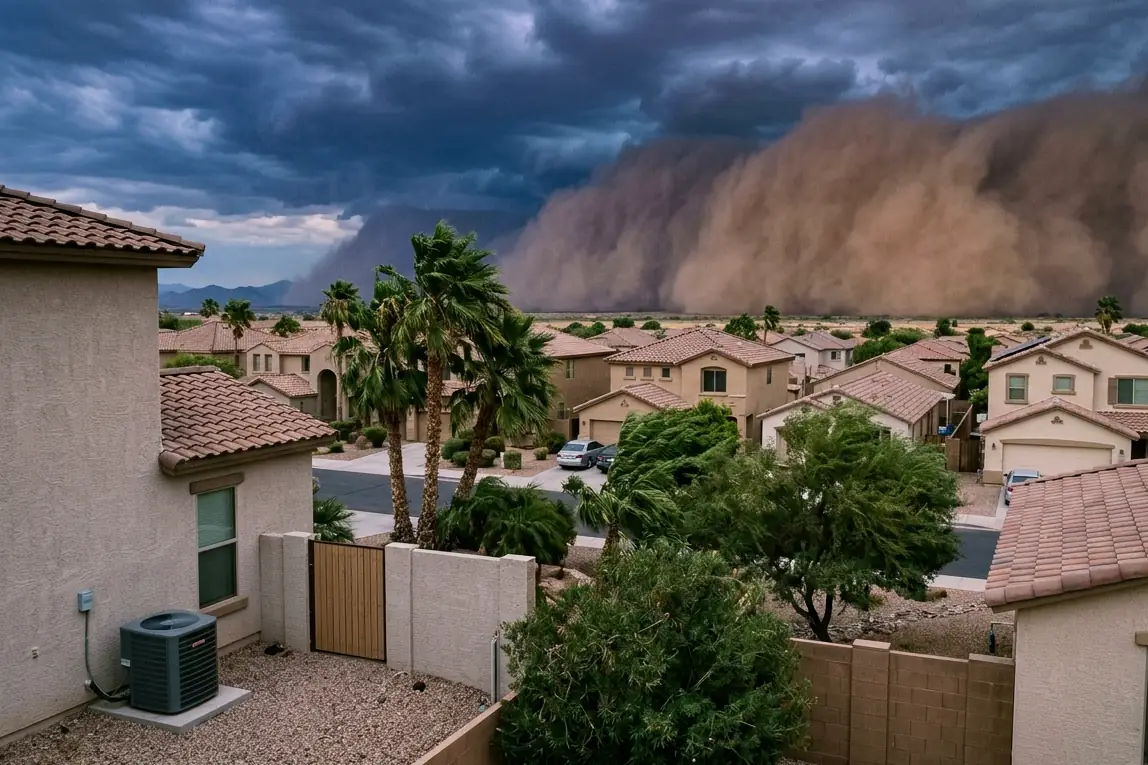
Extreme heat exposes weak parts. Capacitors are the most common summer failure part in the Valley, because heat speeds up their wear, and a weak capacitor can leave a compressor or fan motor struggling to start. A condenser coil packed with dust and spring cottonwood fluff cannot release heat well, which raises system pressure and can trip a safety switch on the hottest afternoons.
Low refrigerant from a slow leak shows up the same way: fine in April, falling short in June. Restricted airflow matters too. A clogged filter, a dirty indoor coil or closed registers reduce how much air crosses the coil, and the system loses capacity it cannot spare. Finally, some homes have equipment that was undersized for the house, or for an addition built later, and they only reveal it once the temperature passes 110°F.
How should you set the thermostat during an excessive heat warning?
The best approach is steady and early. Pick a setting and leave it there, rather than raising it while you are out and expecting the system to pull the house down 10 degrees at 6 p.m. On a 115°F day, it may never catch up. If you are on an APS or SRP time-of-use plan, cooling the house a little extra in the morning, before on-peak hours start, lets the structure store some of that coolness for the afternoon.
- Hold one setting through the hottest hours of the day
- Pre-cool a few degrees before on-peak pricing begins
- Close blinds on west and south windows by early afternoon
- Run ceiling fans in rooms you are using, not empty ones
- Skip the 65°F setting, since it only lengthens the run
What can you safely check before calling a technician?
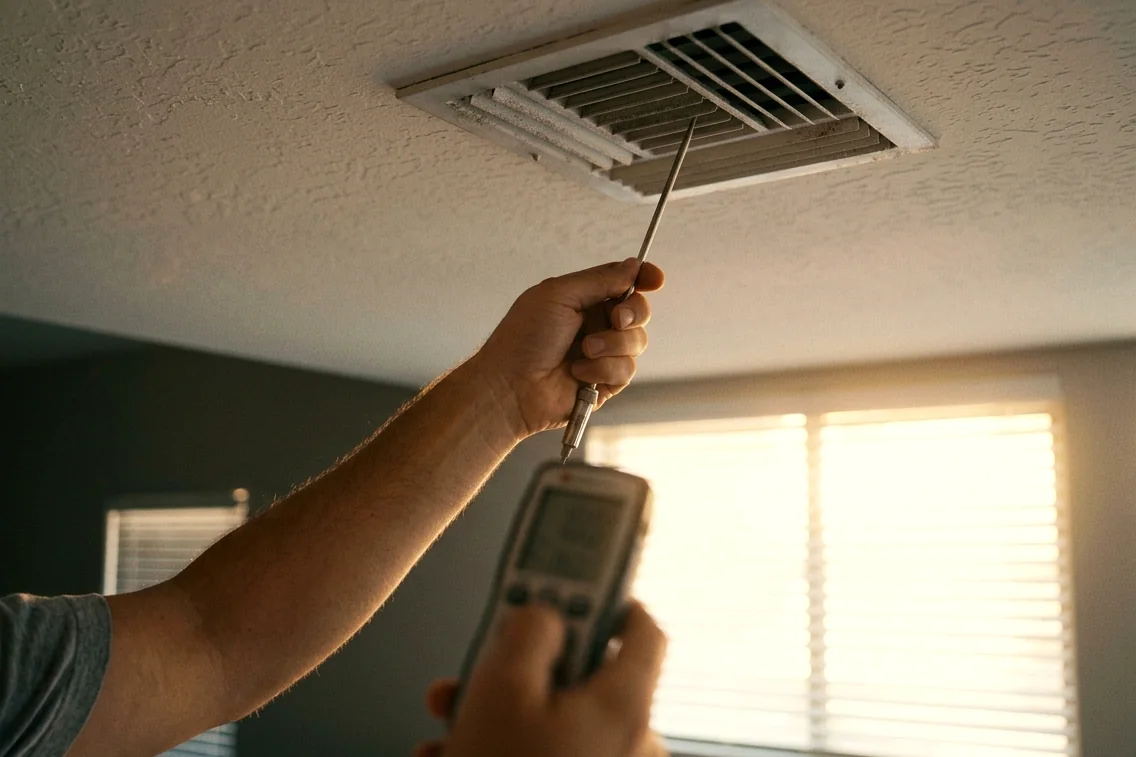
A few checks are safe for any homeowner and can save you a service visit, or at least help our technician get to the cause faster. None of them involve opening electrical panels on the equipment, removing access covers or touching refrigerant lines. Work through them in order, and if a check turns up something you are not comfortable with, stop there and give us a call.
- Replace the filter if it looks gray or you cannot see light through it
- Confirm the thermostat is set to cool and has fresh batteries
- Look for a spinning fan on the outdoor unit and trim plants back two feet
- Check the main panel for a tripped AC breaker and reset it only once
- Make sure supply registers and return grilles are open and unblocked
When is it smarter to call than to wait for evening?
Call right away if the indoor temperature is rising steadily, if you see ice, if the outdoor fan is not turning, or if anyone in the house is elderly, very young or medically fragile. Waiting for the evening to cool things down rarely works here, because the evening barely cools. Running a system with a failed fan motor or a weak capacitor can also overheat the compressor, which turns a modest repair into a large one.
Our technicians are on call 24/7, including holidays and the worst days of July. When you call (602) 848-9399, tell us what you are seeing, what the thermostat reads, how long the problem has been going on and whether the outdoor unit is running. Those details help us bring the right parts on the first trip and get your system back to holding its normal margin as quickly as possible.