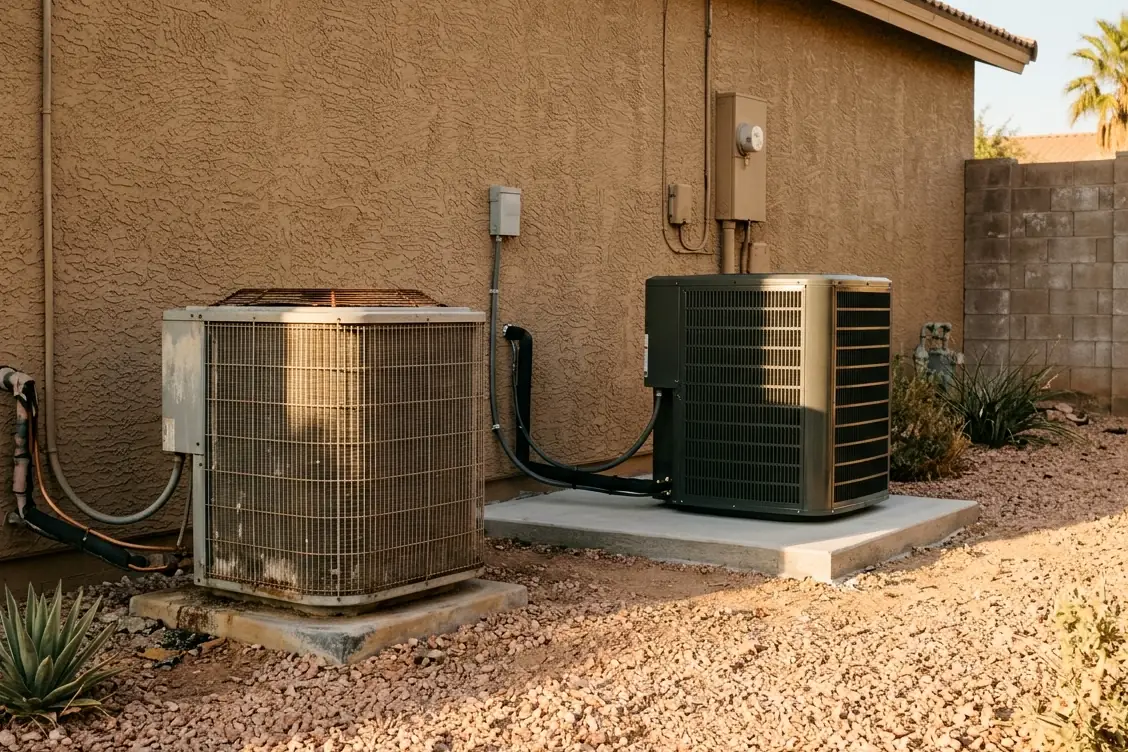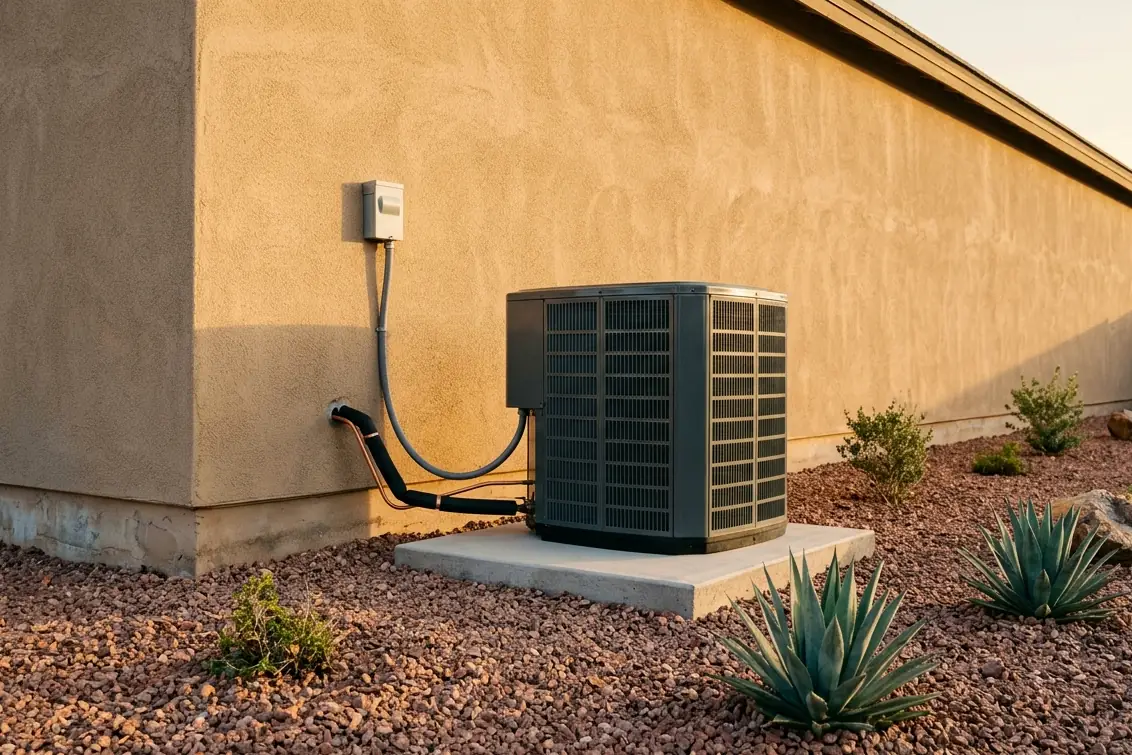
Temperature split is the difference between the air going into your indoor unit at the return and the air coming out at the supply. On a working system it is usually about 15 to 22°F. A split well below that often points to low refrigerant charge, a dirty coil or an airflow problem. A split much higher than normal usually means too little air is moving across the coil.
What exactly is the temperature split?
Your air conditioner pulls warm room air in through a return grille, pushes it across a cold evaporator coil, and sends the cooled air back out through the supply ducts. The temperature split, sometimes called the delta T, is simply the return air temperature minus the supply air temperature. If the air entering is 78°F and the air leaving is 59°F, the split is 19°F, which sits comfortably in the normal range for most residential systems.
The number matters because it reflects how much heat the coil is pulling out of every cubic foot of air. It does not tell you everything about a system, and it is not a substitute for refrigerant pressure readings or electrical tests. It is, however, a reliable early warning. When a homeowner calls us and says the split has dropped from 20°F to 11°F since last month, we already have a strong lead before we open a single panel.
How do you measure your split accurately at home?
You need one decent digital probe thermometer. An instant-read kitchen thermometer works if it responds quickly. Let the system run in cooling mode for at least 15 minutes so the coil and ducts stabilize, then take both readings within a minute or two of each other. Readings taken while the system is starting up or just after it cycles off will be misleading.
- Run the AC in cool mode for 15 minutes before measuring
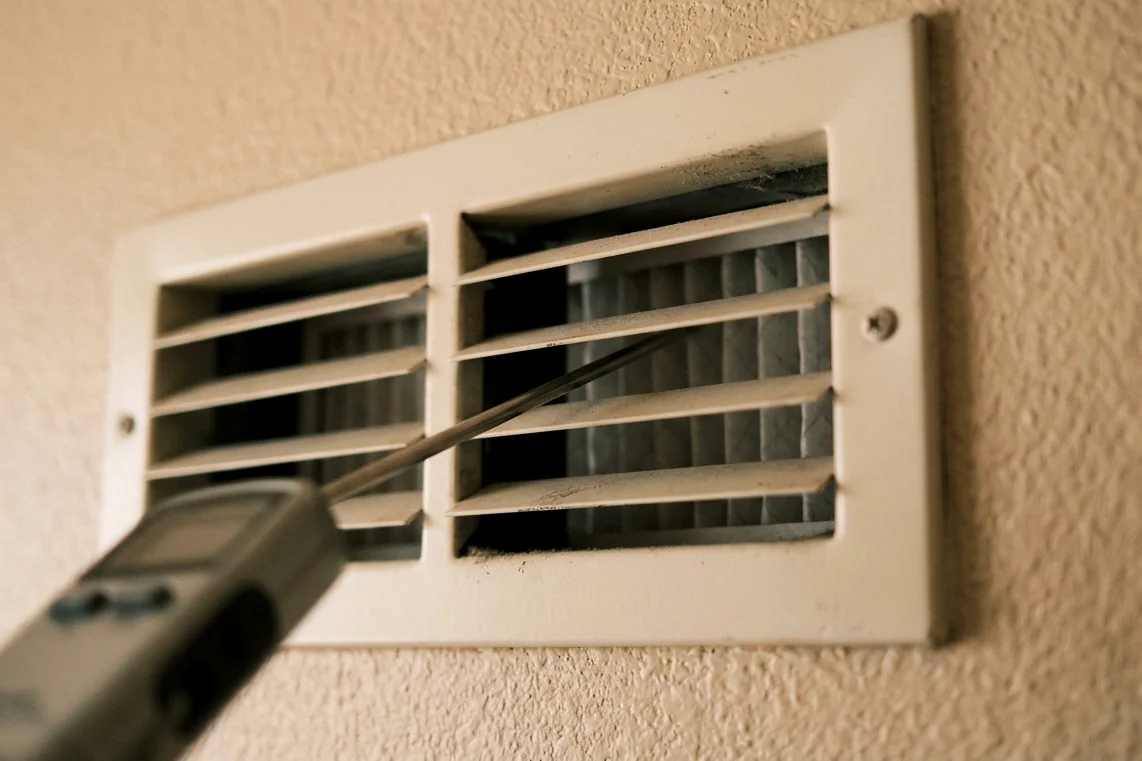
- Hold the probe in the airstream at the main return grille
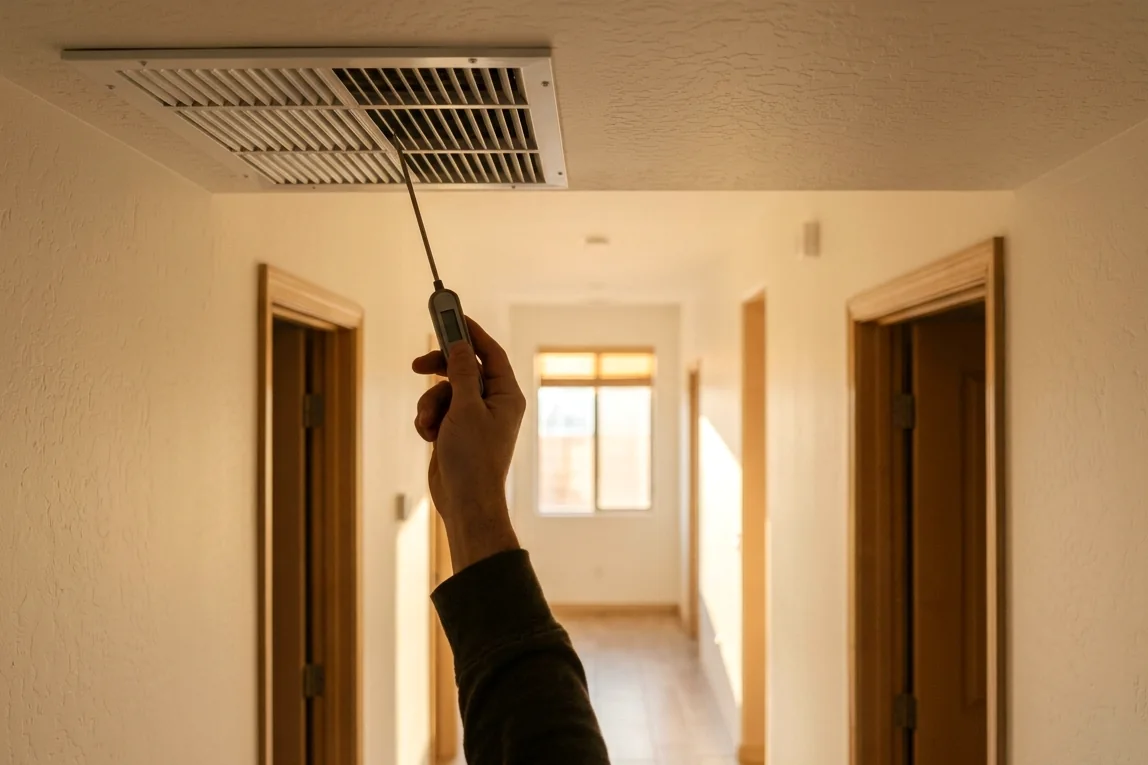
- Measure at the supply register closest to the indoor unit
- Keep the probe in each spot until the reading settles
- Subtract the supply reading from the return reading
- Write down the date, time and outdoor temperature too
Why does the register you pick change the result?
Supply air warms as it travels. In a Phoenix attic that can reach roughly 140 to 160°F in summer, a long duct run can add several degrees before the air reaches a far bedroom. If you measure at the register at the end of the house, you may record a split of 12°F on a system that is actually producing a 19°F split at the air handler. That gap is useful information on its own, since it often points to duct leaks or poor insulation, but it is not a fair measure of the equipment.
For the cleanest reading, use the supply register nearest the indoor unit. In a home with a hall closet air handler, that might be the hallway ceiling vent. With an attic unit, choose the register with the shortest run, often in the hall or the room directly below. Homes with roof-mounted package units should use the register closest to where the supply duct drops through the ceiling.
What does a low temperature split usually mean?
A split that falls well below about 15°F means the coil is not absorbing as much heat as it should. Low refrigerant charge from a leak is a common cause, and it tends to get worse slowly over weeks. A dirty evaporator coil or a condenser coil packed with Phoenix dust can produce the same symptom, because heat cannot move through grime efficiently. A failing compressor or a weak capacitor that keeps the compressor from running properly can also show up as a shrinking split.
- Low refrigerant charge from a slow leak
- Dirty evaporator coil inside the air handler
- Dust-packed condenser coil after monsoon storms
- Compressor or start component trouble
- Hot attic air leaking into return ducts
Can the split be too high?
Yes, and many people are surprised by it. A split much higher than about 22°F usually means too little air is moving across the coil. The air that does pass through stays in contact with the cold surface longer and comes out very cold, but the total amount of cooling delivered to the house drops. A clogged filter is the most frequent culprit, followed by a dirty blower wheel, a failing blower motor, collapsed flex duct or closed registers in several rooms.
Left alone, low airflow can cause the coil to drop below 32°F and ice over. That is when homeowners start to see ice on the copper line at the outdoor unit or water dripping from the air handler as the ice melts. If you measure a very high split, change the filter first, open every register and check again after 30 minutes. If it stays high, the blower or ductwork needs a closer look.
Why can your split look odd during monsoon season?
Humidity changes the reading. During most of the year, Phoenix air is very dry, and nearly all of the coil's effort goes into lowering air temperature. Between June 15 and September 30, monsoon moisture raises indoor humidity, and the coil spends more of its effort pulling water out of the air. That work shows up as condensate in the drain line rather than as a lower supply temperature, so a healthy system may show a split a few degrees smaller on a sticky August evening than it did in dry June.
This is one reason a single reading is less useful than a trend. Compare readings taken under similar conditions, ideally at the same time of day and with a similar outdoor temperature. If your split was 20°F on a dry 108°F afternoon in June and it is 13°F on a dry 108°F afternoon in late September, something has changed inside the system, and it is worth a call before the problem grows.
When should a technician take over from your thermometer?
Your thermometer can raise the flag, but it cannot tell you which part is failing. Our technicians confirm the split, then measure refrigerant pressures, superheat and subcooling, blower amperage, static pressure in the ducts and capacitor values. Those readings separate a refrigerant leak from a dirty coil or a weak blower, so you pay for the right repair. If your split stays outside the normal range after a fresh filter, or you see ice anywhere, call (602) 848-9399 and tell us the numbers you recorded.