An evaporative cooler uses far less electricity and works well in the dry heat of spring and early summer, before monsoon arrives. Refrigerated AC cools reliably in every condition, including humid monsoon days and extreme heat above 110°F, and it dries the air. Many Phoenix homes are best served by refrigerated AC, while some use both: a cooler for dry months and AC for the muggy stretch.
How does an evaporative cooler cool your home?
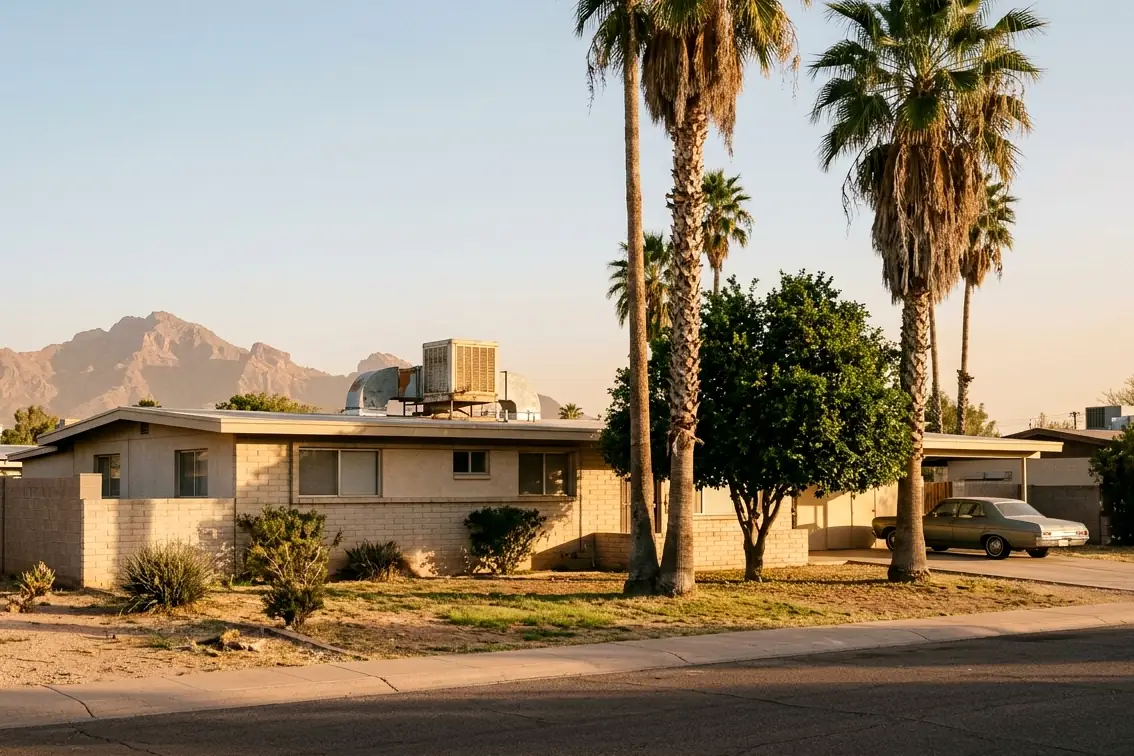
An evaporative cooler, often called a swamp cooler, pulls outdoor air through wet pads. As water evaporates from the pads, it absorbs heat and lowers the air temperature before a blower pushes that cooler, moister air into the house. There is no compressor or refrigerant, just a fan, a water pump and a float valve feeding a reservoir. That simplicity is why coolers use so much less electricity than refrigerated air.
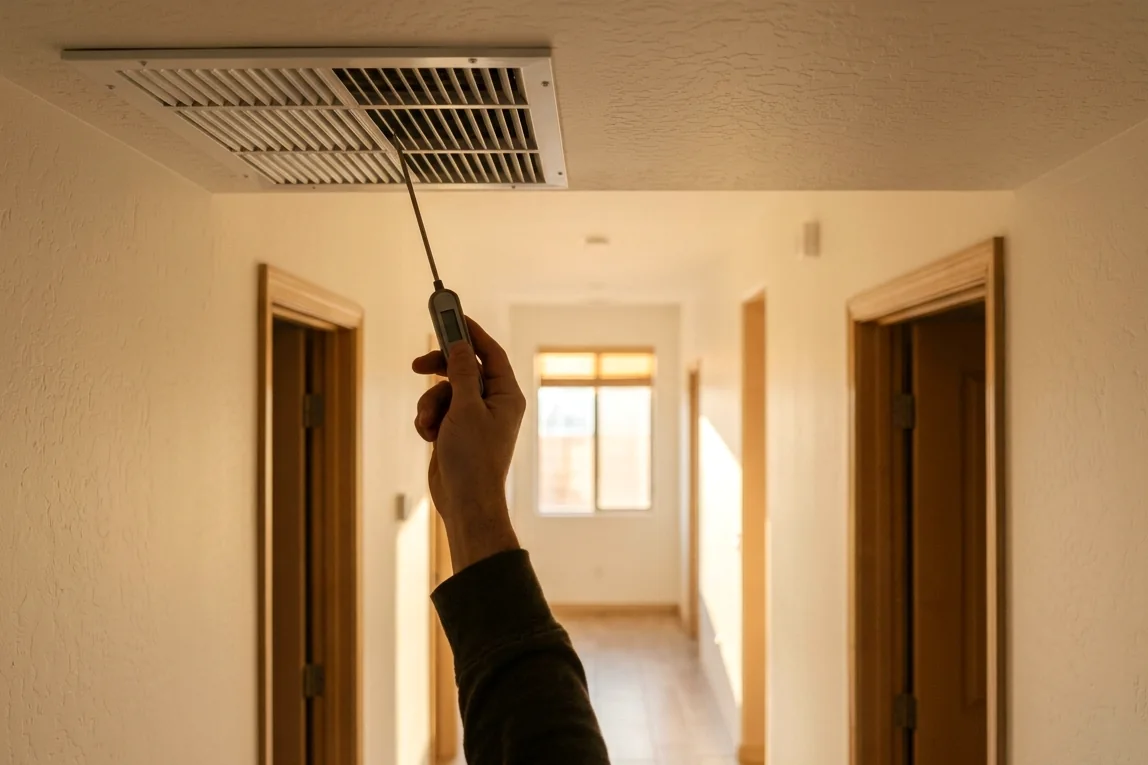
Coolers need open exits for the air they bring in. A cracked window or a ceiling vent lets warm indoor air flow out as cooled air flows in. Without that exit, pressure builds, airflow stalls and the house gets humid fast. Many older Valley homes, especially from the 1950s through the 1970s, were built with roof-mounted coolers and a central ceiling outlet designed for exactly this kind of setup.
When does each system work best in Phoenix?
Dry air is the cooler's fuel. Evaporative coolers work best when humidity is low, which describes most of spring and early summer in Phoenix. On a dry 100°F day in May, a well-maintained cooler can make a home comfortable for a fraction of the electricity an AC would use. Once monsoon moisture arrives, typically from mid June onward, the air cannot absorb as much additional water, and the cooler's temperature drop shrinks noticeably.
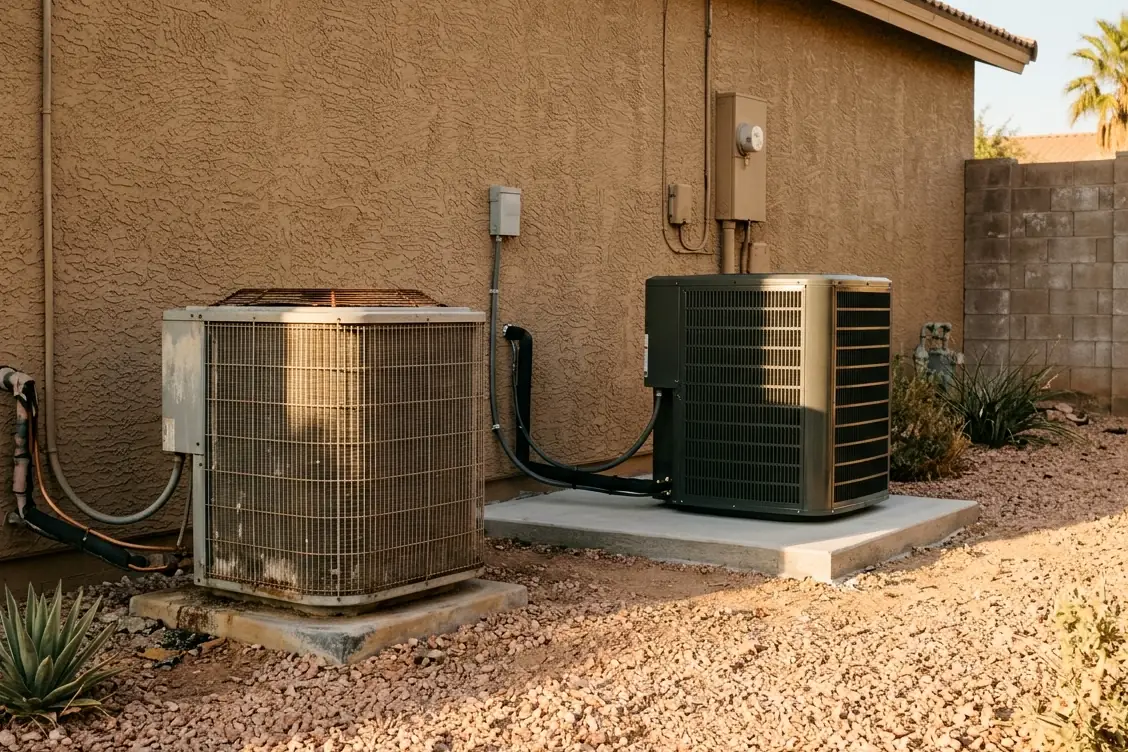
Refrigerated AC does not depend on humidity. It cools by moving heat outside through a refrigerant cycle, and it also removes moisture from the air as it runs. That makes it steady in humid August evenings and on 115°F afternoons alike, when a cooler can barely keep up. The trade-off is higher electricity use, especially during APS or SRP on-peak hours on time-of-use plans, which is why efficient equipment and smart scheduling matter.
- Evaporative cooler: best in dry spring and early summer
- Evaporative cooler: weaker during monsoon humidity
- Refrigerated AC: steady in heat and humidity
- Refrigerated AC: dries indoor air as it cools
How do running and upkeep costs compare?
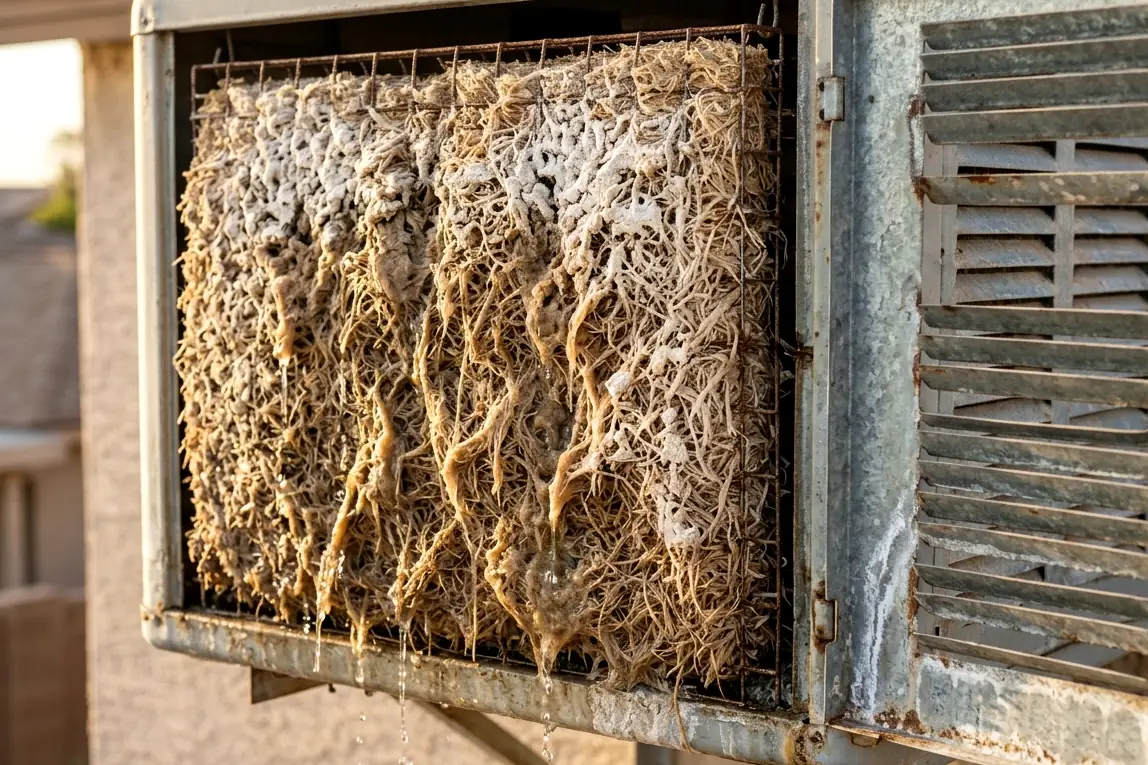
Coolers win on electricity, but they ask for regular attention. Pads load up with Valley hard-water scale and dust and usually need replacing at least once a season, sometimes more. The pump, float valve and water line need checks, and the reservoir should be cleaned to prevent odors and algae. Coolers also use a meaningful amount of water each day in peak season. Before winter, they should be drained and the ceiling damper closed or covered to keep warm air from escaping.
Refrigerated AC costs more to run but needs less hands-on upkeep. Filters need changing every 30 to 45 days in summer, coils should be cleaned and the drain line cleared each year, and a yearly tune-up checks refrigerant charge and electrical parts. With a modern system that meets the higher Southwest efficiency minimums, operating costs are far lower than they were for older AC units.
What about comfort, dust and indoor air?
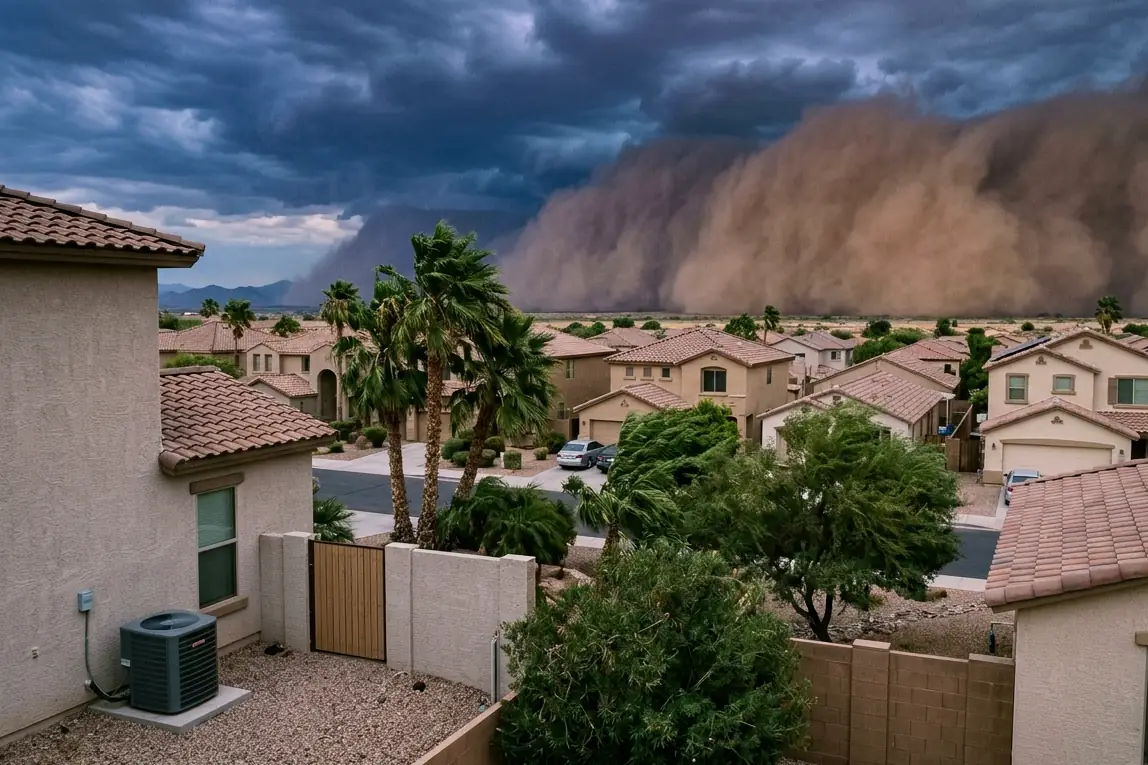
Comfort feels different between the two. A cooler adds moisture, which many people find pleasant in dry spring air, though it can feel clammy once outdoor humidity rises. It also brings in a constant stream of outdoor air, which keeps the house fresh but can bring in dust and pollen during windy days and monsoon storms. People with allergies sometimes struggle with that.
Refrigerated AC recirculates indoor air through a filter, which allows you to control dust and particles with better filtration, including thicker media filters. It keeps humidity lower, which can also help with musty smells and mold risk in closed spaces. On the flip side, a tightly closed home with AC benefits from some fresh-air exchange, which a thoughtfully designed system can provide without letting in a monsoon's worth of dust.
Can you use both systems in one home?
Some Phoenix homes do, and it can work well. The typical pattern is to run the cooler in April, May and early June while the air is dry, then switch to refrigerated air when monsoon humidity arrives or when temperatures climb past what the cooler can handle. Done right, this can lower spring electric bills considerably. The key is keeping the two systems from working against each other.
- Never run the cooler and AC at the same time
- Close the cooler damper fully when switching to AC
- Keep cooler pads and water lines maintained in spring
- Winterize the cooler and seal its ceiling outlet in fall
When does converting a cooler to AC make sense?
If your cooler is aging, the roof deck around it shows leaks, or your household needs reliable cooling through monsoon, converting to refrigerated air often makes sense. A conversion usually involves removing the cooler, repairing and sealing the roof opening, adding a properly sized AC or heat pump system and installing ductwork if the home relied on a single central outlet. Many converted homes use a roof package unit or a split system with an attic air handler.
Typical Phoenix cooler-to-AC conversions often fall around $8,650 to $15,400, depending on home size, the duct work needed, roof repairs and the equipment chosen. Homes that need an electrical panel upgrade can land higher. That is a typical range only, not a quote. The real number depends on what the technician finds in the attic, on the roof and at the electrical panel, and we explain the details before any work is scheduled.
How do we help you decide?
We repair and maintain both evaporative coolers and refrigerated systems, so we can give you a straight comparison based on your house. Our technicians look at your roof, ducts, insulation and electrical service, then talk through how you use your home in each season. If your cooler just needs pads, a pump or a float valve, we will tell you that. If a conversion fits your needs better, we will show you why and what it typically costs. Give us a call at (602) 848-9399.